Category Archives: Expat life

Apretando Mi Corazón: Cuban Emigration

[tweetmeme source=”connergo” only_single=false]

All my friends are talkin’ about leavin’, about leavin’

So goes the little pop ditty in heavy rotation on one of the satellite radio stations I favor. I’d bet my life Cuba never crossed the songwriter’s mind, but it so easily could have been written by my friend Alma, my prima Anabel, or my colleague Jorge.

Or me.

The song is entitled Ghosts and we’re surrounded by them here as certainly as the water which hems us in, as omnipresent and nebulous as the bureaucracy that hobbles Cuban greatness.

Can you hear me sighing? Crying? Thankfully not, but somewhere out there, not too far from where you read and where I write, there’s a Cuban pining for the friends that have left or for those they’ve left behind.

Or not.

Emigration is a little like death: everyone has their own way of grieving and no one has the right to judge – least of all me with the relative freedom of movement I enjoy. Some people block out departed loved ones as soon as that exit permit is stamped or the fast boat slips silently from shore. Until they’re due back for a visit, in which case copious gifts are expected. And they always do. Return, because the pull of this patria is too strong to resist indefinitely and bear gifts because the guilt – self-imposed and otherwise – of leaving is heavy. Besides, what better way to prove the grass is indeed greener than to come loaded with loot? (see note 1)
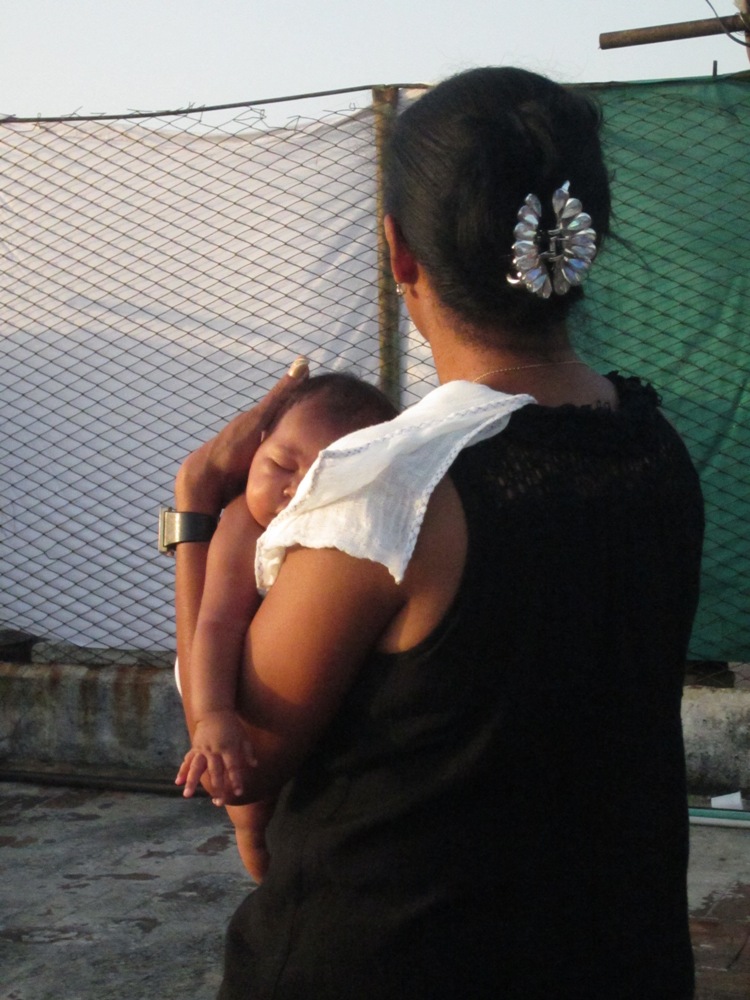
Where will her roots grow? Photo by Caitlin Gorry.

What it amounts to is ‘out of sight, out of mind.’ It’s a wholly common coping mechanism here, in fact. Or rather than a way to cope, it’s simply part of the cultural sofrito. After all, many a liaison – and even marriages – (mal)function due to ‘out of sight out of mind,’ and the related ‘what you don’t know won’t hurt you.’ Until you do, but that’s another story.

Some Cubans, meanwhile, go to the other extreme: they pine and fret and share each morsel of news with every person they meet. Iraida got her driver’s license; Alain saw his first St Patrick’s Day parade; Yoselvis likes Burger King, McDonald’s not so much. This is my approach for keeping close everyone I left behind in my own émigré drama. Willingly taking leave of a lifetime of friendships – most Cubans don’t realize we share this in common.

Emigration is a knotty business, muddled by politics vs. agency, needs vs. desires, illusions and disenchantment, resignation, empowerment, circumstance and happenstance. And I’ve faced a lot of loss and separation on this end. Many of my Cuban friends and family – relationships I’ve fed and nurtured over the past 10 years with all the creativity and passion my heart allows – are leaving. Invariably, I’m tipped off when they suddenly start speaking English and going to every doctor they can, even the dentist.

The details of leaving vary, but the reasons rarely do. Frustrated and fed up, my friends want meaningful work at a dignified salary; yearn to improve their families’ station; and itch to experience something beyond their block, barrio, or province. A leave-taker myself, and with what I know beyond this city, island, and hemisphere, our emigration conversations have been in-depth and interesting.

My 20-something friends ache for independence – from mom and the state – though many are clearly unprepared for the reality fleeing the nest and flying solo imply. My 40-something friends, meanwhile, are tired. Tired of only having water un día sí, un día no; tired of waiting on the bus, permissions, and promises that may never materialize; tired of hunger and boredom and heat without respite, tired of the shortages and struggle and slogans – the endless luchita that erodes the will to go on blackout by blackout.

Just today, after a rash of events that included death of the family dog, a trip to the pediatric hospital and stint at the police station (neither resulting in prolonged care or detention por suerte), a friend reached the end of her rope: “I’m a revolutionary, but there are limits to what a person can take. I can’t take any more. I’m ready to get on any lancha or plane to get me out of here.”

I relate to both groups: fiercely independent, I began working at 13 and left home four years later, so I get my young friends’ anti-dependence stance. What trips me up and out, though, is how they replicate the precise behavior they condemn: they don’t participate in any community endeavors like the block association, because they say the block association doesn’t get anything done. In turn, the association blames ineffectual municipal authorities, who blame overworked and gridlocked provincial authorities and on and on goes the blame game up the hierarchy in a cycle of non-action.

I ask if a renovation or re-thinking of these mechanisms is possible (obviously it’s desirable), but they give me ten reasons why it isn’t practical. When I suggest that they volunteer or campaign for those positions in local government where they might affect change, I get the same response. It’s a vicious cycle and self-fulfilling prophecy a la vez: things won’t get better because the people charged with improvements are ineffective and/or shackled so why even deign to try to fix what’s broken or work towards positive change? So they cross their arms and give in to the inertia – while eating grandma’s home cooking with provisions provided by her and the state, in clothes washed by mom, after which they shower in a bathroom they’ve probably never scrubbed themselves. They are resigned, leisurely.

Out of sight, out of mind? Photo by Conner Gorry.

I know that sounds harsh and as if I’ve written them off. But I feel for this generation. They did get the fuzzy end of the revolutionary lollipop after all. They were born into the hardship of the Special Period, just missing the halcyon Eastern Bloc boom, when you could take your honey out for dinner and dancing on the average salary. The emotional, exuberant revolutionary hey day when the entire country put their backs and minds into creating a more just, equitable society was also before their time. To boot, their lives were proscribed by all kinds of dubious innovations like ‘emerging teachers’, the camello, and reggaetón (see note 2).

But there have been positive changes in their lifetimes, too, and when I ask them about the relaxation of restrictions on private property and enterprise or the very public push for full integration of LGBT Cubans into society for instance, they say ‘too little, too late’ or cite non-causal factors for such strides. Many didn’t participate in the national debates that generated these changes, nor have they read or heard Raul’s speeches specifically dealing with these issues – and even thornier ones like travel and the meager salary problem.

When I point out that not all change is good and ask if they’re prepared to take the good with the bad, they say yes – reflexively. Change for the sake of change is their position. And it leaves me wondering what they believe in; I’m coming to think that even if they know, they aren’t prepared to fight for it.

On the whole, my 40-something friends are nostalgic for the late 80s and agree much has changed since then – for good and not so. Back then, you couldn’t even dream of procuring an exit permit to travel abroad (a restriction the majority believes should be lifted, though this involves complexities not everyone is willing or able to recognize). And they praise recent changes, though often such praise isn’t forthcoming without prompting. It makes their resignation doubly troubling – they have the historical context of how great this country was and the maturity to take the longer view (see note 3) but still they want out. When I ask these friends what they would change, they mention freedom to travel (something my own country doesn’t extend its own citizens – another thing we share in common) and less bureaucracy. Some say they want Liberty, capital L.

Mercurial, that liberty thing. Do they realize tyranny comes in many flavors? And that consumer capitalism, powered by its ‘save yourself if you can’ underpinnings, is among the most bitter?  And if you can’t save yourself? Tough luck.

For many, the choice is reduced to resignation or emigration. Neither of which will deliver the liberty or change they so desire, I’m afraid. To be clear: I wholeheartedly support my friends working towards leaving; after all, I did it myself, I left my country and I can leave this one too when I want to. But I miss them something awful once they’re gone.

To the resigned, I say – if you’re going to stick around, stick up for what you believe in. A better Cuba.

Notes

1. OK, so maybe that’s a little crass. Cubans know better than anyone how hard life is here and generally have a genuine desire to help out those back home. Still, doubt creeps in when I learn about the rent-a-bling businesses in southern Florida which lease chunky gold-plated watches, chains thick enough to moor a boat, and rings for every finger to Cubans returning to the island. These doubts are reinforced when I turn sad watching family ruptures at the airport and friends say: ‘that’s all a show, muchacha. Take it with a grain of salt.’

2. This program trained massive amounts of teachers in the minimum amount of time. The idea was to improve the teacher to student ratio, which took a nosedive as older, more experienced teachers retired – often to offer private, complimentary classes to those students who could afford them. More often than not, these emerging teachers weren’t much older than their charges and depended on videotapes and other teaching aides to compensate for their lack of experience. By all accounts, it wasn’t a good approach. Camellos were double-humped hulks pulled by big rig cabs that held over 300 passengers when packed. You still see them in the provinces, but they’ve been phased out in Havana. If you don’t know what reggaetón is, I envy you.

3. Difficulty in taking the long view is not just limited to Cuban youth, I’ve found.
51 Comments

Filed under Americans in cuba, Cuban economy, Cuban Revolution, Expat life, Uncategorized

Do You Have the Cojones?

[tweetmeme source=”connergo” only_single=false]
If I had a peso for every email I get from someone saying they want to live in Cuba, I could take the six month sabbatical I need to finish my book. Hard as it may be for some of you to believe (or stomach), people do indeed write me all the time professing that they want to live here. These wannabe transplants mention the music usually, the slower, easier pace sometimes, the social safety net often, but Cubans and their idiosyncrasies always. It’s the Cuban ser – their way of being and living – that is so infectious, they tell me. As if I didn’t know. After a decade living here, believe me, I know. And it’s not always pretty or fun. So before you do something rash or costly or dumb, ask yourself this:

Can you be passably nice to people you can’t stand; have betrayed you; or are inept?
Sure, things are changing fast down here with unprecedented economic reforms having sparked a capitalistic furor and all the multi-tasking, efficiencies, and work ethic the best of such furor engenders. But really, it’s the same dog with new fleas. Bureaucratic habits and vice; the cradle-to-grave airbag of state support (i.e. a not always effective, and often painful savior); and the absurdist criteria for job security are die-hard tendencies everyone has to navigate.

Such tendencies, coupled with Havana’s small size and an ingrained system of sociolismo – whereby who you know helps keep you afloat – force us to deal daily with perfidious lovers, mentally challenged office drones, and crabby clerks. Getting all New York uppity or asserting that ‘the customer is always right’ will backfire (trust me) and just make everything harder in any and all future dealings with the aforementioned lovers, drones, and clerks.

Which is more important: sex or drugs?
You’re shit out of luck if it’s the latter. Cuba’s zero-tolerance policy and strict interdiction laws mean jail time for a joint, limiting recreational options to island-produced vice: rum and prescription speed, sedatives, and the like.

If it’s the former, than c’mon down because sex of all types and stripes is better on the island. While I’m still parsing the reasons why, I can say with certainty that it’s related to the lack of shame Cubans have about natural, bodily functions; the absence of Puritanical underpinnings found in other societies (you know who you are!); and the prowess of Cubans en sí. Even if you were to relocate with your spouse or partner, I predict my findings would be confirmed.

Can you tell/enjoy a good joke – especially when you’re the butt of it?One thing that chaps my ass are all these Cuba wonks (including locals – yes, Yoani Sánchez, I refer to you) who write about island life, history, politics and even travel and fail – utterly – to reflect the wicked sense of Cuban humor. This is a funny people, people. No matter who you are or where you’re from, Cuban friends, family, and colleagues will constantly darte chucho y cuero. Loosely translated, this means you will be the butt of many jokes. You are expected to laugh along and what’s more, reciprocate.

To take an example from the weekend-long International Harley Rally I participated in recently….

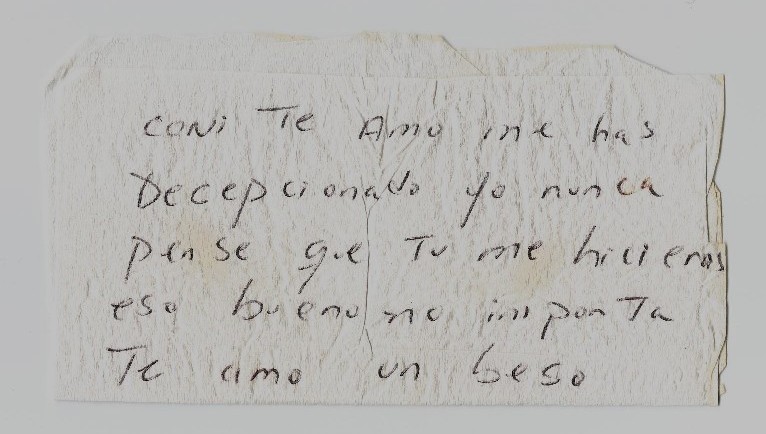
I rode on a 1953 hog driven by compañero Vladimir (Note: name has been changed to protect the guilty). Like most Cubans, he took the 3-hour ride as an opportunity to flirt and shower me with compliments – the scripted Cuban prologue to getting into a girl’s pants. Not a chance did Vlad have, but that never stops an island guy from trying. I was clear on this point, as were the other 100 or so Harlistas and their backseat Bettys, but poor Vlad tried his damnedest regardless. On the last night, there was a big fiesta, the booze flowed, Vlad got stupid drunk, and ended crying in a corner. His friends rallied, rousted him, and escorted him safely to bed. Upon their return, they passed me this note:
[
(Coni I love you. You betrayed me. I never thought you’d do that to me. Whatever. It doesn’t matter. I love you. A kiss)

Uproarious laughter ensued – we all knew Vlad’s blubbering had nothing to do with me and everything to do with dropping his bike in a drunken mishap. Lips pursed and blowing kisses, I snatched the forged note from Rodolfo’s hands, preventing him from making good on his threat to post it on Facebook.

Which is more important: food or sleep?
Automatic fail if you answered either because you’ll will go without both at some juncture here. Obnoxious reggaetón at 5am; pre-dawn Revolutionary Square rallies; and all-night parties will rob you of the latter, while shitty/non-existent restaurant service; midnight munchies with nowhere to sate them; and food just not worth ingesting, will rob you of the former.

Do you have personal space issues?
If ‘yes’ even crosses your mind, cross Cuba off your list: chronic housing and transportation shortages mean you’ll share rooms and beds, seats, sweat and oxygen with friends and even strangers at one point or another. Culturally, Cubans have a completely different approach to personal space – kissing, touching and rubbing up against each other is de rigueur, regardless of relation or circumstance. Even in the dog days of summer, folks greet each other with a kiss on the cheek, leaving behind a wet slick of sweat, a reality I’m still not sure how to deal with: do I let it ride and dry or swipe it away with a perdóname smile?

Are you more of a tits or ass person?
Cuban preference falls squarely on the latter which is a boon for bosom-challenged me, though I’m sorry to report that implants are making major inroads here, tweaking the standard of beauty towards the bust.

How do you feel about second-hand smoke?
Personally, I’m tired of tourists giving me dirty looks as I enjoy my habitual cigar. More than sex, rum, salsa, and solidarity, Cuba is known for its world-class tobacco. If you’re going to be here for any length of time, you’ll have to accept the fact that at one time or another, in places appropriate and not (e.g. windowless clubs, in hospitals, on buses), you’ll be breathing in the piquant, cancer-causing smoke of uncut black tobacco cigarettes and one peso cheroots.

Are you a hygiene freak?
If you’re one of those folks who has a trial-sized Purell bottle clipped to your bag, this isn’t the place for you. From stepping in street juice and gutter detritus to tolerating bugs or hair in your food (or as part of your food, as often happens with chicharrones), you’re going to experience it here. What’s more, every Cuban observes the five second rule: food dropped on the floor is entirely edible, as long as you retrieve it within five seconds. To wit: a couple of days ago I went to the panaderia for my daily ration of bread. As a nice neighbor helped me deposit the rolls in my sack, two fell to the sidewalk. Without pause the baker said: ‘give me those; I’ll replace them.’ He did, but only after placing those two tainted rolls back on the rack alongside the rest to be sold. Whomever came after me got those fallen rolls, none the wiser, poor soul. This happens all the time, and you will eat food that has kissed the ground, whether you know it or not.

Can you go without toilet paper/tampons/Internet/butter/speaking your native language for indeterminate and sometimes extensive, amounts of time?
We all go without these items down here, since to be in Cuba requires an adaptability many visitors I know simply don’t have but which Cubans possess in spades. No toilet paper? No problem – we use water like billions of other people around the world or the Communist daily cut into handy-sized squares. A diehard Tampax user before my move, I switched to pads a decade ago and many Cuban women still use swaths of cotton. Baking notwithstanding, oil is a good enough substitute for butter and while there is no substitute for Internet, being disconnected has its advantages – like actually interacting with real human beings.

On the language front, I’m embarrassed for expats who move to foreign countries and ensconce themselves in enclaves of their native tongue. These folks also like to foist that tongue on locals by talking REALLY LOUD or s-l-o-w-l-y in the odd, delusionary, and insulting belief that these strategies will result in success. If you’re going to live here, you need to speak Cuban, coño, which as any Spanish-speaking visitor knows, is an entirely different ball of wax from straight up Castellano.

Do you wither in the heat?
If so, don’t come here: you won’t be able to take it and frankly, you griping about it bums us out. We, on the other hand, can complain about it long, hard, and better than you – a right earned through innumerable August blackouts with no fan, AC, or ice water.

How is your tolerance for contradictions?
Every society has them and if you think otherwise, you’re not paying close enough attention. But the Cuban flavor of contradiction is particularly special. Married men, for instance, can keep multiple lovers (sometimes of both sexes). Married women? Not so much. Meanwhile, government laws promote private business but the bureaucrats charged with upholding those laws squelch incentive and drive; sex is the national pastime but making carnal noises the neighbors can hear and nude (even topless) sunbathing are taboo; artists keep profits from their work abroad but athletes don’t see a cent; and a taxi driver/tour guide/waitress/hairdresser earns more than a neurosurgeon. The media bears much guilt as well: you’ll very rarely hear trova legend Pablo Milanés crooning his immensely popular songs of love on the radio or TV, but sleazy reggaetón by the likes of Osmany García who beseeches chicas to suck his pinga gets airtime. Some of these contradictions are trying to work themselves out, but are proving as hard to cure as bed bugs and herpes.

Finally, do have untapped stores of inner strength (i.e. cojones)?
I hope so because to live here, you’re going to need them.

68 Comments

Filed under Americans in cuba, bureacracy, cigars, Cuban customs, Cuban economy, Cuban idiosyncracies, Expat life, Living Abroad, Relationships, Travel to Cuba

Loco Libs: The Cuban Party Game

[tweetmeme source=”connergo” only_single=false]
When I was a kid (and later, when boredom and the bobería of teenage existence gave rise to silly drinking games), we used to play something called Mad Libs. If you’re reading this up north in Los Estamos Jodidos (note 1) you are probably familiar with this simple, yet hilarious, game of fill-in-the-blank. If you’re elsewhere – but especially if you’re accessing Here is Havana from anything ending in .cu (and I hope you are, amigos!) – you may never have heard of it.

As simple as the Cuban mating dance, Mad/Loco Libs is easy, fun and funny and I encourage you to play with friends (preferably accompanied by ice cold mojitos) and post your efforts here. It works like this: one person plays emcee, reading aloud only the part of speech requested to fill in the blank and another player – or more; multiply the fun with group play! – supplies the answers. Once all the blanks are filled, the emcee reads the narrative aloud and (hopefully), laughter ensues. Give it a shot with the following:

A Very Cuban Encounter

¡Asere! You’ll never guess who I ran into last night!

Who?

__________________ (famous Cuban)

¡No jodas! Where?

__________________ (famous Cuban spot/landmark)

It was __________________ (adjective). I couldn’t believe it. Right there, he/she and his/her little group of friends were rubbing __________________ (plural noun) with us. But it gets better: they came with a __________________ (noun), which we thought was __________________ (adjective), until we realized they were there to __________________ (verb).

¿¡En serio?!

Seriously. With tremenda pena, I went up to them – I had to! – and asked for a __________________ (noun).

Estás acabando…..What did they say?

__________________ (famous quote).

I didn’t know whether to __________________ (verb) or __________________ (verb). It was straight out of the novela! It made me feel __________________ (adjective). I can’t wait to get the photos up on Facebook!

Notes
1. Loosely translated as “we’re screwed,” this is a play on los Estados Unidos (the United States), courtesy of my friend Patricio.

4 Comments

Filed under Americans in cuba, Cuban phrases, dream destinations, Expat life, Living Abroad

Calling the Cuban Fashion Police, Urgente!

[tweetmeme source=”connergo” only_single=false]

Along with the fidelity conundrum, questionable Cuban fashion has proven rich and popular fodder at Here is Havana. Lamentably, the fury of dubious style has only quickened with new access to knock-offs, bling, and cheese funneled from places like Hollywood and Hialeah. And don’t even get me started on the mania for saline/silicone tits/ass that everyone is chasing here…(see note 1).

But what’s piquing my interest lately is the non-surgical – namely bad haircuts, tacky accessories, and unsuitable footwear and clothing. Part of the problem, explains my 24-year old friend Omar, is that Cuban “fashion” appropriates, rather than innovates.

“There are no personajes,” he says. “We’re not used to creating our own style or seeing anything unique. I mean, people look at me funny when I wear my red pants. Red pants! The other day, I was out with my friend Rodolfo who had on a kilt – an authentic Scottish kilt (see note 2). Imagine the shit he took! Everyone was staring and pointing at him when a guy walked by and said: ‘you’re wearing a salla!’ Then he looked Rodolfo square in the eye and said: ‘but, brother, you’re in talla.” (You’re in a skirt, but man, you’re rockin’ it!). Needless to say, Skirt Boy is the exception to the rule.

But as original as this may seem here, even this is appropriated (and dated – Angus Young, anyone?) One factor, certainly, is the unquestioning, indiscriminate glamour many Cubans ascribe to anything foreign. For example, a compliment like ‘Nice necklace/shoes/dress’ is invariably answered with: ‘es desde a fuera’ (it comes from abroad) – as if this were explanation enough for its quality or style (see note 3).

If you’ve been to Cuba, you’ve surely marveled/recoiled at some of the national fashion. Skin tight jeans bedazzled with Playboy bunnies; spinning $ and pot leaf belt buckles as big as my hand; and couples in matchy-matchy outfits are de rigueur, as are back fat, camel toes, and muffin tops (what I term ‘congris belly’). More than passing trends, these unfortunate looks hang around here like scabies on a hippy. I’m afraid these may never go out of style and I wonder about the up and coming looks Cubans are sporting. Are they too, destined to become part of the uniform?

(A brief caveat: the last time I wrote on this topic, some readers accused me of being harsh and judgmental. I get that much of the clothing and accessories people wear here is directly related to economic possibilities, but there is no excuse for bad taste – even class or wealth. Furthermore, once you see a chick in Lucite heels trying to negotiate the white sands of Playa Santa María, clutching her macho to remain upright, I think you’d agree. If not, you’ll probably not cotton to this post much…)

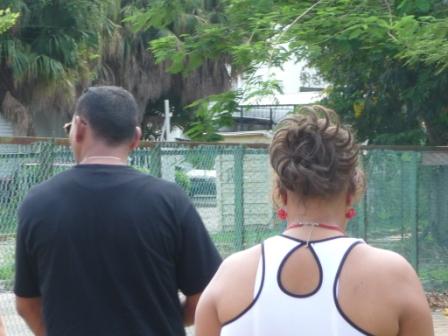
Fake Hair – Remember when I wrote about Cubans taking the disposable part out of the disposable diaper equation? This behavior is a result of wanting the new thing (i.e. disposable rather than cloth diapers) but not having the money or access for the upkeep). Well imagine a ‘fall’ of synthetic hair a decade beyond its expiration date and you get an idea of some of the nasty rat’s nests women attach to their real hair here. No matter if it’s color correct or not, although to their credit, muchachas and matrons who favor fake hair generally try to match it as closely to their natural color as possible. Recently I snapped a photo of a mom attending her daughter’s graduation – a big, dress up kind of day, as you may imagine – with one of these hair pieces. In this case it was a swirl rather than a fall, but I’m fairly certain this was simply the same dog with new fleas: an old hair piece cut and fixed up one last time before it’s relegated to wherever synthetic, flammable accessories go to die.

Personally I’m not too surprised by this fake hair folly: after all, the mullet can still be seen here. Very unfortunate indeed. Which brings us to the next fashion foible:

Bad Hair – There has been a pandemic of bad hair around here as of late, with some styles taking the offense to new heights – both literally and figuratively. Here I’m talking about the yonki. Like me, you may be tempted to pronounce this like those tasty little potato dumplings from Italy, but do so and you’ve pooched any chance of passing for a Cuban: in these parts this hair style is actually pronounced like a strung out heroin addict. Intrigued simply for its rabid popularity, I started investigating why Cuban youth are raging for MC Hammer-era fades known as ‘junkies’ when I discovered the term actually comes from the regguetón star El Yonki.

These hairdos are, quite simply, ridiculous – particularly the 3” high version. Just as popular (and ridiculous if you ask me and if you’re still reading, I assume you do) are the ‘faux hawks’ kids are favoring these days. Guys: do you not have the cojones for a real mohawk? Now that school’s out, you have no excuse (see note 4).

Absurd Footwear – I have some basic rules about shoes. #1: If they’re broken in and still hurt when you walk, they’re defeating the purpose. #2: Ditto if you’re unable to walk in your shoes or they’re inappropriate for the context (eg stilettos on cobblestone streets/in church; come-fuck-me shoes on sand). These rules conform in some way or another to my cardinal rule for fashion, friends, and lovers: form follows function. So you won’t be surprised to learn that I frown upon Uggs worn with Daisy Dukes – something that is also catching on here, though the boots are knock off pleather (that’s Conner-speak for plastic leather) numbers made by Chinese child labor.

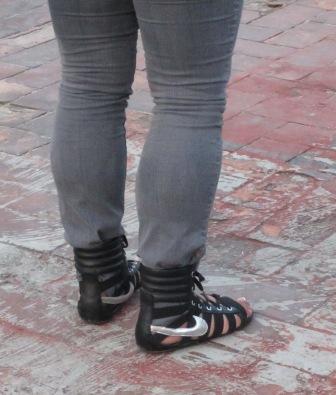
Then there are knee-high Converse sneakers and these weird bondage/Xena Warrior Princess-type sandals with leather ankle cuffs. Not only are these fashions entirely too hot for a Havana summer, they’re fugly (more Conner-speak meaning fuckin’ ugly). To be fair, visitors tell me the same thing when I wear jeans (the hot part, not the fugly part). While researching this post, my fashion consultant, who is here on a long overdue visit (for familial, not fashion reasons), assured me that most of these trends, plus scoop belly overalls – perfect for flaunting that congris paunch! – and bubble dresses (known as bombaches) are still in style only in the Mississippi backwoods and Kansas trailer parks.
[

That’s the bad news. The good news is Cubanas work these lamentable trends more beautifully than anyone else. Cuba remains a country of gorgeousness any way you cut it, no matter the cut of your jib.

Notes
1. A top plastic surgeon here assures me Cuban men are just as amped to go under the knife as their cubana counterparts. As you may imagine, the men go in for love handle removal and chest/muscle amplification. I guess good old fashioned exercise is just too taxing?

2. Rodolfo was wearing underwear; I confirmed, so not 100% authentic.

3. Another common response to such a comment is: ‘it’s yours,’ followed by the person taking it off and handing it to you or says ‘borrow it whenever you like.’

4. Cuban kids from kindergarten through high school wear uniforms and have to conform to hair regulations as well – although they’ve been relaxed a little bit as of late, wild hair is still cause for demerits in many schools.

48 Comments

Filed under Americans in cuba, cuban cooking, Cuban customs, Cuban idiosyncracies, Expat life, Living Abroad, Travel to Cuba

The Cuban Love Doctor Is In

[tweetmeme source=”connergo” only_single=false]

Why do Cuban men cheat?

Are Cuban women faithful?

Steer clear of Cuban men?

Someone save me from my Cuban husband!

People look to me as some kind of authority when it comes to their Cuban lovers – although I’ve only written once on the Cuban fidelity question and never directly about love, lust or the like. Still, Those Faithful Cubans is one of my all-time most popular posts and people search daily for information on the issue as the above – actual search terms from the last week – illustrate.

Honestly, I do try to extend the benefit of the doubt in this regard, but one thing I’ve learned in my job as a health journalist here is to be experiential- and evidenced-based (see note 1). And what the evidence reveals on this topic likely won’t be welcome news for those of you with Cuban lovers or spouses.

Lest you think I’m about to malign an entire country and culture, let me clarify: there are exceptions to the rule – always – and if you’re in a relationship with a Cuban and reading this, you may be one of those lucky few. But in general…

They’ve all got someone on the side. Often, as one reader pointed out, this is a complicit arrangement – more up front and out in the open than on the side. I know men who have been married 20 years (or longer) and have kept the same mistress all the while. Polygamy without the papers I like to call it. In many cases, there’s little care taken to hide it – friends, family, colleagues are all hip to the scenario.

Upon first analysis, it seems logical to say: if everyone’s ok with it, what’s the problem? And trust me, this question has forced me to examine if my own moral code – faithful to a fault – is clouding my appreciation of the issue. But after turning the critical eye to my own beliefs and how they “cuadrar” (or not) with my adopted culture, I’ve concluded there is a problem with these arrangements for two fundamental, fucked up reasons: health and machismo.

Here in Havana, the latter is real, prevalent, and extraordinarily complicated – if you think otherwise, you’re not paying attention. When you hear the word ‘macho,’ the image that pops to mind is likely a hirsute brute in a wife beater, feet up on the coffee table, shouting kitchen-ward for another Coors and a nacho refill. Let me tell you: machismo here is as far from that as a Miami Cuban sandwich is from its Havana counterpart.

Cuban machismo is more subtle (and therefore potentially more dangerous, since you’re not always quite sure what you’re dealing with). It has to be – Cuban women are too empowered, strong-willed, and educated to put up with that shit. The economic dynamic here also plays a part since 57% of all technical and professional jobs are held by women, which doesn’t lend itself to the financial domination men lord over women elsewhere.

This isn’t to say that Cuban women are free from blame. Each time they shoo their sons from the kitchen telling them to play soccer with the other boys and every Saturday they make their daughters help clean house instead of suggesting they help dad fix the bike, they’re part of the traditional gender construct problem. In short, many of the fairer sex here replicate damaging stereotypes and patterns which prop up the macho paradigm (see note 2).

Tolerating mistresses validates machismo for a simple reason: it is not a two-way street. Try taking and maintaining a lover just like your male partner and watch the mierda hit the fan. The message is clearly ‘I can, but you can’t,’ coupled with ‘do as I say, not as I do.’ It’s a pitiable slice of paternalistic hypocrisy that chaps my ass. Can you tell?

And the one-way street runs into carnal endeavors as well: while he may be hot for a threesome with another chick, cuidado if it occurs to you to suggest the same with another man. While this surely is not unique to Cuban machismo, it involves factors specific to culture and place, especially Afro-Cuban religions which, on the whole are absurdly homophobic and macho (see note 3).

(I offer this as partial answer to the reader who searched on: Why don’t Cuban men like their bums touched?)

 The health-fidelity convergence is, at first blush, more straightforward. When a man or woman takes another partner (or several), they are potentially exposing their spouse to everything from HPV to HIV. Sure, there are protective measures everyone can and should take, but condoms, which cost pennies apiece and are sold everywhere, are as popular here as turds at the beach. And let’s face it: there are many ways to swap fluids without penetration, when a condom does you no good.

Machismo also muddies the health picture since some married Cuban men like to get out and savor their own flavor. And this can increase risk of HIV infection for wives since machismo-cum-homophobia is a condom-adverse state of mind. Indeed, here, the term ‘men who have sex with men’ is favored over ‘homosexual’ since only a small portion of men into guy-on-guy action self-identify as gay. I always laugh a sigh when I tell a Cuban friend someone is setting off my Gaydar and they respond: ‘But he’s married!’ Were I to say instead, that man has a mistress, the response would be along the lines of: ‘of course! Who doesn’t?’

But this is just the tip of the iceberg. I’ve limited this diatribe to the bio-medical effects this putería/mariconería has on health. But what of the mental, emotional, and spiritual toll long-term mistresses (and masters) have on health? Better I save that for a different post.

 I don’t have the answers, but to the reader who searched: when your boyfriend goes to Cuba for a month, I say: assume he’s gone rogue and use a condom until you know otherwise.

Notes

1. This is sound advice for everyone from Cuban newbies to vets: take everything with a grain of salt unless you’ve seen it with your own eyes.

2. Metrosexuals – a fairly recent phenomenon here – are bucking this trend. I just wonder how they keep so hairless given our lack of resources here?!

3. Admittedly, I’m not an expert in this field and if anyone is willing and able to share knowledge about the beliefs and codes of conduct vis-à-vis male/female relations and power structures in these religions, bring it on.

185 Comments

Filed under Americans in cuba, Cuban customs, Cuban idiosyncracies, Cuban phrases, cuban words without translation, Expat life, health system, Living Abroad, Relationships, Travel to Cuba

Havana Bad Time (see note 1)

[tweetmeme source=”connergo” only_single=false]Times are exceedingly complex and anxiety-ridden on this side of the Straits. This is part of the reason I’ve chosen to accentuate the positive lately – both personally and generally. No one needs me griping about the small things and adding to the angst, I figure. Besides, here, like everywhere, you take the good with the bad, which is my stock answer for those who don’t believe (or cotton to) my choice to be in Cuba. And for me, the good has heavily outweighed the bad for 10+ years.

But these days, my life has gone a bit pear-shaped (see note 2), sending me to my surest, safest refuge: pen and paper (see note 3). Indulge me this one post and we’ll return to issues of more import, (not to mention fun), soon. Te prometo.

¡Apagones cojones! – Once upon a time, I was one of the 11 million here who withstood 10 hour black outs. Years later (before we’d hooked up with Hugo), the apagones were shorter – a couple, three hours – but still a fact of life. And in hurricanes, the electricity is cut when winds reach 40 miles per hour – one of the reasons Cuba suffers minimum loss of life compared to other places since many storm-related deaths are due to downed live wires. So I’ve known my share of blackouts.

But none of this explains why I came home last week after sol-to-sol meetings to a dead answering machine in my sala and defrosted pork parts in my freezer. Did my neighbors have lights? Yes. Had I paid my bill? Yes (see note 4).

‘Tis a puzzlement as the King once said and not in an intriguing, brain teaser kind of way, but rather in that ‘how am I going to cook dinner and keep cool?’ kind of way. The head scratching intensified once I located my meter amongst 18 others downstairs and found it in working order. Next, I went to the circuit breaker inside my house and found it in the ‘off’ position. I switched it to ‘on.’ A light sputtered to life, but I didn’t even have time to yell “Yay!” before it threw the breaker again.

I waited a bit before switching it again to ‘on.’ The light flickered and held. No electrician has been able to explain the mystery – I have no new appliances or anything additional plugged in – but I dare not turn on my old Russian AC. Send help if you don’t hear from me by August.

The concert that wasn’t – One of the undeniably greatest things about living here is the quantity of quality music happening almost always. So was the case last Saturday night when X Alfonso, Raúl Paz, Kelvis Ochoa, and Decemer Bueno were all playing at different, fabulous venues across the city.

How to choose?

For me, it was easier than most since I’ve seen them all perform multiple times and Decemer’s concert promised something special: invited guests included Israel Rojas from blockbuster group Buena Fe, plus Xiomara Laugart – an exile making her return to the Cuban stage. 

I highlighted his concert on my Facebook page. I invited friends and family and pedaled over some time after 10. I took my time: Cuba isn’t a particularly punctual place and these cats less so. I cruised up and ran into friends on an inaugural date, thrilled they’d chosen this concert over the others…

Once the clock reached 11:15 and the doors still hadn’t opened, my friends bailed. I hung in there and was relieved when they (finally!) started letting people in at midnight. I grabbed a Tu Kola at the swinging bar and headed into the theater where a full house waited. And waited. And waited and waited. At 1 in the morning, I bailed myself, my night of getting down, gone down – in flames (see note 5).

Yes You Can!=No You Can’t! – I’ve said it before, I’ll say it again: my life changed when I got a bike several months ago. It’s fun, it’s fast, it’s practical and represents independence and freedom – coveted states no matter where you live. But I still nursed a hangover from my first Cuban bike in 2002, when I had been stranded one time too many with nowhere to park my chivo.

Bike parking lots were as ubiquitous here during the Special Period as wannabe iMac users are today, but most car lots circa 2012 are reticent to accept bikes and those specifically for bicycles are few and far between. But so far, I’ve only had one run in – with a too-cool-for-school parqueador more concerned about his dwindling keratin supply than the vehicles he was paid to guard. Then I rolled up to the car/moto/bike lot adjacent to Coppelia. Here things took a fast turn for the douche absurd.

ME: Buenas tardes, compañera. I’d like to park my bike.

HER: Sure, put it right there in the rack. (She ties a chapita to the frame and hands me a matching metal ‘ticket,’ which I pocket).

ME: Great. Just need to lock it up.

HER: Oh no! You can’t lock it.

ME: ?!?!

HER: No, no. No locks.

ME: Compañera. I don’t understand. This lock provides added security for both of us.

HER: No. You can’t use a lock here. If you want to use a lock, do it on the street.

ME: But that’s illogical. Why wouldn’t you want more protection for me and you?

HER: Because we’ve had ‘situations.’

ME: What kind of ‘situations?’

HER: People have abandoned their locked up bikes here.

ME: ?!?!

So I wheeled Frances three feet away, on the other side of the rope from the official parking area, locked him to a tree and headed off for ice cream. Your 5 peso loss, lady.

Doggin’ me – This last was really the icing on the cake, the ill effects of which I’m still suffering. Last Sunday afternoon, like those before it, I was making my way to play bike polo. But this time I was escorting a friend, which is good news: our league suffers from a chronic shortage of bicycles. We had just made it around Havana’s hairiest rotunda at Ciudad Deportiva and turned onto the access road to our court. I glanced behind me to make sure my friend had made it through the rotary and when I turned around, there was a stray, mangy dog directly in front of my tire. 

I had no time to react – no swerve or brake or little hop was happening. I ran squarely  over him, passing with a thud over his flan-colored midsection, first with the front tire, then the back. He yelped. I fell. Folks nearby gasped. The dog ran off, leaving me with a badly sprained ankle and a serious hitch in my giddy up. If I wasn’t a dog person before…

Notes

1. This post was suggested (somewhat tongue in cheek) by Havana Good Time user Annabelle P after a visit here. Thanks chica!

2. And what follows is only what Politics, legal considerations, and my personal ethical code permit me to air publically.

3. For all two of you who were wondering: I still do all my first drafts the old fashioned way – by putting pen to paper.

4. The electric and phone company here are merciless when it comes to non-payment, cutting service one day past due. I experienced my share of cold nights and interrupted phone service growing up due to unpaid bills, but I don’t ever remember ConEd or AT&T being that cut throat. Ironic, eh?

5. Turns out they took the stage at 1:30am, having had to wait for the sound guy who was working one of the other concerts which also ran late. To boot, there was a short in Decemer’s mic, so he was getting shocked through his six song set before calling it quits. Friends tell me they’re going to make it up to their pissed public with a free concert soon.

26 Comments

Filed under Americans in cuba, Cuban customs, Expat life, Living Abroad, Uncategorized

Havana Es Un Pañuelo

[tweetmeme source=”connergo” only_single=false]

Have you heard of a postage stamp yard? Well Havana is a postage stamp city – a pañuelo as we say here. Don’t misunderstand: this place has always felt like a small pond to the New Yorker in me (in a good way – not in that inferiority complex-San Francisco kind of way), but lately it has become all too clear how this diminutive status affects human relations in the land of sociolismo.

It’s not simply the size of the population that makes it feel small, but also its static closeness. Therein lies the city’s incestuousness de verdad.

Until very recently, for example, moving to another neighborhood was a pipe dream for most, a torturous, time consuming affair for a select few. What this means in practice is that the people around you have been up in your grill – all up in your business – your entire life. They know your histories and dramas, betrayals and tendencies. The same can be said for your workplace, love life, organizaciones de masa and other extracurricular circles. (If your unfamiliar with Cubans, I should point out that all these circles are also moving the grist of the gossip mill but good, making things worse).

And not only do your neighbors, co-workers, and lovers know all the details and penas of your life, they’ve been amassing favors and calculating debts with you through each and every one of those penas, trading upon all those embarrassing and unfortunate details. I’m not passing judgment. On the contrary; I’m gaining a better, intimate understanding of my acculturation trajectory – because although I haven’t started doing it myself, I’ve started to accept and roll with it.

Does it scare me? Sure, a little. Especially since in the zero sum expat game, such insight into my adopted culture directly corresponds to me understanding my birth culture that much less.

My last trip back to the US was disturbingly jarring in this regard. I’ve had trouble putting it into words (the kiss of death for a writer!), but at its most simple, it has to do with what people up there value and how they behave themselves in pursuit of those values.

And you know the most curious thing? The different value system and how it manifests itself is precisely what bewitched me when I first came to Cuba in 1993.

I’ll keep this in mind the next time I’m faced with the other side of the small town coin: when I once again have to deal with my chismoso neighbor who takes pleasure in reporting me to the housing police (without cause of course); when I’m forced to work with someone who has dogged or betrayed me; and when I find myself in the same small space as someone who’s pursuing my man.

Es Cuba, mis amigos.

4 Comments

Filed under Americans in cuba, Cuban customs, Cuban idiosyncracies, Cuban Revolution, Expat life, Living Abroad, Uncategorized

The Gift of Aché Part II

[tweetmeme source=”connergo” only_single=false]Arriving into Miami from Havana is always a bit nerve wracking, even for someone as experienced and legal as me – more so when you’re trailing a huge crate with unknown contents. As always, I chose my immigration line carefully, studiously avoiding women, Latinos, and people of color (who are more likely to harbor Cuba-based bias or carry chips on their shoulder as a result of their lowly status in the US socio-economic food chain). 

I breezed through immigration with three magic words (‘I’m a journalist’) and headed straight to the bay marked oversized baggage. In flawless Cuban Spanish (that always touches officials in Miami, the overwhelming majority of whom hail from the island), I asked after my crate; within minutes it was on a cart and I was on my way towards US Customs.

“What’s that?” they asked.

“A piece of art. Do I need to declare it?”

“How much did it cost?”

“Nothing, it was a gift,” I said, pulling out another magic answer at just the perfect moment.

“You don’t need to declare it or pay duty.”

(ACHÉ #5).

“But you do need to have it inspected. Proceed to Area 15.”

As I wheeled my way to Area 15 (naturally – or perhaps dyslexically – I was thinking of aliens and top secret shenanigans), my confidence grew that everything was going to work out. Just one more step and I will have fulfilled my obligation.

I entered the large, brightly-lit section known as Area 15; several Customs agents milled about and there was a giant X-ray machine. A strapping Latino officer approached. He circled the crate, asking me what was inside.

“A piece of art. It was my friend’s who died and I’m bringing it to her brother.”

Delivered in my Cuban Spanish, I knew this would tug at the heart strings since every Cuban with family divided has experienced the problem of wills and politically-complicated property transfer.

He nodded non-committally. “It lacks the proper paperwork. It hasn’t been fumigated.”

‘Fumigated?!’ I thought, missing a few beats. Of course fumigation is a logical and necessary factor in this globalized, bug-infested world – but a factor I hadn’t accounted for.

I smiled. “I hadn’t even thought of that.” I didn’t add that had I thought of it, Adam and I would have invented some kind of fumigation markings for the crate, a lo cubano, back in Havana.

The Strapping Agent went to get the jefe.

I started to fret (and sweat).

The jefe arrived, the situation explained. He was short and made me nervous: a pint-sized Latino jefe is ripe combination for a Napoleon complex. I added that Angela’s brother was waiting for me and Yemayá just on the other side of those glass doors. He took a turn around the crate, pried a corner ajar and peeked inside.

He paused, took a step back, and waved me through.

Yemaya, safe and sound in Miami

I wheeled my precious, unwieldy cargo through the doors and out of the terminal. There was Angela’s brother, in a big yellow rental truck, idling at the curb.  

(ACHÉ #6).

As I write this, Triunfo de Yemayá hangs in David’s house, testament to our collective aché.

12 Comments

Filed under Americans in cuba, bureacracy, Cuban customs, Cuban idiosyncracies, Expat life, Living Abroad, Travel to Cuba

The Gift of Aché Part I

[tweetmeme source=”connergo” only_single=false]Folks who know me (or who are paying close enough attention) are aware of my recent rough go of it. Illness, death and dying – that up close and personal, at-the-bedside type of illness and dying – have defined my past 12 months. To put it bluntly, this past year has been a bitch, with moments, days worth of long moments, when my surrender seemed certain.

One of the harshest blows was the death of my friend Angela (known in these parts for her inimitable Cuban Thanksgiving). It was cancer, she was too young, and too loved. To boot, hospice was what hospice always is: well-intentioned and the best compromise given the situation, but sad and painful and a little bit cruel for everyone involved.

I loved Angela and the loss I felt when she finally died – peacefully, surrounded by family and friends in the closest approximation of agape I’ve so far seen – was profound. The grief was shared amongst many and in that there is some solace, but I wasn’t sure that would suffice to carry me through the next steps: I was asked to help clean out her house in Havana and distribute her worldly goods.

The task was entrusted to a five-person team of her nearest and dearest on this side of the Straits and we undertook the task as Angela would have: with a weighty combination of duty and respect, love and courage. She was meticulous in her wishes and armed with a detailed list of who got what, we tackled the job with sorrow-tinged stoicism.

The work went quickly because this is the way of Cubans with a task before them; her computer equipment and kitchenware, jewelry and electronics were distributed as per her written instructions, her love letters and professional correspondence kept confidential. But one wish remained problematic to honor: she asked that Triunfo de Yemayá be transferred to her older brother in South Florida.     

This intricately carved and painted headboard was homage to the Afro-Cuban goddess of the sea and motherhood; surrounded by the magical elements of her domain and influence, the piece was made especially for Angela because she was muse to many, inspiring love and dedication and creativity. Anyone who had been invited into her home over the decades will remember that big, beautiful work of art, stirring memories of good food and friends and the positive energy so engendered.

My problem was Triunfo de Yemayá was as bulky as it was heavy, with fragile protruding bits, and the practical challenges inherent in delivering it to her brother in Miami were many. And my responsibility alone. Not surprisingly, the piece leaned against my office wall for months while I grieved and tried to figure out how to get it across the Straits.    

Triunfo de Yemaya, sitting in my office

The first stumbling block was the crate. This can be a challenge anywhere, but especially in Cuba where resources are scarce and fudging on details, craftsmanship, and follow-through rife. I talked to artist friends and curators to try and find someone to do a proper job of it (see note 1) with little luck. For months no wood was available and the expertise to build a proper crate apparently lacking. To make matters worse, prices carried a Yuma tax, which still rankles, even after 10 years in residence. Triunfo de Yemayá remained an emotional and psychological brick, shoring up my office wall.

And then I met Adam.

(ACHÉ #1)

A babalawo from Centro Habana, Adam is one of those Cubans who can find, fix or resolve anything. In retrospect, it was entirely fitting that a babalawo should step into the picture given the tenor and title of the piece. Within two days, Adam built a beautiful, close-to-MOMA quality crate cheap which would protect Yemayá on her trip across the Straits. Procuring the necessary export papers (see note 2) was the next step and so seamless it felt positively First World.

Packed nicely and with the paperwork squared away, I felt lighter and brighter – I was finally seeing through Angela’s last wishes.

Then I got to the airport.

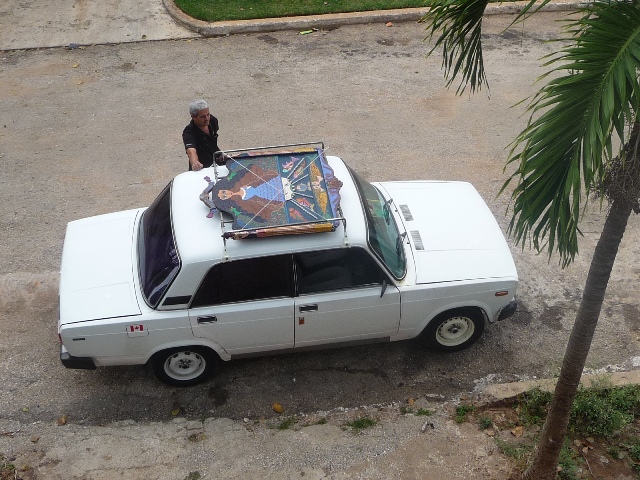
For those who have never been here, taking big luggage out of Cuba is an anomaly and just a little bit crazy, if you ask me. Even so, lowering the crate from the roof of the Lada felt good and approaching final. How misplaced our feelings can sometimes be.

Yemaya: pre-crate, en route to get export papers

“I know you from somewhere, but can’t place your face,” I remarked to a guy standing nearby as I angled Yemayá on to a luggage cart.

“I processed your export papers at the patrimony office. Let me call ahead to our transport specialist so he can smooth your way; he’s on the tarmac now.”

(ACHÉ #2)

As he made the call, I made my way into line, eliciting murmurs and stares as I wheeled my unwieldy luggage towards check-in.

“Are you exporting a TV?” a tourist entirely unclear on the Cuba concept asked.

I laughed. “No. TVs come in to Cuba, they don’t get taken out,” I said, before explaining the story behind the voyage of Yemayá.

As I checked in, the charter representative told me I was 60 pounds over my weight limit and the crate, while lovely, would not fit through the X-ray. Somehow I hadn’t accounted for these factors.

“How can we resolve this, mi amor?” (see note 3) I asked with a smile, taking the opportunity to explain the favor and duty I was doing and the duty I felt to transport the piece.

A $40 “tip” took care of the weight limit issue and the chief cargo officer was summoned to escort Yemayá to that area of the airport where there was an extra grande X-ray machine for oversized luggage. But there was just an hour until the flight and a truck couldn’t be located to get the piece over to cargo. Just then, the aforementioned transport specialist from the National Registry appeared at my side.

(ACHÉ #3)

They decided to go to Plan B.

Wielding the hammer I’d brought for the purpose, the crate was opened and inspected by the Registry’s transport specialist, the chief cargo officer, a customs agent and a couple other rubberneckers.

“My saint is also Yemayá,” someone said, their proclamation hanging in the tiny, crowded office as a final word of sorts.

Working together, we got her repacked right for the next leg of her trip.

“Now what?” I asked, looking at the clock and wondering if 35 minutes would be enough to complete this part of my mission.

“We’re done here. Now we wheel it on to the tarmac and put it on the plane.”

(ACHÉ #4).

As I bid my crew adieu with a hug and the customary right cheek kiss, I heard someone say: “now let’s see what happens in Miami.”

Stay tuned to learn the fate of Triunfo de Yemayá!

(For those wondering, aché means “«the force», not in the sense of violence, but as a vital energy which creates a multiplicity of process and determines everything from physical and moral integrity to luck.”)

Notes

1. In this I have some experience since I lived with an art handler/installer my last four years in the States and precisely how fine art should be transported and handled.

2. To export patrimony +/o art of a certain caliber from cuba requires easy to procure paperwork and 10 CUC; my experience at the Registro Nacional de Bienes Culturales in Vedado was one of the most efficient and friendly I’ve ever experienced here.

3. While compañero and compañera may be waning as preferred terms of address, mi amor never will.

8 Comments

Filed under Americans in cuba, bureacracy, Cuban customs, Cuban idiosyncracies, Cuban phrases, Expat life, Living Abroad, Relationships

Piropos Cubanos: Sí or No?

[tweetmeme source=”connergo” only_single=false]

Cubans are famous for many things: cigars, salsa, and rum jump to mind, with world class athletes not far behind. But that’s amateur hour; after a little more experience and exposure, outsiders (and all non-Cubans are considered so at some time, to some degree) will appreciate less commercial, but equally celebrated traits like Cubans’ sense of humor and solidarity and their art for artifice.

Those who walk the walk and talk the talk know there’s another especially Cuban art and craft – that of come-on lines, known in local lingo as piropos. Whispered your way as you walk by or shouted from a bustling corner, every pretty, average, and ‘butter face’ Cubana has received her share of flowers from the mouths of appreciative men.

If you cook like you walk, I’ll scrape the bottom of your pan,” (note 1) is probably the country’s most popular piropo and anyone with a little swing to their hips has heard it. And while the sentiment sets the imagination awhirl, not a few foreign women have complained to me about how this and other come-on lines tossed their way. In short, they find them offensive.

My friend Juan Carlos argued famously on this precise point with a US feminist poet of note while she was living in Cuba. At that time, she was (and probably still is) vehement in her position that piropos are an affront to women. She’s not alone: similar views were shared here when I mentioned the piropos I receive as I ride this city’s streets on my beloved new bike (see note 2).

To be clear, I’m not talking about groseros – rude, crude lines reinforcing a patriarchal power structure. These are something else entirely and should be rebuked as so. Nor am I referring to the ubiquitous tssssss, tssssss, tssssss that’s used to catch the attention of women countrywide (and which I’m terrified I’ll let slip while beckoning a New York City waitress resulting in bodily harm). No, what I’m concerned with here are those delightfully cunning lines which show appreciation for the female form; I, like my friend Juan Carlos, don’t see the problem.

By way of disclaimer: I was raised by a feminist (by nature, not indoctrination) and I pride myself on being a non-biased, all-inclusive kind of gal who doesn’t give a damn about the color of your skin, to what gender you ascribe, before which god you kneel, or who you choose to screw. Everyone is equal in my heart and mind (until they prove otherwise through moral/ethical digressions). But since so many foreign women have complained to me about piropos, I have to wonder: am I missing something?

And further: what of my impulse to toss out my own piropos to some delicious specimen – a mangón of such magnitude I can’t let him pass without voicing appreciation? Does that make me a failed feminist or a femachista – a term coined by my friend Rigo for those women who talk a good feminist game but reinforce the machismo that is so rampant and damaging here?

After ten years living and working in this wild, incomparable place, I think not. In fact, I’m increasingly convinced that the well-crafted come-on line does no harm. In essence, good piropos are funny, imaginative fare designed to make the recipient pause long enough to laugh; and laughter, along with a sharp mind, is the best aphrodisiac I’ve found – two characteristics which the best piropos embody. This struck me squarely the other day when a guy said to me: “your name must be Alice because looking at you sends me to Wonderland.” I laughed out loud and responded: “good one, brother!” And he laughed too.

I have to ask, then: two strangers laughing out loud at a line cleverly crafted. What’s so wrong with that?

Many foreigners don’t always get this. Furthermore, their attempts at piropos usually pale in comparison. To wit, my old friend Mountain was infamous for cooing “oh to be a bicycle seat” to any pretty girl who rode by.

But to every rule, there’s an exception, like the handsome Swiss stranger who leaned in to tell me: “you must be from heaven, because you have the scapula of an angel.”

Personally, I say ¡! to piropos cubanos.

Notes

1. “Si cocinas como caminas, me comiera hasta la raspa’ sounds a lot better in Spanish.

2. Curiously, the quantity and quality of piropos I get while on two wheels differ considerably from those I get on two feet.

49 Comments

Filed under Americans in cuba, Cuban customs, Cuban idiosyncracies, Cuban phrases, Expat life, Living Abroad, Relationships