Tag Archives: havana

Let Us Pray

[tweetmeme source=”connergo” only_single=false] I ventured once again outside my comfort zone yesterday here in Havana: I went to mass. It was as oppressive (and let’s be frank – hypocritical) as I remember from Jesuit high school (see note 1), although this one was presided over by the big Catholic kahuna himself, Pope Benedict XVI. It was also mercifully short.

While I’m sure you’re oversaturated with ‘The Pope in Cuba’ news up your way, one of the indelible lessons I’ve learned in my 10 years of island residency is that the picture you get of here from there – especially when refracted through the lense of reporters sent to cover such an event – does not accurately reflect what we’re experiencing on the ground. It’s not only that every media outlet from The Militant to FoxNews has an agenda. The view is skewed also because Cuba newbies rarely grasp the complexities of our context (see note 2), nor the attendant history influencing those complexities. You don’t get this perspective unless you’ve been around and stick around and only if you speak Spanish – even a translator is no guarantee (see note 3).

So let me tell you about the mass I attended yesterday under a blazing sun, delivered by a frog-like man in a funny hat.

What folks are saying: One of the pervasive myths about Cubans is that they’re afraid to speak their minds or offer opinions, and that self-censorship is rampant. While it’s undeniable that people keep their heads far below the parapet in the workplace and have the tendency to adjust responses to what they think people want to hear, I’ve always found Cubans to be fiercely opinionated – once you get to know them. Or more to the point: once they get to know you.

The Pope’s visit confirmed this impression.

“I’m so sick of this Pope.”

“Wasn’t he a Fascist?”

“I’ll come by your house once The Almighty Pope leaves and things calm down.”

“Son of a b@&*h! The Pope took our Internet.” (see note 4)

“Faith, hope, and peace: that’s what it’s all about.”

Rocking our rum-pork-party holy trinity: Another element piquing my interest was how Cubans approached this whole Papal visit. Essentially, yesterday felt much like hurricane preparation and landfall: people laid in stores and stayed home watching events unfold on TV, with some chicharrones and a bottle of rum close at hand. Except – and this was a rude awakening for several of my unprepared friends – authorities instituted a booze ban the evening before, which lasted until the Pope Mobile and its cargo were safely at the airport. So those who didn’t lay in the ron were homebound with pork, friends, and family, but no curda. In my decade here, I only recall a few alcohol-free events: election days are always dry and if I’m not mistaken, they did the same during the Non-Aligned Summit here in 2006. Let me tell you: no rum makes Havana kinda grumpy.

Revenue coup: The cleverness of Cuba never ceases to amaze me and yesterday didn’t disappoint once I saw the huge numbers of tourists in the Plaza for mass. My first clue was the distinguished older gentleman of means dressed in khakis, a pink Oxford, and penny loafers, with not a gin and tonic in sight; clearly not one of us. I started looking closely at the crowd and their clothes and distinguishing different accents. Nicaragua, Argentina, Chile, Panama, the DR, USA, PR, Mexico, Venezuela – flags from all across Latin America snapped in the wind whipping across the Plaza and I realized that aside from the pride and so-called “soft power” the Papal visit signified, it also represented a hugely-needed and greatly-appreciated influx of tourist cash. There wasn’t a hotel room to be found; paladares overflowed; extra charter flights were added from Florida. And all Habaneros (save for cops and docs), were given a paid day off. This is the type of devotion we could use more of and we thank you for supporting the cause.

The US matters less: After Juan Pablo II’s visit in 1998, Bill Clinton’s White House issued a press release announcing new policies ostensibly resulting from this historic trip. Most importantly, the release approved people-to-people visits in order to foment “regime change” and “promote a peaceful transition to democracy” – concepts mentioned no fewer than six times in the short document. Blatantly threatening the national sovereignty of an independent and peaceful country thusly is absurd enough, but that Obama maintains precisely the same policies and parrots exactly the same rhetoric 14 years later – that’s just loco. While the US is embarrassingly and unjustly static in its policy, the world and importantly, Cuba has changed, is changing still. Raúl is a different bird from his brother and that manifests itself in many ways, including less of the ping pong policy-making that based decisions on what the bully to the North was doing. That’s how it looks publically anyway.
holy jama!


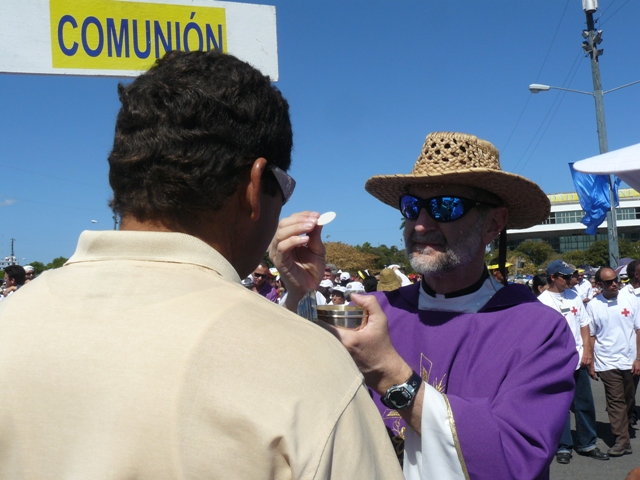
As anti-climactic as the Immaculate Conception: I’m sure you’ve already divined that the religious importance of having his Holiness here held no interest for me and in this I’m not alone: I’ve never seen an event so thinly attended in the iconic Plaza de la Revolución in my 10 years here. In fact, we strolled into the central area just a few moments before the 9:30 mass kicked off and were going against the current of people streaming away from the square. “I came and took the pictures I wanted; I’m going home,” a friend I ran into said. The curiosity seekers and thin crowds were surprising but make sense: as a whole, Cubans just aren’t that church-y. Religious and faith-bound, yes, but that’s different from kneeling before a man in a dress and goofy hat while he proselytizes a doctrine peppered with sins bound to doom your mortal soul. Cubans just aren’t down with that, but they do love a spectacle: one of my favorite moments was when a women who wanted to taste the host tried to fake her way through the motions while the priest held the wafer aloft. When he caught on, he patted her on the head and returned the host to his jaba. Though the Pope himself failed to inspire, Cubans never do.

Notes

1. This, Fidel and I have in common, except those same Jesuits expelled me my junior year (another story entirely!)

2. A simple example: journalists arrive here and compose some flaccid or purply prose (even leading with it occasionally, dios mío) about all the old cars rumbling about. For those of us with continuity here, that’s ‘dog bites man.’ The more compelling, ‘man bites dog’ story is the unbelievable amount of new cars on the road and what that means for traffic, transport options, pollution, etc.

3. The press conference by Foreign Minister Bruno Rodriguez upon the Pope’s arrival is case in point: his response to an English-speaking reporter about “freedom of consciousness” was elegant and sweeping in the original Spanish, mangled and less inspired in English.

4. Cuba has limited bandwidth due to the US embargo-cum-blockade which prohibits the island from connecting to underwater cables running nearby. Instead, the connection for the entire island is provided by a sole, slow Italian satellite. This bandwidth was prioritized for visiting press so they could report live from Cuba. It’s back now, thankfully, obviously.
19 Comments

Filed under Americans in cuba, Cuban customs, Cuban idiosyncracies, Cuban Revolution, Expat life, Fidel Castro, Living Abroad, Raul Castro, Travel to Cuba

Black Market a lo Cubano

[tweetmeme source=”connergo” only_single=false]

If you follow my blog or any similarly semi-intelligent Cuba-related news outlet, you know that things are fast a-changin’ on this side of the Straits. For those out of the loop: in April, 2011, a series of unprecedented policies – which amount to a new (and not without substantial risk) economic paradigm for the country – were approved at the Sixth Communist Party Congress (see note 1).

Though some of my Cuban friends gripe that change isn’t happening fast enough, I’ve been surprised by how many new policies have come to pass as promised: private sales of homes and cars, relaxed regulations for paladares and casas particulares, and the approval of nearly 200 pursuits and services for private enterprise. Other movement towards so-called normalcy is slower and more complicated still: unifying the two official currencies, salary increases, and phasing out the permiso de salida (see note 2) among them.

What these changes will mean for the most vulnerable remains to be seen and I have not a few friends here tormented by uncertainty, anxiety, and a generalized malaise in the face of it all. Uppermost in their hearts and minds: what might these changes mean for the political, social, and ethical tenor of the revolutionary project so many have fought so long to strengthen and so hard to save?

Some days it feels like it’s all going kablooey – that the Cuba we’ve known is reserved now for dewy-eyed nostalgics fingering grainy photos of the 10 million ton harvest. And this is heart breaking to people who have survived so much drama and tragedy: the rending of families in the 60s and 70s, (plus the Bay of Pigs and Missile Crisis), followed by the Mariel boat lift and collapse of the Eastern Bloc in the 80s which led to the torturous Special Period of the 90s. Then there was Fidel passing the baton to hermanito Raúl which I guarantee looks different from your off-island perspective than from ours here in Havana. And let’s not forget the 50 years of sabotage (both bald-faced and covert) by the behemoth to the north, to say nothing of terrorist attacks by US-sheltered individuals and groups.

So before it all goes kaboom (a day late and a dollar short, perhaps?), I’m determined to document the Cuba I’ve known for the past 10 years and the attendant change as accurately, responsibly, and comprehensively as possible. Today, I turn to an examination of the black market.

Jeans and stilettos, perfume and gas. Cigars of course, but also ice cream (Coppelia, the country’s best), and iMacs, milk and meat: it’s all available on Havana’s black market – if you have the hookup or happen upon someone “repurposing” Cuban Clorox or café. In the interest of full disclosure, I have very little direct experience with the black market (or parallel market as Cubans call it) despite a decade in residence; I have no car, so no need for gas, I buy my meat off the cement, fly-spotted counters at my local carnicería, and would love a Mac but don’t earn enough to join that club. Besides, all that shit is stolen (see note 3) and I’ve had enough stuff vicked in my life to know that if you ain’t part of the stolen goods solution, you’re definitely part of the problem.

But then the moral high ground begins to shift (Cuba is funny like that).

—–

Every once in a while, a kind-faced granny shows up at my door selling either eggs (see note 4) or powdered milk – a key ingredient in the Cuban kitchen. Someone on the block must have told her an extranjera lives in Apt 5 because she came straight to my door that first time, knocked hard and called me La Rusa (“The Russian” – old stereotypes die hard). She’s a bit gnarled and I can tell from the edge in her voice and the fade of her blouse that times are tough for the milk-peddling abuelita. Unfortunately, when I need eggs, she has milk; when I want milk, she has eggs. So even though I was keen to help her out, our supply and demand algorithm never quite jived. Last week, her friendly face appeared anew at my door.

“I have eggs,” she said.

“So do I. How about milk?” I asked.

She didn’t have any that day but promised to “resolve” some; I promised to buy it once she did.

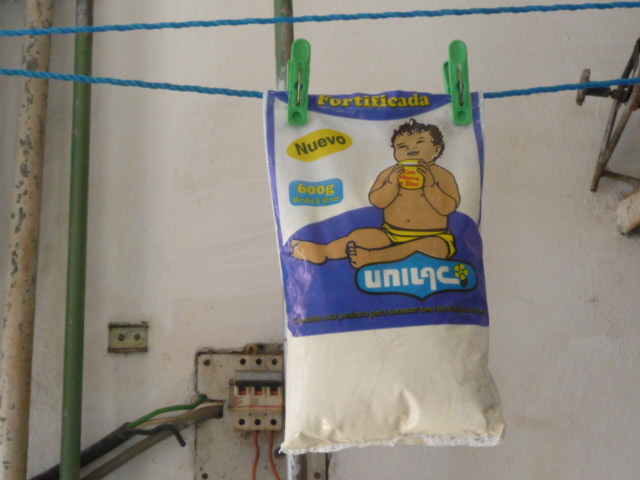
Sitting in my office yesterday whittling a Tweet down to 140 characters instead of working, I once again heard her hearty knock at my door. Smiling big, she told me she had three sacks of milk for sale at $2 a pop (a 50 cent savings over the official store price). I agreed to take one, glad I was finally getting the chance to help out granny. Until she pulled the sachet from her frayed knapsack: I, we both, were taking milk from the mouths of Cuban babes. What my elderly friend was selling was the milk the government guarantees to every child under 7 and I’d just purchased 600 grams of it. I knew that milk wasn’t going to be too tasty. 

—–

This transaction got me to thinking about where all this stolen stuff comes from and put me in mind of my friend Alberto. He has an old Lada on which his livelihood depends. Driving around recently, I noticed a balón de gas (the 20-lb tanks used here for home cooking) wedged behind his seat. Seems Alberto had converted his gas-powered car into a propane-propelled one.

This was a smart investment on his part: although the conversion kit cost $350 and had to be imported from abroad, Alberto fills that tank – which takes him 120 km or so – on the black market for just $5. By way of comparison, that same $5 would buy 15 liters of real gas on the black market; just over four at the pump. I’m glad Alberto has figured a way to enlarge his margins, but wonder about the families who show up to fill their kitchen tanks to be told “no hay” (there isn’t any).

This same pattern repeats itself with steaks and blocks of Gouda, stamps for official paperwork (I was surprised to be asked to produce receipts for my bank-bought stamps on my last visit to immigration) and cooking oil. And while I can appreciate the need for every last Cuban having to do something (or something extra-legal) to make ends meet, the more I parse the situation, the more unsettling it becomes.

And it makes me realize that a certain amount of that aforementioned moral ground is shifting below my feet. At these times I’m forced to ask myself: is this is a part of Cuban culture I wish to participate in? Unluckily for my milk-thieving granny, it is not. But I’m sure she’ll find other clients: as long as there are commodities like oil, meat, and milk to “redirect,” and resell for pure profit, folks will do it.

 As I said: old habits die hard.

 Notes

1. These political powwows are held every so often (the last was in 1997) or mejor dicho: whenever sufficient excrement threatens to make contact with the cooling element, if you know what I mean.

2. All of these issues came to the fore in nationwide public referendum-type debates held in late 2010. The permiso de salida is an exit permit which is mandatory for overseas travel by Cubans and residents. It earns the country revenue, but is also a barrier to travel – an issue that has to be reconciled somehow and soon.

 3. Except the goods in the black market Mac store. None of this is stolen, but rather all new, in-the-box gear with warranty and all, purchased in Miami and spirited into the country.

 4. Eggs aren’t usually stolen either, but rather the product of home-raised hens.

25 Comments

Filed under Americans in cuba, Cuban customs, Cuban economy, Cuban idiosyncracies, Cuban phrases, Cuban Revolution, Expat life, Fidel Castro, Living Abroad, Raul Castro, Travel to Cuba

My New Cuban Love Affair

[tweetmeme source=”connergo” only_single=false]So it’s International Women’s Day (see note 1) and a full moon – two events which occasion a certain randiness and frisk in these parts. And I’m feeling particularly frisky these days thanks to my new love affair with a certain Francis.

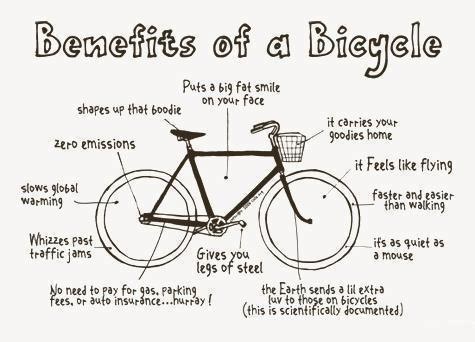
Francis is my new bike.

My trusty steed…

Before I wax poetic on the new steed between my legs, let me take this opportunity to digress a bit with a few words about the personification of one’s transport.

I was once in love with a guy who drove a truck – lived with him for over four years actually – and it fell to this unlucky fella to teach me to drive (see note 2). During my schooling, he also taught me the importance of naming your vehicle. Your car (or truck or bike) has a personality, he explained. You need to communicate with one another and work together. A name facilitates this inorganic synergy between man, movement, and machine; completes the anthropomorphic picture so to speak. I took his point. The one and only car I owned (co-owned and only for three months), was a beat up Audi named Otto. My mom’s Subaru is Harriet the Chariot. My sister’s 1982 Peugeot is Bruce. Over the years, I’ve had the pleasure of knowing Rocinante, Mugsy, and Hoss – great cars all.

When I got my new bike, I knew I had to have a name.

But after a month zipping across Puente Almendares, pedallling the pristine macadam bordering Parque Monte Barreto, and bracing my ass against potholes and train tracks, I still didn’t have a name. Clearly it was time for outside counsel. I put it to my friend Lucia, she of the Bambi filets

Her first question: male or female?

Ever-practical, Lucia cut to the obvious question I’d failed to ask. I had been so focused on a name that would translate equally well in English and Spanish, that I’d completely neglected to consider gender. Standing there in her bedroom it occurred to me that I didn’t want only linguistic inclusivity, choosing a name that would make sense in both my languages, I also wanted gender inclusivity.

“How about something gender neutral?” I wondered aloud.

“There aren’t many gender-neutral names!” Lucia’s 10-year old wunderkind piped up. After a few beats she asked: “How about Michel(le)?”

“Good one!” I said, knowing that girls of a certain age (even hyper talented Cuban ones) need encouragement and positive reinforcement. “But this bike doesn’t seem like a Michel(le).”

Wracking my brain for neutral names I’d come across in Cuba, I asked: “How about Francis?”

And a bike was born.

That was a long digression, I know, but I’m taking the Vin Scelsa defense here (see note 3).

_____

 I first cut my two-wheeled teeth in Manhattan (site of my one and only drunk “driving” accident, when I went down hard in a greasy Chinatown alley, erasing a patch of freckles the size of a one peso coin in the process), then in San Francisco, and now in Havana.

If you’ve never had the opportunity to glide along a deserted big city street under a moon so full it makes even me want to lactate, there’s something of the magical hidden from you. Every city has a side that only night owls see, of course – anyone who has walked home from a bar or ballgame in the wee hours has experienced this frisson with a city’s secret side. It’s exciting and slightly illicit somehow. With the wind in your face and the caresses of night billowing your hair and clothes about the faster you pump the pedals only heightens the sensation. Whether I’m coasting down Paseo or along Avenida 31, dodging potholes in Playa, or startling stray cats from their dumpster diving, on my bike I feel free in a way approximated only by orgasm. In short, city cycling unshackles something in the spirit.

Gliding through Havana’s landscape on a bike makes me look at things differently from when I’m walking (or driving, it goes without saying). I’m higher up for one. I see over hedges and into windows. I discover shortcuts and side streets I didn’t know existed. I note every parked car (my greatest – and most realistic fear – cycling in Havana is that I’ll get “doored”) and each driveway. In my experience, riding in a city requires a level of alertness not necessary while walking and opportunities for observation not possible while driving, which makes me keenly aware and appreciative of my surroundings while mounted.

I carefully consider other cyclists now and their habits, from the old dudes who poke along, pants rolled to the knee, to the shirtless young studs who ride as confidently as any Midtown bike messenger, cigarette dangling from their lips. The deplorable state of Havana’s street lighting is hammered home on these late night jaunts, as is the real possibility of encountering a drunk driver. And is there any city that smells like this one? Pedalling along, I get glancing whiffs of savory sea mixed with the off-putting tang of rotting garbage and wet earth if it has rained, dried leaves if it hasn’t.

By day, Francis takes me wherever I need and want to go: to check my PO box across town; to immigration; the grocery store; the theater; and my sister-in-law’s house. Errands that used to take an entire morning using public transportation are completed in an hour or two with Francis. Friends I put off visiting because they live far away now have me landing on their doorstep any day, any time. This in itself is liberating, not only for the time and money I save, but also for how refreshed I feel when I arrive – tired, sure, but refreshed like after a long swim or hot bath.

And oh, how the boys seem to like a girl on a bike. Perched on Francis, riding along 3ra Avenida or the Malecón, I bask in all the piropos trailing me as I pedal by: ‘¡Mami, llévame!’, ‘Que rica estás, rubia’, ‘¡Ay! Si yo fuera tu silla, mi cielo’ make me smile. And the best part is that I can mutually admire these men of all type and stripe and then be safely, happily on my way.

This post is dedicated to Chris and Alexis M, and Julia F who made my partnership with Francis possible; and to Cornelius S who introduced me to the joys of cycling the big city.  

Notes

1. Though largely ignored or unknown in the United States, International Women’s Day, observed each March 8th, is a huge deal in Cuba when every guy shows appreciation for the women in his life with flowers and shouts of ‘¡Felicidades!’ Even strangers proffer the celebratory phrase and many restaurants gift a single gladiola to all female patrons on March 8th. It’s one of the silver linings of machismo, I guess. 

2. I’m fond of making rules for others to live by – have been ever since I declared several decades ago that white people should not have dreadlocks. More recently, I’ve decided that men – I don’t care if it’s your dad, brother or lover – should not teach women to drive. It just adds to the universe’s general conflict and woe.

3. Vin Scelsa has been making what’s known as freeform radio for some 40 years now. His show Idiot’s Delight helped shape the paradigm which holds that the DJ can play and importantly, talk about, whatever the hell he wants. As you might guess, Vin talks a lot on his show, often about stuff not at all music-related. And as he’s fond of pointing out: if you don’t like it, change the station. Precisely my philosophy at Here is Havana.

27 Comments

Filed under Americans in cuba, Cuban phrases, environment, Living Abroad, off-the-beaten track, Relationships, Travel to Cuba

For: My 20-Something Friends, Love: Your 40-Something Tía

[tweetmeme source=”connergo” only_single=false] Sometimes I bore myself with all this Cuba talk and expat navel gazing; granted, there’s a lot to say on the subject (see note 1), so I’m not beating a dead horse per se, but it does make me feel like a wordsmith one trick pony. So very occasionally (e.g. when I was in Haiti and occupied Wall Street), I muse on things which have nothing to do with the beguiling isle.

But this post is a complete departure for me since in addition to being not at all Cuba-related, it’s also the first time I’m writing for a particular readership (see note 2). Inspired by my cohort of young friends on both sides of the Straits (who are remarkably similar in their youthful optimism and doubt, impatience and drive), I wanted to share a bit of wisdom to help ‘abrir caminos’ as we say here (see note 3).

I’m guessing most Here is Havana readers are – like me – “older,” but surely you have some young friends and family who might benefit from my blather. Or perhaps you’ve hit your fourth or fifth decade and have pondered the passage of time and its relation to the parable of life in ways discussed below. Regardless, I’m hoping said blather will resonate, no matter your biological age.

Party hard while you can – Partying until dawn at 40 is an entirely different undertaking from that at 20-something. At your age, you suck it up after a big night out and snag a couple of hours of sleep before going to class or work or both. But when you crawl in at daybreak at my age, you’re looking at a 24 hour recovery period. In short, the day after is totally lost, a write-off, while you drag ass, rest, maybe have a little hair of the dog, followed by more resting. My advice? Party hard while you can because that in itself gets harder as you age.

Shape up now – Your mind, depth of experience, and perspective grow as you grow up (if not, you’re doing something wrong), but your body? Hell in a handbasket, my friends, and you’ll eventually reach the point of sagging muscles and tone loss, slackening skin accompanied by its evil twin wrinkles, and gravity working its black magic on your boobs, balls, and god knows what all. My advice? Eat healthy, exercise, and don’t smoke or drink to best hedge your bets (says the woman suggesting you party hard while you can). I largely ignored this advice at your age, so I’m not throwing stones here, but rather signposting the road of life for my young friends. (I should admit here that I’m also a wee bit nostalgic for the taut, hard body I had at 20.) My advice? Enjoy it while you’ve got it, but know that maintenance is essential if you want to remain fit and bed-able at 40. This is particularly true for young XX readers, since women are saddled with an unjust and inequitable standard of youth and beauty as compared to men.

Get jiggy now– You might not think much of it at the moment, but once you’ve passed 40 or 50 springs on this earth, Viagra will become tantamount. For males, it’s a modern miracle. For us women, it sucks 16 ways from Tuesday. First, there’s straight up anger. They get Viagra and we get menopause?! Where’s my Viagra coño?! Second, those little miracle pills trick men into thinking they’re unjustifiably hot, omnipotent, and virile (some are dupes in this sense regardless, but that’s another story). On the upside, we ladies usually hit our sexual stride much later than guys – i.e. when most age-appropriate males can’t keep up without the help of Big Pharma. My advice? Enjoy yourself (safely!) now and entertain the cougar cruisers when your time comes.  

Some things don’t fix themselves – In addition to penile erectile dysfunction (see above!), other problems in life like clogged drains, yeast infections, back taxes, and bad tattoos (see below!) don’t get better on their own. This can also be said of HIV infection and I feel a little sorry for my 20-something friends who have only lived in the post-HIV world. My advice? Embrace latex and call a professional – whether it’s a sexual health expert, plumber, gynecoloigist, accountant, or laser wizard – when things go awry.    

Resist brand tyranny – Whether it’s Apple or Converse, Mercedes or Harvard, I urge you to resist marketing mania and associated pressure to buy and flaunt labels. Hilfiger or Louboutin, Ed Hardy or Kate Spade: no matter the brand, wearing it will not make you smarter, better looking, or more kind. True, I’m a fashion disaster, but in these matters, I defer to my favorite billionaire who observed: why shell out $10,000 for a Rolex when my $15 Timex keeps the hour just as well? My advice? Think twice before buying into the brand.

Love stinks – Sorry to break it to you, but even at my age you probably won’t have the love thing figured out. Sure, you may be with someone, engaged, married, or in love even, but that doesn’t mean it’s going to be easy. On the contrary, love makes everything more complex and in that complexity lies the problem. My advice? Tellingly, I have none; please let me know if you’ve had any revelations on the relationship front.

Think before you ink – I’m speaking from experience here guys: the tattoo that seems daring, romantic, or artistic at 20 can become a real problem at my age. Trust me – the choice between cover-up and removal isn’t pretty (or cheap) no matter how you cut it. My advice? Think long and hard about the statement you want to make and if it needs to be permanently emblazoned on your body and where.  

Older doesn’t necessarily mean smarter – Which is my way of saying: you don’t always have to listen to people older than you. Authority figures sometimes get off on that alone – i.e. the authority of age and position – and that can be dangerous for reasons too convoluted to go into here. My advice? Question authority, as much for your own benefit as for those wielding that authority because once they go unquestioned, they can do anything. And we definitely don’t want that.

Take the long view – I have a young friend who lost her zest for college two-thirds of the way through and she’s thinking about dropping/copping out. I say copping out because the lion’s share of the work is done and she just needs to suck it up a little longer to successfully attain her degree. Three semesters seems like forever to her at 21, but that ain’t nothing in the scheme of things, baby! I beg those of you close to completing school, a project, or a dream to persevere even though it feels like it will be forever until you reach your goal. My advice? You can do it – just go easy and take it slow when your patience runs thin.  

Keep your finger on the pulse – I’ve learned in the two decades since I was in your shoes that it’s important to befriend, mentor, and seek out and the opinion of, people younger than you. My advice? Whether you’re 20, my age, or double that and your next step is death, nurture relationships with people younger than you to keep your horizons expanding.

Live your dreams – As so many have said, life isn’t a dress rehearsal; it’s the only shot you’ve got. My advice? Make the most of it.

This post was motivated by the friendship of many 20-somethings in Cuba and beyond, including Caitlin, Benji, Joelito, Jenny, and Pablo. I dedicate it to you!

Notes

1. Which is why I’m writing a book (some would call it a memoir, a word that makes me cringe for several reasons) on the topic.

2. If you’ve landed here because you’re interested in Cuba-specific reading, I suggest trolling past posts and checking back in a few weeks – I’m preparing something juicy on the Pope.

3. For the curious: ever since I was 16, I knew I didn’t want to have kids and at 42, I remain exhileratingly child-free (and I’m not alone: check out this group Green Inclinations, No Kids or GINKs). But I adore being an aunt – tía in Spanish, which is a double entendre in Cuban since it loosely means ‘a woman of a certain age no longer considered sexy or eligible for seduction.’ I remember the first time a young Cuban buck called me tía – it smarted, yes it did!

43 Comments

Filed under Americans in cuba, Here is Haiti, Relationships, Writerly stuff

The Cuban Food Question

[tweetmeme source=”connergo” only_single=false]Not questionable Cuban food, mind you, but questions about Cuban food which continue to dog me, even after 10 years here, like: why are there no croutons? Or guacamole? And why don’t Cubans cook with coconut (Baracoa excepted)? Or bacon? I mean, it’s not as if there aren’t enough cocos and pigs to go around. To be fair, bacon is making inroads (see note 1) and I’ve seen a couple of coconut dishes here in Havana, but a tasty use for stale bread and old avocados?! You’d think the frugal out of necessity and habit Cubans, people who always use a tea bag twice and for whom disposable diaper is an oxymoron would be all over these past expiration date preparations. But no.

As devoted readers of this blog well know, I’m preoccupied with food, maybe disproportionately so, but that’s what happens when your formative years are spent in a food insecure home (see note 2). Whether that’s the reason my mom and siblings are such avid, fantastic cooks, I can’t say, but it rubbed off on me. This devotion to inventive, well prepared food coupled with the hundreds of restaurants, bistros, cafés, buffets, and drive-ins (Hawaiian kine) I’ve had to review for guidebooks makes me an expert of sorts (the bad, overly critical kind perhaps, but hey, someone has to steer you clear of shitty food in your travels).

Not surprisingly, I’m both excited and wary about the explosion of new restaurants in Havana. Excited because the quality and diversity of menus are improving – even in state restaurants which seem to be upping their game in the face of stiffer competition. Wary because I know how horrifyingly crappy Cuban food can be and the tricks used to try and cover the fact. At the same time, I’m concerned for my fellow travelers since everyone is writing about these new eateries, including amateurs and hacks who are dangerously unqualified – either due to a lack of regard for good food in general or ignorance of Cuban cooking and context specifically. These poseurs shall remain nameless, (that would be tacky), but their “work” on the topic has motivated me to help out with some observations about eating in my fair city.

All the examples below are from new paladares which are currently or soon will be listed in my app Havana Good Time.

An Indian restaurant sans raita – So Cuba has its first “Indian” restaurant (note quotation marks people – punctuation has a function!). The space is quite lovely and the staff is attentive, but the food? Like the guy I lost my virginity to, being the first is not enough to win me over. I know, I know, I should be thankful that we even have an “Indian” restaurant here (see note 3), but you know what? I cook better Indian food and mine is accompanied by the requisite raita. For those not familiar with Indian cuisine, this traditional sauce is used to cut the spiciness of dishes while adding a dynamic flavor layer to the palate. And before you jump down my throat about the unavailability of certain ingredients here in Cuba: raita is yogurt, cucumbers, and garlic – three items that rarely go missing here in Havana.

“Vegetarian” spring rolls – It’s really too bad that the new Vedado paladar serving this toothsome finger food doesn’t heed punctuation as religiously as we do: when I cut into one of these rolls recently, out spilled bok choy, scallions, cabbage, carrots and…ham. When I asked the waitress (nicely, my shoulders unburdened of any NYC or foodie chip) what was in these rolls, she confirmed the presence of the ever-present pork. I pointed out that this could result in some serious problems – not only with vegetarians (see note 4), but also with Jews and Muslims too, who take as much solace as herbivores to see vegetarian selections on the typically pork-laden Cuban menu. When I asked why they call them “vegetarian,” she said with a straight face: ‘because there are lots of vegetables in there.’ 

Deep fried olives are considered nouvelle cuisine – I don’t know what was more shocking: seeing something besides Gouda cubes and croquettes as hors d’oeuvres or the realization that they had actually deep fried olives to serve to a group of foreign VIPs. While far from heart healthy, I have to admit these were disconcertingly tasty, which can be said for almost anything except the deep fried cucumbers I had last week. Both of these examples, by the way, hail from Habana Vieja, part of Eusebio Leal’s wickedly clever fiefdom (which is usually head and shoulders above regular state enterprises). Alas, sophistication is not an overly common Cuban trait, as evidenced by…

Oil & vinegar, the one and only dressing – Sure, you might get a nice honey Dijon in someone’s home, but in a high end paladar? Not likely, where the same tired oil-vinegar- salt trio prevails (lucky you if that exotic spice we call black pepper is available!).  A few places are starting to provide balsamic and olive oil, considering this the height of haute, showing how far we are from raspberry vinaigrettes or tahini-lemon dressing. Granted, raspberry vinegar and sesame paste are in short supply here, but honey, Dijon, blue cheese, anchovies, capers, soy sauce and many other ingredients for inventive dressings are available sin problema.  But this lack of sophistication is even more blatant in the place with…

Busty waitresses in low-cut blouses and Daisy Dukes – I don’t care how hot you are (or think you are or your manager thinks you are): I don’t want my steak served with more flesh in my face than Copacabana sees in summertime. In a word: inappropriate! Especially at this expensive high-end restaurant featured recently in several glossy magazines (which made a glaring omission of the “uniforms;” unsurprisingly, all the articles were written by men). Havana Hooters anyone?

The $4 fruit shake – Argue with me all you want (welcome to the club!), but this is simply wrong in our context and distorts the local economy like the thousands of bright-eyed NGO workers who rush into post-disaster Haiti or Indonesia and pay triple the going price for bananas, potable water, taxis, whatever. To all the new places offering the four dollar shakes and similar: consider yourself boycotted on GPs.

Musing about all this leads me to believe the absence of croutons, guacamole, and coconut-based dishes is due to lack of knowledge, experience, creativity, motivation, or a combination thereof.

What do you think readers? Any surprising omissions in your Cuban culinary travels?

Notes

1. I predict crispy bacon (not the flaccid, fatty crap at hotel buffet troughs) will explode in popularity as US visitors continue to pour in and restaurateurs realize the egg/bacon/toast triumvirate is as American as inequity.

2. Mom was a single mother of four which made her, out of necessity and habit, a creative, but stretched cook (and very Cuba in her way which is a big factor as to why I’ve been able to survive/thrive in the peculiar conditions on this side of the Straits. Epigenetics might have something to do with it too). We all remember with a shudder living on oatmeal for two weeks solid and the fight over who got more noodles. This fracas is still dragged out to this day – but in the best, sibling rivalry type of way now that our oatmeal and noodle days are behind us.

3. In the interest of full disclosure: everyone I’ve talked to who has eaten there – visitor and Cuban alike – was very impressed with the place which means one of two things: my standards are too high or theirs are too low.

4. I have seen a strict vegetarian take a bite into an egg roll he was told was 100% veggies and the resulting fisticuffs – never underestimate the strength and rage of a pissed off vegetarian!

41 Comments

Filed under cuban cooking, Cuban economy, Cuban idiosyncracies, Travel to Cuba

How to Cope Like A Cuban

[tweetmeme source=”connergo” only_single=false]I’ve got a friend – I’ll call her Lucia. Life has been a bitch for Lucia in that special Cuban kind of way with family torn asunder by bi-lateralpolar politics; dramatic affairs of the heart and all the ardor and betrayal that implies; and the exhaustion inherent in raising three kids – the oldest two during those hard, indelible times known as the Periodo Especial, when stomachs growled and cramped with hunger and entire days were spent in blackout. The Special Period was also when mobs of people cast their fate to the wind, water, and sharks on slap-dash rafts with a 50/50 chance of making it across the Straits.

Many of those poor souls failed in their attempt to escape, dying outright en route or otherwise kept from stumbling into the open arms of Uncle Sam (see note 1). With a forced smile exemplifying the Cuban dicho ‘mal tiempo, buena cara,’ Lucia waved goodbye to friends and family, colleagues and acquaintances as they emigrated north. Due to circumstances financial and otherwise, many of Lucia’s people – including her only sister and two childhood friends – can’t return to visit Cuba. Like so many people I know, Lucia dreams of sharing a Cristal wet with sweat in the honeyed Havana light with her loved ones.

Paddling away on a raft or zipping off in a lancha (regular weekly departures for $10,000 a head) is the most dramatic and dangerous means of escape, but there are others: marrying a foreigner is perennially popular, as is the slower (but somehow less tedious) application for the bombo (see note 2); securing a Spanish passport if your family descends from those parts; or quedándose on a trip abroad. That is: going overseas for work or as a tourist (yes, some Cubans do travel for shopping pleasure) and neglecting to get on the plane back. To give you an idea of how profoundly the emigration question touches Cubans, consider ‘La Visa,’ the latest schoolyard game whereby a ball is thrown in the air and a country shouted out – Yuma! Mexico! España! The kid who catches the ball ‘gets’ the corresponding visa.

But contrary to what the world has been led to believe, there are more Cubans who don’t want to leave than do. Like Lucia. Like my husband and his family. Like many of my co-workers. But just because they aren’t scheming their great escape doesn’t mean they don’t feel trapped now and again. Hemmed in by water, but also bureaucracy, Third World economics, politics and other factors quite beyond one’s control – who wouldn’t be? It’s trying at times and requires figurative escapes – coping mechanisms to mollify the madness and loosen the psychological pretzel island living engenders.

In no particular order:

Sex, drugs, and rock ‘n roll: The Cuban penchant (and talent) for sex is legendary and sexual freedom in the form of multiple partners and the pursuit and conquest of same is part and parcel of our daily landscape. Not only is hooking up freeing in the personal sovereignty sense in that it affirms (however hollowly), one’s individual choice and control, but it’s also free entertainment. The flirting and dancing and piropos (pick up lines and compliments) and foreplay help keep boredom (however temporarily) at bay and serve as an escape from all those factors beyond our control.

Drugs – illicit or not – serve the same purpose and despite Granma’s assertion that drogas aren’t a health problem here, 10 years of living in Havana paints a different picture. I know more than a handful of hardcore drunks for example, and prescription pills are in such high demand family doctors have been trained how to handle patients angling for scripts. Marijuana and cocaine can be had at no small risk and price (see note 3) and I’ve heard about Cuban acid trips and X adventures. Rock ‘n roll (coupled with rolls in the hay) is my personal drug of choice and in this, I’m largely up shit’s creek here since Cuba has crappy rock, though regular gigs by accomplished cover bands like Los Kents provide certain succor.

The Novela: Soap operas are addicting, which you well know if you’ve spent any amount of time in Cuba, where ‘round about nine o’clock the city quietly retreats inside to catch the next installment. Brazilian, Argentine, Cuban – it doesn’t matter the origin, as long as the cast is beautiful, the food abundant and the tragedia delicious. These fantasy worlds provide needed escape for islanders of all stripes, from housewives to priests, cowboys to convicts. On December 31st, a hallowed night spent with family here, the clan licked pork fat from their fingers and waited to pop the cider that stands in for champagne here when all the women mysteriously melted away. ‘La novela,’ someone said when I asked after them. Even Fidel has interrupted one of his televised speeches to assure viewers he wouldn’t run over into the soap opera. If you think I’m kidding about soaps as serious escape, consider that two TV households aren’t uncommon here: one for those who want to watch the novela, another for watching pelota. Homes with just one set become divided and bicker-ridden when the soaps and baseball are simulcast.

DVDs: Even before the explosion of private entrepreneurs selling pirated DVDs descended upon us, Cubans habitually rented and copied movies (or entire seasons of their favorite soap), on VHS and now on DVD and in digital formats. Last week as I looked to buy a 5 movie combo from my neighborhood pirate, the saleswoman nodded knowingly when I told her I was looking for something to ‘desconectarme,’ to ‘saca el plug.’ Whether at home or in the theater, cinematic escape is familiar to all Cubans and the saleswoman had no trouble plucking a DVD from the rack with Moneyball, New Year’s Eve, and three other recent releases.

Sports: Technically (and for all the old timers), baseball may be the national sport, but football/soccer is making a play for the title. Every day in the park near my house, local kids field two full teams and kick up the dirt in bare feet as they drive towards the goal. When Barça or Real Madrid play, the bars are packed with fans wearing their colors who unleash a fury once reserved for the Industriales baseball club and national volleyball team. I’m not surprised that booting a little black and white ball about for millions of dollars while having all the super models, fast cars, and sprawling properties your heart desires is the escape-cum-dream package for so many Cubans.

And that’s what it’s all about, friends: the dream. Not the American one or the European one. Nor the dream of fame and fortune those places symbolize (but rarely actualize) for so many from points south. Just the dream, in and of itself regardless of time, space or place. This is what’s essential. We all have them. We all have the right to them. I encourage everyone, everywhere to embrace, as I have, my mom’s sage advice: ‘live your dreams.’ No matter what they are or where they may take you.

In the words of Blondie: “I’ll build a road in gold just to have some dreaming. Dreaming is free.”

Notes

1. The USA has an extra special immigration policy for Cubans known as ‘wet foot/dry foot’ whereby any Cubano who is able to touch toe to hallowed US ground is granted automatic residency in the Land o’ the Free. This ‘advance to Go, collect $200’ dangled before Cubans (and only Cubans) means would-be immigrants from this island are even more reckless than their nothing-left-to-lose brethren from other latitudes, risking life and limb to reach the USA. Again and again, it has proven fatal (Elián González ring a bell?).

2. Other extra special Cuban immigration rules coming from the USA include this emigration visa, 20,000 of which are pledged under current accords (Obama re-instated this old policy suspended by Bush Hijo).

3. I strongly advise everyone reading this against trying to procure illicit drugs here; see Locked Up Abroad.

20 Comments

Filed under Americans in cuba, bureacracy, Cuban customs, Cuban idiosyncracies, Cuban phrases, dream destinations, Expat life, Fidel Castro, Living Abroad, Travel to Cuba

Cuban Juju: New Year’s & Beyond

[tweetmeme source=”connergo” only_single=false]

Havana is a place that holds dear its superstitions and traditions. Where the former leaves off and the latter begins is a tough and tangled business, thanks in part to the very serious and more relevant and prevalent than you might imagine AfroCuban juju floating about the island. While slaves were being forced over here from the Congo and the Gambia, Senegal and Nigeria, bringing their rich and powerful belief systems with them, the Spanish colonists and Catholic Church (the Imperialist 1% digamos) were also in the mix, inventing Cuban traditions.

This wasn’t an entirely innocent affair, I learned recently from Fernando Martínez Heredia (among the country’s most knowledgeable and respected historians), as he worked the rocker in my living room and regaled me with the whole ignoble story about the arrival of the Virgen de la Caridad del Cobre on these shores. According to the legend, Cuba’s patron saint floated into the Bay of Nipe 400 years ago to save three local fisherman adrift in their skiff. With the seas threatening to capsize and surely kill the two mulatto hermanos and young slave aboard, a beautiful, diminutive black virgin floated towards the pobres, the raft on which she rode inscribed with the message: “I am the Virgin of Charity.” With her appearance, the sea instantly and magically calmed, becoming flat as a plate, as we say here.

A legend so pat and serendipitous begs certain questions: Exactly what would they be fishing for in that inland bay? ‘There are no fish worth the time in Nipe,’ Fernando observes. And what of the message, carried by the trio back to the folks living in the area? ‘How convenient that those guys could read – unheard of at the time for people of their station – and Spanish no less,’ my favorite historian continues. But what’s truly intriguing, says Fernando (and I agree), is the appearance, at this precise time, of similar virgins elsewhere in Latin America – the Virgen del Cobre, the Virgen de Guadalupe in Mexico, St Rose of Lima. Turns out there was nothing coincidental or mystical about this plethora of virgins: secular and clerical big wigs determined that consolidating power over their far flung New World colonies required a spiritual component beyond the Father, Son and Holy Ghost. So they created her (see note 1).

But the Spanish also introduced more benign customs, many of which mixed with those of African slaves of yore, more modern traditions and superstitions from around the globe, and others which are purely, wonderfully Cuban. In short, the traditions we observe here are an ajiaco, a stew of culture and influences that mirror Cuban society itself.

Need a karmic boost or extra dash of good luck? Visit El Caballero de Paris, frozen in midstride at the doorstep to the Iglesia de San Francisco de Asís and give his bronze beard a stroke or two – already polished to a high sheen by untold masses who have thusly petitioned for luck before you. If things are such that more pro-active measures are required, drop a coin (the bigger, the better!) down the wishing well at the opulent entrance to the Hotel Nacional; utter your desire aloud and hopefully it will come true.

When you really need to invoke the city’s store of good luck, taking three turns around the sacred ceiba facing El Templete each November 16 is an age-old Cuban tradition (dating back to those Spaniards again) for improving one’s lot or luck. Don’t forget to lay some coins at the base of the tree for extra aché (folks in the know tell me it can be CUCs or pesos cubanos since the spirits also maneuver in the double economy). And speaking of age old traditions: who hasn’t seen the red ribbons flying from the undercarriage of every Lada and Buick, Mitsubishi, and Muscovich around here? De rigueur, this good luck charm for the open road.

Sometimes I think Cubans take all this superstition stuff a bit too far, like trying to ward off evil spirits with strong scents. Why else would someone burn incense in a bakery of all places or douse themselves so early and often with cheap, noxious perfume? More than once I’ve come home from clubs or alit from cars, my taste buds coated with someone’s idea of a come-hither scent. But I digress…

Where traditions and superstitions really gain traction here is on New Year’s Eve. There’s the costumbre of eating 12 grapes on the last day of the year – one for each month, a wish made with each fruit popped into your mouth. This comes from the Spanish I’m told, but I’ve yet to take a shine to this ritual: it seems greedy to make a dozen wishes (I’d be happy with just one or three), plus grapes cost $4/lb here, so it makes for a pricey gambit.

Maybe you’ve been unfortunate enough to be walking under a balcony or open window ‘round midnight on December 31st, in which case you were unexpectedly and unceremoniously drenched by falling waters (don’t worry: it’s clean). One of our endearing and enduring traditions here is to heave a bucket of water out the window at the stroke of midnight, the idea being that you’re chucking all the bad shit from the year previous. I don’t know where this tradition originated (neither do any of the Cubans I’ve been asking), but I was the first at our party with bucket at the ready once 2011 was over and done with.

By far, my favorite New Year’s tradition (aside from religiously observing it with family while stuffing myself silly with roast pork and yucca and smoking one of the amazing high quality cigars that always come my way this time of year) is the walk around the block with your suitcase – a tradition/superstition that improves your chances of traveling in the upcoming year.

On a balcony overlooking the Malecón this December 31st, I ducked falling waters while the cannons boomed across the Bay, couples kissed, and glasses clinked. A sultry wind blew and I waved with delight at all the folks streaming from their homes to wheel their luggage over buckling sidewalks and potholed streets.

To all of you wishing to travel or hoping to fall in love, entreating the spirits for good health or a prosperous 2012, I toast you and hope all your dreams come true. To Cuba and all my friends and family here, there, and elsewhere: I raise my glass with love and respect and hope we continue to reap what we sow.

2012: We’ve got high hopes, in spite of it all.

Feliz Año Nuevo everyone.

POSTSCRIPT

Ive been talking to folks here about their New Year’s traditions since writing this post and a few have mentioned burning all that’s bad from the previous year in curbside fires in Boyeros y mas alla (mentioned by Kristen in comments below), while in Artemisa they burn effigies made of old clothes and such. The dirty water  (and much less toilet water – mentioned by Yemaya in the comments below) doesn’t have any adherents I’ve asked, but we do agree that we won’t be drinking sugar water this year, in accordance with Ifa’s  letra del ano.

Notes

1. You may have heard about La Virgencita’s recent tour around the island. If not, you’ll definitely hear about her as 2012 unfolds since The Pope’s visit to Cuba has been confirmed for March 26-28; his trip kicks off in Santiago de Cuba and a pilgrimage to meet the Virgen.

22 Comments

Filed under Cuban customs, Cuban idiosyncracies, Cuban phrases, Living Abroad

Trip Tips: Havana Independently

[tweetmeme source=”connergo” only_single=false]

Havana is hot and I’m not talking about mulatas or the weather: from Cayo Hueso to Regla, Cementerio Colón to Ciudad Deportiva, you can’t swing a dead gato around here these days without hitting a tourist. To tell you the truth, I don’t think I’ve seen this many foreigners in Havana since the 2006 Non-Aligned Meeting (see note 1).

There are reasons of course. The Cigar and Young Filmmakers Festivals are going strong as I write this, we’re getting a couple of monster cruise ships docking each week, and all-inclusive packages from Canada are mad cheap (see note 2). But most importantly, Havana’s streets teem thanks to Obama’s rollback to Clinton’s policy whereby US college students and select others can travel “legally” to the island. I’m surprised the effects have been so lightening fast – the new/old regulations were just announced in January – but everywhere I turn these days there seems to be a fresh-faced co-ed in Wesleyan gear or a Teva-shod geek. I hope they all have iPads.

Many of these people won’t end up liking Havana (hell, even I don’t like Havana some times). Starting with poor air quality, negative travelogues grouse about the expense of this place; perceived levels of state control; difficulties scratching below the surface +/o contextualizing their experience; and of course, crappy goods and even shittier services.

The dramatic economic changes happening around here – legalizing 178 types of private business from clown to cook, masseur to manicurist – are altering the travelers landscape (see note 3). So that Here is Havana readers can maximize their visit to this enigmatic city, I dedicate this post to travel strategies designed to get you beneath Havana’s skin.

#1. Talk the talk. There is no better way to maximize an independent holiday here than to speak cubano, with all its chopped off words, odd pronunciation and slang (see note 4). Even if ¿que bola asere? and ‘la heva está enpinga’ isn’t in your repertoire, try at least to dust off that high school Spanish since surprisingly few Cubans dominate English (and many of those that do are unusually accomplished charlatans). Not speaking Spanish doesn’t mean you’ll have a bad time – on the contrary. But it will limit your ability to get information, negotiate, learn and arrange logistics.

#2. Embrace pesos cubanos. As soon as you’re able, get some moneda nacional, also known as pesos cubanos and CUP. There’s a myth out there as tenacious as herpes in a whorehouse and which no amount of posting, commenting, and conversing seems to dispel: that tourists can’t use this ‘local’ currency. Complete rubbish. The truth is, most visitors simply don’t know how to use CUP. I suggest starting your trip by changing $5 of hard currency (24 CUP = 1 CUC = 0.82 USD) into this funny money to use for fixed route taxis, movies, food, condoms, cigars, and stepping out.

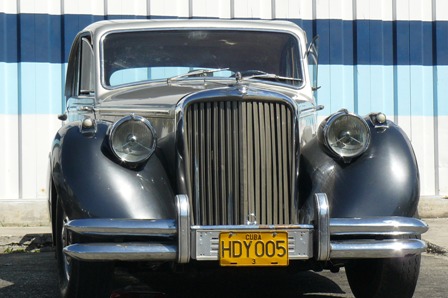
#3. Roll like a local. Long-finned Pontiacs, Capone-era Dodges, and other ‘Yank tanks’ leap to most minds when Cuba is mentioned. Undeniably cliché, these cars are everywhere, plying Havana’s streets working as communal, fixed-route taxis. For 10 pesos cubanos (about 0.40 USD), you can hail one of these endearing jalopies (I climbed into one yesterday that had packing tape upholstery and a ceiling lined with old refrigerator boxes) between Playa and Vedado or Habana Vieja, out to Miramar or Marianao. Longer routes – from Habana Vieja out to the Playas del Este beaches for example – will run double. To grab one, just stick out your arm parallel to the ground and ask the driver if he’s going to where you need to be. It helps to be on the right thoroughfare: 23 or Línea in Vedado, San Lázaro or Neptuno in Centro Habana, Avenida 31 or 41 in Playa, Calle 51 in Marianao, or 3ra Avenida in Miramar.

c. C Gorry

Even lower down on the transportation food chain is the guagua (pronounced wa-wa) – the Cuban bus. A ride literally costs pennies and while not especially comfortable or efficient, riding the guagua gives a real taste of Cuban daily life with all its attendant humor and hardships.

If these options don’t appeal, consider renting a car and driver. Part of the new regulations stipulate that licensed freelance drivers can now be contracted (by anyone, including foreigners as I understand it) to provide transport islandwide. There are no set fares, with rates to be determined between driver and client. Already nearly 6,000 choferes in Havana have applied for the freelance license; 2,000 have been granted. If the market has its way, the increased competition should make for more bargaining power and improved service. At the very least, it provides visitors an alternative to renting a car for $100 a day (which will somehow end up costing more when the agency is done with you). I predict that freelance drivers who speak English are going to do very well under these new regulations.

#4. Make yourself at home. One of the great benefits presented by the new regulations for travelers is the possibility to legally rent an entire house. This means you can shop at the agro (using those pesos cubanos) and cook for yourself, throw a dinner party, or introduce Cuban friends to the concept of brunch. Having your own private space means you can channel surf Cuban state TV (University for All! Little House on the Prairie! Seinfeld!), take mojitos on your porch to the delight of the neighborhood gossips, or stumble in carefree at 4am.

Another idea for a different Havana experience is to take lodging in more off-the-beaten-track places like the beach towns of Guanabo or Baracoa or Cojimar – the fishing village made famous by Hemingway’s Old Man and the Sea. These are close enough to enjoy Havana but just far enough removed to give a taste of small town life.

c. C Gorry

#5. Get primped & pampered. The new regulations approve all sorts of services which visitors can now enjoy without any sneaking around. Now your visit can include a 1-hr massage for $20 (really $10, but you might be charged double – the foreigner tax digamos), manicures for $2, and haircuts for $5 (careful with this last however).

If you’re interested to learn if someone – driver, masseuse, pizza maker – proffering these and other goods and services is licensed to do so, ask to see their licencia de cuenta propista. Most people are proud to flash their spiffy new ID cards.

#6. Spread the wealth. Frankly I weary of travelers asking me how they can avoid patronizing state businesses. That’s like asking how to avoid death or taxes. From the moment you buy your $20 tourist card to enter the country, to the minute you’re paying the $25 tax to leave, you’re supporting the Cuban government. What’s so evolved about this place is that paying into government coffers does in turn support the Cuban people (maybe not how or to the extent you’d like, but in my book the Cuban approach is fundamentally better than subsidizing bombs in Afghanistan and spies in Caracas). If you have a problem with this, do us all a favor and go to Cancun.

Having said that, I do recommend spending your hard-earned cash at a mix of state and private enterprises, but how to tell the difference? With eateries, there are some telltale signs. If your server is wearing a uniform or hairnet the place is probably state-owned. If your food descends from a balcony in a bucket it’s definitely private.

With taxis it’s even clearer: 99% of the old Motor City monsters (and many of the Ladas) brandishing taxi signs are privately owned. When in doubt, do like the Cubans do and look at the license plate (see note 5). There’s an entire code for plates here, with the first clue being the color: blue is for state-owned, yellow is private. All hotels, meanwhile, are at least 51% state-owned, but casas particulares (rooms or independent houses for rent) are privately operated. Look for the blue ‘arrendador divisa‘ sign.

c. C Gorry

If you’re interested in learning more of the Havana ‘mécanica‘ including bus and fixed-fare taxi routes, the best spot for 75 cent whisky shots and $1 lunch, Cuban line etiquette and more, please check out my iapp Havana Good Time.

Notes

1. It’s highly doubtful we’ll reap the same benefits however: when Cuba hosted the meeting as is customary for the country holding the rotating presidency, Havana’s main roads were repaved, trees were planted (including many of the trees lining Boyeros every visitor zooms by on their way from the airport) and house facades all along the arrival route were painted up nice and spiffy for the visiting delegations.

2. These 7-day all inclusive deals are oftentimes cheaper than just a Toronto-Havana Cubana flight. Savvy travelers just book the package and stay a day or two at their resort and then travel independently. As an aside, tourism figures for January indicate a 16% increase for the same period last year. Top countries visiting Cuba: Canada, Italy, Germany, France, Russia, Argentina, and Mexico.

3. I say travelers here instead of tourists because I believe there is a fundamental difference between a person who passively observes a culture and someone who desires to actively participate in it. If you’re one of those disposed to take issue with the tourist vs traveler terminology, I invite you to focus on the phenomenon/philosophy I’m talking about rather than the etymology of the terms used to describe it.

4. Those interested in Cuban slang and phrases should check out this Dichos iapp. I haven’t been able to get it yet (the US government blocks iTunes from operating in Cuba) but am loca to try it.

5. This national reflex is widespread and wild to watch: no matter what type of car you’re in, observe how passing Cubans immediately drop their eyes to check out the license plate. Via the coded plates, they’ll know if your car is from Havana or the provinces, whether you’re a foreign resident or visiting, even if you work for the state, a mixed Cuban-foreign enterprise, a church or an NGO.

37 Comments

Filed under Americans in cuba, cuban beaches, Cuban phrases, dream destinations, off-the-beaten track, Travel to Cuba, Uncategorized

The Road Test: Adventures at the DMV Part II

[tweetmeme source=”connergo” only_single=false]

So I passed the written – a test my friend Pilar called “easy” but which took me a couple of tries (while my ego took a beating) to master. In the end, I’d triumphed. I’d passed; the hard part was over. I had my Cuban driving permit. I wasn’t a bit worried about the road test – I’d been driving for years before my US license expired, including in Havana. It was just a formality.

Famous last words, as Mom would say.

Countdown: 16 Days to Go

Our friend Camilo stopped by for a visita on the eve of the road test. This was serendipitous. Camilo is a professional taxi driver and an old hand at Cuban rules of the road.

“You’ll be fine – just be careful how and where you park. They like to get tricky with that.”

This gave me pause.

“How about the car I’m using? Does it matter that I’m taking it in kind of a clunker?” It wasn’t one of those Meyer Lansky-era jobs mind you, but a car with sus problemitas nonetheless.

“As long as it’s manual – you can’t take it in an automatic. And make sure the emergency brake works. They won’t let you test if it doesn’t.”

The emergency brake, of course, was the car’s major problemita. It was totally flojo, flaccid. Stopping that car with the emergency brake was like trying to shoot pool with a piece of rope.

Sleep was elusive that night. I could blame the refurbished mattress, but my tossing and turning and anxious sighs were caused by images of loose emergency brakes and personal failure followed by financial ruin.

We arrived bright and early the next morning at the police precinct parking lot where the road test began. My stomach was in knots and my eyes had the itch and irritation of insomnia – allegories for my mental and emotional state. It wasn’t yet 8:00 am and already three were three testees, plus their representantes – those folks who drove us to the test and would perform the car inspection before setting out. I took el último. We chatted to pass the time. My hyperkinetic, chain smoking husband did little to allay my nerves.

My heart was beating faster than is normal or healthy when Oswaldo, our examiner (or inquisitor, depending on how you look at it) strode up. He gathered us around and explained the exam. He reviewed common mistakes and what skills he’d be looking for.

“Any questions?”

“If we fail today, how soon can we come back to retake the test?” I asked. My clock was ticking faster than a childless 40-year-old with maternal tendencies and I needed to know exactly where I stood.

“You have to wait a week and can only take it three times. If you fail all three times, you have to wait a year before taking it again and then you start from zero, with the written.”

He asked for all the candidates to step forward with their documents. I was the lone foreigner. There were some younger folks with their bling and blasé attitude, plus an army guy (see note 1), a truck driver, and a tall dreadlocked dude with an extranjera girlfriend so butt ugly she could have cracked a mirror (see note 2).

Oswaldo asked each representante to take the wheel of the cars we’d be testing in to verify that the blinkers, brake lights, and emergency brake were in working order. My husband tossed his smoking cigarette aside and got in the car.

“Accelerate and pull the break,” he was instructed.

He did so. Oswaldo looked at me.

“Back up and do it again. Without stepping on the brakes this time.”

The love of my life did as he was told and coasted to a stop too many yards away.

Oswaldo shook his head. “You can’t take the test in this car. Can you find another?” I told him we would.

My husband called his office and they sent over an even older car that rattled when it rolled. Now I had sweaty palms to go with my irregular heartbeat. This car, not surprisingly, also failed the pre-test inspection. I was starting to get seriously worried. My Plan B – tossing a buddy of mine a “Benjamin” every week for use of his jalopy truck during my assignment abroad – was tenuous at best and I there was no Plan C. I walked home steamed.

After raging against my husband’s shitty work vehicles to our empty living room, I gave my good friend Angela (she of the Cuban Thanksgiving) a call. She had a nearly new Korean jobbie – small and simple – that I was sure she would lend me. She’s solidaria like that. Not only did she agree, she came over later that afternoon so I could give it a test drive.

“Does your car have a name?” I asked her once I was behind the wheel.

She looked at me as if I’d asked her to join me on a stroll of the Malecón with an ‘abajo el socialismo‘ sign.

“It’s just that I know a lot of people who name their cars: Bruce, Chico, Rocinante. That way you can talk to them – maybe cajole them into behaving better. Kind of like plants or kids.”

I took Angela’s no name car for a spin and it felt like I always did behind the wheel: like an experienced driver. We agreed to meet the next morning in the police lot.

Stay tuned for Part III of Conner’s Adventures at the DMV.

Notes

1. I steered clear of any chit chat with this fellow for his sake: all members of the Cuban armed forces who come in contact with a foreigner – even inadvertently – must file some ridiculous paperwork about the encounter. I learned this one day as I sat on my friend’s couch when her nephew dropped by. He was in uniform and tried to hightail it out of there before he was compromised, but too late. This regulation of contact with foreigners is why folks in uniform looking for a botella (hitchhiking – common throughout Cuba) won’t get in your car if you offer them a ride.

2. It’s not my style to notice – much less comment – on someone’s physical appearance (beauty is on the inside after all) but this woman was extraordinarily, exceptionally ugly making me think other factors were likely at play in this Cuban-foreigner hook up.

9 Comments

Filed under Americans in cuba, bureacracy, Living Abroad

Cubans Do it Better: Adventures at the DMV Part I

[tweetmeme source=”connergo” only_single=false]

I’ve never been a fan of the DMV. There’s the bureaucracy of course – a paradigm of grouchy inefficiency with which I’m sure you’re familiar – but it’s more than that. It’s too many hoops to jump through and rules and the petty (but potent) power wielded by the cogs in the department of motor vehicles machine that chap my ass.

So when my US driver’s license expired, my gut seized up and more hairs grayed as I imagined the horror of the Cuban DMV (see note 1). The adventure started when I tried to get a copy of Ley #60 – Cuban rules of the road – to study up. The DMV didn’t have any and after a brief consultation, the nice lady cop suggested I check across town at the driving school.

I hoofed it over there in a McCarthy-era Dodge and walked a dozen long, hot blocks under a blazing Cuban summer sun only to have the dark, heavy-lidded compañera at the reception desk inform me that they didn’t have any. After almost nine years in Cuba, I know not to ask ‘why?’ But my disappointment must have showed, for the desultory lady livened up to say: “the new regulations are being implemented. The books are being printed up now.”

“and they’ll be ready?…”

The somnolent curtain descended again and she shrugged. After a moment she offered to transfer a digital version of the old road rules book onto a memory stick if I had one.

I didn’t.

So it was back to the drawing board, which meant I’d have to go about things ‘a lo cubano‘ or ‘por la izquierda‘ (see note 2). An Internet search brought up Ley #60 (all 67 pages of it) and friends supplied the same classes and practice quizzes given at the fancy, hard-currency driving school.

I set to studying.

Some of the Spanish tripped me up (I had never had cause to use the word contén and can anyone explain to me in plain English the difference between a remolque and semi remolque?!) but luckily, Cuba is a signatory to the 1949 UN Convention on Road Traffic, so most of the US road rules with which I’m familiar applied. I skimmed the rural transit section – surely I don’t need to know the tare weight of a tractor trailer or speed limits for horse carriages. I took the quizzes, did OK, and readied myself for the written exam (see note 3).

I arrived bright and early – a bit nervous, but excited. For no reason, it turns out: the computers were down. I’d have to come back the next day. “Or better yet in two,” said the cop with the boyish good looks and tender smile. He was easy on the eyes even as he delivered the bad news.

My time was running out you see and this unforeseen delay was deeply troubling. I was due to leave soon on assignment and I would have to cover a lot of ground, in a context where a car is compulsory – think LA or the French Riviera. I needed this gig. We needed the money. The debt I imported from my life “before” in the US continued to grow (see note 4) and my income wasn’t keeping pace. This was our money for most of 2011. I couldn’t blow it. I had to get that Cuban license.

Countdown: Four Weeks

I returned two days later to take the written. The system was still down. I asked the comely cop for a phone number (no, not his – faithful readers of Here is Havana know I’m hopelessly devoted to my husband) to call before trudging over again. I phoned the next day to see if thee system was up and running.

Game on.

The waiting room was archetypical Caribbean, sporting coral-colored walls and a phalanx of tropical plants leading to the balcony where new drivers awaited their laminated, holograph-imprinted licenses. That balcony was my goal. Poco a poco.

I waited to be called into the exam room. A nearly life-sized poster of Raúl loomed above me. He wore his poker face and olive greens, but somehow remained avuncular in a way that Fidel can be but isn’t often. The quote emblazoned in red below brother Raúl was new to me: “gossip is a divisive and counterrevolutionary act.” Here was a man after my own heart.

I was summoned into the exam room and let the AC wash over me. A dozen computer terminals occupied by wrinkled grandpas and young studs in bad Hugo Boss knock offs lined the room. This was much more high tech than I expected and more modern than I was used to. All around me I saw furrowed brows punctuated by nervous laughter. Men outnumbered women four to one.

I sat at terminal 3 and began the test. I knew most of the answers but not all. The Spanish was somewhat confusing and I second guessed myself. I got the question about tractor tare weights and failed by one wrong answer – just shy of the required 75 points to pass. Another setback. More stress, which grew when the proctor with a keen eye for cheaters (and there were several) told me I had to wait a week before I could take it again. No exceptions. No overrides of the computer system.

“Study up and come back next Friday at 11am when I start my shift.” Was that a wink or a nudge I saw when she said that? I certainly hoped so and planned to show up next week with a package of high quality, hard currency coffee for the affable cop proctor.

Countdown: Three Weeks

I read every word on each page of the 67-page long law. I highlighted tricky concepts and took copious notes. I checked terms with my husband I didn’t understand. One sign – described, but not pictured anywhere – was a complete mystery to everyone we consulted. It had something to do with railroad crossings, we got that much, but otherwise was a complete puzzlement. The written exam always had a ‘what does this sign mean?’ question, but what were the odds I’d get this one?

I returned the Friday following nervous, but more confident (the coffee weighing down my handbag helped). I hailed Raúl and his sage words for all the revolutionary chismosos and strode into the exam room. The nice proctor was nowhere in sight. I felt stood up and doubted the policewoman with dyed jet black hair and fire engine lipstick would be as kind.

‘Focus, Conner, focus,’ I admonished myself.

Elvira’s Cuban cousin left the room and the kid on my right with a marijuana leaf belt buckle as big as my palm began feeding answers to his socio on my left. Really? Cheating on the DMV permit test? That’s unethical and dangerous; I don’t want to share the road with the idiot that needs to cheat on the written. Should I tell Elvira, I wondered?

‘Focus, Conner, focus.’

Then came question 11. It was a red and white railroad sign with an inverted V below a red X. The mystery sign from the night before. I called Elvira over.

“Hi there. I’m a little confused. I’ve never seen this sign here. Does it even exist in Cuba?”

She laughed and leaned over my shoulder to check out the sign on the screen. “Well, some are international and correspond to the treaty to which Cuba is a signatory, but you don’t necessarily see them around.”

“Oh,” I nodded.

She leaned in again to consult my screen. “Don’t worry. You answered correctly.”

Buoyed, I set to the remaining nine questions. When I’d finished, I started from the beginning, re-reading each question carefully, parsing the Spanish. I went through all 20 again and reviewed my work. I was just about to click ‘Finish and get results,’ when a film crew entered and started shooting. Elvira told the classroom to continue as if they weren’t there. It was the prime time program On the Road where the finer points of Cuban road rules are discussed for a half hour each week (see note 5). Seems yours truly was going to feature.

My hand was sweating. I hovered over ‘Finish and get results.’ I clicked. 95 out of 100, with just one incorrect response: question #11 with the mystery railroad sign. Gracias, Elvira.

Stay tuned for Part II of Cubans Do it Better: The Road Test
.

Notes

1. Officially called the Oficina de Licencia de Conducción, conveniently attached to the local police precinct.

2. Note to self: when a problem needs resolving, best to start “Cuban-style,” consulting with informal channels known literally as doing things “via the left.”

3. This process also included supplying $30 in official stamps, an eye exam (performed at my local polyclinic), a medical exam, and a couple of photos.

4. Note to all would-be expats: this is a really bad move. IRS, student loans, family floats – whatever the debt, try to clean it off your plate before moving abroad.

5. If all this attention to Cuban traffic law – new regulations, prime time TV shows, and the like – seems odd, it isn’t when you consider that the #5 cause of death in Cubans as a whole is accidents (it’s the #1 cause of death in Cubans aged 5-19); the overwhelming majority of these are traffic accidents.

12 Comments

Filed under Americans in cuba, bureacracy, Cuban customs, health system, Living Abroad