Tag Archives: cuba

Cuban Juju: New Year’s & Beyond

[tweetmeme source=”connergo” only_single=false]

Havana is a place that holds dear its superstitions and traditions. Where the former leaves off and the latter begins is a tough and tangled business, thanks in part to the very serious and more relevant and prevalent than you might imagine AfroCuban juju floating about the island. While slaves were being forced over here from the Congo and the Gambia, Senegal and Nigeria, bringing their rich and powerful belief systems with them, the Spanish colonists and Catholic Church (the Imperialist 1% digamos) were also in the mix, inventing Cuban traditions.

This wasn’t an entirely innocent affair, I learned recently from Fernando Martínez Heredia (among the country’s most knowledgeable and respected historians), as he worked the rocker in my living room and regaled me with the whole ignoble story about the arrival of the Virgen de la Caridad del Cobre on these shores. According to the legend, Cuba’s patron saint floated into the Bay of Nipe 400 years ago to save three local fisherman adrift in their skiff. With the seas threatening to capsize and surely kill the two mulatto hermanos and young slave aboard, a beautiful, diminutive black virgin floated towards the pobres, the raft on which she rode inscribed with the message: “I am the Virgin of Charity.” With her appearance, the sea instantly and magically calmed, becoming flat as a plate, as we say here.

A legend so pat and serendipitous begs certain questions: Exactly what would they be fishing for in that inland bay? ‘There are no fish worth the time in Nipe,’ Fernando observes. And what of the message, carried by the trio back to the folks living in the area? ‘How convenient that those guys could read – unheard of at the time for people of their station – and Spanish no less,’ my favorite historian continues. But what’s truly intriguing, says Fernando (and I agree), is the appearance, at this precise time, of similar virgins elsewhere in Latin America – the Virgen del Cobre, the Virgen de Guadalupe in Mexico, St Rose of Lima. Turns out there was nothing coincidental or mystical about this plethora of virgins: secular and clerical big wigs determined that consolidating power over their far flung New World colonies required a spiritual component beyond the Father, Son and Holy Ghost. So they created her (see note 1).

But the Spanish also introduced more benign customs, many of which mixed with those of African slaves of yore, more modern traditions and superstitions from around the globe, and others which are purely, wonderfully Cuban. In short, the traditions we observe here are an ajiaco, a stew of culture and influences that mirror Cuban society itself.

Need a karmic boost or extra dash of good luck? Visit El Caballero de Paris, frozen in midstride at the doorstep to the Iglesia de San Francisco de Asís and give his bronze beard a stroke or two – already polished to a high sheen by untold masses who have thusly petitioned for luck before you. If things are such that more pro-active measures are required, drop a coin (the bigger, the better!) down the wishing well at the opulent entrance to the Hotel Nacional; utter your desire aloud and hopefully it will come true.

When you really need to invoke the city’s store of good luck, taking three turns around the sacred ceiba facing El Templete each November 16 is an age-old Cuban tradition (dating back to those Spaniards again) for improving one’s lot or luck. Don’t forget to lay some coins at the base of the tree for extra aché (folks in the know tell me it can be CUCs or pesos cubanos since the spirits also maneuver in the double economy). And speaking of age old traditions: who hasn’t seen the red ribbons flying from the undercarriage of every Lada and Buick, Mitsubishi, and Muscovich around here? De rigueur, this good luck charm for the open road.

Sometimes I think Cubans take all this superstition stuff a bit too far, like trying to ward off evil spirits with strong scents. Why else would someone burn incense in a bakery of all places or douse themselves so early and often with cheap, noxious perfume? More than once I’ve come home from clubs or alit from cars, my taste buds coated with someone’s idea of a come-hither scent. But I digress…

Where traditions and superstitions really gain traction here is on New Year’s Eve. There’s the costumbre of eating 12 grapes on the last day of the year – one for each month, a wish made with each fruit popped into your mouth. This comes from the Spanish I’m told, but I’ve yet to take a shine to this ritual: it seems greedy to make a dozen wishes (I’d be happy with just one or three), plus grapes cost $4/lb here, so it makes for a pricey gambit.

Maybe you’ve been unfortunate enough to be walking under a balcony or open window ‘round midnight on December 31st, in which case you were unexpectedly and unceremoniously drenched by falling waters (don’t worry: it’s clean). One of our endearing and enduring traditions here is to heave a bucket of water out the window at the stroke of midnight, the idea being that you’re chucking all the bad shit from the year previous. I don’t know where this tradition originated (neither do any of the Cubans I’ve been asking), but I was the first at our party with bucket at the ready once 2011 was over and done with.

By far, my favorite New Year’s tradition (aside from religiously observing it with family while stuffing myself silly with roast pork and yucca and smoking one of the amazing high quality cigars that always come my way this time of year) is the walk around the block with your suitcase – a tradition/superstition that improves your chances of traveling in the upcoming year.

On a balcony overlooking the Malecón this December 31st, I ducked falling waters while the cannons boomed across the Bay, couples kissed, and glasses clinked. A sultry wind blew and I waved with delight at all the folks streaming from their homes to wheel their luggage over buckling sidewalks and potholed streets.

To all of you wishing to travel or hoping to fall in love, entreating the spirits for good health or a prosperous 2012, I toast you and hope all your dreams come true. To Cuba and all my friends and family here, there, and elsewhere: I raise my glass with love and respect and hope we continue to reap what we sow.

2012: We’ve got high hopes, in spite of it all.

Feliz Año Nuevo everyone.

POSTSCRIPT

Ive been talking to folks here about their New Year’s traditions since writing this post and a few have mentioned burning all that’s bad from the previous year in curbside fires in Boyeros y mas alla (mentioned by Kristen in comments below), while in Artemisa they burn effigies made of old clothes and such. The dirty water  (and much less toilet water – mentioned by Yemaya in the comments below) doesn’t have any adherents I’ve asked, but we do agree that we won’t be drinking sugar water this year, in accordance with Ifa’s  letra del ano.

Notes

1. You may have heard about La Virgencita’s recent tour around the island. If not, you’ll definitely hear about her as 2012 unfolds since The Pope’s visit to Cuba has been confirmed for March 26-28; his trip kicks off in Santiago de Cuba and a pilgrimage to meet the Virgen.

22 Comments

Filed under Cuban customs, Cuban idiosyncracies, Cuban phrases, Living Abroad

Trip Tips: Havana Independently

[tweetmeme source=”connergo” only_single=false]

Havana is hot and I’m not talking about mulatas or the weather: from Cayo Hueso to Regla, Cementerio Colón to Ciudad Deportiva, you can’t swing a dead gato around here these days without hitting a tourist. To tell you the truth, I don’t think I’ve seen this many foreigners in Havana since the 2006 Non-Aligned Meeting (see note 1).

There are reasons of course. The Cigar and Young Filmmakers Festivals are going strong as I write this, we’re getting a couple of monster cruise ships docking each week, and all-inclusive packages from Canada are mad cheap (see note 2). But most importantly, Havana’s streets teem thanks to Obama’s rollback to Clinton’s policy whereby US college students and select others can travel “legally” to the island. I’m surprised the effects have been so lightening fast – the new/old regulations were just announced in January – but everywhere I turn these days there seems to be a fresh-faced co-ed in Wesleyan gear or a Teva-shod geek. I hope they all have iPads.

Many of these people won’t end up liking Havana (hell, even I don’t like Havana some times). Starting with poor air quality, negative travelogues grouse about the expense of this place; perceived levels of state control; difficulties scratching below the surface +/o contextualizing their experience; and of course, crappy goods and even shittier services.

The dramatic economic changes happening around here – legalizing 178 types of private business from clown to cook, masseur to manicurist – are altering the travelers landscape (see note 3). So that Here is Havana readers can maximize their visit to this enigmatic city, I dedicate this post to travel strategies designed to get you beneath Havana’s skin.

#1. Talk the talk. There is no better way to maximize an independent holiday here than to speak cubano, with all its chopped off words, odd pronunciation and slang (see note 4). Even if ¿que bola asere? and ‘la heva está enpinga’ isn’t in your repertoire, try at least to dust off that high school Spanish since surprisingly few Cubans dominate English (and many of those that do are unusually accomplished charlatans). Not speaking Spanish doesn’t mean you’ll have a bad time – on the contrary. But it will limit your ability to get information, negotiate, learn and arrange logistics.

#2. Embrace pesos cubanos. As soon as you’re able, get some moneda nacional, also known as pesos cubanos and CUP. There’s a myth out there as tenacious as herpes in a whorehouse and which no amount of posting, commenting, and conversing seems to dispel: that tourists can’t use this ‘local’ currency. Complete rubbish. The truth is, most visitors simply don’t know how to use CUP. I suggest starting your trip by changing $5 of hard currency (24 CUP = 1 CUC = 0.82 USD) into this funny money to use for fixed route taxis, movies, food, condoms, cigars, and stepping out.

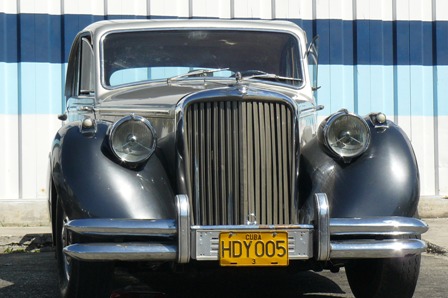
#3. Roll like a local. Long-finned Pontiacs, Capone-era Dodges, and other ‘Yank tanks’ leap to most minds when Cuba is mentioned. Undeniably cliché, these cars are everywhere, plying Havana’s streets working as communal, fixed-route taxis. For 10 pesos cubanos (about 0.40 USD), you can hail one of these endearing jalopies (I climbed into one yesterday that had packing tape upholstery and a ceiling lined with old refrigerator boxes) between Playa and Vedado or Habana Vieja, out to Miramar or Marianao. Longer routes – from Habana Vieja out to the Playas del Este beaches for example – will run double. To grab one, just stick out your arm parallel to the ground and ask the driver if he’s going to where you need to be. It helps to be on the right thoroughfare: 23 or Línea in Vedado, San Lázaro or Neptuno in Centro Habana, Avenida 31 or 41 in Playa, Calle 51 in Marianao, or 3ra Avenida in Miramar.

c. C Gorry

Even lower down on the transportation food chain is the guagua (pronounced wa-wa) – the Cuban bus. A ride literally costs pennies and while not especially comfortable or efficient, riding the guagua gives a real taste of Cuban daily life with all its attendant humor and hardships.

If these options don’t appeal, consider renting a car and driver. Part of the new regulations stipulate that licensed freelance drivers can now be contracted (by anyone, including foreigners as I understand it) to provide transport islandwide. There are no set fares, with rates to be determined between driver and client. Already nearly 6,000 choferes in Havana have applied for the freelance license; 2,000 have been granted. If the market has its way, the increased competition should make for more bargaining power and improved service. At the very least, it provides visitors an alternative to renting a car for $100 a day (which will somehow end up costing more when the agency is done with you). I predict that freelance drivers who speak English are going to do very well under these new regulations.

#4. Make yourself at home. One of the great benefits presented by the new regulations for travelers is the possibility to legally rent an entire house. This means you can shop at the agro (using those pesos cubanos) and cook for yourself, throw a dinner party, or introduce Cuban friends to the concept of brunch. Having your own private space means you can channel surf Cuban state TV (University for All! Little House on the Prairie! Seinfeld!), take mojitos on your porch to the delight of the neighborhood gossips, or stumble in carefree at 4am.

Another idea for a different Havana experience is to take lodging in more off-the-beaten-track places like the beach towns of Guanabo or Baracoa or Cojimar – the fishing village made famous by Hemingway’s Old Man and the Sea. These are close enough to enjoy Havana but just far enough removed to give a taste of small town life.

c. C Gorry

#5. Get primped & pampered. The new regulations approve all sorts of services which visitors can now enjoy without any sneaking around. Now your visit can include a 1-hr massage for $20 (really $10, but you might be charged double – the foreigner tax digamos), manicures for $2, and haircuts for $5 (careful with this last however).

If you’re interested to learn if someone – driver, masseuse, pizza maker – proffering these and other goods and services is licensed to do so, ask to see their licencia de cuenta propista. Most people are proud to flash their spiffy new ID cards.

#6. Spread the wealth. Frankly I weary of travelers asking me how they can avoid patronizing state businesses. That’s like asking how to avoid death or taxes. From the moment you buy your $20 tourist card to enter the country, to the minute you’re paying the $25 tax to leave, you’re supporting the Cuban government. What’s so evolved about this place is that paying into government coffers does in turn support the Cuban people (maybe not how or to the extent you’d like, but in my book the Cuban approach is fundamentally better than subsidizing bombs in Afghanistan and spies in Caracas). If you have a problem with this, do us all a favor and go to Cancun.

Having said that, I do recommend spending your hard-earned cash at a mix of state and private enterprises, but how to tell the difference? With eateries, there are some telltale signs. If your server is wearing a uniform or hairnet the place is probably state-owned. If your food descends from a balcony in a bucket it’s definitely private.

With taxis it’s even clearer: 99% of the old Motor City monsters (and many of the Ladas) brandishing taxi signs are privately owned. When in doubt, do like the Cubans do and look at the license plate (see note 5). There’s an entire code for plates here, with the first clue being the color: blue is for state-owned, yellow is private. All hotels, meanwhile, are at least 51% state-owned, but casas particulares (rooms or independent houses for rent) are privately operated. Look for the blue ‘arrendador divisa‘ sign.

c. C Gorry

If you’re interested in learning more of the Havana ‘mécanica‘ including bus and fixed-fare taxi routes, the best spot for 75 cent whisky shots and $1 lunch, Cuban line etiquette and more, please check out my iapp Havana Good Time.

Notes

1. It’s highly doubtful we’ll reap the same benefits however: when Cuba hosted the meeting as is customary for the country holding the rotating presidency, Havana’s main roads were repaved, trees were planted (including many of the trees lining Boyeros every visitor zooms by on their way from the airport) and house facades all along the arrival route were painted up nice and spiffy for the visiting delegations.

2. These 7-day all inclusive deals are oftentimes cheaper than just a Toronto-Havana Cubana flight. Savvy travelers just book the package and stay a day or two at their resort and then travel independently. As an aside, tourism figures for January indicate a 16% increase for the same period last year. Top countries visiting Cuba: Canada, Italy, Germany, France, Russia, Argentina, and Mexico.

3. I say travelers here instead of tourists because I believe there is a fundamental difference between a person who passively observes a culture and someone who desires to actively participate in it. If you’re one of those disposed to take issue with the tourist vs traveler terminology, I invite you to focus on the phenomenon/philosophy I’m talking about rather than the etymology of the terms used to describe it.

4. Those interested in Cuban slang and phrases should check out this Dichos iapp. I haven’t been able to get it yet (the US government blocks iTunes from operating in Cuba) but am loca to try it.

5. This national reflex is widespread and wild to watch: no matter what type of car you’re in, observe how passing Cubans immediately drop their eyes to check out the license plate. Via the coded plates, they’ll know if your car is from Havana or the provinces, whether you’re a foreign resident or visiting, even if you work for the state, a mixed Cuban-foreign enterprise, a church or an NGO.

37 Comments

Filed under Americans in cuba, cuban beaches, Cuban phrases, dream destinations, off-the-beaten track, Travel to Cuba, Uncategorized

The Road Test: Adventures at the DMV Part II

[tweetmeme source=”connergo” only_single=false]

So I passed the written – a test my friend Pilar called “easy” but which took me a couple of tries (while my ego took a beating) to master. In the end, I’d triumphed. I’d passed; the hard part was over. I had my Cuban driving permit. I wasn’t a bit worried about the road test – I’d been driving for years before my US license expired, including in Havana. It was just a formality.

Famous last words, as Mom would say.

Countdown: 16 Days to Go

Our friend Camilo stopped by for a visita on the eve of the road test. This was serendipitous. Camilo is a professional taxi driver and an old hand at Cuban rules of the road.

“You’ll be fine – just be careful how and where you park. They like to get tricky with that.”

This gave me pause.

“How about the car I’m using? Does it matter that I’m taking it in kind of a clunker?” It wasn’t one of those Meyer Lansky-era jobs mind you, but a car with sus problemitas nonetheless.

“As long as it’s manual – you can’t take it in an automatic. And make sure the emergency brake works. They won’t let you test if it doesn’t.”

The emergency brake, of course, was the car’s major problemita. It was totally flojo, flaccid. Stopping that car with the emergency brake was like trying to shoot pool with a piece of rope.

Sleep was elusive that night. I could blame the refurbished mattress, but my tossing and turning and anxious sighs were caused by images of loose emergency brakes and personal failure followed by financial ruin.

We arrived bright and early the next morning at the police precinct parking lot where the road test began. My stomach was in knots and my eyes had the itch and irritation of insomnia – allegories for my mental and emotional state. It wasn’t yet 8:00 am and already three were three testees, plus their representantes – those folks who drove us to the test and would perform the car inspection before setting out. I took el último. We chatted to pass the time. My hyperkinetic, chain smoking husband did little to allay my nerves.

My heart was beating faster than is normal or healthy when Oswaldo, our examiner (or inquisitor, depending on how you look at it) strode up. He gathered us around and explained the exam. He reviewed common mistakes and what skills he’d be looking for.

“Any questions?”

“If we fail today, how soon can we come back to retake the test?” I asked. My clock was ticking faster than a childless 40-year-old with maternal tendencies and I needed to know exactly where I stood.

“You have to wait a week and can only take it three times. If you fail all three times, you have to wait a year before taking it again and then you start from zero, with the written.”

He asked for all the candidates to step forward with their documents. I was the lone foreigner. There were some younger folks with their bling and blasé attitude, plus an army guy (see note 1), a truck driver, and a tall dreadlocked dude with an extranjera girlfriend so butt ugly she could have cracked a mirror (see note 2).

Oswaldo asked each representante to take the wheel of the cars we’d be testing in to verify that the blinkers, brake lights, and emergency brake were in working order. My husband tossed his smoking cigarette aside and got in the car.

“Accelerate and pull the break,” he was instructed.

He did so. Oswaldo looked at me.

“Back up and do it again. Without stepping on the brakes this time.”

The love of my life did as he was told and coasted to a stop too many yards away.

Oswaldo shook his head. “You can’t take the test in this car. Can you find another?” I told him we would.

My husband called his office and they sent over an even older car that rattled when it rolled. Now I had sweaty palms to go with my irregular heartbeat. This car, not surprisingly, also failed the pre-test inspection. I was starting to get seriously worried. My Plan B – tossing a buddy of mine a “Benjamin” every week for use of his jalopy truck during my assignment abroad – was tenuous at best and I there was no Plan C. I walked home steamed.

After raging against my husband’s shitty work vehicles to our empty living room, I gave my good friend Angela (she of the Cuban Thanksgiving) a call. She had a nearly new Korean jobbie – small and simple – that I was sure she would lend me. She’s solidaria like that. Not only did she agree, she came over later that afternoon so I could give it a test drive.

“Does your car have a name?” I asked her once I was behind the wheel.

She looked at me as if I’d asked her to join me on a stroll of the Malecón with an ‘abajo el socialismo‘ sign.

“It’s just that I know a lot of people who name their cars: Bruce, Chico, Rocinante. That way you can talk to them – maybe cajole them into behaving better. Kind of like plants or kids.”

I took Angela’s no name car for a spin and it felt like I always did behind the wheel: like an experienced driver. We agreed to meet the next morning in the police lot.

Stay tuned for Part III of Conner’s Adventures at the DMV.

Notes

1. I steered clear of any chit chat with this fellow for his sake: all members of the Cuban armed forces who come in contact with a foreigner – even inadvertently – must file some ridiculous paperwork about the encounter. I learned this one day as I sat on my friend’s couch when her nephew dropped by. He was in uniform and tried to hightail it out of there before he was compromised, but too late. This regulation of contact with foreigners is why folks in uniform looking for a botella (hitchhiking – common throughout Cuba) won’t get in your car if you offer them a ride.

2. It’s not my style to notice – much less comment – on someone’s physical appearance (beauty is on the inside after all) but this woman was extraordinarily, exceptionally ugly making me think other factors were likely at play in this Cuban-foreigner hook up.

9 Comments

Filed under Americans in cuba, bureacracy, Living Abroad

Rock, Meet Hard Place

[tweetmeme source=”connergo” only_single=false]

Excuse my absence from this space, dear readers, but to put it bluntly, things are pretty fucked up for me these days here across the Straits.

I won’t bore or burden you with the details. Suffice to say, I’m between a rock and a hard place with very little wiggle room. To boot, it’s my own fault. I alone am responsible. I don’t have to tell you this makes it worse. Much worse.

I’m trying to be Zen about it, but I’m not a Buddhist and I’ve never been a good believer (although I do have faith, but don’t ask me in what right now because frankly, I’m a mess), so it’s very difficult for me to “rest in the middle way.” My (present) inability to resolve this particular problem of my own doing is salt in my wound, lemon juice in my third eye.

For all the wonderful experiences I’ve lived and all the skills I’ve acquired in almost nine years here in Havana, sometimes living abroad sucks. For so many reasons. And while I don’t think I’ve glorified it per se, I’m not sure I’ve devoted enough keystrokes or analysis to all the factors that make it ulcer-producing. That erode my confidence, opening a sluice gate of self doubt and re-awakening insecurities I thought long conquered.

There’s the language for one (and after all this time, I still struggle) which, for someone who traffics in words is a toxic state of affairs. Then there’s what has been “left behind.” Even with the Internet, important emotional and practical pieces of my pre-Cuba life have broken off and fallen away like the façade of an Old Havana tenement. All but my closest relationships (which I work hard to maintain and grow from afar – no es fácil) sit idle, parked in a 9-year coma. My littlest niece is wearing bras and discovering rock ‘n roll, my friends have kids I’ve never met, and my mom grows older. My namesake and goddaughter, much like me at her age, is going through her parents’ break up and I’m missing all of it. I’m neither comfort nor counsel to these people I love.

The practical business of taxes and jury duty, student loans and passport renewal is a whole other ball of angst-enhancing wax (and if I do indeed have an ulcer, these administrative and fiscal obligations are to blame). Attending these boorish tasks, for different reasons, is often impossible from here. Given this state of affairs, some things slide. And I’ve let them. I’ve got no one to blame but myself for arriving between this rock and hard place.

I had planned on writing a triumphant post today about how I faced and conquered this particular problem, how I found my metaphorical paddle in this creek I’m up, but I failed. Twice now I’ve failed. And if first time failure is disheartening, the second time around is downright frightening.

So here I am, scared for our financial future which is riding on a writing gig I’m due to start next week. This project is huge and depends on me passing the Cuban road test. Twice I’ve failed. And I only have one more chance (see note).

I’ve always believed three is a charm. In this case, it damn well better be.

Stay tuned for the next installment of Conner’s Adventures with the Cuban DMV.

Note

I’ve driven (well, I might add) for years in contexts as demanding as LA, Mexico, and Manhattan, making Havana a piece of cake comparatively. I know these streets well, having driven at all hours of day and night, during black outs and fierce tropical storms. But that was before I let my US driver’s license expire. Stupid, stupid, stupid move. Hopefully by writing this someone, somewhere will learn from my ridiculous mistake.

27 Comments

Filed under Americans in cuba, Cuban customs, Living Abroad, Writerly stuff

Wild Camping in Cuba – Part I

[tweetmeme source=”connergo” only_single=false]

The last time I planted tent poles, it was within pistol shot of the crumpled Presidential Palace, Port-au-Prince, March 2010. At 33 nights, it was the longest I’d spent in a tent. Given the wretched situation and endless cavalcade of sick and hungry Haitians seeking succor from the Cuban medical brigade I was covering, it was, (it goes without saying), the most taxing tent time of my life.

But a few months on, I was ready for the swelter of the carpa and clouds of (malaria-free) mosquitoes. Even the dicey baño scenarios didn’t deter. Besides, a camping vacation was the only kind our budget could handle.

Our target was the Bay of Pigs (see note 1). The snorkeling was good, the fishing promising, and the beaches we found on our 2003 island-wide adventure, camper-friendly. But in one of those travel mystery moments, as vague and insistent as a nostalgic scent or voice carried on a breeze that you can’t be sure isn’t just the wind in the leaves, we changed course. Which is how we ended up under a bridge.

—–

As sick as it sounds (and probably is), the plastic tarp and stick structures huddled under the bridges reminded me of Port-au-Prince. The more fortunate had two-person tents and a thatch-screened area for pissing and more demanding duties. Families 15-strong cordoned off their slice of beneath-the-bridge beach using old rope, freshly-cut palm fronds and whatever else was on hand. Their dogs prowled the periphery, their bunches of plátano hung out of reach. Side by side like cubes in an ice tray, kids tucked into mosquito net cubicles rigged by red eyed fathers in knee-high gumboots. As the little ones slept, bonfires blazed and chispa burned throats. Cooking, bathing, dishwashing and other necessities of life were carried out in broad daylight. Children frolicked. Women worked. Men played dominoes. It felt awfully familiar.

We kept exploring. Every few kilometers there was another river carving its path onto the beach and feeding into the sea. Each river was spanned by a bridge. They had evocative, indigenous names that filled my mouth with marbles: Yaguanabo, Cabagan, Guanayara. Then we pulled down into Río Hondo. Claims had been clearly staked at the far side of the beach nearest the deep, green river and by the looks of it, the campamento there was hosting a family reunion of forty. Already I could feel the reggaetón and general bulla rattling my bones and grating my nerves.

We kept on exploring.

Our pocket was tucked away at the other end of Río Hondo’s sandy expanse, where the bridge curved over and away like a mulatta out of your league. Almond and seagrape trees provided shade for weathering Cuba’s brutal summer sun and we could easily improvise bathroom facilities where they thickened back from the beach; the tumble of sea stones that made up the shore gave way to a sandy, shaded patch for our tent; and our closest neighbors were 300 meters down the beach.

The site was, I dare say, perfect.

To be continued…..

Notes

1. You almost never hear ‘Bahia de Cochinos’ in Cuba, which just goes to show you how far apart the thinking is between here and there. Forget coming to terms on human rights issues, immigration, or sovereign state concepts: the two sides of the Straits are even at etymological odds, having different terms for the embargo (know as the bloqueo here and occasionally as genocidio, which I have a small conceptual problem with), the Spanish American War (called the Guerra Hispano-Cubano-Americano here which makes eminent sense: the Cubans, after all, played a pivotal, indispensable part), and the Bay of Pigs (here referred to as Playa Girón).

13 Comments

Filed under Americans in cuba, cuban beaches, environment, Here is Haiti, Travel to Cuba

Es Cuba Mi Amiga*

[tweetmeme source=”connergo” only_single=false]

I love Latin America. I’ve been traveling there as tourist, scholar, reporter, and guidebook writer for 30 years. I dedicated my absurdly expensive stint with higher education to its history and politics. I’ve visited almost every country and know many intimately. Each is different and captivating in its way, it goes without saying. But of all the countries south of ‘El Norte,’ none compares to Cuba.

I should know, I’ve been living here since 2002.

I speak Cuban and know the best scams. (You won’t learn ‘¡¿cuál es la mecánica asere?!‘ studying Spanish in Antigua, homestay or no). My family has a ration book and I commute to meetings in ’56 Buicks. I know where to buy condoms for a penny and procure black market gas. Like anywhere, such practicalities can be learned over time. But the charm of a place, the underlying magic that makes here thrum at a higher frequency than there, dwells within the people.

—–

Bright and early Monday morning, I make my way in a tinny old Lada to the travel agency. Like everywhere in Latin America, errands are best run in the morning lest the lights go, the building springs a leak, or the workers take a 6-hour siesta. I’m not surprised to find the agency next to the Artificial Rain Augmentation office. Es Cuba, after all.

At 8:45 the small, windowless room is already packed – there are four times more people than chairs. As usual, it’s sweltering and the air conditioning is broken.

A bleach blond with two young girls in tow is ceded one of the coveted seats. Her daughters play tope, tope, tope while she chats with the agent. Purchasing a simple plane ticket here is a slow, inefficient process. There’s not a computer in sight, just a single phone, and tickets are written out by hand. Transactions are in cash, meaning at this moment there are of thousands of dollars secreted in bras, stuffed into envelopes, and tucked inside jackets all around me.

To pass the time, we talk about the weather, where to buy rice, and the new soap opera. Those keeping mum are either not Cuban or have been gone so long they’ve lost their local chops – talking to strangers while waiting is both hobby and sport here.

The dyed-blond mom isn’t having much luck today. Each time Inés María tries to ring the central office – where the computers live assumedly – the line is busy. She replaces the handset and asks Blondie what grade the girls are in. With each new client’s arrival, the office grows hotter. A woman wearing the agency’s colors enters at half past nine, proffering a tiny cup of sweet dark coffee to Ines María who immediately offers Blondie a sip.

‘It is so hot in here,’ Inés María says to everyone and no one. She picks up the phone, determined to resolve the problem.

‘Hola amor. This is your colleague in the sauna calling. Can you come check on this AC? It’s so hot I’m ready to take my clothes off in front of all these clients and it’s gonna go porno. It won’t be pretty!’

She signs off with kisses for Mr Fix It’s family and wishes his grandmother a quick recovery.

Blondie’s girls are getting restless. The older one says she has to go to the bathroom.

‘It’s right down the hall, sweetie,’ Inés María tells her.

Typically – for Cuba – the 8- and 6-year old leave without adult accompaniment to find the public bathroom. We resume talking about the weather. Suddenly the younger girl is back.

‘Mom, she needs toilet paper,’ she announces to the now overflowing office. ‘She has to poop.’

Needing a personal, portable supply of toilet paper; talking openly about bowel movements; sharing conversation and coffee with strangers while waiting a couple of hours to purchase a plane ticket: this is normal. This is Cuba.

*This post will appear in the forthcoming ebook anthology of top Latin American bloggers being edited and published by Steven Roll of travelojos. If you’d like to be notified when it’s released, drop me a line.

17 Comments

Filed under Americans in cuba, Living Abroad, Travel to Cuba

Here is….HAITI

Hi readers,

Well, if all goes as planned, at this time tomorrow I will be in a (dry, please be dry!) tent watching the Cuban doctors do what they do so well. Hopefully I’ll be spared the foot amputation I witnessed in post-quake Pakistan (this was both my first post disaster assignment AND my first time in an operating room without me on the table. The blood wasn’t bad, but the stink of cauterizing flesh is not easily forgotten)…

Anyway, I will be blogging for my organization, MEDICC and perhaps here too. Posts will be a bit different – more mental effluent and emotional reaction than the (usually) carefully crafted prose I like to post on Here is Havana.

In the meantime, I’ve got a new article up on the fabulous Matador travel Network entitled Life as an Expat in Havana, Cuba (their title, not mine). Check it out!!

And as one of my favorite DJs likes to say: “fly low and avoid the radar.”

See you on the rebound!

Abrazos,
Conner

3 Comments

Filed under Americans in cuba

Survival Skills for Cuban Cooks – Part II

[tweetmeme source=”connergo” only_single=false]

The best preparation for living in Cuba is having known hard times. To paraphrase that paragon of faith and insight Frei Betto: “The rich can handle Cuba for a week, the middle class for two, but the poor can live there forever” (see note 1). Poor folks know what it means to have no lights or water or phone and just how costly a bounced check can become (see note 2). And most poor folk have known, if temporarily, what it means to go hungry.

Cubans know many things – salsa, art, history, sports, poetry, rum, rumors. Cubans also know hunger. In the ‘Special Period in Time of Peace’ adult Cubans lost 15 pounds on average. During these lean times, kids would be fed and sent to bed while their parents laid awake, stomachs empty, fighting off painful pangs of hunger. These were those notorious times when flour “meatballs” were what was for dinner and ‘pasta de oca’ was a staple (see note 3). Thankfully, tales of banana peel hamburgers and shredded condoms standing in for pizza cheese seem to be apocryphal. Except for the condom cheese, I can attest to the veracity of these stories – I first came here in 1993 during the worst of the Special Period and witnessed the privation first hand.

Though some things have improved some, the Periodo Especial endures in ways. My brilliant friend Fernando summed it up like this: we don’t suffer from physical hunger so much anymore. What we suffer from is psychological hunger. That is, it’s the lingering scepter of hunger that haunts us. This explains a lot, from obesity rates in Miami to the savagery that possesses Cubans at buffets and Coppelia (see note 4). Bells started ringing with Fernando’s “psychological hunger” dictum – this is precisely the condition from which I suffer. Sown during the oatmeal years and now in full bloom, I get like a nervous flyer on a haul to Honolulu without my Xanax when food stores are low. Hunger may make the best sauce as the old saying goes, but take cover when it overtakes me.

Coppelia notwithstanding, Cuba’s not the best place for the psychologically hungry. It’s not Sub-Saharan style granted, but it has its moments. Mondays for instance, when all fruit, vegetable, and meat markets are closed. Run out of fresh stuff on a Monday? Tough luck. Need an egg? Go to Plan B (see note 5). I don’t need Bob Geldof to tell me why I don’t like Mondays. Though open daily, regular stores selling pasta, butter, cheese, and other staples close at 6pm and even if you catch them open, there’s zero guarantee they’ll have what you want or need.

Then there are the seasons. Cuba imports 80% of its food supply – none of it fresh fruit or vegetables. That means if it ain’t the season, you ain’t eating it. No chips and salsa in July or mango chutney in October. Guacamole? You’ve got a three month window. And so it goes with everything from lettuce and parsley to scallions and spinach. Some produce (pears, plums, berries of any sort, broccoli, asparagus, mushrooms) is just a dream on that 90-mile-away horizon. This probably sounds like a nightmare to most, but is mostly bearable until one breezy evening when the mouth-watering image of a BLT pops into my head. Agony ensues. It’s too late for tomatoes and nowhere near lettuce time. Ironically, I’ve got the bacon but by the time I can lay my hands on the L and the T, the B will be long gone (see note 6). Needless to say, in almost eight years living here, I’ve never had a BLT.

The seasons, the supply chain, and the complete unavailability of some items (not to mention the occasional hurricane and blight) force a cook to get and stay creative here in Havana. Such creativity sometimes results in radishes in your pasta primavera or squash in your stir fry. When I first got here I was unsettled by the frequency with which cooked cucumbers appeared in casseroles, chop sueys, and other concoctions. But now I’m unfazed by hot cucumbers and other inventions like Tandoori spaghetti.

To be continued…

Notes

1. For those of you unfamiliar with Frei Betto, the man is an inspiration to which this wiki doesn’t do justice. He was imprisoned for four years helping people flee dictatorial Brazil and has written 50 (FIFTY) books. His most famous is Fidel & Religion based on umpteen hours of interviews with you-know-who. This book holds some kind of weird record for selling out faster in Cuba than any other title in the nation’s history. I could explain why but that would entail a long and not terribly interesting (for the general reading public) explanation of religious history in revolutionary Cuba. Unfortunately, few of Betto’s books are available in English.

2. Living here for so long, I am woefully out of touch. Do people in the real world even use checks anymore?

3. Literally ‘goose paste,’ this is about as close to pâté as Alpo is to ground chuck. Since the 90s and the worst of the Special Period, the government ration system has relied fairly heavily on “enriched” products to inject protein into the national diet. The most infamous of these is “picadillo de soya enriquecido” or enriched soy pellets. Pasta de oca was along these lines – a gooey, flour-based paste to which microscopic amounts of ground up goose was added. Sounds appetizing right? The point is, pasta de oca wasn’t something to savor, but something to keep 11.2 million from death’s door. Amazingly, it did.

4. Coppelia is Cuba’s world famous ice cream parlor and one of my favorite spots here in Havana. Sure, the lines are beyond what most people reading this blog would ever endure, but put in your 45 minutes and you’ll be sitting down to 5 cent scoops of delicious ice cream surrounded by (real! live!) Cubans. Sure, there’s usually only one flavor available – two in the summer – but the ice cream is wicked and the atmosphere charged. Did I mention the nice price?

What you’ll notice after the monumental mod architecture (inspired by the cathedral in Brasilia) is the ferocious appetite Cubans have for ice cream. Chicks so gorgeous they’d be modeling elsewhere order 4 “ensaladas” without a second thought and tack on a piece of cake while they wait. When the 20 (TWENTY) scoops of ice cream arrive, they set to work. These Cubanas lindas aren’t alone: people all around the place are digging into their own score of scoops and if you’ve ever sat elbow to elbow digging in with them, you know I’m not exaggerating in the slightest.

And if you’re ever find yourself stuck between a Cuban and a buffet, run the other way, fast!

5. In the up north world, an egg is something easily resolved – just head over to the neighbors and see if they’ve got one to spot. Not so here, where eggs are nicknamed “salvavidas” (lifesavers) since they’re a major source of protein. While neighbors reliably loan sugar, salt, rice and other ration book staples, it’s seriously bad form to ask for a protein float.

6. Ironic because Cuba is awash in pigs and pork products – lard, feet, ribs, ears, sausage, and more are all easy to come by – but bacon? No, my brother. I’m not sure why. Any butchers out there who can educate me on this finer point of pork?

23 Comments

Filed under Uncategorized

Survival Skills for Cuban Cooks – Part 1

[tweetmeme source=”connergo” only_single=false]

To say I come from a long line of inept cooks is an understatement. My grandmother – a well-heeled dame from Philadelphia’s Main Line – was so artless at the stove she used to have Thanksgiving catered; our observations that she’d mistakedly put the gravy on the green beans and drenched the potatoes in vinaigrette were met with a call for a fresh gin and tonic. In her mind she was a martyr: her mother had live-in help, an entire staff to dress the vegetables and cook the bird. All this living large ended with my mother, the quintessential black sheep who was black balled from the family when she got knocked up at 19.

Four kids and a lousy divorce later, the wolf was at our proverbial door. We were headed for the skids and stories of these lean times endure. There was the time we survived on nothing but oatmeal, three times a day, every day (see note 1) and the Christmas when my mother somehow scored a ham. As we slept, she dog tired from trying to make a poor Christmas joyful and us kids tossing and turning in anticipation, our beloved beagle Barney pawed open the refrigerator door and wolfed that whole ham down. What we awoke to wasn’t carols and candy but Mom, furious as we’d rarely seen her, chasing that beagle with a rolled up newspaper. Needless to say, that was the end of Barney (see note 2).

Some years later, we’d volunteer one Saturday a month to cut mammoth slabs of tasteless cheese into manageable blocks that we received in kind from the Park Slope food co-op near where we lived. One time, when there was another windfall like the one that brought us Barney’s Christmas ham, Mom bought half a cow. It was cheaper that way. “Bessie” sat in our freezer for a year getting eaten little by little until a Cuban-style blackout forced us to cook all those cow parts in one fell swoop.

Except for the week or two of oatmeal (family accounts differ as to how long we actually had to survive on that slop), I didn’t realize how poor we were when it came to the dinner table. Sure, we knew our classmates were eating burgers and fried chicken while we sat down to ratatouille, jambalaya, and moussaka (see note 3), but we figured it was an insatiable interest in other cultures that brought these exotic dishes to our table and not precarious finances. But the fact is, most ethnic food is poor people’s food, made with whatever happens to be on hand.

In “food insecure households” such as ours, it pays to know how to cook and I’m convinced my mom learned her way around a kitchen out of necessity (see note 4). My brothers, sister, and I followed suit, habitually making stock from chicken bones; reviving old bread with a few sprinkles of water and some minutes in the oven; transforming stale crackers into breading as tasty as any herbed panko; and hacking mold from cheese and scraping surface scum from maple syrup and sauces (see note 5).

All of this is to say that this culture of waste not, want not is serving me well here in Cuba.

To be continued….

Notes

1. To this day, none of us can stomach the sight of it. To us, oatmeal is survival gruel.

2. Before you get all PETA on me, let me underscore the premise here: if an animal, any animal – pet, barnyard, or wild – is taking from your children’s mouths, the beast, in my opinion, has got to go (what my buddy Jack calls the “25 cent solution” – apparently this is what bullets cost in his stomping grounds).

3. This last was usually meatless – no lamb, no ground chuck – meaning it was pure eggplant. We dubbed it “moose kaka” a name that stuck.

4. Incidentally, my mom is not only a creative cook, she is also efficient (and somewhat diabolical: every year on Halloween, she’d make us sit down to big bowls of pea soup before we could go trick or treating. Talk about cruel and unusual punishment!) When we were young, she used to cook a week’s worth of dinners each weekend and freeze them so she wouldn’t have to come home from several jobs and work some more cooking for us. Monday we’d extract a meatloaf, Tuesday a lasagne and so on. Sometimes however, her system had dramatic, unforeseen results…

I remember when I was 11 (a brutal age for girls then, now, and evermore), I was desperately trying to make friends. Being the poor daughter of a divorcee made me an easy outcast, plus I was generally considered just plain weird, so when someone had the bright idea for me to host a Valentine’s Day party with all my little prospective girl friends, I was game. There was a pretty successful scavenger hunt, plus candies of all sorts of course; all in all, everyone seemed to be having a helluva time. As the afternoon drew to a close, it was time for the party’s highlight: a beautiful heart-shaped chocolate cake made with all the love in the world by my mom during one of her marathon weekend cooking sessions. When Stephanie – the most popular girl in the 5th grade and the prime target of my fledgling attempts at friendship – cut into her cake, out tumbled a chunk of ham. Apparently the offending cube had straggled behind, escaping from being cooked into what would be Friday night’s quiche and slipping into the cake batter instead. That was the end of my attempt at pre-teen popularity; thereafter I was truly weird.

5. We have friends that didn’t grow up like we did, who aren’t down with reviving old food like we do. So when Mom recently hauled out a sack of year-old madeleines from the freezer to invent something, there were gasps. A year old! Frozen that whole time! No matter that the cookies were from Café Baloud. But mom knew better and whipped up that poster child of poor folk dessert: bread pudding. M’hija. That year-old-Baloud-madeleine bread pudding was so delicious even the naysayers couldn’t wait for dinnertime, spooning it up to wash it down with their morning coffee.

15 Comments

Filed under Americans in cuba, Living Abroad

Things I Don’t Miss about the U.S.A.

[tweetmeme source=”connergo” only_single=false]

Most Cubans get a queer, screwed up look on their face when they learn I’m from the States but choose to live here. It’s logical: for so many people the world over, the USA is the land of milk and honey, of unfettered freedom and opportunity. I can only think that these folks know nothing from taxes and $200 pap smears, the Patriot Act or hate crimes.

But I know what shade the grass is on the other side; Considerable is the time I spend trying to explain this to my Cuban friends, colleagues, and strangers on the street (see note 1). This is like trying to explain the color of beets to a blind man or the importance of Les Paul to someone who doesn’t play the guitar (see note 2). Too much just doesn’t compute.

 Needless to say, I’ve had 7 long years to think about life over there, about what I miss and what I don’t. Here’s a snapshot about those things I’m happy to live without:

 – Panhandlers

– From MJ to Ms Schiavo, unrelenting media coverage of dead and dying famous (and not so) people

– TV commercials (see note 3)

– Antibacterial everything

– Scented toilet paper

– Telemarketing

 – Road rage

 – Anti-smoking Fascists

 – All that dog eat dog

– Hidden (and not so) cameras and the nonstop surveillance that comes with “modern” life

– $400 mammograms and $200 pap smears (see note 4)

– Pro-war people

– CNN

– Shoveling snow & raking leaves

– Mormons

– Sirens

– Children who can’t entertain themselves

– People texting and tweeting in the middle of conversations

– Epidemic obesity

– Electric flushing toilets (especially the hair trigger kind that are flushing before you’re finished)

– And the latest discovery on my trip back “home”: advertising on plane tray tables.

Notes

 1. Apparently being a blondish haired, blue eyed, be-freckled Yuma gives every Tomás, Ricardo, and Enrico here the green light to talk me up. The Cuban-foreigner dynamic is insanely complicated and something beyond the scope of this post, but suffice to say that every time I step out my door there’s someone invading my personal space with their personal questions.

 2. I was very saddened to learn of Les Paul’s recent death. He holds a special place in my heart and I know was an inspiration to many generations of guitar players.

 3. One great upside to government-controlled media is that there are zero TV commercials. This means when I’m watching The Reader or The Sopranos, I get it all uninterrupted (and mostly) uncut.   

4. Is it just me or is it totally sick that someone should have to pay such an outrageous amount of money for preventative medicine? You can bet if it were the men of the world with boobs and vaginas it wouldn’t be so.


6 Comments

Filed under Americans in cuba, Living Abroad