Category Archives: Travel to Cuba

A Quick Note on Irma

Havana September 14, 2017

Time for thanks giving.

Among the many (well documented) reasons Cuba does hurricane preparation and post-recovery/survival so well is the ability of the populace to pull together, help each other and and sweat it out as one. It’s one of the intangibles of resiliency which if we bottled, would make this a better planet and us a more evolved race. To all the supporters of Cuba Libro who generously donated batteries, candles, flashlights, headlamps, and crank radios over the years: you directly supported resiliency in our community. These items were distributed to families in preparation for and in the wake of Irma. So thanks for that.

To the folks who helped batten down the hatches and clean up afterwards, including the entire Cuba Libro Team who, I say it to them and I’ll say it to you: is in a league of their own. What great, giving people. Regulars and neighbors pitched in too, while Salgado – I can’t remember the 52 things this Renaissance guy did to help us get ready and bounce back. So thanks for that ya’ll. Then there’s Toby who went on walkabout just shy of 8pm the night before Irma hit as we were hauling everything in. He chooses his escape window carefully, that wily pooch. So no thanks due there, but he’s awfully cute and keeps our spirits up (except when he’s on unauthorized walkabout).

To my neighbors in Playa who shared food, rum, water, conversation, information, companionship, volunteer time, and solace, a heartfelt thanks is also due. My block didn’t pool food supplies – a couple of plátanos from Isabel, a chunk of pork from Gaby, some puré from Ramón – to make a caldosa like those where Mary and Yen live, but just short of it. We passed hours and hours talking to our neighbors, sweating out the long hot days and nights when Irma moved out and we were left in entire blackout. Havana, Holguin, the nation. Our lights just came back on after more than four days (CROWD ROARS). As I type this, a text comes in from my friend M who still has no lights. I picture her house and sigh: she definitely won’t have lights any time soon; M lives steps from Colón Cemetery. As soon as the lights came back on at Cuba Libro, we let M and other friends know so they could at least charge their devices and drink some ice cold water. We became a meeting point for support and catharsis.

The flooding, the destruction and the deaths: it’s intense and real. I saw old-growth trees, trunks bigger than tractors, ripped with the chunk of sidewalk where they grew, straight from their roots. Some blocks had so many of these grand stands down you couldn’t even see the street. Most ripped out electricity posts or hung suspended on thick cables. Although these trees – in Playa and Vedado – choked off entire streets, I can’t remember one that hit a house straight on. Crushed an iron fence, sure, glanced off a corner of a roof before crashing to the ground, definitely. But crushing a house outright? I didn’t see that. I’m sure Havana had its share of damaged houses and that is awful. I also saw traffic lights and concrete utility poles snapped in half, heard a dog get electrocuted, watched as blond, laughing tourists cruised damaged neighborhoods in classic convertibles, and listened as my friend D, described her sofa, refrigerator, furniture, books and savings floating in her living room as the sea crashed through her front door. Anyone living on the ground floor within three blocks of the Malecón has a similar story; flooding from the sea also contaminated all the cisterns in these buildings.

As I write this, half the Cuba Libro team still doesn’t have electricity – along with most of the country. This presents so many practical problems it’s hard to transmit the difficulties if you haven’t lived through something like this; the way the planet and Mother Nature are protesting lately (hurricanes, earthquakes, typhoons, tsunamis), many readers, friends and family sadly, know all too well what I’m talking about. Instead of presenting the laundry list of problems a developing, blockaded, island nation faces in a post-disaster situation such as we find ourselves, I’ll limit to just one aspect which in my estimation and experience is overlooked and under-reported: sleep deprivation. When it’s a hundred degrees, with 90% humidity and not a leaf blows in the non-existent breeze, you haven’t had a drink of cold anything in days, nor a shower during that time, sleep is more elusive than a straight priest (if this last offends you, sorry: PC this blog ain’t). In these days, we’ve dragged mattresses into living rooms and on to balconies, hefted them up to roofs – NY, black tar beach style – and tried to catch a few winks in rocking chairs. It rarely works and we wake in pools of sweat, no shower possible. Babies are fanned with squares of cardboard or collapsible hand fans all night long. It makes people tense and cranky, a bit awkward and torpid, slow to answer or react. And lovemaking? Por díos, no.

But we’re muddling through with characteristic cheer and chistes, with the occasional attack of hysteria. When that happens, friends and neighbors intercede, commiserate and return us to a laughing state. But this is no laughing matter: the island is reeling from Irma and needs help. If you’re planning a trip to Cuba, come. If you’re coming to Cuba, bring donations – targeted, well-needed donations. I can’t tell you how many tubes of expired Neosporin and four-year old bottles of ibuprofen we’ve received. And please: keep your half-used trial size Pantene. I’d be happy to provide ideas of what, and importantly, where to donate while on the island. If you’re reading this anywhere in the world and would like to support recovery efforts of the health system, MEDICC and Global Links, with over 30 years combined experience in supporting Cuban health, have partnered with PAHO. If you know of other worthy, transparent and experienced organizations with a track record in Cuba, please comment or get in touch.

I’ve gotta go freeze more water for my friends still without electricity.

43 Comments

Filed under Americans in cuba, Communications, Cuban customs, Cuban economy, Cuban idiosyncracies, Cuban Revolution, environment, Expat life, health system, Living Abroad, Travel to Cuba

Inside a Cuban Posada

Brothels, bordellos, madams and the prostitution profession in general have long intrigued me. Even prior to writing about Heidi Fleiss (the Hollywood Madam), one of my first paid gigs as a scribe, I was a proponent of legalizing and regulating prostitution. For my money this is the best way to protect the health and safety of the providers and to bring the world’s oldest profession out of the shadows. It can never be eradicated – hooking, transactional sex, play for pay, whatever you call it – and if it can’t be wiped out, wouldn’t it be better for all involved if the violence and drug addiction, unsafe and underage sex, human trafficking and other related dangers could be addressed in a systematic way, applying legal and public health frameworks? I know some countries have taken certain steps towards this with mixed results – legal houses in Amsterdam; Sweden penalizes johns instead of prostitutes – and there are no easy answers. I certainly don’t have any, though I’ve thought about this quite a bit.

Prostitution in Cuba doesn’t interest me all that much. Or rather, sex tourism doesn’t interest me, but Cubans paying for sex does: it flows so freely here, it seems like money poorly (or desperately) spent. Some of this carnal action happens in what are known as ‘posadas,’ where rooms are rented by the hour. These fill a very specific need here since homes are overcrowded, while privacy is a luxury reserved for the very privileged. So it’s not all putas and johns that rent rooms by the hour, but also couples who just need a place to screw. Posadas are easy to identify. You know those little blue symbols on Cuban homes which signify that they rent to foreigners? There’s another, identical sign, but in red, which means the house rents rooms to Cubans only, in pesos cubanos. I’ve always wanted to rent a posada room for an hour or two, just to see what it’s all about until a friend said: ‘are you nuts?! All those rooms have holes for peeping or filming.’ That turned me right off to this new Cuban experience I sought.

Fast forward to last week and where do I find myself? In a posada in Santa Clara. My friend José and I went to the city of Che/city gay to celebrate International Day Against Homo/Transphobia, but we had no accommodation lined up. Our budget was tight, we were tired, and José offered to hunt down a house. He found something affordable, a bit outside the city center, but we had transport. The only catch was we had to be out by 10:30 the next morning – “seems like they’ve got a ‘palo programado’ (a scheduled screw).” I was too exhausted to ask. When we entered the room – no window, no toilet paper, no hot water, one pillow, one towel and an Igloo cooler on the floor filled with ice – I collapsed on the double bed, but sleep was elusive. The stench of cheap air freshener permeated everything – the sheets, my hair, our clothes, even the stale air stank. We slept with the door open to provide a shred of relief from the olfactory assault. Luckily the room faced a brick wall – to keep out prying eyes.

We awoke fairly rejuvenated in spite of it all and I was looking forward to getting a glimpse of the pair who had a standing date each Friday morning (escaping from work and/or spouses with a handy excuse I would have loved to hear but there are some things you just don’t ask). At 10:30am sharp, a cherry red Dodge with blacked out windows rolled into the interior patio and out stepped a bleached blonde temba (a woman of my age more or less) in platform heels and a puss on her face. A lover’s spat, perhaps? Her companion looked more upbeat (don’t they always?!), having already doffed his shirt in the mid-morning heat. We rode away and I was ready to get as far from the stench of chemical flowers as fast as possible. Too bad it still stuck to my skin.

Two days later, we got caught in a mountaintop rainstorm, quickly scrapping the idea of camping. Instead, we headed to the closest big town to look for a room. We rolled in to Cumanayagua at about 9pm, wet and tired after an all-day hike and were directed to a corner on the outskirts of this bustling rural berg. The sign said: Hostal, 24 hrs, AC, hot water TV and DVD. José walked through the big steel sliding door which I’m learning is typical of posadas (so cars can enter and the lovers can rent their room without being seen) to talk to the proprietress. Standing on the sidewalk, the smell of urine stinging my eyes, I heard her ask: “you want the room for the whole night?! It’s $4.” Suddenly I knew what we were dealing with, but I didn’t know what we were in for. We rented the ground-floor room and once again were assaulted by the cloying stench of cheap air freshener. Was there some lucrative business selling this shit by the gallon to posadas, I wondered?

The bed was flanked by golden gilded mirrors and even tackier curtains without a purpose; a TV on a retractable arm like they have in hospitals pointed towards said bed. There was a DVD player with a disc in it. I would have bet my life that it was some kind of B-grade porn; if I had, I would be dead. It was actually 172 minutes of C-grade music videos. While I surveyed our $4 surroundings, I overheard the señora say: “Who knows? Her ID card says it’s her, but I have no idea.” As if I would be in the middle of nowhere passing a fake ID at a flophouse that reeks of faux flowers and piss…

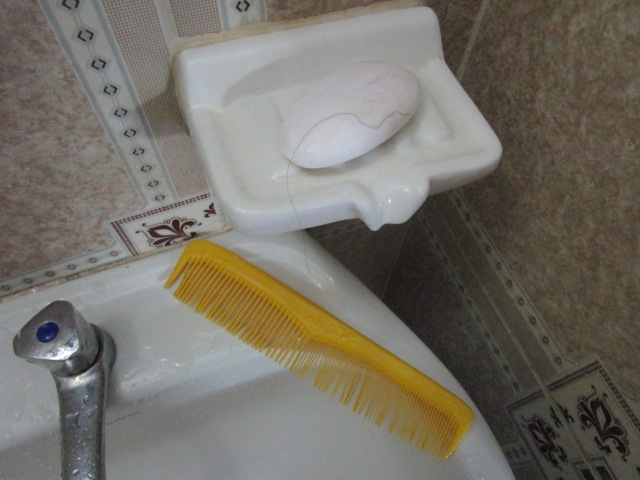
We hung our wet shirts and pants and socks on a clothesline we strung across the room and took a cold beer and cola from the fridge. That’s when I saw the first cockroach skitter along the wall – a Lower East Side-type sucker, the size of a Bic lighter. I decided it was time for a shower. My flip flops firmly on my feet, opting for our soap rather than the complimentary – used – cake on the sink, black hairs and all, I tried scrubbing the road grit and posada perfume from my body. I succeeded in ridding myself of the former, the latter not so much. When the soap slipped from my hand and skidded across the shower floor, it picked up a few black hairs in the process. Before getting into bed, I wondered who would actually use the comb provided for guests – obviously someone had.

Our hostess warned us that we had to be out by 8am (another early morning ‘palo programado’) and we were beat besides. We woke to the familiar smell of piss and air ‘freshener’ and packed quickly. Another cockroach sighting later and we were out of there. But as we did our final check around the room, the fan mixed with a breeze and flipped up a corner of the sheet, under which was a condom wrapper. At least they’re practicing safe sex, I thought. Ciao Cumanayagua, it’s been real.

I’ve now had my Cuban posada experience – twice in five days. Believe me, it was plenty.

_____

I need to add a little postscript to this post which has nothing to do with posadas but everything to do with how Cuba continues to puzzle. Besides, I need to exorcise the images swimming around in my head. In the five days we were tooling around the Escambray, I learned of a disturbing fact of local life. My friend José told me of a fellow he knows in the tiny town of Cordobonal who is clinically insane. And his family, rather than commit him, keeps him in a cage. I asked my friend not to share information like this with me; as a writer, I was visualizing his whole miserable existence (and that of his family). Later that night, sitting with José’s family in a similarly tiny town, I learned that his cousin’s wife has a nephew who went insane at the age of 14. For the past 17 years, this young man has been living in a cage as well. I think the worst part of it all is that my friend’s cousin was asked to build that cage – and he did. If I’m having trouble with the image of people living in cages, what about the person who builds them? I shudder to think. What makes it even more difficult for me to process is that Cuba has a national network of psychiatric hospitals – all free. Sure, conditions can be pretty scary, the food is scarce and terrible but is this worse than spending your life in a cage? I was talking to another friend about this yesterday and he told me about another one in the center of Vedado that he can see clearly from his balcony. And last night, I was watching Going Clear: Scientology and the Prison of Belief (a documentary that has gone viral here) and I was left positively speechless when I learned that L Ron Hubbard kidnapped his young daughter as revenge against his wife in the 1950s, took her to Cuba and left her with a mentally disabled Cuban woman – who kept the young Hubbard girl in a cage. WTF people?! This boggles my mind, but it’s got me thinking I should make my own documentary…

12 Comments

Filed under Americans in cuba, camping, Cuban customs, Cuban idiosyncracies, Cuban phrases, Expat life, Living Abroad, off-the-beaten track, Travel to Cuba

Carnal Delights in Cuba

A friend celebrated his 40th birthday a few days ago and invited his closest amigos for a party – one of those blow outs with a guy posted at the door to keep out crashers, a DJ spinning cool sets, and the liquor flowing ‘a full’ as we say. The type of party Cubans call ‘tirando la casa por la ventana.’ When I asked another friend, formally invited, if he was going he said: “yeah, I’ll be there. But it’s bound to be a fiesta de chorizo.” It took me a moment to get what he meant – that the male to female ratio at the party was going to be grossly imbalanced, there would be 10 guys for every woman. It would be, in Cuban argot, ‘a sausage party.’

Later that same day, another friend was telling a tale about a recent liaison, saying it was a ‘palo de cebolla.’ For those around the table who didn’t understand, we explained that an ‘onion shag’ is when the girl has a killer body but a face only a mother could love: you lift her dress above her head, tie a knot, and get down to business, her ugly face hidden from sight. Sausage parties and onion lays got me to thinking about Cuban diversions, including sex, and how so many of the terms and phrases involve food. There’s a certain logic going on here since eating and screwing, food and partying share many of the same senses, are sensuous and fulfilling in equal measure (when done/cooked right).

As the wheels turned, I began recalling all sorts of expressions that mix the bedroom and the kitchen. For example, it’s hard to miss the double entendre in Los Van Van’s popular song ‘don’t bother knocking, the black guy is cooking.’ I started picking the brains of friends and away we went. The most obvious is the classic ‘papaya.’ When you’re in Havana and crave this juicy, coral-colored fruit, you best ask your produce purveyor for ‘fruta bomba’ – because here, papaya means pussy. I remember once a group of tourists invited me to eat at La Guarida, Havana’s most famous and in-demand restaurant and laughing out loud as we perused the dessert menu. The chef’s suggestion was ‘papaya pie’ and I explained to the table of yumas (yes, I used to sing for my supper, but no longer) that it was obvious they put it on the menu just to hear foreigners order ‘pussy pie.’

Terms and turns of phrase for the sex act (and fluids), are almost always referring to foodstuffs. Semen is called ‘leche’ (milk) or – as I’ve just learned, writing this post – sometimes as ‘lágrimas de chorizo’ (sausage tears). When you haven’t been laid in a while, you have ‘queso’ (cheese). It’s a veritable charcuterie around here, I tell ya. Talking to my next door neighbor the other day, I learned another relevant sex act phrase when he told me he was going to ‘jamar una heva’ (devour a chick). No matter that he’s married. A quickie, meanwhile, is known as a ‘palo de conejo,’ rabbit being a popular protein in these parts. There are also derogatory terms that I refuse to use including ‘tortillera’ (egg scrambler), loosely translated as ‘dyke.’

When I have questions like these, I go to the experts. In this case, I consulted Alfredo, a street-smart Casanova and all around good guy. Seems Alfredo is a breast man for all the terms he rattled off the top of his head for different kinds of tits (he also provided illustrations): bananas (with nipples pointing skyward); fried eggs (with large aureoles); and orange piths (saggy and sucked nearly dry). He also provided tons of food-related terms for penises: banana dicks curve up, cucumbers are a catch-all phrase for the male member, and my favorite ‘pene de Pelly.’ For those of you who have never gone searching for food here at midnight, been to a baseball game, or ventured to a Ditu, you probably don’t know Pelly, but it’s our Cheese Doodle. Garlic flavored. You can imagine the rest.

I’m sure there are many more; if you have a favorite, please do drop a line – I’m always anxious to broaden my vocabulary. Regular readers of Here is Havana know I’m a huge fan of Cuban slang and sayings (dichos). One of my recent acquisitions makes an apt close to this post: ‘come pan para no comer más pinga.’ This is a handy phrase for whenever a Cuban is being a douchebag – you only have to say ‘come pan;’ they’ll fill in the blank.

24 Comments

Filed under Americans in cuba, Cuban customs, Cuban idiosyncracies, Cuban phrases, cuban words without translation, Expat life, Living Abroad, Relationships, Travel to Cuba

Tourism: Killing the Cuban Encanto?

First came the packs of drunken jailbait to the Fábrica de Arte, snapping selfies while the Cuban band played their hearts out.

Then came the frat boys so blasted they lay unconscious in the street and had to be taken to their casa by the police. Only they couldn’t remember where they were staying.

They were followed by the wannabe musician from Ohio (passing himself off as Brazilian) who threw himself to the sidewalk, shrieking like a schoolgirl ‘SOY TURISTA!! SOY AMERICANO!!’ when the Cuban he cheated set upon him.

This is the new normal for tourism in Havana. It ain’t pretty. I figured I’d just wait until it blew over (and it will blow over – the college girls will discover the gorgeous mulatto bailarín is already married; the Yuma who bought a house with his Cuban ‘frens’ will return after a quick trip north to find the locks changed and no legal recourse; and word will get around that there are too frequent shortages here, of beer, water, electricity, English speakers, toilet paper, vegetarian food, whatever). Then something happened which obligates me to write this post.

“Where’s the closest Wifi? We have to connect!”
“There’s a park with Wifi six blocks from here. And they just activated Wifi along the Malecón.”
“What’s the Malecón?”
“…”

These were nice guys, don’t get me wrong. But this is akin to asking: what’s the Louvre? What’s the Coliseum? The Malecón is THE symbol of Havana. This instantly qualified as one of the top 3 most stupid questions I’ve been asked. Plus, it convinced me to try – once again – to do something about the pervasive ignorance about Cuba. I know I’m pissing in the wind here – if I’m lucky, this blog gets 400 views a day and those are mostly choir members: people anxious for on-the-ground information about Cuba, my followers, friends and family. So how do I reach the others? The cruise ship passengers in port for 36 hours and the spring breakers here for a mojito-fueled weekend? What about the 1% who land their private jets at José Martí International Airport and contract a paladar for their exclusive dining pleasure, paying $6000 for the privilege (the equivalent of 20 years salary for my neighbor Mercedes), and then jet off again? Or the family of four “daring” to visit Cuba, trying to keep up with the Joneses?

I’ve written tons about traveling more conscientiously to Cuba. I’m a founding member of RESPECT (Responsible and Ethical Cuba Travel) and tell everyone willing to listen about this new consortium. Anyone who asks to buy bottled water at Cuba Libro gets all the potable (boiled) water they can drink, free of charge, and an earful about why we don’t sell bottled water. Four million tourists in 2016, drinking small plastic bottles of water + island ecology = environmental disaster, no matter how you do the math. The same goes for anyone who asks for a straw. We stopped using straws after participating in the Ocean Conservancy’s International Coastal Cleanup last year when we learned that drinking straws are the #1 plastic product polluting our planet’s oceans.

I’m one of those people who always wants to do more. Maybe it’s because I’m the youngest of four. But my time, money and reach are limited. I wish I could have an impact beyond sending these thoughts into the ether and bending everyone’s ear about the evils of (some) tourism. So, until I’m invited to do a TedTalk, here are some of the most egregious and under-reported ways that tourism is affecting us here on the ground:

No Spanish whatsoever: Get a phrase book, an app, an interpreter, whatever works for you, but learn at least a few words of wherever you’re traveling. One everyone needs at the ready here in Cuba is “permiso.” This means ‘excuse me.’ Learn it. Use it. I was at a popular club last week (part of my so-far-not-so-successful 2017 goal to re-establish some work-play balance in my life) and spotted my friends across the crowded dance floor.
“Permiso,” I said, the smile on my face audible.
No response.
“Permiso!” I repeated, louder.
Nothing.
“PERMISO/Excuse me!!”

The dude shifted his weight slightly to the right and I squeezed through. I get that not everyone speaks Spanish, wants to speak Spanish, or has the time, energy or brain cells to learn some local words before traveling to foreign climes. But when you start fucking with our mechanisms and flow, it gets annoying (and inefficient). It’s like the people in New York, my home town, who stand on the left side of escalators or who stop on street corners to look at maps or their smart phones. Permiso isn’t a hard word to learn or pronounce, nor is taking the último, which you should do in each and every line in which you find yourself. El último is the most important concept to learn before traveling here if you don’t want to screw with the local flow.

The classic car cliché – The fury for classic car tours has me irrationally incensed. I say irrational because there are upsides: cars rusting in back lots or abandoned in garages for decades are now up and rolling through the streets; restoring them is providing jobs for many; and the cars’ owners are making a killing taking tourists on hour-long loops around the city. Before I unleash my rant, let me repeat for lazy readers who missed it the first time: I recognize the benefits and I admit my attitude is irrational. Now for the complexities: convertible car tours have become such a trend that cars previously functioning as collective taxis for the local population are being taken out of circulation and their tops shaved off (to the tune of $3000 CUC) to satisfy tourist demand. Whereas these drivers used to hump their ass all day long (or hire someone to do so) collecting 10 peso fare after 10 peso fare (about 35 cents), they now get up to $50 CUC an hour (that’s double the average monthly state salary) taking Tea Party supporters on a Habana Vieja-Plaza de la Revolución-Parque Almendares-Miramar tour. I would love to do a Candid Camera-type maldad where fun- and sun-seeking tourists from Kansas jump into the convertible and instead of traveling around ‘Disneyland Havana,’ they’re taken into the dark, gritty depths of Jesús María, La Timba, Fanguito, Los Pocitos, and Coco Solo, ending up in Mantilla…and left there.

Sadly, whoever is currently chopping a classic car is screwed: word on the street is that the state auto regulatory authority won’t be approving any more post-factory convertible conversions. If true, I predict it’s going to play out like this: car owners unable to procure the proper authorization will operate anyway, illegally. The money is just too tempting and they have to recover their investment after all. When stopped by the cops, they’ll slip 20 CUC in with their license and registration and everyone will drive off happy. Instead of being just another cog in this cliché, I suggest taking a classic Harley-Davidson tour – you’ll get the same 360° views; be closer to the people and scenes you’re photographing; and helping a needier Cuban than the convertible car guys. It’s also much cooler. Two other factors about these cars chap my ass: the environmental damage of all these cars without catalytic converters is incalculable and when they line up on the Avenida del Puerto in the heart of Habana Vieja to await thousands of disembarking cruise ship passengers, it causes nasty traffic snarls, making it even more difficult for regular folk to get to and from home, work, or play.

Pro tip for those on one of these tours: someone, please sit up front! It is local custom for someone to share the front with the driver. Cubans are social like that, plus, you get to observe up close how a pro maneuvers 2 tons of steel , can feast on the dashboard details (I’ll bet you 10CUC the speedometer doesn’t work), and you get the same stellar views. Bonus, insider info will definitely be yours if you share a common language with your driver – whose ear you’ll have for an hour or more. So unless you’re on a honeymoon or something similarly romantic, ride shotgun – even, or especially if, you’re traveling solo.

Your lucha is our gain – There’s other tourism-related stuff annoying me lately: foreigners who refuse to stand in line and pay to jump it; visitors who scam subsidized cultural events here, insisting on paying the local price (almost all venues here have a Cuban and a foreigner price, just like in Hawai’i, the Seychelles and other tourist-dependent islands. Often these same visitors decry the low salaries here, precisely as they undermine them); and of course, sex tourism, prostitution, transactional sex or whatever you want to call it. I was very heartened to learn at the recent Gender Violence, Prostitution, and Sexual Tourism Symposium that Cuba is considering penalizing johns instead of the sex providers a la Sweden.

Because this is a very depressing post and we’re living in very depressing times, I want to end on a positive note. A couple, actually.

First, talking with my friend Ernesto today, he observed that one of the good things about all this tourism – especially from the USA – is that people are seeing Cuba for themselves and learning first-hand that much of what they’ve heard about Cuba – it’s dangerous, a repressive police state, that Cubans are miserable and hate their realities – is bullshit. People drawing their own conclusions from their own experiences is powerful.

Second is the story of Kevin, Bryant, Blake and Jeff (or something like that), four bros from the East Coast who came to Cuba on a quick 5-day whim of a trip. On Day 2, they went out to the Morro-Cabaña and while picking their way along the moss-slickened cliffs, Jeff (or Kevin or Bryant or Blake) slipped and went tumbling into the sea. He surfaced quickly, holding his iPhone above the water as his friends fished him out. They made their way back to their casa in Havana and began hunting for raw rice in which to submerge the iPhone overnight in an effort to salvage it. Night had fallen by this time; they didn’t know where to buy rice and no stores (let alone bodegas) were open regardless. They stopped in a restaurant and in their broken Spanish asked one of the waiters if he’d be willing to sell them some rice. A diner overheard their conversation, rose from the table where he was sharing dinner with his family, took the guys to his home, gave them some rice (refusing payment, of course), and invited them back the next day for some coffee and conversation.

They were thrilled and so was I: here were four dudes whose Cuba trip could have been filled with a classic car tour, mojitos, jineteras on the Malecón and getting nauseous on Cohibas. Instead, they embraced serendipity, solidarity and the spirit of experiential travel. I don’t know if they ever got the iPhone working, but I know they made travel memories that will last their lifetime.

77 Comments

Filed under Americans in cuba, Cuban customs, Cuban economy, Cuban idiosyncracies, environment, Expat life, Hawaii, Living Abroad, Travel to Cuba

El Paquete: Opiate of the Cuban Masses

I’m not a particularly heavy consumer of the “package” (love the typically Cuban double entendre) but I know what I want, my ‘Paquete’ guy knows what I want, and I stray only for research and on recommendation. Samantha Bee; Transparent; Lie to Me (swoon, swoon Tim Roth); The Lobster; Sully; Captain Fantastic – here, we get any series you’re watching for $1 a season. Another buck gets me six or seven films playing in a theater near you.

What first turned me on to The Paquete in a hot and heavy way was when I discovered it also contains all manner of professional sports. My Paquete guy, Yuri, knows: any Knicks or Golden State game and all pro tennis, bring it on! I’ll take a Redskins game or any old Monday Night Football once in a while, too. I’m a life-long sports fan and active participant, still, and if you ask me, sports transcend. Watching and playing sports – the most democratic and unequivocal of all human pursuits – thrills me. I know some of you don’t get it and actively reject organized athletics. That’s cool, but I do think it’s your loss.

Enjoying sports via The Paquete however, has its quirks and downsides. Lots of it comes from ESPN en español, so none of the sportcasters are familiar, they’re using Spanish sports slang I’m still learning, and they can be terrible chismosos. Listen, I don’t want to hear about Carmelo Anthony’s new car – just call the game asere! Another downside is when you’re fast forwarding through the commercials, the total length of the program is indicated on the menu bar. So if Team X or Player Y is getting walloped, the length of the menu bar serves as spoiler and at a certain point it becomes obvious that a mid-game rally or late match come-from-behind is impossible. Knowing which side will reign victorious before or mid-way through the game takes a lot of the fun out of it. But ‘del lobo un pelo’ as we say here: something’s better than nothing.

For a fairly new phenomenon (within the past 8 years or so), The Paquete is making a huge impact. When I moved to Havana in 2002, most neighborhoods had a person – young, old, home-bound – with an impressive VHS (remember those?!) collection who made a few extra bucks renting them out. Their bread and butter was mostly Hollywood blockbusters several years out of date and the latest soap operas from Brazil and Mexico. The more technologically savvy and those with more financial resources eventually transitioned to DVDs and soon thereafter, businesses cropped up where the movies or series or soaps you wanted were copied directly on to a memory stick (‘pingüitas’ in Conner slang, for their form and propensity to catch viruses). The soaps and flicks were then re-copied and re-copied as you shared them with friends. The final stage of this digital evolution is The Paquete.

In the simplest terms, The Paquete is one terabyte of media downloaded (mostly via a super speedy connection provided by the State and motivation a-plenty for some people to hang on to their low-salaried State jobs) every Monday and then shared the length and breadth of the island via private businesses dedicated to just that. I’m fairly certain this is a ‘grey market’ activity, but according to ABC News, The Paquete is the #1 employer in Cuba today.

Accessing The Paquete is easy: within a 5-block radius of Cuba Libro, for instance, there are no fewer than half a dozen private businesses – usually in the entryway to a residential home or building rented out for this purpose – where you can go every Monday to download the entire terabyte of new offerings on an external hard drive. Or you can pick and choose what you like. Different distributors organize their offerings differently and prices and quality vary. Some folks I know price by the gig – 8 gigs for 10CUP (about 35 cents) is one of the cheapest I’ve found – others, by the number of movies or episodes you want. Some movies have been hand-filmed in cinemas (where you can hear audiences laughing at the funny bits and get a glimpse of the guy returning from the concession stand with his popcorn), while others are BluRay or high definition. There is also home delivery service of The Paquete where the distributor arrives at your door and copies directly on to your computer whatever you request (free anti-virus included).

It’s worth mentioning that The Paquete contains more than just sports and Hollywood movies and series – the funny (and not so) tapes from Havana’s police cameras; digital magazines produced in Cuba (of which there are many, Vistar being the most high-profile); erotica (AKA soft porn); La Voz; music videos; computer games and more. Super events like the Stones concert in Havana and the Chanel show are also popular and usually available in days following the actual extravaganza. Recently, Zoológico, a Cuban-produced soap opera deemed unfit for broadcasting on state-run TV has been a popular Paquete request.

Games of Thrones, The Walking Dead, West World: visitors are often shocked at how plugged in and current Cubans are. Me? I’m still shocked at the pervasiveness of the ‘Cuba frozen in time/stuck in amber’ myth. There’s now Wifi the entire length of the Malecón (to give you an idea of the type of tourist here nowadays, I actually had someone ask me last week what the Malecón was. Dios mío) and in parks from Mariano to Nueva Gerona, Quivicán to Guantánamo. A pilot project will install broadband in 2,000 Habana Vieja homes soon and Cubans will begin receiving data on their mobile phones this year. Every medical professional has full internet access via Infomed and those accounts are often “shared,” multiplying users two- or three-fold. In universities, the national network of Joven Clubes, at work: Cubans are way more connected than you ever imagined.

I know a lot of readers may have expected and wanted my new post to be about Fidel’s death and I’m sorry to disappoint. Rest assured, I’ll get around to it (once I’ve further wrapped my head around it). But I will provide you with this bit of intel straight from my friends who work distributing The Paquete: during the 9-day national mourning period, these folks made money hand over fist, working double time, until midnight most nights, copying movies and series and sports for Cubans anxious to watch anything besides the ‘round-the-clock Fidel documentaries being shown on State TV.

I gotta go.There’s a hot Murray-Djokovic match I’m in the middle of watching.

17 Comments

Filed under Americans in cuba, Communications, Cuban customs, Cuban economy, Fidel Castro, Living Abroad, Travel to Cuba

Trumped Cubans

Everyone’s talking about it, stunned still. Cubans and foreigners alike are godsmacked by Trump’s victory and Republican control of Congress. A steady stream of locals and Yuma have been making their way to Cuba Libro, dazed, incredulous, tears in their eyes. No matter if they hail from here or there, everyone posits the same question: WTF?!

Just this morning one of our Cuban regulars came in and said: ‘Conner, explain this to me.’ What amigo? Trump? I asked. ‘Yeah. What the fuck?’ He was followed by a pair of Tulane students on a semester abroad at the University of Havana, heads hanging in their frappuccinos, questioning everything: what future do young people of color have in the USA? What happened to our country’s moral compass? Should I be afraid to go back? They admitted they are afraid to go back.

The shock Cubans are experiencing (US election news has been all over the TV, on the radio, in the papers, and on the street) is accompanied by confusion. A lot of people are askin me to explain the electoral college, not understanding how more people voted for Hillary but she lost regardless. They’re not alone and I’m buoyed by the emergence and strengthening of initiatives to abolish the electoral college and unite progressives (read: the sane) across the country. Many Cubans are also wondering why the two instances in recent memory where the candidate winning the popular vote lost the election were Democrats.

What Cubans do know is that the USA is a very polarized country – something many have sensed, either through conversations with family and friends or by traveling there themselves, but which they’ve seen taken to the extreme in this presidential election. They also know about the crash of the Canadian immigration webpage in the wake of Trump’s unexpected triumph. They know Californians (or some of them anyway) are mounting an initiative to secede. They’re quite aware that the House and Senate are under complete Republican control – and this is causing no small measure of fear and anxiety; the George W Bush years are still fresh in everyone’s mind here. Including mine – I survived two terms in Havana under that regime. It was brutal and cruel: family visits only once every three years, regardless of circumstance, including death of your mom, dad or other immediate family member, reduced remittances, and harassment/prosecution of US citizens and residents traveling to ‘the forbidden isle.’

Other interesting comments revealing Cubans’ analytical capacity and knowledge over the past few days include:

– “And that email shit the FBI pulled a week before the election? With no demonstrable evidence? That’s democracy?! They totally screwed with the election!”
– “We’re going to see a lot of Cuban viejitos returning to the island after their Medicare is cut.”
“Michael Moore was right.”

Logically, what people here are watching closely, almost exclusively, is Trump’s platform (to use the term very loosely) as regards Cuba. Rolling back all the Executive Orders put into motion by Obama; returning Cuba to the list of nations sponsoring terrorism; and assuring the embargo stays in place (guaranteed regardless, since only Congress can lift it). Of course, what Cubans fear the most is any change in their extraordinarily privileged immigration status. For those still unclear how the ‘wet foot, dry foot’ policy works: any Cubans reaching US shores, by whatever means, receives a financial aid package, housing placement, job training, free English classes, and food stamps. This is complimented by the Cuban Adjustment Act which bestows an ever-coveted US green card to Cubans after a year in the country. I know many Cubans who have taken advantage of this sweetheart deal and the difference it makes for a recently-arrived immigrant – even if they arrived illegally – is immeasurable, unbelievable, yet totally real.

Under Trump, all of this preferential treatment is in danger of going the way of Bernie Sanders. Cubans from Mexico to Brazil, Sandino to Maisí, are crapping their pants. For some, the decision to emigrate across the Straits is easier than cheating on their spouse (kind of a no-brainer here). The process and cost and risk of emigrating is a huge burden, don’t get me wrong, but the decision? Some Cubans – no matter how much they love their native land, no matter their affinity for their pueblo – can’t or won’t tolerate it here. For them, the decision to go is easy.

For others, the decision is one of torment and stress. I have a dear friend who fell in love with a Mexican and although she had never considered leaving Cuba, you know the things we do for love. She left her mother, father, brothers and ailing grandmother, not to mention many friends, and moved to Mexico. Most Cubans “moving” to Mexico only do so in order to cross the border to the United States, where they receive the aforementioned benefits extended to Cubans leaving the island. This is a very popular way to go north – so common that Cubans buy work contracts in Mexico for $6000. Alternatively, Mexican women make themselves available for marriage to Cubans (making them eligible for a Mexican visa), for the tidy sum of $10,000. My friend, who struggled with her decision but ultimately surrendered to love, discovered after several months that love which ignites fast burns out faster. And she also discovered that Mexicans can be ‘insuportable.’ So she’s been desperately trying to save enough money to cross the border into the States. She hasn’t enough savings as of this writing to get a bus to the next town, let alone to the border and beyond. Now with Trump – he who wants to erect a wall between the USA and Mexico – my friend’s plan will probably crumble. I fear for her. This is heavy stuff for a 26-year old who had never traveled far from Havana.

Then there’s Enrique. He stopped by yesterday to unburden himself. Last weekend, he sold his house in La Lisa and stashed the $9000 with some trusted family members, with instructions to not release a cent, even if he came begging. I do this for Cuban friends who don’t trust themselves with money. I congratulated Enrique – on both the successful house sale and his sage decision to park his fulitas with family in a faraway province. But he looked worried.

‘What’s up chico?’ I asked.
Little did I know what was coming.

‘It’s this Trump shit. I can’t believe it. I can’t sleep. I’m not sure what to do.’

This is Enrique’s story: the house sale was to finance his emigration to the United States, a place he never wanted to live, never wanting to be ‘just another Cubanito among millions.’ He’s even had job offers, good job offers, in Amerika. But he has a two-year old son he has never met and his Japanese wife of nine years in Tokyo. Getting from Cuba to Japan takes money and a visa and then what? He arrives in Tokyo just to be a burden to his wife, a stranger in a strange land, where he’ll struggle to communicate, find work, and have fun. So he made the difficult decision to sell his house and emigrate to Florida, working in his cousin’s construction business and saving to travel to Japan in year or two’s time. Enrique’s plans are also slated to go to shit under Trump.
He sipped his cappuccino. ‘I’ll just have to wait and see.’

As for me, things have just gotten too weird. President Trump? Secretary of State Giuliani? Sign me up for the alien abduction.

23 Comments

Filed under Americans in cuba, Expat life, Living Abroad, Relationships, Travel to Cuba

Havana, We Have a Problem: Stray Cats & Dogs

If you’ve been to Havana, you’ve seen them. The poor bitch in heat lying prostrate on the sidewalk trying – unsuccessfully – to prevent another macho from mounting her. Packs of roving cats scouring garbage night after night. Bony and mange-ridden, Havana’s strays have a hard row to hoe. Here, where food is rarely thrown out and the majority face daily pressures more urgent than a dumped or unwanted animal, street creatures have to be really scrappy to survive. They have to dodge the pet police, avoid getting poisoned (a shockingly, all-too-common practice here; when your dog barks too much or causes too much fuss, your neighbor just might feed her some meat mixed with crushed light bulbs or a fatal dose of BioRat, domestically-produced rat poison), and forage enough food to live another day.

lindapreop

Although Habana Vieja has a program for spaying, neutering, vaccinating and tagging strays, this is not the case throughout the rest of the city. Coincidence that the country’s #1 tourist destination is the only place with a functional animal protection policy? You be the judge. Animal rights activists here are trying to get a protection law considered – to present it to parliament, they have to collect 10,000 signatures from Cuban voters. And they almost made it; more than 8,000 people signed the petition to legislate spaying, neutering and vaccinating strays so they might be adopted. But the initiative went to shit when internal divisions (over money, I’m told, which isn’t at all hard to believe), split activists, leaving the petition en el aire, as we say here. Today, there are at least two groups still actively pushing for legislation: PAC (Protección de Animales de la Ciudad) and CEDA (Cubanos en Defensa de los Animales). There are also foreign associations – from Canada and Belgium for example – which help fund local animal protection efforts and come periodically to spay and neuter strays for free. These initiatives are admirable, but speaking from personal experience, wholly inadequate.

Toby. Linda. Tucho. Yoko. Luther. Belle. All of these cats and dogs are part of our family. Don’t worry. I haven’t turned into some crazy cat/dog lady; I don’t live with all these animals, but rather say ‘our family’ since here in Cuba we still speak more collectively than individually (let’s see how long that lasts; in Havana at least, the “me” mentality is starting to root). And each of these wonderful pets are rescues. At different times, under different circumstances in different parts of the city, they were saved from life on the mean city streets.

tony-and-marylou

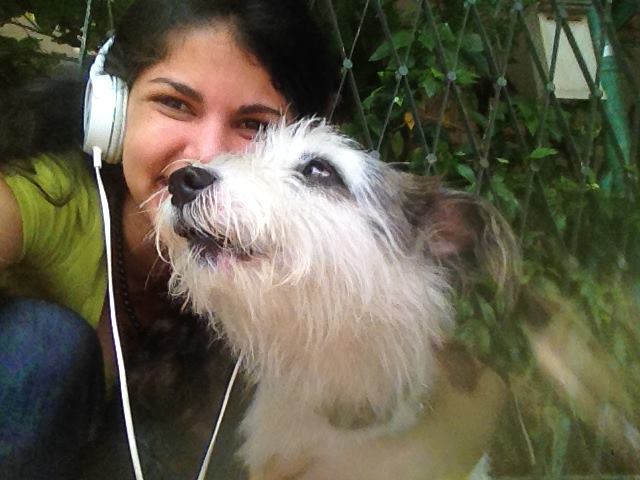
Toby wandered into Cuba Libro, dirty and sorry-looking, in 2014, soon after his young owner headed into military service, whereupon he cast Havana’s most beloved terrier mutt into the streets. I’ve got empathy for abandoned dogs, but as my father once wisely observed: ‘living with animals went out with Jesus.’ Besides, I live in a three-flight walk up – hardly ideal for a dog. So Toby lived in Cuba Libro’s garden, eating pizza and spaghetti until one fateful day when a violent tropical storm ripped open the Vedado skies, sending down thunderclaps and lightening, a hard pelting rain, and almonds from considerable height. And then my conscience kicked in: ‘that very cute dog is waiting out this storm alone. I better go check on him.’ When I got the locks off the gate and entered the garden, Toby was in the corner, soaked-to-the-bone and shivering, with a heart-broken look on his face. Did I have a choice? No folks, I did not. I plopped him into my backpack, strapped it to my chest and rode him home on my bike. Every day since, we’ve walked from our apartment to Cuba Libro, where he is more famous than me.

Tucho, salvaje!

Tucho, salvaje!

yoko

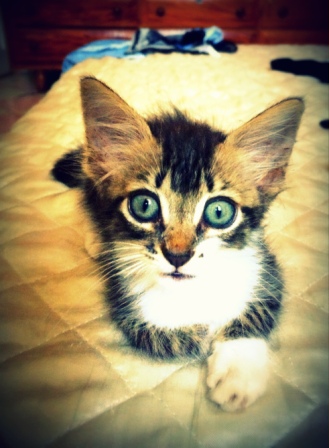
Tucho, the dog, like his friend Yoko, the cat (her partner, John, went the way of the actual Lennon, unfortunately), were found dumped in garbage cans, on the verge of starvation before my friends Lis and Alfredo took them in. Luther, meanwhile, was rescued outside the maternity hospital in Marianao. Lis and Alfredo discovered him when they came upon a gaggle of mischievous kids pelting the kitten with pebbles. Following a proper chewing out for their cruel behavior, my friends provided house and home for Luther (named for Dr King, who Cubans revere). This is one superior kitten who scales trees and walls like a superhero, can leap through windows better than a thief, and who already has his very own fan club with a President and card-carrying members, of which I am one.

Local heroes, Liz & Alfredo (and Tucho!)

Local heroes, Liz & Alfredo (and Tucho!)

luther

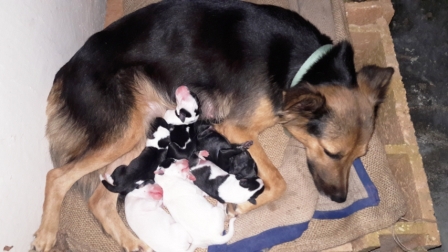
Belle, a gorgeous mutt with a good dose of German shepherd, was found abandoned in a coop, her fur so infested with chicken lice she couldn’t stand herself. Or even stand. Belle was taken in by my friends at the organic farm Finca Tungasuk where they tried all manner of non-chemical applications to cure her. Seems these were some hyper-resistant bichos: they finally resorted to spraying her with Lo Maté!, Cuban roach and bug killer. This is some strong stuff (manufactured by Cuban convicts, by the way). ‘If this doesn’t kill these lice, nothing will,’ they figured, letting the aerosol fly, taking great care to keep it from her head, mouth, eyes and ears. These are CUBAN bugs, remember. Rather than die, they hightailed it to Belle’s nose where they formed a writhing black mass like something from a sci-fi movie. Grossed out but determined, my friends eventually relieved Belle of her vermin, now contained on her nose, using a small brush. The good news is, today Belle is a beautiful, healthy, and happy farmhouse dog. In fact, she has just given birth to six gorgeous puppies sired by Huracán from the adjoining farm.

belle1

belle2

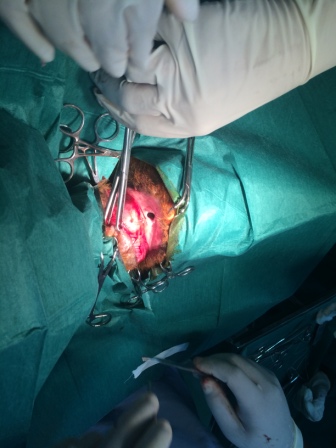
There’s Belle and then there’s Linda. Similar names, completely different experiences. Linda was found in San Miguel de Padrón at death’s door. This is no Cuban drama-rama or exaggeration: this one-year old mutt with baby doll eyes was lying on the sidewalk literally more skin-stretched-over-bones than dog, unable to lift her head. Seems her owners (strike that: abusers) had kept her on a choke chain so tight, a one inch band around her entire neck was raw and bloodied, with tendons exposed. Meanwhile, the ring on the chain had opened a nickel-sized hole in her throat so any sustenance proffered (she was beyond foraging for herself), went into her mouth and came out the hole.

lindaoperacion2

lindaoperacion

Likely she had only a few days of life left when Alfredo and Lis (the same friends who took in Tucho, Yoko, and Luther) carried her home. What ensued was a modern fairy tale mixed with grisly, gory reality TV – a three hour surgical procedure to close her perforated pharynx (during which she flat lined twice), intravenous antibiotics multiple times a day, changing of bandages, intramuscular vitamin injections, and a special high protein diet, among other measures (yes, she was allowed to sleep in the bed!) to help nurse this helpless animal back to health. It put my friends in the poor house with all the transportation, medication and care required, but you should see this beautiful, grateful pooch just a week after her surgery. Hair growing back, eating like a horse, she’s constantly wagging her tail and setting her soft, gratitude-filled eyes on every human she comes across. And she and Toby have fallen in love. Exactly six days into her post-op recovery, she came into Cuba Libro bundled in a sheet carried by Lis. Toby immediately began licking Linda’s stitches and kissing her nose. He swiftly moved to sniffing her butt and before we could intervene, he mounted her. And she liked it. I swear they were both smiling. We’re now considering the possibility of mating them once she’s fully recovered. After Cuba’s cutest puppies are born, she’s getting spayed and he’s getting neutered.

linda-que-linda

Spaying and neutering: this is the #1 issue any Cuban animal protection campaign should attack head on. Where I come from, responsible pet owners spay and neuter. It’s hard to overstate how vehemently most Cubans reject this basic obligation – to the animals, to their neighbors, their city, and themselves. It’s part ignorance, part machismo (‘you can’t take away his manhood!’ I was told repeatedly when I announced I was going to neuter Toby. ‘I can’t? Watch me,’ I told dissenters). If more Cubans followed this standard practice, we wouldn’t have buried newborn kittens left in a box by the bodega last week.

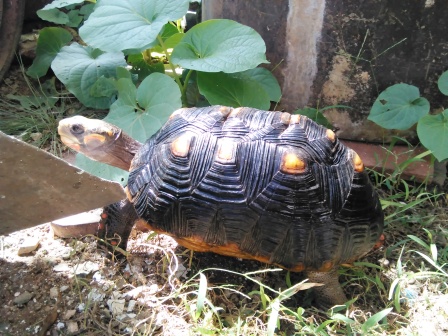
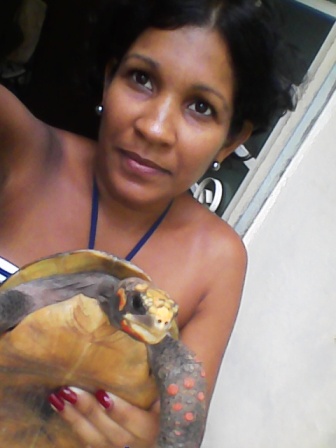
Don’t like cats +/o dogs? Allergic? No problem. There are other animals left to the streets with alarming regularity – a duck took refuge in Cuba Libro’s garden a few days ago and Shiva, a tortoise, was rescued from a Centro Habana sidewalk by another friend a couple of years back. When she reached to scoop up the animal, she was chastised: ‘don’t touch that! It’s brujería!!’ (tortoises are used in various Afro-Cuban sacrificial ceremonies). She paid them no heed and today, Shiva is as big as a football and an integral part of her family. There are myriad reasons for leaving street animals to fend for themselves towards likely death. But there’s no excuse for putting a pet on the streets (a fairly common practice among Cubans preparing to emigrate) and one very good reason for rescuing them: it’s the right thing to do.

shiva
liz-and-shivas

NB: Friends of Cuba Libro, the 501(c)3 I founded to fund projects of high community impact, is launching an initiative to help activists defray costs of animal rescue and raise funds for a proper animal shelter in Havana. Please drop a line if you’re interested in receiving more information.

12 Comments

Filed under Americans in cuba, Cuban customs, Cuban idiosyncracies, environment, Expat life, health system, Living Abroad, Travel to Cuba

Communicating from Cuba?!

One of my oldest, closest friends is having a tough go of it lately. Man problems, work-life balance problems, health problems. In a nutshell, she’s living life, which, as Hobbes observed, tends to be nasty, brutish, and short.

All I want to do right now is pick up the phone and call her in LA to commiserate, consult, and kvetch. Unfortunately, that’s an impossibility since I’ve insufficient saldo on my cell and besides, rates are outrageous (over a dollar a minute). It’s also impossible to call her from my home phone, which has no international service. At least I have a home phone – many people here can’t say that. But igual, rates are outrageous. What about email? you may be wondering. I can pause the pirated US Open match I’m watching, plug in the modem and phone line, wait and HOPE it connects (on a weekday night like tonight, even if I succeed in logging on to the remote computer, the connection speed tops out at 28kbps – that’s kilo, not megabytes, people). If it does connect, yay! Then I have to click through four screens to finally be able to kvetch and commiserate via email. Meanwhile, I’ll be praying no one calls, thereby kicking me offline. But you know what? That just doesn’t cut it when you want to talk to someone you love.

If this state of communicative affairs sounds terrible as you stream the latest Netflix series or rock out to Pandora, while taking calls and reading this blog via your broadband and bandwidth, it is. But things are a lot better than when I first moved to Havana in 2002. Back then I lived in a microbrigada in what’s known as a ‘silent zone’ – meaning a neighborhood with no landlines. For the next six years making a phone call (nationally only, of course) was a serious chore. I had to make sure I had the right coins (because not all coins are accepted; that would be too easy and efficient), go down five flights of stairs and walk several blocks to a pay phone. And if there was a neighbor gossiping with her girlfriend from Gunatánamo? Ay mamá! The wait for that precious phone could be half an hour or more. I remember a fight broke out once – nothing physical (it takes a lot, or a lot of rum, for a Cuban to raise a hand or throw a punch), but rather a loud, bellicose shaming: ‘chiquita! You aren’t sitting at home in your living room. This is a p-u-b-l-i-c phone. Wrap it up already!’ This encouraged others to chime in. ‘There’s a line here, you know!’; ‘we have to make calls too. Give us a chance muchacha!’ people in line grumbled.

Having a cell phone back then was unthinkable. It was extraordinarily expensive of course and it was illegal for Cubans to have them. That seems absurd now, given how far connectivity has come in the intervening years. The only people I knew with cell phones were international correspondents (who also had Internet and satellite TV; the latter is still illegal for Cubans). Fortunately, the days of illegal cell phones and silent zones are long behind us. Now we have Wifi in parks, people get emails on their smart phones, and don’t be surprised if the Cubans kids at the table next to you are glued to their tablets or iPads. In short, communication to and from Cuba is better than ever – not as fast or accessible or affordable as any of us would like, but still, we’re leaping into the 21st century. Here’s how we keep in touch in Cuba nowadays:

Cell Phones: Cubacel is the one and only cell service provider on the island. Once you sign a contract for a phone (cost: $30 CUC) and buy an actual phone if you don’t already have one, you have to fuel it in increments of $5 and $10 CUC to make calls. National calls cost between 10 and 35 cents a minute, depending on the time of day. International calls are over $1 CUC/minute no matter where in the world you’re calling. Text messages are more affordable (nine cents per 160 characters within Cuba, 60 cents to the rest of the world) but can be prickly in practice.

Just getting a cell contract is a neat feat since the lines at Cubacel offices can be obnoxiously long and it’s not uncommon to find they are out of SIM chips, in which case you’re shit out of luck. If your phone is from outside Cuba, it will likely be locked or won’t accept the size chip used here, which also renders you shit out of luck. This, however, is ‘resolvable’ since private entrepreneurs all over the island have opened businesses specifically to unlock phones and cut SIM chips down to the proper size (costing an additional $100 CUC or so all in).

Text messages are a fast, cheap way to communicate – I’m sure many of you reading this send scores of messages a day without even thinking about it – but texting can fail mightily here. The most frustrating aspect for me personally and millions of Cubans is that it’s impossible to send messages to or from the USA using a Cuban cell phone. You read that right. You can text a congris recipe to your friend in London, Madrid, Buenos Aires or Montreal, but can’t tell your mom in Kendall that you love her or confirm an upcoming meeting with a delegation from DC via text. There are services to allow texting between the two countries, but Im too tired to jumopop through even one more hoop! Internally, text messages also get delayed when volume is particularly heavy – on Valentine’s Day, say, or when the Stones are in town. How many times have I been rudely awoken by a 4am text that was actually sent the night before? Too many to count. And how many parties or family meals have passed without my presence due to delayed message receipt? Ditto. The moral of this story is two-fold: if the information you need to convey is time sensitive, spend the extra money on an actual call. And if you want a good night’s sleep, put your phone on airplane mode.

The same advice holds for US folks with Verizon, T-Mobile or Sprint, which now have roaming agreements with Cuba. Rates are usurious – you wouldn’t be the first to return from a Cuba trip to find you’d racked up $1000 in roaming charges. The only people these agreements benefit are business and government fat cats with even fatter expense accounts.

Now for the good news. A service appeared several years ago which allows you to recharge a Cuban cell phone via the internet. This means you don’t have to hunt around for someone selling the $5 or $10 CUC scratch off cards and you can do it any time of the day or night. Don’t have an internet connection and credit card? No matter – friends anywhere in the world can gas up your cell with the click of a few buttons. But it gets better: every six weeks or so, the companies providing this internet-based service have promotional offers which double or even triple the money charged to your phone. For those without friends or family abroad willing to plunk down money on your cell, there are private businesses all across the island which allow you to take advantage of these promotions for a $2 CUC surcharge. These services (Facebook is another), have literally transformed communication between Cuba and the world strengthening relationships and even reuniting families. My friend Douglas in Havana, for instance, reconnected with his long-lost brother, Clive, in Stockholm. They first made contact using Facebook and now talk via cell thanks to offers like those provided by ding which make calls affordable (admittedly, I’m often transferring money from my cell account to Douglas’ – and other friends – so they can talk. This is another new and wonderful option we have: using a simple code, you can transfer saldo from one cell to another here.) Clive has been to visit Douglas three times in the past 18 months and it’s heart warming to see their relationship blossom.

While there are a handful of companies offering this suite of services, my family and friends swear by ding (not for nothing but ding is headquartered in Dublin so receives bonus points for the Irish connection). Hearing about my mom’s latest canine escapade or wishing my niece a happy birthday, sharing details about our latest art show at Cuba Libro or regaling friends with Harley tales: I can personally attest to an improved quality of life thanks to ding’s generous recharge offers. And all you have to do is click Cuba in their drop down menu, enter the phone number and click ‘Top Up.’ This last has led to some panicked calls from Cuban friends: ‘Conner! My socio in Canada wants to put money on my phone before the offer expires, but they can’t find where to do it!’ I tell them to click the big green button that says ‘Top Up’. Even bilingual friends look confused at this point, unclear what ‘top up’ means – it’s less than intuitive this last step. The ‘top up’ service is sold in 500,000 retail locations around the world as well. Ding also has services for putting money on Cuban landlines and nauta accounts.

Nauta: This is even newer and more novel than cell phones. An email and internet service available directly from your smart phone (which one repeat visitor called ‘the new Bible in Cuba’), Nauta is very handy, especially if you work extensively with Cubans via email. Opening a nauta account may involve an interminable line, but it will be worth it once you pay your $2 CUC to open the account and receive a dedicated nauta email address. Then you can send and receive email and surf the internet for $1 CUC per megabyte – the money is deducted directly from your cell phone. Internet can also be accessed from hotels ($6 CUC/hr) and dedicated ETECSA internet offices (the most user-friendly is in Miramar Trade Center). Ding also offers Nauta top up services.

Wifi: Wireless access in public parks across the nation may just prove to be the revolution within the revolution. This technology was introduced a couple of years ago and allows people – again, those privileged enough to have smart phones – to connect to Wifi for as little as $2 CUC an hour using a one-use card. Re-sellers are rampant due to the high demand however, and do a booming business cranking the cost of the cards by 50 to 100%. Since my phone is more dumb than smart, I’ve never used the park Wifi but I know the connection can be wonky depending on traffic and well, communicating in a public space can present privacy issues. If you want real insight into contemporary Cuban culture, skip a night on the Malecón and plant yourself on a park bench during peak Wifi hours. A grandmother connects to the internet for the first time in her life and meets her baby grandson virtually; a mulatta lies to her husband that she doesn’t have anyone else, that he’s her one and only Papi; a third grader tells his mom about his day at school – whether you’re at 16 & 15 or Parque Coyula or any of the other parks around town with Wifi, such eavesdropping will be a revelatory experience.

For my part, thanks to my family and ding, I finally have money on my phone to be able to talk to my friend in LA. When the call connects, it goes directly to voice mail, costing me $1 CUC in saldo.

42 Comments

Filed under Americans in cuba, Communications, Cuban customs, Cuban economy, Expat life, Living Abroad, Travel to Cuba

That Time of the Month in Havana (AKA Periodo Especial)

So the KKK deigned us with a visit. Not the white hooded racists, but the Prada-clad Kardashian clan. By all accounts, they hated Havana. They are not alone. Reasons to dislike my adopted city abound – the vicious gossip and hearsay; the transportation troubles; the dearth of nuts, berries, cheese, and fish; the inevitable beer or four added to your tab. But apparently, none of this registered on the limited radar/IQ of these young women who will never garner the respect or notoriety of their step dadmom, Caitlyn Jenner (I bet that puts Kim, Kourtney and Khloe’s La Perla panties in a twist). No, they hated Havana because their escapades in the world’s hottest city went undocumented on Snapchat and Twitter, negating whatever semblance of relevance they’ve ever known.

And in Havana, the Kardashians are irrelevant, something else they bitched about: ‘no one here knows who we are!’, proving once again that as insane as Havana is, it remains one of the world’s last bastions of sanity. What is relevant are the expectations people bring to this very unexpected place. I get it: most folks traveling here have sorely limited knowledge about Cuba. Maybe they know about the Missile Crisis or the Bay of Pigs or nothing at all. That started changing about two years ago when the likes of Usher and Jagger, Lagerfeld, Lady Gaga, and the real First Lady began stampeding the island like WalMart shoppers on Black Friday. Naturally, these visits made novel TV fodder for channels around the globe.

Meanwhile, Hollywood discovered a tropical playground with high-quality, low-budget talent (Fun Fact: the 12 day shoot for the 8th installment of the Fast & Furious franchise cost Universal $7 million; Cuban friends working on the set report that Vin Diesel is an idiot). Vanity Fair won’t fulfill subscriptions to Cuba (which has my cotton briefs in a twist), but sent Annie Leibovitz down for an exclusive shoot with Rihana where the pop star looks like just another ‘ho from Centro Habana, $2500 come-fuck-me shoes notwithstanding. All of these factors, plus others beyond the purview of this post, create a pseudo-reality of Cuba in the minds of the outside world. The result? Distorted perceptions and false expectations.

Distorted reality was what led me to create Here is Havana seven years ago – to give you the straight dope on what’s really going on in one of the world’s most fascinating cities. So while the Kardashians are whining about their inability to access the Internet (Pro Tip girls: head to the park at 16 & 15 to get all your connectivity woes resolved), I want to talk about real life issues affecting us on the ground: feminine hygiene products.

This is what period products are euphemistically called in the USA, but down here, where menstruation is talked about in mixed company, between and among generations, and at the family dinner table, we’ve no use for euphemism. Cubans – and now me by extension – talk about maxi pads and ‘Tampac’, blood flow and cramps they way you talk about Fair Trade coffee and standard-of-living raises: big issues, but not a shame-inducing big deal. In short, from periods to explosive diarrhea, Cubans have no pena when it comes to bodily functions. I’ve written previously about my admiration for this kind of Cuban straight talk, but given the ‘tourism tsunami’, I think a re-visit is in order, especially what women can expect at that time of the month.

###

When I moved to Havana in 2002, it had been decades since I’d used a maxi pad (also known as a sanitary napkin, which makes it sound like a Purell-infused paper towel found on your airplane or hospital food tray). Until my early 30s, I was a tampon gal all the way and never used anything but Tampax (Fun Fact #2: tampon brand loyalty is one of the all-time fiercest consumer behaviors according to focus groups and surveys; get a girl on to your brand in her first or second cycle and she’ll love ya for life! Or at least through menopause).

I arrived with a jumbo box of tampons, but was rudely awakened when those ran out: tampons were just not a thing in Havana. Not available, at any price. I was shocked and a little pissed. How did Cubanas cope? Tampons were a necessity as far as my First World mind could fathom and many of you likely agree. Can’t it be argued that the tampon is one of the most powerful weapons in the women’s lib arsenal (after the washing machine and the immigrant nanny to run it)? It seemed antiquated, as if I’d been thrown back to my mother’s pre-Betty Friedan teenage years.

Except this was 2002. And I was bleeding without recourse. I had to adapt.

This exercise in dystopian social Darwinism taught me some key Cuban survival skills. Most importantly, I learned how Cubans confront the monthly bleed: they procure a limited amount of maxi pads via their ration card, supplemented by cotton swaddling they fashion into pads when the ration, inevitably, runs out. The former are often gifted or sold, the latter reserved for when things devolve into a bloody mess. Once in a while, you might find pads in the dollar stores and when you do, buy in triplicate. When all else failed, I resorted to wads of toilet paper and Scotch tape. File under: Epic Fail. This all put a serious hitch in my giddy up on trips to the beach, hotel pool, or secret waterfalls, but I made do without any seriously embarrassing bleed through. Although, as I like to point out, it’s terribly hard to embarrass a Cuban, no matter the context, and period blood made public is no real cause for concern. To wit: my buddy Oscar recently shared a story about partying with friends at one of the faux posh Miami lounges cropping up in Havana like fungi under cow shit. Seating was in booths and on cubes made of white pleather (that’s plastic leather in Conner-speak; learn it. Love it). When Oscar’s girl stood to go to the bathroom, she left the cube smeared with blood. As she walked away, Oscar grabbed a napkin and wiped it clean without missing a beat.

Still, it’s hard to return to bulky, non-beach-compliant pads and relive pleather-smearing accidents after you’ve experienced [insert your favorite brand here]. Indeed, tampons are in such high demand in Havana, we ask foreign visitors to pack some extra in their luggage. Thanks to many kind folks who have done so, we have stock on hand at the bookstore – we’ve saved many a tourist and colleague with these donated ‘feminine hygiene products.’ And we’re converting people too: a pair of Cubana friends declined our invitation to a Cuba Libro beach outing because it was their time of the month. I told them this shouldn’t be a limitation and introduced them to tampons. One of these women was in her 20s; the other in her 30s. I gave them a quick how-to (verbal, not visual) and handed them the bilingual instructions/anatomical diagrams provided in every box. Judging by the frequency of tampon requests we’re now fielding at Cuba Libro, I’d say consumer choice and convenience – of which the tampon is poster child – are going to start driving many people’s agenda. Personally, unless I’m working an outfit requiring a thong or am destined for water play, I’m a stalwart pad supporter. At my age, I don’t have that many more years to worry about all this. What a fucking relief (but please dear lord: retain my robust libido!)

As for the Kardashians, I hope they brought enough feminine hygiene products – they sure did seem like they were on the rag during their visit.

33 Comments

Filed under Americans in cuba, cuban beaches, Cuban customs, Cuban idiosyncracies, cuban words without translation, dream destinations, Expat life, Living Abroad, Travel to Cuba, Uncategorized

Living the Dream: The Stones in Cuba

“I am about to see the Rolling Stones. In my hometown. In my lifetime.”

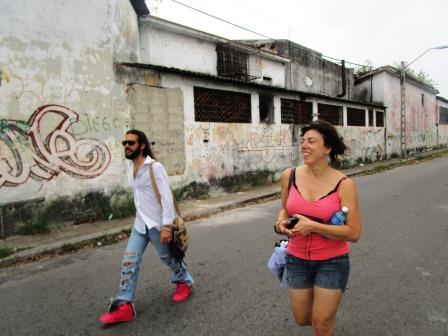
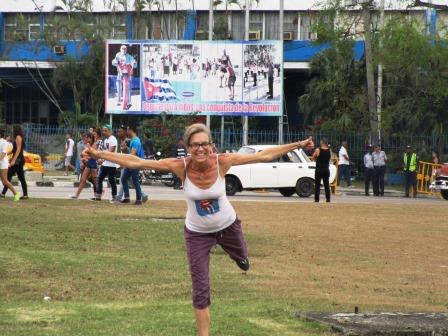
Proclaimed with equal parts conviction and awe by a Cuban I hold in certain esteem, we headed off on foot to Ciudad Deportiva. The Day had arrived. There was a spring in our step, a jaunt in our spirit and the sense that all the sacrifice and struggle, resignation and indignation living in Cuba engenders was about to pay off. For those of us who stick it out here (Cubans and aplatanadas alike) our reward was about to be reaped. It was a chosen and blessed feeling – and still is 24 hours on as I write this; the perma-grin still affixed, the experience embedded somewhere deep and personal, patching a broken heart perhaps, or planting a seed of revelation to be harvested at a later date.

stones en route

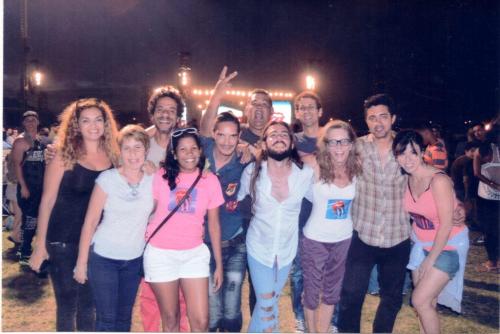
The sun set pink and orange as WisPride beside the stadium as the moon rose opposite, the iconic Stones logo pulsating in 3-D on screens in between. We roamed the grounds, hugging innumerable friends and making new ones along the way, including Julie, who had arrived in Cuba for the first time the night before and had seen the Stones once before – in 1968. We scoped out a spot like a dog who sniffs and spins looking for the perfect place to shit. I invented a game as we waited for the show to start: with what song would they open? Song to close? Number of encores? What song would you most like to hear? Our piquete debated and struck gentleman’s bets.

stones about to take stage

My dearest friend, visiting for the first time in my 14-year residence, craved the ballads: Angie; You Can’t Always Get What You Want. And she got what she needed. This wasn’t the case for another friend who, if there’s any credence to karma, should have been gifted a sweet, slow, poignant Time is On My Side. It is on his side, but reaffirmation by The Stones, at decibel levels heretofore unprecedented, would have been nice. My tear-inducing favorite, Wild Horses, didn’t make the set either. Disappointing, but I too, got what I needed in the end (funny how that works).

stones

My intellectual sparring partner and fellow member in the Cuban Tribe of Cool sidled up as the lights went down: ‘I’m betting Satisfaction to open and Jumping Jack Flash to close, flipping your prediction, just to be contrary.’ He’s smart enough to qualify an opinion contrary to mine: the lights burst on, the Stones took the stage and ripped into…Jumping Jack Flash. We locked eyes and laughed (score one for Conner!) before breaking into wild, unbridled dance, our feet pounding down the grass. And so kicked off two solid hours of dancing, leaping, singing, screaming and booty shaking. The shoes were off, the cameras were away and our hearts were open, from the first bars of Jumping Jack to the final cymbal crash of Satisfaction (I called it bitches!!).

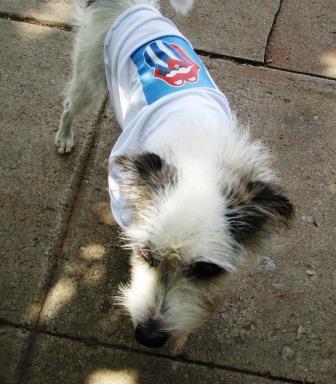
toby los rolling

I’m not a big believer in much, but I do believe in energy transference and we had slipped into a pocket of joy and movement and acute consciousness of the historic moment. This concert was an even bigger moment, more of a game changer than the Obama visit (something else I called). That The Stones eclipsed Obama was a no-brainer: musical convergence – free no less, created by one of the greatest rock n roll bands of all time – has much more relevance for us here on the ground in the here and now. We channeled that energy and convergence, whirling and dipping and hugging throughout the show. We were actively, mindfully, transcending la luchita, shedding the stress of the bureaucracy and lovers’ spats, co-workers’ drama and the myriad hypocrisies and illogical contradictions we encounter daily. We were living The Rolling Stones in Cuba. I’m quite sure we’ll be talking about that rendition of Sympathy for the Devil for decades – as well as Mick’s accomplished Spanish and domination of Cuban jerga; when he shouted ‘Habana! Está en talla!’ the crowd went berserk.

stones pre show

I have many friends who blew off the show citing their distaste for (or outright panic of) large crowds. In fact, this was the number one reason given by many – and I polled scores in the lead up – for not attending. I feel extraordinarily sorry for them. Next time? Face your fears. There was room enough to get down and lay down, cartwheel and roam and damn, did we! You all? You missed the experience of a lifetime. It’s that simple. Herein lies a lesson in saying ‘yes!’ to adventure and opportunity as you make your way through this crazy little thing called life. To those of us who said ‘hell yes!’ to The Stones in Cuba, I salute you. To those who didn’t, you willfully missed the greatest rock concert in Cuban history – something you’ll be explaining to your kids, like people who blew off Woodstock…Sucks to be you.

The sun set, the moon rose and I’m writing this as the sun rises over Havana the day after. My feet ache and my belly’s tight and grumbling from too much coffee and not enough sustenance, but my spirit is bursting with a lust for life and the conviction that you can construct a short, but meaningful and memorable one if you try.
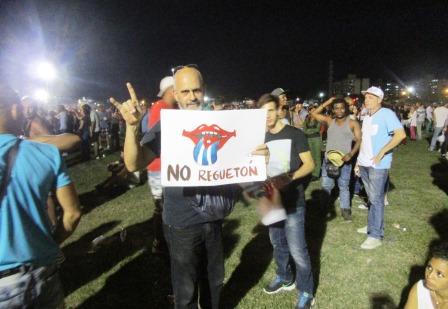
stones no reguetown
The next time I doubt that, I’ll read this post. I, we, are proof.

I know it’s only rock and roll, but I like it.

P.S. Now bring on Led Zeppelin – the only band more beloved in Cuba than The Stones.

Living the Dream – Bonus Material

The Rolling Stones are a band that keep on giving. Not surprisingly, impressions, sentiments, and memories of this historic concert are still sinking in (plus rumors are running rampant here), so I’m adding this bonus material:

– I have it on good authority that the Obama Sisters, Malia and Sasha stayed behind with their abuela for the Stones show while their parents continued on their diplomatic jaunt through Latin America. File under: Another Moment Barack Misses Out.

– Since Saturday, you hear people whistling Paint It Black in the street and Jumping Jack Flash coming from balconies. And everyone’s watching the HBO series Vinyl, including me. New York and rock and roll? I’ve been living this since my diaper days and am loving this series long time!

– Ingress and egress to the venue epitomizes Cuba: the entrances and exits were simply sections of the tall, iron fence taken out. We streamed in with hundreds – no metal detectors, no pat downs, no bag searches. My biker friends did get patted down (yes, profiling happens here too), I learned later, upon which knives, all-in-one tools and boxes o’ ron were stashed in boots.

– Rumors four days post-show: next acts due to play here include AC/DC, Metallica, Iron Maiden, Sting, Stevie Wonder, Paul McCartney and Red Hot Chili Peppers. As with everything here, we’ll believe it when we hear/see it. And even then it’s unbelievable: that the Stones event even happened is still sinking in all these days later.

13 Comments

Filed under Americans in cuba, Cuban idiosyncracies, Cuban Revolution, dream destinations, Expat life, Living Abroad, Travel to Cuba, Uncategorized