Category Archives: Cuban customs

Cuban Harley Culture

[tweetmeme source=”connergo” only_single=false]

In the introduction to my forthcoming book (see note 1), I muse briefly on how similar Havana (my adopted city) is to New York (my birth city): the garbage and grit; taxi drivers with higher degrees; the self-contained neighborhoods – it all feels very familiar. Another characteristic both cities share is they teem with subcultures worthy of an urban anthropologist. Poets and punks, gym rats and drunks, shylocks, gamblers, sluts and thieves: here, like there, we’ve got the full spectrum of human passions, vice and interest crashing together like waves on the Malecón.

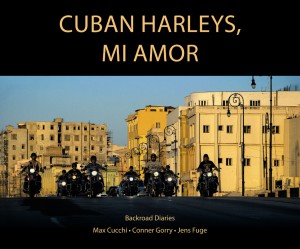
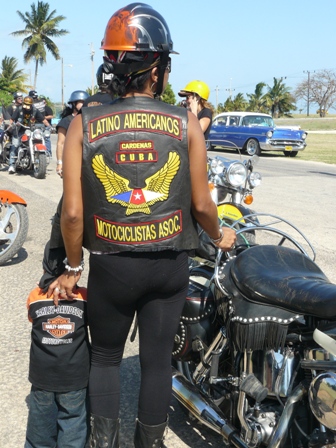
This past weekend, I was (gratefully, willingly) thrust into one of Cuba’s most prismatic and emblematic subcultures and scenes: I rode along on the country’s first Harley rally. For the record: the trip from Havana to Varadero was only the third time I’ve been on a Harley in my life. The first was a joy ride in what was clearly foreplay and a bid to get something more corporeal between my legs than a thundering motor (in this the fella failed, for which I’m thankful: at that destructively drunken point in my life, the last thing I needed was to hook up with a biker bartender). The second was a thoroughly platonic and enjoyable ride home from the year-end party in Habana campo hosted by the Latin American Motorcycle Association (LAMA) and the third time was this past weekend, when over 50 riders made their way to Varadero on pre-1960 bikes from as far as Pinar del Río and Camagüey for three days in hog heaven.

As you may imagine, my muse was working overtime in this new and captivating environment, populated by cool people with their own language and subtext. Since everything I know about biker culture I learned from Easy Rider and Altamont, I was keen to experience the 1ro Encuentro Nacional de Harlistas Cubanos firsthand.

And I wasn’t disappointed. Al contrario: I was inspired and surprised. Because although as a group these folks cultivate and maintain an identity wholly dedicated to, nay obsessed with, Harley Davidson, they remain, al fondo, 100% Cubano.

If you know Cuba from the inside, you know this subculture phenomenon – be it goth, gay, or black – hasn’t always fit in well or properly with the macro unity concept that is the glue for us here in one of the world’s last bastions of socialism. Of course, when there’s USAID or other sovereignty-compromising dollars in the middle, peor todavía. Worse still with reason since I believe all human relations should be driven by mutual respect, regardless if it’s in the realm of sex, economics, culture or politics. In short: you don’t tell me how to live, work or play and I’ll return the favor.

What was even more striking still was that on the whole, these Cuban bikers are more closely connected to their global counterparts and importantly, their US brethren, than any other community I’ve encountered here (see note 2). As a group, they speak (almost) as much English as the slickest jineteros and what’s more, the main biker groups here – LAMA and Harlistas Cubanos – have foreign membership, long timers like me who live here and love bikes. And the mix works seamlessly because beyond the bikes, gear, and foreign presence, what grounds and unites these folks is their Cubanilla, with all the idiosyncrasies good and bad that implies.

Even before we rumbled out of Guanabacoa towards Varadero, the gossip was flying. And believe me: these Harley folks are more chismoso than a kitchenful of bored housewives. I learned all about Antonio’s marital strife; the petty divisions and squabbles among different riders and groups; and how Vladimir got his hog and Oscar lost his. Thanks to the gossip mill, I was privy to the anonymous alcoholic’s struggles and how much Fulano paid for the silicon tits and ass of his funny, sexy, back seat Betty. The grapevine was heavy with juicy fruit, but what impressed me the most was the handful of folks who didn’t gossip. Those are the ones to ponder further, I figure – above all because I abhor gossip as an entirely negative pursuit. With the anti-chismosos, I’d found my people (see note 3).

What also struck me as totally Cubano was the fury for everything with the Harley Davidson logo. I know brand loyalty is common to riders the world over, but Cubans can go overboard like nobody’s business – especially when it comes to logos and bling. And this was no different: there were boots, belts, shirts, jackets and vests, jewelry, headbands, bandanas, flags, stickers, and business cards all emblazoned with the Harley label. Boy, did I ever look out of place with my Hawaii-kine style, particularly when everyone was throwing devil horns and I’m waving the shaka. But while I may have looked out of place, not for a moment did I feel out of place – another sign you’re hanging with Cubans.
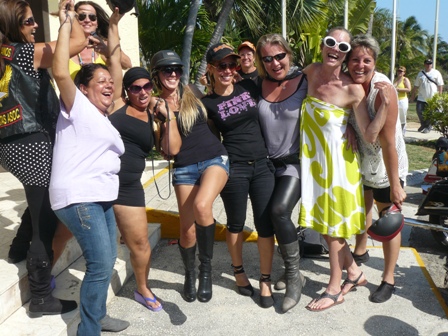
If you know this place and manage well in Spanish, you know that there is no one who can make and appreciate a good joke like Cubans – especially when the joke’s on you. And these bikers are tremendous jokers – jodedores constantly dando cuero. No one is spared, least of all me, and these Harlistas ribbed me good-naturedly at every opportunity: about how I leaned into curves (not that well, apparently; ¡que pena!); about my addiction to roasted pork (see note 4); and my penchant for hopping on the back of anyone’s motorcycle, anytime. I’m sure they have words in biker parlance for promiscuous back seat bitches like I was this weekend, but in my case, it ended with a forged love note that had everyone busting a gut. But at least I fared better than another foreigner who had his gold chain vicked by a muchacha ‘fren’ giving him a massage; he never heard the end of it.

But what most drove home the Cubanilla for me was that bedrock Cuban principle driving relations on-island and off which these folks have in spades: what matters above all else is family. Blood, extended, new and departed. And it wasn’t only the adorable kids along for the ride (many in mini Harley gear), but how you know your back is covered when someone falls ill or that someone will lend a hand when you need a new part, mechanic, or lover and an ear when you’re down. As a group, the Harlistas Cubanos function as one big, complicated – dysfunctional at times, but happy all the same – family. United by their love for their bikes, the road, and their patria.
It’s a weekend I’m sure I’ll never forget. If you’re in Havana and want to experience what I’m talking about, stop by their weekly event at La Piragua (Malecón and Calle O, in the shadow of the Hotel Nacional), held every Saturday at 5pm. You just might get lucky and spot me in some colorful get up on the back of a hog, throwing a shaka to my new friends-cum-family.

Notes

1. A perennial work in progress that’s like a so good, but so bad lover you know you should finish with but somehow can’t (or won’t), I’m determined to get this sucker published in 2012.

2. Granted, I don’t hang out with dissidents who are all up in that foreigner action – and not in a good, healthy way like this bunch.

3. Also a sign of my people: so many Harlistas smoke cigars and give them away like candy, I smoked none of my own stash the whole weekend and returned to Havana with healthy stores thanks to their generosity.

4. And let me tell you: the three puercos asados they laid out for the farewell lunch were the tastiest I’ve had in 10 years here, trumping memorable pigs eaten in a bohio in Pinar del Río, on a secluded beach in Las Tunas, and during carnival in Holguín.
36 Comments

Filed under Americans in cuba, cigars, cuban beaches, Cuban customs, Cuban idiosyncracies, Cuban phrases, dream destinations, Expat life, Hawaii, Living Abroad, off-the-beaten track, Travel to Cuba

Six Highly Annoying Cuban Habits

[tweetmeme source=”connergo” only_single=false]

OYE!!

MUCHACHAAAAA!

¡LLEGÓ EL POLLOOOOO!

Are all the Cubans you know shouters? And do they always crank the music to 11 à la Nigel Tufnel? In your world, is a Cuban whisper an oxymoron? If so, you know that calling Cubans loud is redundant and the ruckus here is a full volume affair.

Labeling this noise pollution is a misnomer since 80% of the time the noise in question is a product of partying, kids screaming at play, antique Chevy’s honking out the Godfather theme, or the neighborhood knife sharpener making his rounds. Steaming beans, whirring blenders, trumpeters practicing in the park – Cuban noise is a life-affirming refrain, a symphony of love, work, and play that’s cacophonous at times, but more soulful and less discordant than planes droning overhead, panicky sirens, migraine-inducing leaf blowers and lawn mowers, and ubiquitous, petulant car alarms.

Even without this modern white noise, it is damn loud here. Some people aren’t down with this. I get it, but personally, I adore it (except when regguetón is involved) since I’m from a fast talking, high volume NY family; I feel right at home with all this bulla. I love that I don’t have to think twice about cranking Queen or audible climaxes (see note 1). Meanwhile, there are other Cuban habits which are highly annoying and chap my ass…

The farmer hanky: I was at a wedding not long ago (see note 2) and while I was smoking my cigar in the patio, another guest used a farmer hanky from the balcony above. For those unfamiliar with the practice, a farmer hanky is when you close off one nostril with a strategically placed finger, cock your head to the side and let the snot fly. With the wind, hopefully. I understand the Special Period and its aftermath made toilet paper a luxury item, but in public, at a wedding, you need to do this? How about a cloth handkerchief, which are all the rage down here? I do know one thing: that guy and I were both lucky he didn’t peg me with his snot rocket.

Barging in: After a decade here, I still don’t get the compunction to burst through a closed door without knocking. It doesn’t matter if it’s a boudoir, baño, or office: Cubans are loathe to knock. As you may imagine (and if you’ve spent any amount of time here, you don’t need to imagine this indignity, you’ve lived it), this can be compromising if you’re on the can or in the throes with your honey (see note 3). And this cuts both ways: Cubans aren’t used to locking doors or responding to ‘anyone in there?’ raps and I’ve walked in on my share of people after knocking, receiving no answer and sallying forth as a result.

Flushing reluctance: This is another truly puzzling and widespread habit here. Innumerable are the times I’ve walked into a stall to find the toilet filled with a cocktail of piss. My first thought: ‘the toilet is busted’ is followed by my second: ‘there’s no water’ (both very real possibilities here), but both prove to be wrong when I depress the handle and the cocktail whirls down and away. Laziness? Adaptation for the many non-working, waterless toilets we have here? I don’t know, but I end up dealing with lot of other people’s shit.

PZP: Thanks to fellow blogger at Cachando Chile for coining this acronym for public zit popping, something I find so repulsive and popular, I’ve mused on it before. Daughters squeezing their mother’s blackheads; lovers giggling with glee as they lance a good one; friends squirting puss from each other’s face to pass the time. It’s as disturbingly intimate and inappropriate as people worrying their dandruff scabs in public – something people all over the world can’t seem to resist, I’ve noticed.

Phone etiquette: Anyone who knows this place even half-well knows no one can dial a wrong number like a Cuban. If I had a nickel for every time someone dials me instead of the person they intended, I wouldn’t have to bust my ass peddling my Havana app. I’m talking to the tune of several wrong numbers a week. And this isn’t just limited to guys intentionally given the wrong digits by girls who aren’t interested; old ladies, bureaucrats, kids – everyone has a penchant for wrong numbers here. Hey, anyone can make a mistake, I get it.

What really grates, however, is when I pick up a ringing phone and the voice on the other end asks: “Who’s this?” No compadre, it doesn’t work that way; you called me. The question is: who is this? Sometimes these are acquaintances or colleagues giving bad phone, but often, these are men cold calling until they get a female on the line. They continue to call and coo, asking your name (and in my case: where you from?), until you tell them to stick it where the monkey put the shilling. Still, I wonder: was there ever a guy who got lucky with this mecánica? It’s highly absurd and disturbingly pathetic. Recently, a guy was calling me every morning at 7:45 with such patter until I told him I had caller ID (available here, though I’m too thrifty to pay for it) and was going to report him. Never heard from him again.

Spoilers: You sit down to watch a movie with your Cuban friend, lover, or mother-in-law and before the opening scene concludes, they exclaim: “Oh! I’ve seen this one! It’s where the wife really turns out to be the assassin but you don’t know it until the end!” Or along the lines of: “You haven’t seen The Crying Game?! It’s the one where she turns out to be a he!” Incredibly, this spoiling sport is even practiced by professional filmmakers. Don’t believe me? Check out the 30-minute muela that precedes the Friday night movie program Séptima Puerta – the host runs down the entire plot arc, replete with clips, before the opening credits even run.

Got any annoying habits you’ve observed among Cubans? Drop a comment!

Notes

1. Interestingly, the one situation where the Cubans I know aim for quiet is during carnal affairs.

2. I’ve refrained from writing about this event – the kitschiest thing this side of a Hialeah quince – to protect the guilty happy couple.

3. One thing I do love about here, however, is that on the whole, Cubans aren’t modest when it comes to bodily functions: everyone pisses, shits, and fucks. There’s nothing to be ashamed of.

176 Comments

Filed under Americans in cuba, Communications, Cuban customs, Cuban idiosyncracies, Expat life, Living Abroad

Let Us Pray

[tweetmeme source=”connergo” only_single=false] I ventured once again outside my comfort zone yesterday here in Havana: I went to mass. It was as oppressive (and let’s be frank – hypocritical) as I remember from Jesuit high school (see note 1), although this one was presided over by the big Catholic kahuna himself, Pope Benedict XVI. It was also mercifully short.

While I’m sure you’re oversaturated with ‘The Pope in Cuba’ news up your way, one of the indelible lessons I’ve learned in my 10 years of island residency is that the picture you get of here from there – especially when refracted through the lense of reporters sent to cover such an event – does not accurately reflect what we’re experiencing on the ground. It’s not only that every media outlet from The Militant to FoxNews has an agenda. The view is skewed also because Cuba newbies rarely grasp the complexities of our context (see note 2), nor the attendant history influencing those complexities. You don’t get this perspective unless you’ve been around and stick around and only if you speak Spanish – even a translator is no guarantee (see note 3).

So let me tell you about the mass I attended yesterday under a blazing sun, delivered by a frog-like man in a funny hat.

What folks are saying: One of the pervasive myths about Cubans is that they’re afraid to speak their minds or offer opinions, and that self-censorship is rampant. While it’s undeniable that people keep their heads far below the parapet in the workplace and have the tendency to adjust responses to what they think people want to hear, I’ve always found Cubans to be fiercely opinionated – once you get to know them. Or more to the point: once they get to know you.

The Pope’s visit confirmed this impression.

“I’m so sick of this Pope.”

“Wasn’t he a Fascist?”

“I’ll come by your house once The Almighty Pope leaves and things calm down.”

“Son of a b@&*h! The Pope took our Internet.” (see note 4)

“Faith, hope, and peace: that’s what it’s all about.”

Rocking our rum-pork-party holy trinity: Another element piquing my interest was how Cubans approached this whole Papal visit. Essentially, yesterday felt much like hurricane preparation and landfall: people laid in stores and stayed home watching events unfold on TV, with some chicharrones and a bottle of rum close at hand. Except – and this was a rude awakening for several of my unprepared friends – authorities instituted a booze ban the evening before, which lasted until the Pope Mobile and its cargo were safely at the airport. So those who didn’t lay in the ron were homebound with pork, friends, and family, but no curda. In my decade here, I only recall a few alcohol-free events: election days are always dry and if I’m not mistaken, they did the same during the Non-Aligned Summit here in 2006. Let me tell you: no rum makes Havana kinda grumpy.

Revenue coup: The cleverness of Cuba never ceases to amaze me and yesterday didn’t disappoint once I saw the huge numbers of tourists in the Plaza for mass. My first clue was the distinguished older gentleman of means dressed in khakis, a pink Oxford, and penny loafers, with not a gin and tonic in sight; clearly not one of us. I started looking closely at the crowd and their clothes and distinguishing different accents. Nicaragua, Argentina, Chile, Panama, the DR, USA, PR, Mexico, Venezuela – flags from all across Latin America snapped in the wind whipping across the Plaza and I realized that aside from the pride and so-called “soft power” the Papal visit signified, it also represented a hugely-needed and greatly-appreciated influx of tourist cash. There wasn’t a hotel room to be found; paladares overflowed; extra charter flights were added from Florida. And all Habaneros (save for cops and docs), were given a paid day off. This is the type of devotion we could use more of and we thank you for supporting the cause.

The US matters less: After Juan Pablo II’s visit in 1998, Bill Clinton’s White House issued a press release announcing new policies ostensibly resulting from this historic trip. Most importantly, the release approved people-to-people visits in order to foment “regime change” and “promote a peaceful transition to democracy” – concepts mentioned no fewer than six times in the short document. Blatantly threatening the national sovereignty of an independent and peaceful country thusly is absurd enough, but that Obama maintains precisely the same policies and parrots exactly the same rhetoric 14 years later – that’s just loco. While the US is embarrassingly and unjustly static in its policy, the world and importantly, Cuba has changed, is changing still. Raúl is a different bird from his brother and that manifests itself in many ways, including less of the ping pong policy-making that based decisions on what the bully to the North was doing. That’s how it looks publically anyway.

holy jama!


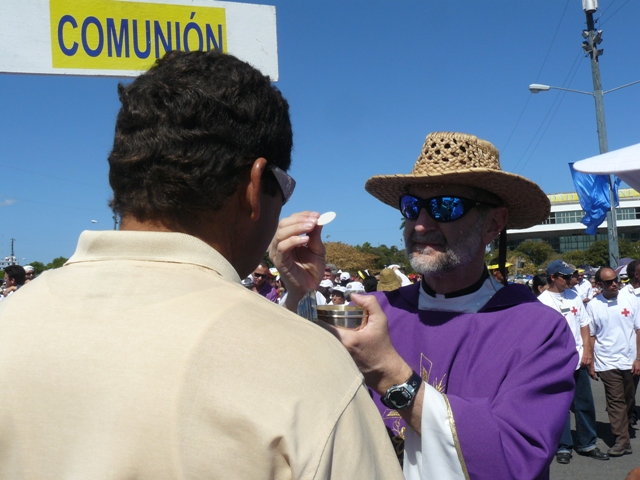
As anti-climactic as the Immaculate Conception: I’m sure you’ve already divined that the religious importance of having his Holiness here held no interest for me and in this I’m not alone: I’ve never seen an event so thinly attended in the iconic Plaza de la Revolución in my 10 years here. In fact, we strolled into the central area just a few moments before the 9:30 mass kicked off and were going against the current of people streaming away from the square. “I came and took the pictures I wanted; I’m going home,” a friend I ran into said. The curiosity seekers and thin crowds were surprising but make sense: as a whole, Cubans just aren’t that church-y. Religious and faith-bound, yes, but that’s different from kneeling before a man in a dress and goofy hat while he proselytizes a doctrine peppered with sins bound to doom your mortal soul. Cubans just aren’t down with that, but they do love a spectacle: one of my favorite moments was when a women who wanted to taste the host tried to fake her way through the motions while the priest held the wafer aloft. When he caught on, he patted her on the head and returned the host to his jaba. Though the Pope himself failed to inspire, Cubans never do.

Notes

1. This, Fidel and I have in common, except those same Jesuits expelled me my junior year (another story entirely!)

2. A simple example: journalists arrive here and compose some flaccid or purply prose (even leading with it occasionally, dios mío) about all the old cars rumbling about. For those of us with continuity here, that’s ‘dog bites man.’ The more compelling, ‘man bites dog’ story is the unbelievable amount of new cars on the road and what that means for traffic, transport options, pollution, etc.

3. The press conference by Foreign Minister Bruno Rodriguez upon the Pope’s arrival is case in point: his response to an English-speaking reporter about “freedom of consciousness” was elegant and sweeping in the original Spanish, mangled and less inspired in English.

4. Cuba has limited bandwidth due to the US embargo-cum-blockade which prohibits the island from connecting to underwater cables running nearby. Instead, the connection for the entire island is provided by a sole, slow Italian satellite. This bandwidth was prioritized for visiting press so they could report live from Cuba. It’s back now, thankfully, obviously.

19 Comments

Filed under Americans in cuba, Cuban customs, Cuban idiosyncracies, Cuban Revolution, Expat life, Fidel Castro, Living Abroad, Raul Castro, Travel to Cuba

Black Market a lo Cubano

[tweetmeme source=”connergo” only_single=false]

If you follow my blog or any similarly semi-intelligent Cuba-related news outlet, you know that things are fast a-changin’ on this side of the Straits. For those out of the loop: in April, 2011, a series of unprecedented policies – which amount to a new (and not without substantial risk) economic paradigm for the country – were approved at the Sixth Communist Party Congress (see note 1).

Though some of my Cuban friends gripe that change isn’t happening fast enough, I’ve been surprised by how many new policies have come to pass as promised: private sales of homes and cars, relaxed regulations for paladares and casas particulares, and the approval of nearly 200 pursuits and services for private enterprise. Other movement towards so-called normalcy is slower and more complicated still: unifying the two official currencies, salary increases, and phasing out the permiso de salida (see note 2) among them.

What these changes will mean for the most vulnerable remains to be seen and I have not a few friends here tormented by uncertainty, anxiety, and a generalized malaise in the face of it all. Uppermost in their hearts and minds: what might these changes mean for the political, social, and ethical tenor of the revolutionary project so many have fought so long to strengthen and so hard to save?

Some days it feels like it’s all going kablooey – that the Cuba we’ve known is reserved now for dewy-eyed nostalgics fingering grainy photos of the 10 million ton harvest. And this is heart breaking to people who have survived so much drama and tragedy: the rending of families in the 60s and 70s, (plus the Bay of Pigs and Missile Crisis), followed by the Mariel boat lift and collapse of the Eastern Bloc in the 80s which led to the torturous Special Period of the 90s. Then there was Fidel passing the baton to hermanito Raúl which I guarantee looks different from your off-island perspective than from ours here in Havana. And let’s not forget the 50 years of sabotage (both bald-faced and covert) by the behemoth to the north, to say nothing of terrorist attacks by US-sheltered individuals and groups.

So before it all goes kaboom (a day late and a dollar short, perhaps?), I’m determined to document the Cuba I’ve known for the past 10 years and the attendant change as accurately, responsibly, and comprehensively as possible. Today, I turn to an examination of the black market.

Jeans and stilettos, perfume and gas. Cigars of course, but also ice cream (Coppelia, the country’s best), and iMacs, milk and meat: it’s all available on Havana’s black market – if you have the hookup or happen upon someone “repurposing” Cuban Clorox or café. In the interest of full disclosure, I have very little direct experience with the black market (or parallel market as Cubans call it) despite a decade in residence; I have no car, so no need for gas, I buy my meat off the cement, fly-spotted counters at my local carnicería, and would love a Mac but don’t earn enough to join that club. Besides, all that shit is stolen (see note 3) and I’ve had enough stuff vicked in my life to know that if you ain’t part of the stolen goods solution, you’re definitely part of the problem.

But then the moral high ground begins to shift (Cuba is funny like that).

—–

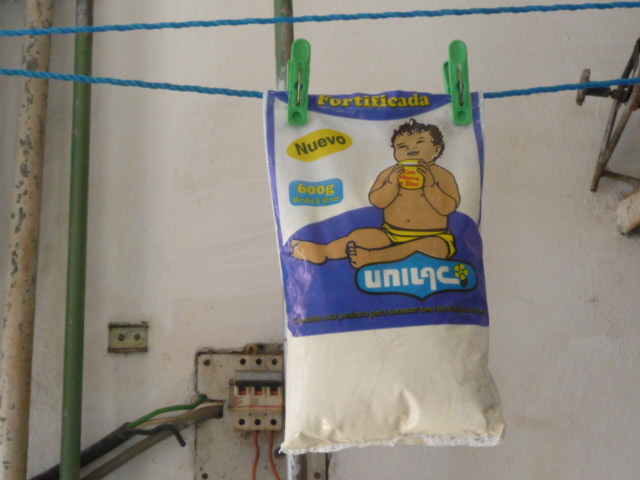
Every once in a while, a kind-faced granny shows up at my door selling either eggs (see note 4) or powdered milk – a key ingredient in the Cuban kitchen. Someone on the block must have told her an extranjera lives in Apt 5 because she came straight to my door that first time, knocked hard and called me La Rusa (“The Russian” – old stereotypes die hard). She’s a bit gnarled and I can tell from the edge in her voice and the fade of her blouse that times are tough for the milk-peddling abuelita. Unfortunately, when I need eggs, she has milk; when I want milk, she has eggs. So even though I was keen to help her out, our supply and demand algorithm never quite jived. Last week, her friendly face appeared anew at my door.

“I have eggs,” she said.

“So do I. How about milk?” I asked.

She didn’t have any that day but promised to “resolve” some; I promised to buy it once she did.

Sitting in my office yesterday whittling a Tweet down to 140 characters instead of working, I once again heard her hearty knock at my door. Smiling big, she told me she had three sacks of milk for sale at $2 a pop (a 50 cent savings over the official store price). I agreed to take one, glad I was finally getting the chance to help out granny. Until she pulled the sachet from her frayed knapsack: I, we both, were taking milk from the mouths of Cuban babes. What my elderly friend was selling was the milk the government guarantees to every child under 7 and I’d just purchased 600 grams of it. I knew that milk wasn’t going to be too tasty. 

—–

This transaction got me to thinking about where all this stolen stuff comes from and put me in mind of my friend Alberto. He has an old Lada on which his livelihood depends. Driving around recently, I noticed a balón de gas (the 20-lb tanks used here for home cooking) wedged behind his seat. Seems Alberto had converted his gas-powered car into a propane-propelled one.

This was a smart investment on his part: although the conversion kit cost $350 and had to be imported from abroad, Alberto fills that tank – which takes him 120 km or so – on the black market for just $5. By way of comparison, that same $5 would buy 15 liters of real gas on the black market; just over four at the pump. I’m glad Alberto has figured a way to enlarge his margins, but wonder about the families who show up to fill their kitchen tanks to be told “no hay” (there isn’t any).

This same pattern repeats itself with steaks and blocks of Gouda, stamps for official paperwork (I was surprised to be asked to produce receipts for my bank-bought stamps on my last visit to immigration) and cooking oil. And while I can appreciate the need for every last Cuban having to do something (or something extra-legal) to make ends meet, the more I parse the situation, the more unsettling it becomes.

And it makes me realize that a certain amount of that aforementioned moral ground is shifting below my feet. At these times I’m forced to ask myself: is this is a part of Cuban culture I wish to participate in? Unluckily for my milk-thieving granny, it is not. But I’m sure she’ll find other clients: as long as there are commodities like oil, meat, and milk to “redirect,” and resell for pure profit, folks will do it.

 As I said: old habits die hard.

 Notes

1. These political powwows are held every so often (the last was in 1997) or mejor dicho: whenever sufficient excrement threatens to make contact with the cooling element, if you know what I mean.

2. All of these issues came to the fore in nationwide public referendum-type debates held in late 2010. The permiso de salida is an exit permit which is mandatory for overseas travel by Cubans and residents. It earns the country revenue, but is also a barrier to travel – an issue that has to be reconciled somehow and soon.

 3. Except the goods in the black market Mac store. None of this is stolen, but rather all new, in-the-box gear with warranty and all, purchased in Miami and spirited into the country.

 4. Eggs aren’t usually stolen either, but rather the product of home-raised hens.

25 Comments

Filed under Americans in cuba, Cuban customs, Cuban economy, Cuban idiosyncracies, Cuban phrases, Cuban Revolution, Expat life, Fidel Castro, Living Abroad, Raul Castro, Travel to Cuba

Conner’s Cuba Rules Part II

[tweetmeme source=”connergo” only_single=false] About six months ago I wrote Conner’s Cuba Rules, a super popular post that raised the ire of some readers. Rereading my musings six months later, I better understand some of the dissent offered by commenters. Given that much has changed here in Havana since then and I’ve had several opportunities to travel outside of the capital thanks to my day job, I’ve compiled a new, hopefully more positive, set of rules to complement the first ones.

The Revolution will be televised: I’ve met a lot of visitors (and even some foreign residents) who have never seen Televisión Cubana. Granted, there are only five channels here, but you’re missing out on a big chunk of Cuban culture if you don’t surf those five at least occassionally. For the intersection of politics and journalism, check out the Mesa Redonda (see note 1) and the prime time news. The latter is important in and of itself for the weather report; pay special attention if Dr José Rubiera is forecasting. Meanwhile, a good baseball game can rivet entire households, the novela even more so. Only if you watch TV here will you understand what Cubans mean when they say: “it was like the Saturday night movie” (see note 2). Meanwhile, the music shown down here – videos, documentaries, concerts and jam sessions – can be as moving as the live thing. I’ve seen Chucho Valdés, Clapton and Queen, the Festival of Modern Drumming and some guy from Uzbekistan singing Talk Boom, a riveting song I’m still trying to track down – all in a single night on Televisión Cubana. Watch it; you’ll like it (or at least get a good laugh or song lead).

Pack a sense of humor: It always amazes me when I read something that disregards, overlooks, or otherwise fails to recognize the Cuban sense of humor, which ranges from the side splitting to the sublime. The writer can be someone who knows and loves Cuba long time or a visitor who has parachuted in and out on vacation. No matter the source, the frequency with which folks miss the funny stuff here is alarming. It’s true, a lot depends on speaking Spanish (or a crackerjack translator), but however you resolve the language question, if you’re comparing Cuba to China, Vietnam, or the defunct USSR, you’re missing one of the most important ingredients in the Cuban character. These folks love to share stories, jokes, and the occassional tall tale, and use their verbal prowess to enliven, laugh, and woo; it is what has enabled these people to resist so much for so long. Even without Spanish skills or a translator, if you’re not laughing a lot on a visit here, you’re doing something wrong in my personal and professional opinion (see note 3).

Use pesos cubanos: If you know even a little about Cuba, you know we operate on a dual currency system with pesos cubanos and pesos convertibles circulating side by side. Since one of my goals of Here is Havana is to bust myths, I always take the opportunity to debunk one of the most pervasive: that foreigners cannot use pesos cubanos (AKA Moneda Nacional, MN), but only pesos convertibles (AKA divisa, chavitos, CUC). This is 100% false. Anyone can use either currency. It’s what each can buy where the difference lies. Certain goods and services, for example, are only available in CUC including cooking oil and butter, hotel rooms and the internet. But fruits and veggies, surprisingly pleasant cigars, fixed route taxis, movie tickets and lots of other stuff are sold in pesos cubanos – if you know where to look. My advice? Change some CUCs into MN (1:24) to experience firsthand how much pesos cubanos can buy and how the double economy works.

So as to avoid confusion +/o more myths: you can always pay for goods and services priced in pesos cubanos with hard currency pesos convertibles but never the other way around. And some services (interprovincial buses, concert and ballet tickets) are sold in pesos cubanos to Cubans and residents, but in hard currency to visitors.

Bring your own reading material: Rarely a week goes by when someone isn’t griping to me about the lack of English-language books and magazines here. What is available is largely limited to historical and political titles and they are very expensive (and make for dull beach reading besides). The Kindle can be handy in this regard, but the bonus to bringing print publications is that you can pass them along to some avid English reader (like me!) upon departure. Drop me a line if you have some good (ie no romance novels or sci fi pulp) English-language reading material to donate to the cause.

Hightail it out of Havana: This may seem contradictory, given that I have an iApp to the city and I recommend in my guidebooks and elsewhere that visitors consider basing their entire trip in Havana. But things are changing fast here and though I’m a city girl by birth and breeding, I’m back peddling a bit on that advice. Havana, with its dirt, garbage, and graft, noise and air pollution, and materialistic ways (I did call Habaneros ‘logo whores’ after all) is distorting Cuba’s image. In short, Havana is not Cuba, which can be said of every major city around the world from New York to Manila, Managua to Dakar. But since visitors often request recommendations for “authentic” experiences and how to discover the “real” Cuba, I now find it prudent to advise getting out of Havana and exploring farther afield. With more flights, both charter and commercial, to provincial capitals like Holguín, Camagüey, and Santiago de Cuba, this is also a more practical proposition than ever.

Above all, have fun and keep your head about you!

Notes

1. The Mesa Redonda (Round Table) is a nightly “debate” show which discusses a topic (US aggression overseas; Latin American intregration) on which all four guests and the modeator agree.There are many jokes in these parts about the program; the shortest and sweetest calls it the Mesa Cuadrada, meaning ‘Square Table’ in literal Spanish, but meaning something more along the lines of ‘Dogmatic Table’ in Cuban.

2. The Saturday night movie here is prefaced by a parental warning, the most common of which alerts viewers that the Hollywood action shlock about to be shown contains Nudity, Violence, & Foul Language. To wit: the old, slow, over-crowded camello buses (of which I took many), were always called ‘the Saturday night movie.’ [NB: did it annoy you to have to scroll down to read this note? Yeah, me too, but I haven’t been able to figure out how to hyperlink notes within posts; if someone has a solution, please get in touch].

3. Trying to connect to and use the internet excepted. Even casual visitors know that connectivity is no laughing matter here. Indeed, I flirted with the ledge and sharp knives today as I frittered away several hours trying to connect. Once I “succeeded,” it topped out at 9.6kbps – not nearly fast enough to load even a simple web page before timing out.

30 Comments

Filed under Americans in cuba, cigars, Communications, Cuban customs, Cuban economy, Cuban idiosyncracies, Cuban Revolution, Expat life, Living Abroad, lonely planet guidebooks, Travel to Cuba

How to Cope Like A Cuban

[tweetmeme source=”connergo” only_single=false]I’ve got a friend – I’ll call her Lucia. Life has been a bitch for Lucia in that special Cuban kind of way with family torn asunder by bi-lateralpolar politics; dramatic affairs of the heart and all the ardor and betrayal that implies; and the exhaustion inherent in raising three kids – the oldest two during those hard, indelible times known as the Periodo Especial, when stomachs growled and cramped with hunger and entire days were spent in blackout. The Special Period was also when mobs of people cast their fate to the wind, water, and sharks on slap-dash rafts with a 50/50 chance of making it across the Straits.

Many of those poor souls failed in their attempt to escape, dying outright en route or otherwise kept from stumbling into the open arms of Uncle Sam (see note 1). With a forced smile exemplifying the Cuban dicho ‘mal tiempo, buena cara,’ Lucia waved goodbye to friends and family, colleagues and acquaintances as they emigrated north. Due to circumstances financial and otherwise, many of Lucia’s people – including her only sister and two childhood friends – can’t return to visit Cuba. Like so many people I know, Lucia dreams of sharing a Cristal wet with sweat in the honeyed Havana light with her loved ones.

Paddling away on a raft or zipping off in a lancha (regular weekly departures for $10,000 a head) is the most dramatic and dangerous means of escape, but there are others: marrying a foreigner is perennially popular, as is the slower (but somehow less tedious) application for the bombo (see note 2); securing a Spanish passport if your family descends from those parts; or quedándose on a trip abroad. That is: going overseas for work or as a tourist (yes, some Cubans do travel for shopping pleasure) and neglecting to get on the plane back. To give you an idea of how profoundly the emigration question touches Cubans, consider ‘La Visa,’ the latest schoolyard game whereby a ball is thrown in the air and a country shouted out – Yuma! Mexico! España! The kid who catches the ball ‘gets’ the corresponding visa.

But contrary to what the world has been led to believe, there are more Cubans who don’t want to leave than do. Like Lucia. Like my husband and his family. Like many of my co-workers. But just because they aren’t scheming their great escape doesn’t mean they don’t feel trapped now and again. Hemmed in by water, but also bureaucracy, Third World economics, politics and other factors quite beyond one’s control – who wouldn’t be? It’s trying at times and requires figurative escapes – coping mechanisms to mollify the madness and loosen the psychological pretzel island living engenders.

In no particular order:

Sex, drugs, and rock ‘n roll: The Cuban penchant (and talent) for sex is legendary and sexual freedom in the form of multiple partners and the pursuit and conquest of same is part and parcel of our daily landscape. Not only is hooking up freeing in the personal sovereignty sense in that it affirms (however hollowly), one’s individual choice and control, but it’s also free entertainment. The flirting and dancing and piropos (pick up lines and compliments) and foreplay help keep boredom (however temporarily) at bay and serve as an escape from all those factors beyond our control.

Drugs – illicit or not – serve the same purpose and despite Granma’s assertion that drogas aren’t a health problem here, 10 years of living in Havana paints a different picture. I know more than a handful of hardcore drunks for example, and prescription pills are in such high demand family doctors have been trained how to handle patients angling for scripts. Marijuana and cocaine can be had at no small risk and price (see note 3) and I’ve heard about Cuban acid trips and X adventures. Rock ‘n roll (coupled with rolls in the hay) is my personal drug of choice and in this, I’m largely up shit’s creek here since Cuba has crappy rock, though regular gigs by accomplished cover bands like Los Kents provide certain succor.

The Novela: Soap operas are addicting, which you well know if you’ve spent any amount of time in Cuba, where ‘round about nine o’clock the city quietly retreats inside to catch the next installment. Brazilian, Argentine, Cuban – it doesn’t matter the origin, as long as the cast is beautiful, the food abundant and the tragedia delicious. These fantasy worlds provide needed escape for islanders of all stripes, from housewives to priests, cowboys to convicts. On December 31st, a hallowed night spent with family here, the clan licked pork fat from their fingers and waited to pop the cider that stands in for champagne here when all the women mysteriously melted away. ‘La novela,’ someone said when I asked after them. Even Fidel has interrupted one of his televised speeches to assure viewers he wouldn’t run over into the soap opera. If you think I’m kidding about soaps as serious escape, consider that two TV households aren’t uncommon here: one for those who want to watch the novela, another for watching pelota. Homes with just one set become divided and bicker-ridden when the soaps and baseball are simulcast.

DVDs: Even before the explosion of private entrepreneurs selling pirated DVDs descended upon us, Cubans habitually rented and copied movies (or entire seasons of their favorite soap), on VHS and now on DVD and in digital formats. Last week as I looked to buy a 5 movie combo from my neighborhood pirate, the saleswoman nodded knowingly when I told her I was looking for something to ‘desconectarme,’ to ‘saca el plug.’ Whether at home or in the theater, cinematic escape is familiar to all Cubans and the saleswoman had no trouble plucking a DVD from the rack with Moneyball, New Year’s Eve, and three other recent releases.

Sports: Technically (and for all the old timers), baseball may be the national sport, but football/soccer is making a play for the title. Every day in the park near my house, local kids field two full teams and kick up the dirt in bare feet as they drive towards the goal. When Barça or Real Madrid play, the bars are packed with fans wearing their colors who unleash a fury once reserved for the Industriales baseball club and national volleyball team. I’m not surprised that booting a little black and white ball about for millions of dollars while having all the super models, fast cars, and sprawling properties your heart desires is the escape-cum-dream package for so many Cubans.

And that’s what it’s all about, friends: the dream. Not the American one or the European one. Nor the dream of fame and fortune those places symbolize (but rarely actualize) for so many from points south. Just the dream, in and of itself regardless of time, space or place. This is what’s essential. We all have them. We all have the right to them. I encourage everyone, everywhere to embrace, as I have, my mom’s sage advice: ‘live your dreams.’ No matter what they are or where they may take you.

In the words of Blondie: “I’ll build a road in gold just to have some dreaming. Dreaming is free.”

Notes

1. The USA has an extra special immigration policy for Cubans known as ‘wet foot/dry foot’ whereby any Cubano who is able to touch toe to hallowed US ground is granted automatic residency in the Land o’ the Free. This ‘advance to Go, collect $200’ dangled before Cubans (and only Cubans) means would-be immigrants from this island are even more reckless than their nothing-left-to-lose brethren from other latitudes, risking life and limb to reach the USA. Again and again, it has proven fatal (Elián González ring a bell?).

2. Other extra special Cuban immigration rules coming from the USA include this emigration visa, 20,000 of which are pledged under current accords (Obama re-instated this old policy suspended by Bush Hijo).

3. I strongly advise everyone reading this against trying to procure illicit drugs here; see Locked Up Abroad.

20 Comments

Filed under Americans in cuba, bureacracy, Cuban customs, Cuban idiosyncracies, Cuban phrases, dream destinations, Expat life, Fidel Castro, Living Abroad, Travel to Cuba

Cuban Juju: New Year’s & Beyond

[tweetmeme source=”connergo” only_single=false]

Havana is a place that holds dear its superstitions and traditions. Where the former leaves off and the latter begins is a tough and tangled business, thanks in part to the very serious and more relevant and prevalent than you might imagine AfroCuban juju floating about the island. While slaves were being forced over here from the Congo and the Gambia, Senegal and Nigeria, bringing their rich and powerful belief systems with them, the Spanish colonists and Catholic Church (the Imperialist 1% digamos) were also in the mix, inventing Cuban traditions.

This wasn’t an entirely innocent affair, I learned recently from Fernando Martínez Heredia (among the country’s most knowledgeable and respected historians), as he worked the rocker in my living room and regaled me with the whole ignoble story about the arrival of the Virgen de la Caridad del Cobre on these shores. According to the legend, Cuba’s patron saint floated into the Bay of Nipe 400 years ago to save three local fisherman adrift in their skiff. With the seas threatening to capsize and surely kill the two mulatto hermanos and young slave aboard, a beautiful, diminutive black virgin floated towards the pobres, the raft on which she rode inscribed with the message: “I am the Virgin of Charity.” With her appearance, the sea instantly and magically calmed, becoming flat as a plate, as we say here.

A legend so pat and serendipitous begs certain questions: Exactly what would they be fishing for in that inland bay? ‘There are no fish worth the time in Nipe,’ Fernando observes. And what of the message, carried by the trio back to the folks living in the area? ‘How convenient that those guys could read – unheard of at the time for people of their station – and Spanish no less,’ my favorite historian continues. But what’s truly intriguing, says Fernando (and I agree), is the appearance, at this precise time, of similar virgins elsewhere in Latin America – the Virgen del Cobre, the Virgen de Guadalupe in Mexico, St Rose of Lima. Turns out there was nothing coincidental or mystical about this plethora of virgins: secular and clerical big wigs determined that consolidating power over their far flung New World colonies required a spiritual component beyond the Father, Son and Holy Ghost. So they created her (see note 1).

But the Spanish also introduced more benign customs, many of which mixed with those of African slaves of yore, more modern traditions and superstitions from around the globe, and others which are purely, wonderfully Cuban. In short, the traditions we observe here are an ajiaco, a stew of culture and influences that mirror Cuban society itself.

Need a karmic boost or extra dash of good luck? Visit El Caballero de Paris, frozen in midstride at the doorstep to the Iglesia de San Francisco de Asís and give his bronze beard a stroke or two – already polished to a high sheen by untold masses who have thusly petitioned for luck before you. If things are such that more pro-active measures are required, drop a coin (the bigger, the better!) down the wishing well at the opulent entrance to the Hotel Nacional; utter your desire aloud and hopefully it will come true.

When you really need to invoke the city’s store of good luck, taking three turns around the sacred ceiba facing El Templete each November 16 is an age-old Cuban tradition (dating back to those Spaniards again) for improving one’s lot or luck. Don’t forget to lay some coins at the base of the tree for extra aché (folks in the know tell me it can be CUCs or pesos cubanos since the spirits also maneuver in the double economy). And speaking of age old traditions: who hasn’t seen the red ribbons flying from the undercarriage of every Lada and Buick, Mitsubishi, and Muscovich around here? De rigueur, this good luck charm for the open road.

Sometimes I think Cubans take all this superstition stuff a bit too far, like trying to ward off evil spirits with strong scents. Why else would someone burn incense in a bakery of all places or douse themselves so early and often with cheap, noxious perfume? More than once I’ve come home from clubs or alit from cars, my taste buds coated with someone’s idea of a come-hither scent. But I digress…

Where traditions and superstitions really gain traction here is on New Year’s Eve. There’s the costumbre of eating 12 grapes on the last day of the year – one for each month, a wish made with each fruit popped into your mouth. This comes from the Spanish I’m told, but I’ve yet to take a shine to this ritual: it seems greedy to make a dozen wishes (I’d be happy with just one or three), plus grapes cost $4/lb here, so it makes for a pricey gambit.

Maybe you’ve been unfortunate enough to be walking under a balcony or open window ‘round midnight on December 31st, in which case you were unexpectedly and unceremoniously drenched by falling waters (don’t worry: it’s clean). One of our endearing and enduring traditions here is to heave a bucket of water out the window at the stroke of midnight, the idea being that you’re chucking all the bad shit from the year previous. I don’t know where this tradition originated (neither do any of the Cubans I’ve been asking), but I was the first at our party with bucket at the ready once 2011 was over and done with.

By far, my favorite New Year’s tradition (aside from religiously observing it with family while stuffing myself silly with roast pork and yucca and smoking one of the amazing high quality cigars that always come my way this time of year) is the walk around the block with your suitcase – a tradition/superstition that improves your chances of traveling in the upcoming year.

On a balcony overlooking the Malecón this December 31st, I ducked falling waters while the cannons boomed across the Bay, couples kissed, and glasses clinked. A sultry wind blew and I waved with delight at all the folks streaming from their homes to wheel their luggage over buckling sidewalks and potholed streets.

To all of you wishing to travel or hoping to fall in love, entreating the spirits for good health or a prosperous 2012, I toast you and hope all your dreams come true. To Cuba and all my friends and family here, there, and elsewhere: I raise my glass with love and respect and hope we continue to reap what we sow.

2012: We’ve got high hopes, in spite of it all.

Feliz Año Nuevo everyone.

POSTSCRIPT

Ive been talking to folks here about their New Year’s traditions since writing this post and a few have mentioned burning all that’s bad from the previous year in curbside fires in Boyeros y mas alla (mentioned by Kristen in comments below), while in Artemisa they burn effigies made of old clothes and such. The dirty water  (and much less toilet water – mentioned by Yemaya in the comments below) doesn’t have any adherents I’ve asked, but we do agree that we won’t be drinking sugar water this year, in accordance with Ifa’s  letra del ano.

Notes

1. You may have heard about La Virgencita’s recent tour around the island. If not, you’ll definitely hear about her as 2012 unfolds since The Pope’s visit to Cuba has been confirmed for March 26-28; his trip kicks off in Santiago de Cuba and a pilgrimage to meet the Virgen.

22 Comments

Filed under Cuban customs, Cuban idiosyncracies, Cuban phrases, Living Abroad

Cuba Contradictory

[tweetmeme source=”connergo” only_single=false]While other bloggers are making their end-of-year lists, I’m just waiting for this year to end. Loss and sorrow is what 2011 has meant for me and while a turn of the calendar page won’t cure what ails me, you, or the world, it can provide a dose of hope – false and fleeting as it may be – to help us keep on stepping. Like a car with an empty gas tank, the warning light red and taunting, we know we’re running on fumes, but moving forward nonetheless; ‘bound to cover just a little more ground,’ as the song goes.

Havana circa December 2011 feels similar: we may be running on fumes, but at least we’re still running.

But that’s today. Other days, Havana hops with energy and enthusiasm and drive, where the theme song is instead ‘How do you like it? How do you like it? More, more, more’ – more millennial and hip, more sophisticated and noteworthy. This fuel injection comes from new economic regulations permitting private businesses, the buying and selling of cars and homes, and relaxed travel rules by Obama for Cubans in the USA wanting to visit family on the island (see note 1).

So how Havana feels largely depends on the day you measure her. And your outlook, what you see and experience, and who you talk to. Just like anywhere else, I suppose (if you’re paying close enough attention), except this place is like nowhere else. The contradictions are starker, more frequent, funnier.

Here are some that have caught my attention recently:

The Limousine/Ox-Drawn Cart

When Cubans of a certain means and bent get married, the bride and groom tour around town in a convertible festooned with satin bows, the novia perched atop the back seat waving to passersby while the driver lays on the horn (some honk out the wedding march, others the Godfather theme). But a few days ago, I crossed paths with the newest fad of the nouveau riche: the black tinted stretch limo (there’s only one) rented from Rex Autos covered in the same satin bows. There was no horn honking, however, and no visible bride – defeating entirely the purpose of showing off to plebes and passersby. I guess the thrill of a limo ride is reward enough for some and it did turn heads, including mine.

A short time later, I waited as two oxen were maneuvered with coos and stick by their expert handler. They carted behind them the water tank (known as the pipa in these parts), that makes the rounds of neighborhoods without municipal water. The pipa is the savior of all those homes and families which only have water un día sí, un día no (or even more infrequently).

Stretch limos and oxen carts; conspicuous consumption and water shortages: Es Cuba, my friends.

Penthouse Too Big/House Too Small

Estrella lives in a propiedad horizontal – a floor-through apartment. And it’s a penthouse no less. These huge, luxurious flats are found throughout Vedado high-rises and are more reminiscent of Manhattan than Havana. They usually feature phenomenal city and sea views but are also a pain in the ass – hard to clean and maintain, they’re also a real liability during hurricanes when their height, exposure, and plate glass windows put them in direct path and danger of the elements. For these reasons, Estrella is looking to permutar her penthouse for something closer to the ground, a more manageable home in short.

Contrast this with my friend Gloria – 68 and a spitfire who has dedicated her life’s work to helping the revolution work, she shares a bedroom with her 6-year old grandson and 10-year old granddaughter. If you know Cuba and the housing crisis we’re in, you know multi-generational sleeping arrangements are common. Except in Gloria’s case, she not only shares the room with her grandkids, but a double bed with the boy to boot. Sadly, this is also not terribly uncommon.

Both Estrella and Gloria are equally revolutionary and politically committed; this too, is Cuba, dear readers.

Chocolate-filled Churros/Pallid Pizza

As the new economic regulations gel, Cubans are figuring ways to live with the Gordian Knot that is capitalism. Folks with money to invest and a head for business are differentiating their products and services – and making money hand over fist as a result. The full-service car wash that everyone is talking about is one example of entrepreneurial pluck and vision, as is the nearby scuba school. Since I have no car and don’t dive, these are simply a curiosity for me. Not so the cafeteria selling chocolate-filled churros; jamaliche that I am, this development piqued my interest. Using a machine imported from Ecuador, these folks crank out a fried, filled sweet treat that drives Cubans gaga – and all for the nice price of 3 pesos (less than 15 cents). Also taking the city by storm is the burger and pizza joint with one of those inflatable playhouses kids love so much in the yard. While the kids jump and play, their parents nosh and drink, dropping a bundle in the process. According to my sources, this cafeteria is netting 1500 pesos a day (around $62 – not bad for a startup here).

Meanwhile, block upon block of new cafeterias sell the same forgettable hot dogs and egg sandwiches, bread spread with cloying mayo or croquettes. Some of these places serve terrible food – tasteless or cold, on day old bread or presented to customers just after the flies have been swatted away. Last week, I stopped by a new cafeteria in my neighborhood selling the smallest, palest, saddest pizza I’ve ever seen. With cheese congealing (despite being placed beneath an office lamp), the pathetic pizza sold at Rapidos around town look delectable in comparison. No wonder the government estimates 80% of these new businesses will fail within a year.

The contradictions abound caballeros. Every human and society has them. But we’ve recently had many complexities introduced into our reality here on the island which are deepening these contradictions. It’s a confusing time – anxiety-ridden once you scratch the surface – but it seems these complexities have also sparked a new line of critical thinking and reflection.

Over several visits with different friends and families over the past week, discussions have turned on the theory and opinion that what we’re experiencing today can largely be chalked up to the Special Period – that time in the 90s when the Cuban economy crashed and burned, threatening to take the Revolution with it. So that wouldn’t come to pass, people tightened their belts, took a hold of their bootstraps, and sallied forth. But at a cost. These conversations didn’t focus on what the new economy is or isn’t doing for our present, but rather the hard times of the past and how they eroded values, placed the pursuit of things over relationships, and planted the seeds of individual survival over the collective.

“We used to live here so naturally.”

“People changed overnight.”

“It was 180° turn, fast and dizzying.”

These are some of the comments made to me recently about those trying years, but in relation to our current situation. Interesting food for thought and worth recalling, 20 years hence, as we contemplate the changes in Cuba circa 2011.

Notes

1. You should see what folks are bringing in from abroad to start their families’ businesses here – everything from car parts and coolers to snorkel masks and jungle gyms. Permissions for Cuban families from the USA to travel here is being threatened by political (but powerful, ojo) dinosaurs in Congress. Although it seems Obama isn’t going to let this happen, I encourage all Here is Havana readers to keep the pressure on to lift both the travel ban and the blockade.

21 Comments

Filed under Americans in cuba, cuban cooking, Cuban customs, Cuban economy, Cuban idiosyncracies, Cuban phrases, Relationships, Travel to Cuba

Let Me Count the Ways…

[tweetmeme source=”connergo” only_single=false]
Ay Cuba.

What have you done to my heart, torn in so many directions but always aching for 23° 7′ 55″ North, 82° 21′ 51″ West? And my soul? Of, by, and for New York from birth, but now reconfigured into an alma cubana that whispers mysteries in Spanish I’m still unable to cipher.

I’m not sure when this happened – feeling betwixt there and between here – though I know it’s common to long-term expats. Hell, I’ve even parsed some of this awkward, never complete transition over the years, crafting a sort of road map to the cultural, linguistic, and romantic bumps in my road.

Despite my musings and analysis, I entered some unknown territory on my most recent trip off-island: in a nutshell, I did not want to leave. Maybe I’ve been hanging out too much with Moises and Rina, two friends who had to travel to the United States recently, but neither of whom had the ganas to do so. It wasn’t due to fear – both have traveled several times for work – nor was it because they’d traveled so extensively that trips abroad had become old hat and rote (see note 1). They just didn’t want to leave the island and these days, nor do I. It feels wrong and a bit scary, like kissing a cousin or sibling.

It makes me sad because I know the lengths so many Cubans take just for a chance to see what lies beyond all that water crashing against the Malecón. And it’s confusing, because on every previous trip, I too felt the need to ‘saca el plug’ (pull the plug) and ‘desconectar’ from the drama-rama that is Cuba. Trips out used to be exciting, emotional, and necessary.

But not this time. I didn’t want to cut whatever cord hooks fast into those of us crazy for Cuba, making us spend money we don’t have, go against our better judgment, and jeopardize job, health, and relationships to get back to the island. In an effort to untangle that cord (or loosen the noose, depending on your POV), I offer all these reasons why I love Cuba (see note 2).

The $1 lunch – Whether it’s a cajita across from the CUJAE or a knife and fork sit down at El Ranchón (one of my all-time favorites), Cuba has some kick ass $1 lunch with all the fixings. Even at the airport: on my recent trip off-island, I filled up at the cafeteria outside Terminal 2 (clearly one of the greatest benefits of the new economic regulations) with a plate overflowing with pork, congris, yucca, salad, and chips. It was so tasty a fellow diner said: ‘my congratulations to the cook – he must be from Pinar del Río!’ (see note 3).

Touching, hugging, and general closeness – Latinos have a different concept of personal space and Cubans, as is their wont, take it to an extreme. Men embrace and greet each other with kisses on the cheek, female friends walk hand in hand, and my best salsa partners have been girlfriends. All of this is to say that Cubans aren’t afraid to touch – your leg when telling a story, your back as they try to pass you in the hall, your shoulder as they ask: ‘how is your family?’ Cubans fill elevators to its maximum capacity and I always delight in watching a mixed Cuban-foreigner crowd boarding them for the mutual awkwardness that ensues. Up in the States, the awkwardness is mine every time I step into a nearly full elevator, encroaching somehow, though there is always room for one more. That weird, reactionary, and let’s be frank, harmful rule that teachers can’t hug students in the USA? My Cuban friends can’t even grasp the concept when I try to explain it.

The hello/goodbye kiss – Related to touching is the traditional Cuban greeting – one kiss on the right cheek no matter if you know each other or not. Even taking leave of big groups results in blowing a kiss to the crowd. I think we should start this trend up north. Our world couldn’t be any worse off with more kisses, could it? On my visit to the States recently, I leaned in towards my host and said: ‘you were wonderful tonight,’ touching his knee as I spoke. Did he misread my Cuban-ness? Interpret it as something more?, I wondered later as he slid his hand down my back to cup my ass. This doesn’t happen in Cuba unless the signal is an unequivocal green (ie the ass grab is mutual).

Fun in the sun – I was born and bred in northern climes, but I’m a winter wimp through and through. Sure I loved tobogganing and ice skating and snowball fights as a kid – still do in fact – but the bulky clothing, the cold that turns wet once the fun is done, and the squeak of day old snow that sounds like someone is packing Styrofoam in your ear isn’t my bag. I like loose clothing, walking in the sun, and smelling gardenias or fresh cut grass in December. Summer clothing is sexier I think we can all agree, and as white as I am, when my freckles fuse into a pseudo tan, I work those scanty, loose-fitting clothes to full effect.

Drink, smoke, & be merry – The 8am Bucanero; the post-feast cigarette; the incessant regguetón: Cubans milk the ‘party hearty, the rest of you be damned’ approach to its fullest. Believe me, I know. And should it slip my mind, my neighbors are quick to bust out their state-of-the-art karaoke machine and warble drunken, sappy ballads until the wee hours.

And the smoking, dios mío. I remember going for my first pap smear at my local doctor’s office here in Havana…hoisting my feet into the stirrups, I watched aghast as the doctor took one last drag of her filter-less cigarette and with a deft flick of her gloved hand sent it flying out the window before diving between my legs (see note 4). If you’re a non-drinker, non-smoker, or not into music appreciation, you’ll probably find Havana offensive. But for those who like an after dinner cigar, enjoy (or need) some hair of the dog once in a while, or are usually the first on the dance floor at parties and functions, I bet Cuba will float your boat.

It’s safer than where you live – Okay, that’s a broad stroke, I know: after all, I don’t know where you live, much less the crime rates. But I can tell you that the absence of crack cocaine, crystal meth, heroin, and guns means a generally safer city. I’m not saying drugs, prostitution, violence, and rackets don’t exist in Havana. They do. But as a longtime traveler and writer of guidebooks to some of Latin America’s most violent cities (Caracas, Guatemala City, San Pedro Sula, Tegucigalpa) and an eyewitness to NYC’s crack attack in the 80s, I can tell you that Havana is a gated community comparatively. Kids play unsupervised in the street here and I walk home alone at night frequently. (Truth be told, I took a short hiatus of walking home alone after a tall guy grabbed me from behind and thrust both hands between my legs one night in Vedado, but I conquered whatever uncertainty the event planted within me). Most of the crime here is of the opportunistic/snatch and grab variety and tends to peak between October and December when people are trying to rally resources for Christmas and New Years’ celebrations.

These are some of the reasons why I love Havana and if you’ve been thinking about coming here, let me leave you with one piece of advice: don’t put it off any longer. The only certain thing in life is that life is uncertain.

Notes
1. Yes, there are Cubans who get tired of traveling they do it so much: politicians, organizers, academics, musicians, and artists, typically.

2. For those interested in earlier thoughts on this subject, see my earlier post Things I Love about Cuba.

3. Country cooking like they do in Pinar del Río is unrivaled – trust me on this one and seek out a campesino lunch next time you’re in that wonderful province.

4. For new readers to Here is Havana, let me reiterate that all the stories found throughout these pages are entirely true, though some names have been changed to protect the guilty.

20 Comments

Filed under Americans in cuba, cigars, cuban cooking, Cuban customs, Cuban economy, Cuban idiosyncracies, Cuban phrases, dream destinations, Expat life, Living Abroad, lonely planet guidebooks, Relationships, Travel to Cuba, Uncategorized

Cuba: Going to the Dogs?

[tweetmeme source=”connergo” only_single=false]
In my forthcoming article for NY Magazine, I write a bit about Havana’s newly-moneyed. Whether it comes from remittances, self-employed work, or working over tourists is irrelevant. What piques my interest (and hopefully retains yours, dear readers), is how wealth – relative as it may be – manifests itself here, how it changes behavior and tweaks norms heretofore adhered to.

Faithful followers of Here is Havana will remember my thinly-veiled diatribe against Cuban marca mania – if I’m not mistaken, I actually called my compatriots ‘logo whores.’ I repeat: not all Cubans, everywhere, but there does seem to be an inordinate amount of importance placed on logos and bling here. I understand why Cubans are attracted to shiny, pretty things, but at the same time I’m biased: one of my abiding principles holds that nothing you can buy builds character (except maybe psychotherapy). The whole status symbol compulsion and keeping up the Joneses – is it inherently bad? I don’t know, but I do know I’m hard pressed to find anything good about it.

These days status symbols are displayed with as much pride as cadres display their photo with Fidel (see note 1). Gold teeth and braces, anything Mac (even if it’s just the iconic white apple sticker), cell phones (working or not), and pure-bred dogs. It stands to reason that Cubans are drawn to perros de raza since they’re a walking (shitting and barking) status symbol.

Now, those of you of my personal acquaintance know I’m not a pet person. A tortoise, perhaps, or a crafty cat that can paw open the door and hunt down a bird when it’s hungry, I’m down with. But a dog? They’re dependent, they shed, they smell, fleas like them, and often they age poorly – farting as they lumber about on rickety bones and bump into furniture with their cataracts. Plus, they hamper travel. Sorry to Sam, Sadie, Paka, Bob, and all the other great dogs I’ve known, but when it comes to canines, I subscribe to my Dad’s axiom: ‘living with animals went out with Jesus.’

But let’s put this dog question into context: I’m sure the average Cuban doesn’t give much thought to any of this. A dog here – whether in the city or campo – means added security. Dogs keep vermin of all types at bay and sound the alarm. In Havana, I’m sure you’ve noticed, folks are very concerned about the safety of their stuff and enclose entire houses – balconies, doors, windows, all – in rejas (iron bars and gates). Even taillights on motorcycles have their rejitas; check it out next time you’re in town.

So a dog is an added source of protection. I get it. But it’s also another mouth to feed and represents all manner of unanticipated expenses like when they get parasites (and they all do) or when the heat wreaks havoc on their fur (hairless perritas chinas excepted of course). They also need to be walked, adding another task to already overworked Cuban women, who, if my observations are accurate, do most of the dog care. In practical terms therefore, I’m not convinced that the benefits outweigh the costs of keeping a dog here. But what I simply can’t get my mind around is Havana’s new status symbol: Siberian Huskies.

They are all the rage: from the grimy streets of inner Habana Vieja to the bourgeoisie boulevard of 5ta Avenida, you’ll see people trying to walk, train, and tame these über Alpha dogs. And what about the heat? Have you been here in August? Just being in your own skin is a sauna – imagine if you had a pelt adapted for permafrost. It disturbs me inordinately, so I’ve started asking around…

According to my dog trainer friend Yamel, these dogs make challenging pets under the best circumstances. They’re a bitch to train because they’re bred for dominance and it’s difficult to establish supremacy. Even Yamel – who works his magic with rowdy shepherds, disobedient Dalmatians and other maladjusted dogs – says he’d never have one for this reason.

My neighbor is case in point with her trio of Huskies. They pull their leashes taut, dragging her behind, paying her no never mind. Recently, I’ve seen her working with a trainer (another expense) in the park nearby. I’m sure she watches Cesar Milan – prime time TV fodder here – religiously. Then there’s the heat. Yamel tells me they adjust, but I’m dubious: I know of at least one retriever who died of heat exhaustion here.

I was completely taken aback on a recent visit to my dear friend Carmita to see she had acquired a Husky pup. This is an unlikely pet for an unfortunate household. She’s an 84-year old pensioner living with her college-age grandson. They get a little economic help from Miami and other points north and are church-going, so have some support, once in a while, from the congregation. But Iker – named for the Real Madrid goalkeeper – is no black market Husky; he’s the real deal. Offspring of Massimo Zar de la India and Bella Bon (I’m not making this up!), Iker was purchased at one of the periodical dog shows here (see note 2) for the exorbitant price of $200. Despite my prejudices, I put a good spin on it to Carmita.

“That’s great! Now you have company while Maykel’s in class.”

She makes that smacking, sucking sound which in Cuban means ‘bullshit.’

“He’s a pain in the ass and makes a mess of everything.”

Gotta love Carmita.

We don’t mention how much his food and care must cost. Why bother?

To be fair, the vet school here has services available in both pesos cubanos (24 to the dollar) and CUCs (one to the dollar), so are technically accessible cost-wise. The CUC section of the school is sparkling, there’s no line to wait in, and medicines are available. Meanwhile, the peso cubano section swelters with people and pets waiting their turn and the pharmacy may or may not have what your dog needs that day.

But the differences don’t end there: In the waiting room of the CUC services, snappy, pretty posters extol the benefits of pure breeds; above all, the posters underscore the beauty of these dogs. Shuffle over to the peso cubano waiting room and the script is different. Here, the posters are yellow and curling and don’t celebrate poodles, spaniels, and Afghans, but instead list the virtues of mutts, pointing up their strength, resilience, and force of character.

Pure breed or mutt? Pesos convertibles or pesos cubanos? Welcome to today’s Havana: suelta sin vacunar (on the loose, without her shots).

Notes

1. Every visit with The Comandante is documented by a state photographer. A few days after the meeting, a 6×8 matte photograph of you and Fidel arrives at your door.

2. While not Westminster, dog shows are serious business here, with breeders showing their stuff and buyers perusing their pups like johns trolling for ‘company.’ When purchased, Iker’s name was Kritop D’Spiritu Libre.

34 Comments

Filed under Americans in cuba, Cuban customs, Cuban economy, Cuban idiosyncracies, Cuban phrases, Cuban Revolution