Category Archives: Travel to Cuba

My Digital Divide

[tweetmeme source=”connergo” only_single=false]Have you ever lost a job or revenue due to tech inequity? Watched hours of productivity get sucked into the ether by a dial up connection that poke, poke, pokes along, draining all satisfaction from the act like an inexperienced or egotistical lover? Known the frustration of not being able to perform any task involving large documents, YouTube, streaming, or VOIP? And my list of music to download? A pipe dream – along with watching Jon Stewart – until I’m off-island. Is there anyone out there who feels my pain?

Before I detail the many and sundry ways Cuba, and more specifically I personally, am far behind the tech curve, let me be clear: it’s not all bad, this technological disadvantage – knowing how to write and submit via a super slow, unreliable connection for example, helped build skills and instill patience which served me well reporting from post-quake Haiti.

Let me also point out that in some cases my technological handicap is not because the gadgets aren’t available in Cuba, but because they’re out of my financial reach – which is the same thing in the end, and a reality faced by many of the world’s poor. Something to think about the next time you hear someone defending technology as the great leveler (and when you receive text messages from Yoani Sanchez: where does she get the money? I have to wonder).

Taken together, the technical challenges (see note 1) combine with the price of buying and maintaining new technologies to create a digital divide which I’m guessing most HIH readers can’t imagine. Here’s a litmus: have you ever folded laundry, washed dishes, or otherwise had to multi-task while waiting for a page to load? No? Then you probably can’t relate.

Before anyone kicks me to the curb for being a privileged foreigner who’s insensitive to what ‘regular Cubans’ go through (see note 2), let me clarify a couple of things. First, I have access to funds many Cubans don’t and I have the ability to open an internet account as an accredited journalist. So privileged? Yes. Insensitive? No – just ask my friends and family without access of their own.

Furthermore, my livelihood in large measure depends on my ability to research and submit articles, stories, and guidebooks and update my iApp via the internet. Without those gigs, I’d be left with just this blog and empty pockets. Don’t get me wrong: Here is Havana is a great writing tool, motivator, community-builder, outlet for angst and cathartic vent, but without my internet connection, it would go the way of Obama’s campaign promises, fast.

This is the practical effect of the digital divide, but there’s a subtler, more insidious side to the disconnect: it contributes to the outsider status of expats like me. Neither entirely comfortable where we came from or wholly accepted where we’ve moved to, we’re in this limbo that is pointed up every time someone waxes orgasmic about Angry Birds or Google +. Mostly I prefer being behind the tech curve (I’ll take the Flinstones over the Jetsons any day) but when it affects The Work, I bug (see note 3).

For those interested in how a decade living in Cuba translates vis-à-vis tech challenges, here goes:

I have no cell phone. Cubans are incredulous when they discover I’m not celled up, but their disbelief is based on their assumptions that a) I can afford one (see note 4) and b) I want or need to be localizable 24/7. They’re wrong on both counts.

I’ve never used a GPS. I’m a map idiot, I admit, but the GPS concept is just dangerous if you ask me. First, any map skills someone like me may have had (or had the chance of developing), go out the window once you introduce GPS. Second, they’re useless in contexts that don’t fit the traditional mapping mold, like Cuba, Hawaii, the Mosquito Coast, and every medina. Third, they limit one’s likelihood to get lost, thereby curbing new discoveries, spontaneity and flexibility, and chances for fun.

I’ve only played Wii once. Granted it was for three days straight and was a helluva lot fun but…Here in Havana I have a friend with a Wii, who calls it ‘healthier than Playstation’ and limits his daughter’s usage (but not his, I suspect!). Tip for those looking for a gift for Cuban friends: you can’t go wrong with a Wii, (two remotes, please).

Kindle-free. My take on the Kindle is kind of like my take on sexual diversity: to each his (or her) own – as long as it doesn’t infringe on my action. In other words: you can have your Kindle, but let me have my books. This is where my old fashioned ways are a disadvantage, to be sure, since hauling books here is a real pain in the ass (see note 5), plus they require shelf space. Sure, a Kindle would make my life easier, but it would also make it less enjoyable. When someone talks quality of life to me, that involves the look, smell, and heft of books.

Blue Tooth?! About a month ago I saw a Cuban American picking his way among the busted up sidewalks of Centro Habana with one of these gadgets wedged in his ear. I burst out laughing at the newest accessory in the Miami crowd’s insatiable need to ‘especular’ (show off their material goods). I tried to imagine what was so damn pressing on the other side of the Straits that this guy was willing to pay three months average Cuban salary (minimum!) to have it mainlined into his ear. Then I remembered what Cubans do with other signs of apparent wealth like watches and cell phones: they wear them and flash them, but it doesn’t mean they work. But it’s one thing to have a busted watch strapped to your wrist or a bunk cell phone clipped to your belt (that’s how the men do it here; the women tuck them into their cleavage), while it’s quite another to walk around with a pinguita in your ear.

¿Conclusión?

My life goes along happily, swimmingly without these advances. Just don’t bring it up at deadline time or mention Jon Stewart – unless you want to see me cry.

Notes

1. Cuba is prohibited by the blockade from connecting to any US satellites or fiber optic cables. At the moment, that leaves Cuba only one choice for connectivity – an Italian satellite which transmits all the data to and from the island.

2. While it’s true Cubans have the lowest connectivity rate in the hemisphere with only 14% of the population connected, these figures don’t reflect the reality since internet accounts are widely and regularly shared here. And the famous underwater cable that has been laid from Venezuela to Cuba and promises to increase our connectivity by 3000%? When it was announced a few years ago, I counseled folks to not hold their breath. Take my advice: keep breathing and continue to file under ‘I’ll Believe It When I See It.’

3. This post was inspired by an ongoing freelance gig that I couldn’t accept because I have no access to Skype.

4. Despite the exorbitant costs (to get a cell account here costs $40, with both incoming and outgoing calls charged at $0.10-$0.45/minute), most Cubans are gaga for cell technology and spend what little money they have to get it.

5. This is also extremely costly: on the direct flights from the USA to Cuba which I’m eligible to take, any luggage over 44 pounds is charged at $1/lb – and that includes carry on.
54 Comments

Filed under Americans in cuba, Communications, Cuban idiosyncracies, Expat life, Here is Haiti, Living Abroad, Travel to Cuba

Cuban Tourism 2.0

[tweetmeme source=”connergo” only_single=false]

New tourism figures were released by Cuba recently and the news isn’t good: arrivals are up (as fans are quick to point out), but revenues are down (as detractors never fail to underscore). Regardless of your love/hate bent (see note 1), the seeming contradiction between more arrivals but less profits makes sense since a Canadian can fly into Varadero and stay a week at an all-inclusive resort for less than a Toronto-Havana plane ticket alone. 

Visitors up and profits down isn’t necessarily a bad thing in the short term save for one small detail: many first timers who visit Cuba say they won’t return.

So what’s a little island to do?

Followers of Here is Havana know my feelings about the golf course strategy Cuba is doggedly pursuing to attract foreign investment and visitors, so I won’t flog that dead horse further. Medical tourism is another growth sector reaping rewards, if the number of Cuban Americans passing through the doors of Cira Garcia (the foreigner hospital here) is any indication. But I’ve recently seen another side of Cuban tourism and it looks a lot like the DR.

_____

One element of Cuba’s tourism strategy many people don’t know about is the push to get locals into the mix (see note 2). In theory it’s a great tactic: offer unbelievable deals for the domestic market and watch those precious CUCs migrate from under mattresses and into the national coffers. In practice however, it looks more like this:

Voluminous flesh rolling from scanty beachwareCuban fashion is a force majeure under the best of circumstances, but take it to the seashore and it’s a Frederick’s of Hollywood train wreck. Lucite stilettos and lamé swimsuits with cutaway sides and gold buckles of unusual size, plus ridiculously shredded ‘cover-ups’ providing full on views of what four decades of congris does to a woman’s body – like a car crash, you want to look away, but can’t.

Drink, Eat, Sleep – There’s something of the spectacular watching Cubans scrum at an all-you-can-eat buffet. Let’s just say there isn’t a plate big enough for the piles of protein and starch they crave. As a work-around, friends and family members divvy up duties and fan out to the different stations, regrouping at their table with multiple plates so heavy they take two hands to hold: rice for 15, bread for a baseball team, mountains of pork chunks and potatoes, and coma-inducing towers of lard-laden sweets. Once the feeding frenzy begins, it blows over quickly, like a late afternoon thunderstorm. From the table, each diner to a one lumbers towards the nearest chaise lounge and passes out. Look for the beer bellies, listen for the snores.

Cost cutting & control – It’s not as bad as the old days when silverware had to be chained to the tables, but almost – on a recent visit to a beach installation that will remain nameless, it became clear that the cornerstone of the national tourism strategy is to maximize profits while limiting losses and cutting costs. I first realized it cruising the buffet. No exotic cheeses and pasta or steak stations like at other all-inclusives. For us it was claria and hot dogs, butter-less bread and shredded cabbage – more like a ‘comedor obrero’ (worker’s lunchroom) than a resort buffet, right down to the single salt shaker for the 200+ crowd. Other penny pinching measures included ‘honey’ that was really sugar water à la Special Period and to wash everything down, the choice of water or water (boiled, not bottled). No matter – the guajiro behind me at the buffet kept repeating breathlessly ‘está riquiquisisimo. ¡Riquiquisisimo!

Tipsy entertainers – If you’ve ever been to a Cuban all-inclusive resort, you know they’re gaga for animación – entertainment from pool volleyball to salsa classes provided by gregarious, often gorgeous, Cubans known as animadores. At the low-budget place where we went, the animadora was a sweet ‘temba’ (35+) who downed not one, not two, but three screwdrivers before leading the crowd in a rousing round of karaoke.

Then there’s the reggaetón and overall pachanga of which Cubans are so fond – partying and kanoodling, dancing and romping about – often in public places. Not helping matters any are the plastic plates littering the beach, along with cups and fluorescent plastic straws, napkins and even a dirty diaper or two – in spite of the garbage cans spaced along the shore like birds on a wire or lovers on the Malecón (see note 3).

 I wasn’t surprised that this resort was virtually foreigner-free (present company excepted). But I did realize on this trip that the most effective enforcer of so-called tourism apartheid is the almighty Market itself.  

Money talks, bullshit walks – welcome to the Cuba Tourism 2.0.

Notes

1. Longtime Cuba followers know three cardinal rules apply when analyzing any news item: 1) consider the source; 2) read between the lines; and 3) after applying rules #1 and #2, accept the fact that you’ll probably never know the full story.

2. Prior to 2008, Cubans were not permitted to stay in hotels and resorts, leading many to brand the policy ‘tourism apartheid.’ That policy was reversed by Raul Castro

3. Cubans’ aversion to trash cans is rivaled only by their aversion to flushing perfectly functional toilets. What up with that?

42 Comments

Filed under Americans in cuba, cuban beaches, Cuban idiosyncracies, environment, Expat life, Living Abroad, Raul Castro, Travel to Cuba

Best Cuba Posts Evah! (Sorta)

[tweetmeme source=”connergo” only_single=false]

Hola & Happy July 26th!

Maybe you’ve noticed I’ve been on a bit of a hiatus – ‘recharging the batteries’ as we say on this side of the Straits – and more importantly, trying to get my act in gear to write, to bite off the rest of my forthcoming book. Aiming to strike while the iron’s hot and all that.

In the meantime, some bloggers way more sophisticated than your humble, slogging-through-dial up protagonist, have invented this clever game of virtual tag whereby they tag Here is Havana making me “it,” inviting me to excavate oldie, but goodie posts that warrant reading.

These are not just pedestrian travel bloggers looking for free junkets and working the ad sense angle, but fabulously well-traveled women who have lived in Chile (in the case of Margaret over at Cachando Chile) and Moldova (in the case of Miss Footloose over at Life in the Expat Lane). What’s more, these chicks can write! I highly recommend checking them out. Also a big shout out to Camden of The Brink of Something Else for nominating Here is Havana (check out the killer shot of Havana taken from Regla – tagged as TBSE’s most beautiful post).

The categories were selected by whomever invented the game and include the “most beautiful,” “most controversial,” and “most overlooked” posts, among others, crafted over the two years of Here is Havana’s life. Have a click around, share with friends, spread the word…

Most beautiful: This was intended to be Chapter 1 of my book Here is Havana, but life has taken a left turn (as tends to happen here) and the book now has a life of its own (i.e. more a chronicle and a memoir than E.B. White’s Here is New York – my original inspiration). Any feedback on this would be greatly appreciated!

Most popular: My most popular post is actually my ‘About’ page but since that’s kind of flojo as we say in my neck of the woods, I suggest also checking out my second-most popular post about the wacky way Cubans speak.

Most controversial: The reaction to this post about Cuban fashion really surprised me – people came out with their elbows sharpened! Despite some of the wide-of-the-mark pop psychology, some of the comments are intriguing. See what you think…

Most helpful: This is a weird kind of category because what may be helpful to you, isn’t necessarily helpful to someone else, and what readers find most useful probably wasn’t the most useful to me (for those interested: the most helpful posts to me are those that help tease out the niggly snarls of cross cultural living, like this one about a visit to the USA and how it messes with my head and this one about always being on the outside looking in. These are closely followed by those posts trying to help me understand evolving Cuban reality, like the capitalist changes underway at present).

Clearly, though, tips for travelers to Havana and how to form a line in Cuba are among my most helpful posts for the general reading public.

Surprisingly successful post: Hands down, this is my post on dying in Cuba, Part I & Part II. There’s a real sadness to this ‘success’ – judging from search terms and other analytics, the folks that are searching on this term are family members living outside of Cuba who lost loved ones inside Cuba and are trying to figure out how to deal with the practicalities of that loss.

Post that didn’t get attention it deserved: At the beginning of 2010, as the wheels of change lurched along their inevitable track, I wrote about what Cubans were thinking, feeling and experiencing and how all these confusing emotions and intellectual gymnastics were affecting behavior. Worth a revisit – especially for those in faraway lands wondering: what the hell are they thinking over there?!

Post I’m most proud of: On the last day of February, 2010, I landed in Port-au-Prince with members of Cuba’s Henry Reeve Emergency Medical Contingent for a stint covering their earthquake recovery efforts in Haiti. For a month, I lived in a tent in their central camp in Port-au-Prince, with no running water, electricity only a handful of hours a day, crippling heat, and an internet connection 1,000 times more frustrating than my dial-up in Havana. Talk about learning experience….

TAG! Now, you’re it:

Bacon is Magic: HIH readers know I’m a chicharrones addict, so simply the name of this blog enamors, but Ayngelina also calls Guatemala “the most underrated country” after only a week. Sharp girl!

Fevered Mutterings, The Art of Unfortunate Travel: Funny, pull-no-punches mutterings by Mike Sowden.

Modern Gonzo: Robin Esrock has lots of companies sponsoring him, his own TV show, and is so well-traveled, he could be one of those ‘been there, done that’ assholes, but in fact is a totally cool, accessible, and down-to-earth guy.

Roving Gastronome: Mexico, Morocco, Queens, Cuba – Zora O’Neill, travel writer, cookbook author, and dinner party hostess-with-the mostest, takes you there and makes sure you eat well.

This Cat’s Abroad: Not updated nearly often enough for the talent and chutzpah exibited, this blog delivers a unique perspective by a woman living in Iraq (and now Kurdistan).

8 Comments

Filed under Americans in cuba, Communications, Cuban customs, Cuban idiosyncracies, Cuban Revolution, dream destinations, Expat life, Here is Haiti, Living Abroad, off-the-beaten track, Travel to Cuba, Writerly stuff

Conner’s Cuba Rules

[tweetmeme source=”connergo” only_single=false]

Since I’m from the Estados Unidos (more fittingly known as ‘Estamos Jodidos,’ or the independent republic of ‘We’re Screwed’), very few friends have visited me here on the “wrong side” of the Straits (see note 1). The lengths the US goes to keep Cuba down makes me indignant, but also sad since my peeps haven’t been able to experience this place for themselves and draw their own conclusions as to how good (or not so) things are in my world.

Last week however, the friend blockade was broken by some dear old amigos who finally made the leap and turned up for a visit.

As you might expect, they had lots of questions about governance and control, salaries and employment, the burgeoning private sector, tourism, race relations, emigration and myriad other aspects of Cuban life. Their curiosity and desire to better understand the sometimes unfathomable reality that is Cuba, forced me into a thoughtful analysis of the mundane, germane, and slightly insane features of life here.

Since the contemporary Cuban reality is so complex and different from what most people know, I’ve developed several rules of thumb for travelers wanting to maximize their Cuba visit. Part philosophical, part practical, the following complement Trip Tips: Havana Independently, posted in these pages some time ago.

– 8 out of 10 people approaching you on the street want something. ‘Do you have the time?’ ‘Where you from?’ and ‘Hello, my fren! Francia?! Italia?!’ are the most common lines used on new arrivals by jineteros. These are always asked with a good dose of charm in some of the best English you’re likely to hear in Cuba and it usually takes a couple of days before visitors get clued in to the hustle.

Conner’s Rule of Thumb #1: Deny hustlers an easy opening by eschewing clothing or accessories that identify your nationality and learn a few deterring phrases. These might include ‘déjame en paz’ (leave me alone) or for those who won’t take no for an answer: ‘no te metes conmigo, coño’ (don’t mess with me damn it). If you’re a hustler magnet (or hater), consider steering clear of tourist hot spots in Habana Vieja and Centro Habana altogether. In the end, all foreigners are seen as rubes and marks regardless of station, education, or experience.

– Cubans tell you what they think you want to hear. As a rule, foreigners receive the ‘poor oppressed us’ line first. A sympathy ploy laced with political assumption, this tactic is tiresome for its banality and blatant disregard for facts. You’ll be told, for example, about the stiff penalties incurred for killing a cow, but this ‘woe’s me’ contingent will conveniently leave out the part about the government guaranteeing milk for all children under 7, pregnant women, and other vulnerable groups – the reason cows are protected property. Cubans renting rooms in their houses are notorious for this type of incomplete picture peddling, complaining to clients about the taxes levied upon their business. What they neglect to mention is that their income-earning homes are provided by the government virtually rent-free. Wanting a rent-free property to run a business and be tax exempt? That’s chutzpah.

But this cuts both ways. If, for instance, you evidence respect and awe for the Cuban Revolution, you’re likely to hear about free education and the wonders of organic farming. What you won’t necessarily hear about are the overcrowded dormitories with shitty food and water shortages or the country’s experiments with genetically-modified crops.

Conner’s Rule of Thumb #2: Cubans tend to see things as black and white, when the truth more often resides in the gray. When picking a Cuban’s brain, always consider the source and listen to the complainers very closely: you’ll likely hear the axe they’re grinding loud and clear.

– You can’t ‘fix’ Cuba. There’s an especially annoying type of tourist who after two weeks here is convinced they’ve got it all figured, that they know precisely how to fix what’s broken (see note 2). Their simplistic ideas often disregard the complexities of Cuban society and illustrate a woeful ignorance of history, geo-politics, even the weather. For example, if you think hurricanes have little connection to health and housing in Cuba, you might be this type of visitor. Even after living here for 9 years, I can’t figure it all out and while it’s possible some tourist is better positioned to analyze Cuba, it’s not likely.

Conner’s Rule of Thumb #3: The more you know about Cuba, the less you understand. Remember: it’s better to remain silent and appear a fool than open your mouth and prove it. If you’re truly keen to learn, read widely before your trip, ask lots of questions once here, and avoid declarations.

– The more things change, the more they stay the same. Huge, watershed changes are taking place here, but at its core, Cuba is still Cuba. It’s a cultural constancy that may be drawing to a close as market forces gather momentum, but I’m not so sure. Consider this quote:

 It is plain there is a good deal to be learned here…Things which we cannot do without, we must go out of the house to find, and those which we can do without we must dispense with. This is odd and strange, but not uninteresting and affords scope for contrivance and the exercise of influence and other administrative powers…I must inform myself on the subject of this strange development of capital over labor.”

– Richard Henry Dana, Jr.

 What’s so interesting about this observation is that it could have easily been made yesterday, but dates from 1859.

Conner’s Rule of Thumb #4: Cuba is evolving, but not necessarily in the direction or way you or I might think (or want). Though the steps people take to maintain balance might change, the fact that the ground is always moving never does. Do like Cubans and roll with it.

No coge lucha. Threats to national sovereignty notwithstanding, Cubans don’t take too much too seriously, preferring to get and go along over fussing and fighting. I’m convinced it has something to do with the weather – this heat is enough to wither anyone’s defenses – but is probably also related to the fact that there is so little housing and employment movement here, if you piss a neighbor or co-worker off, you’re in for a lifetime of problems.

Conner’s Rule of Thumb #5: Don’t get your knickers in a twist if things don’t go as planned or a government drone isn’t cooperating. Have a sense of humor, laugh it off and follow the old axiom: you catch more flies with honey than vinegar.

Writing all this, I realize I’d be wise to take my own advice!

Notes

1. For anyone new to this blog +/o US-Cuba relations, the freedom for US citizens and residents to travel to the island has been restricted for 50 years. As I type this, the House Appropriations Committee has just voted to reverse the small opening Obama offered US travelers wanting to travel to Cuba.

2. These types really chap my ass, almost as much as the Cuban émigré who hasn’t been here in 20 years or worse, the person sitting at their computer who has never been here.

57 Comments

Filed under Americans in cuba, Cuban customs, Cuban idiosyncracies, Cuban Revolution, dream destinations, Expat life, Living Abroad, Travel to Cuba, Uncategorized

Proyecto Runway: Parsing Cuban Fashion

[tweetmeme source=”connergo” only_single=false]Camel toes and muffin tops. Back fat. Lucite heels a la G String Divas. Gold watches and teeth and rings for every finger. Logo whores to the hilt, Cubans want Ed Hardy, D&G, Kangol & Crocs, knock-offs or not. Converse high tops and low, whether you’re 7 or 70 (see note 1) – this is what folks are wearing these days in Havana.

Those of you who know me know my fashion philosophy, where Rule #1 is Form Follows Function. No open-toed sandals in the greasy, gross alleys of Barrio Chino, no heels for Habana Vieja’s cobblestone streets. Rule #2, loosely related to the first, is Nearly New is New Enough. Why buy new when there are Salvation Army and other thrift stores from Kona to Bangor selling perfectly good, new-to-me clothes?

All of this is to explain why I’m the last person qualified to play Fashion Police (see note 2), but folks who haven’t been to Cuba before or in a long time have expressed a certain intrigue with the threads, accessories, and trends here. You asked for it, you got it.

Tight & short Most foreigners go gaga when the get a load of las Cubanas working their Daisy Dukes that are so short and tight, the only word that comes to mind is: chafe. Closely related are micro minis. These skirts, (a misnomer since they’re no bigger than napkins), barely, just barely, cover the crotch. I’m tempted to play Mom to some of these girls, embarrassing both them and me by suggesting: ‘won’t you cover up a bit love? Men can’t be trusted with so little left to the imagination.’ Thankfully for everyone involved, I refrain. I also don’t tell them that in La Yuma, only working girls dress like that – another factor confusing foreign visitors.

All hail spandex! Gone are the days when women of all body types – up to and including carny sideshow size – roamed Havana’s streets in striped Lycra leggings. Nevertheless, the material still reigns supreme and you’ll see it everywhere. As I write this, moneyed matrons are power walking 5ta Avenida in fashionable yoga pants and chicks in skin tight Spandex, their assets emblazoned with ‘Sexy’ or ‘Hollister,’ are waiting for the guagua.

And then there are ‘jeggings’ which combine the two fashions Cubans are most passionate about: jeans and leggings. These days, jeggings are hotter than the gold chain a guy just tried to sell me on the street.

Denim, damn the weather Every once in a while people ask me: how can you wear jeans in that heat? My response is: how can’t we? For me, this is a quality of life issue. There is nothing like a great fitting pair of jeans to get ’em hot and bothered and I can rock the Levis with the best of them. Sure, it’s a little uncomfortable in August, but the rest of the year? We suck it up.

One denim super trend which warrants ticketing by the Fashion Police however is the violation of the 11th Commandment: ‘thou shalt not wear jeans with jeans jacket.’

Congrís belly and butter face Not fashion per se, these two phenomena are rooted in the conviction and confidence possessed by most Cubans that I Am Hot. A long time ago my friend Jim, a musician, told me ‘the key to success is 95% confidence.’ That is, confidence compensates for any lack of gift or polish and this is a maxim Cubans embody effortlessly. Consider what I call ‘congrís belly,’ a commonplace and easily observable trait: gorgeous, lithe girls looking good enough to eat strut their stuff in jeans and skin tight camisoles stretched over (or almost but not quite) a pot belly. They’re ubiquitous these slim girls with guts, which I can only attribute to the voluminous amounts of congrís (and refresco, ice cream, white bread, and fried everything) Cubans so love.

The second phenomenon is the ‘butter face’. Striding along confidently on her spiked heels (what mom used to call ‘come fuck me shoes’), a Cuban woman stops traffic with her ass-of-a-goddess in skin tight jeans or body-clinging Lycra, complemented by her plunging cleavage. But get a look at her from the front and she’s got a healthy moustache, acne scars, and a mug only a parent could love. She is, in short, the classic butter face: everything is gorgeous but…her…face. This phenomenon seems to be taking on new dimensions as silicone breast implants become all the rage here.

Bigger IS better Cuban men, too, have their fashion faux pas. A flagrant one of late is the bagel-sized belt buckle. Is it just me or is the size of the buckle in direct inverse proportion to the size of the boner (cowboys notwithstanding)? It’s a ridiculous trend regardless, taken to new heights here with giant pot leaves, huge spinning dollar signs (“they spinnin’ nigga, they spinnin’!” see note 3), and scorpions. It’s funny this last, since I’ve never seen another sun sign represented. I’d love to see a young salsero sporting a giant Gemini buckle for instance.

The party line “Typical MININT,” my friend said to me the other day, giving the once over to a guy nearby. How’d he know so quickly and unequivocally the fellow was with the Ministry of the Interior? The checked button down shirt. It’s a dead give away, no matter the color or combination. A related standard issue is the striped pullover. These collared shirts usually come in muted stripes of blue, red, and grey and are favored by state workers – drivers especially.

Butt cheeks The urban trend whereby men show off their skivvies thanks to absurdly low slung jeans is taking Havana youth by storm. So what if the boxers say ‘Joc Boxer’ or ‘D&C?’ No, the bad counterfeit logos don’t bother me, but when I want to see your underwear, you better be ready to give me the Full Monty.

Got a favorite Cuban fashion? Give a holler.

Notes

1. Like everything else at Here is Havana, this is no exaggeration: my father-in-law rocks a very chulo pair of Chuckie Con low tops.

2. A habit I picked up from my insanely intelligent brother, he of incisive wit and observatory (and other) powers. R.I.P.

3. This is a classic Chris Rock joke I rarely repeat for obvious reasons, but every time I see one of these spinning belt buckles, I laugh out loud, Rock ringing in my ears.

86 Comments

Filed under Americans in cuba, Cuban customs, Living Abroad, Travel to Cuba

Lawyers, Guns & Money

[tweetmeme source=”connergo” only_single=false]

Why is money green?

Because lawyers pick it before it’s ripe.

To be fair, two of my closest friends are lawyers, which predisposes me to their ilk, but I had no clue how often I’d be relying on their craft when I landed in Cuba. To wit: the organization I work for is completely lawyered up and my husband and I required representation to get married. I’ve had clients advise me to retain counsel before they axed me unlawfully and I surely have a fat file somewhere in the bowels of the State Department (hopefully this will never be cause for me to call on my attorney friends).

I’m required to navigate all these legal hoops due to the simple, but paradoxically complex fact that I fell in love with a Cuban who, like 70% of his compatriots, was born under the US blockade. I’m based here in full compliance with US law, but no matter: I still require a phalanx of legal eagles.

The stated purpose of this 51-year old policy is to topple the revolutionary government. When a policy hasn’t worked for over half a century, it’s time to try something new, don’t ya think? Maybe I should write Poli Sci for Dummies for those bozos in the Beltway. In addition to failing to achieve its goal, it makes US administrations and the Florida PACs that yank their chains look like an abused spouse: they know it’s not working, witnesses and allies tell them it’s not working, but they keep coming back for more, taking a beating in the process (see note 1).

Sad and illogical for regular folks, but good for the lawyers.
_____

I grew up in New York, but didn’t see my first dead body until I moved to San Francisco and didn’t see my first gun until I moved to Havana. As might be expected on a blockaded island, weapons are extraordinarily rare in Cuba (the woman-to-woman withering stare and crippling bureaucracy notwithstanding) and Havana is the safest place I’ve ever lived or traveled (see note 2). But people talk…

Especially around Christmas and New Year’s, when money is both needed and tight, crime rates spike and run-of-the-mill rumors are spiced up with brazen robberies and cheeky scams. Since the daily papers and nightly newscast favor potato harvests over politics and international crises in lieu of the domestic variety, our only way of learning about heists, busts, or protests is through these rumors AKA radio bemba, the coconut wireless, and the grapevine.

As 2010 drew to a close, everyone was talking about the stick up at the Trimagen on 42 & 19. It wasn’t the ideal place to hit, what with the police booth and cameras on the corner adjacent. That area is a hive of activity too, meaning all of Havana was a-buzz with the story of the two masked gunmen and their derring-do. Robberies always dominate year’s end gossip, but the use of a gun distinguished this tale.

When a buddy of mine from rough and tumble Lawton shared stories of armed thugs robbing women for their gold chains in his neighborhood, I wondered aloud: ‘where are all these guns coming from?!’ (see note 3).

“There was a container full of guns stolen back in the 90s. They’re still floating around,” my friend explained.

Hearing about guns (or quakes or snakes) is one thing – coming face-to-face with them is quite another.

It was an inky, moonless night when we broke down by the side of the road. We were between here and there on Cuba’s main highway, called Ocho Vías for its eight lanes that in reality are reduced to four when you factor in all the potholes and horse carriages. This isn’t a highway in your sense of the word. Here, there’s no shoulder or lights, no roadside service or emergency call box. To get out of there we’d have to fix the Lada ourselves or walk to get help (we were too close to Havana to flag someone down – those days are largely over as suspicion displaces solidarity in the big city).

As I fretted about getting clipped by a passing truck on the side of that dark road, my driver – an ex cop who shall remain nameless – reached beneath his seat.

“Don’t worry. If anyone messes with us, they’ll be sorry,” he promised, brandishing the first pistol I’d ever laid eyes on. And I was worried about other drivers.
_____

Money: it makes even the most isolated, bull-headed island go ’round. This isn’t news – except perhaps for all those lefties whose rose-colored glasses are clouded by wishful thinking and dewy-eyed nostalgia. It has been a long time since Cuba was immune to The Market, marketing (Red Bull anyone?), and the opiate of the masses peddled by the likes of Steve Jobs, Barry Levinson, and Mark Zuckerberg. Cuba’s resistance was inspiring while it lasted and let’s give thanks that it lasted as long as it did. But those halcyon days? Konet.

I admit my relationship with money is fraught with difficulties and contradictions. I know we all need the green (some more than others, certainly), but I’m miserable at making it, more so at managing it. This is a deadly fiscal combination – especially in Cuba where it’s dreadfully hard to make money and life is expensive.

Playing the money game is something I’ve never been good at, which is painfully obvious when it comes to international banking – or lack thereof as the case may be. For those of you who don’t know, American credit and debit cards don’t work in Cuba. If your bank even so much as has a branch on US shores, your plastic is useless due to (again) the US blockade.

To give you an idea of how incredibly insidious this is, I ask you to consider the last time you traveled somewhere – even to the next town over – and couldn’t use plastic money of any kind (see note 4). OK, maybe during a long weekend in the woods or on an off-the-beaten track Asian odyssey, but living for months at a time, with no access to your bank account, nor capability to purchase anything with a credit card? How would you do it? (see note 5).

I’ll tell you how we do it. We mule in cash. Fat wads of Euros, pounds, Canadian dollars or whatever’s giving the best exchange rate at the moment (see note 6) are carried in by Americans forced to do so. As I type this, big stashes of cash are being tucked in bras and under clothing to wing their way from Miami to Havana.

Let’s hope there are no armed robbers lurking at Arrivals. My advice? Have your lawyers number handy just in case.

Notes

1. Many people have written on the economic boon lifting the embargo would mean for key regions in the US, notably Florida and the Gulf States.

2. Save for the Big Island which in so many ways is unto a class itself (see note 4).

3. It’s difficult enough to sneak in a hard drive or dried sausage these days past Cuban customs, let alone a firearm.

4. Residents of and visitors to the “cash is king” Big Island excluded.

5. I should mention here that there’s a Canadian outfit called Caribbean Transfers which sets up a totally usable card for you to use in Cuba to get cash and make purchases. I personally have not had luck with them, though I know other people who swear by this company.

6. Despite being called the ‘convertible peso,’ it’s impossible to procure or change (ie convert) Cuba’s hard currency outside of Cuba.

15 Comments

Filed under Americans in cuba, Expat life, Living Abroad, Travel to Cuba

Sensing Havana

[tweetmeme source=”connergo” only_single=false]
Travel anywhere can be magical for many reasons, but as a writer what inspires me most is the shift in perspective – seeing new things, which is as trite as it is true of course – but also seeing old things in a new way. Have you ever noticed how returning home after a big trip even the mundane snaps into focus, like putting on a new pair of glasses? How obviously a tree trunk in the yard resembles a thumb and forefinger though you’d never once noted it or the regularity with which that dun colored bird comes to visit each morning?

I’ve lived in Havana the past nine years and what snapped to my attention and popped into focus when I first got here I rarely notice now (see note 1). Mustachioed women and muffin tops for instance or the fastidiousness with which people sweep the sidewalk and grass strips in front of their homes. I lament no longer seeing my adopted city with a “child’s eyes” – that precious curiosity and wonder we tend to lose as adults – but tell myself it’s justified. Change is happening so fast here (for here), how could I focus on the constants?

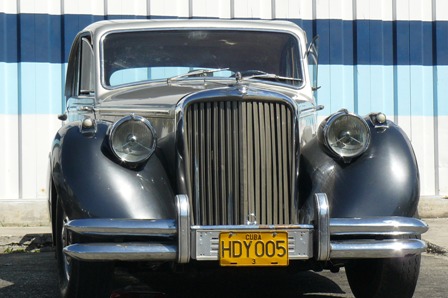
 It used to be for instance, that the only Mercedes’ you’d see were taxis lined up at the Hotel Nacional or zooming down 5ta Avenida transporting heads of state. Back in the day, a couple of superstars had them too: Once I saw the unmistakable salsero Pedrito Calvo behind the wheel of his Mercedes, but it was missing a hubcap and had dents around the wheel well. Today, there are all kinds of shiny new cars cruising Havana’s cratered streets – BMWs and Audi’s, but also at least one Bentley, Hummer, and mini Cooper. All sport yellow license plates (indicating private ownership), not black (embassy) or blue (state).

 Today, Havana is in flux. Accumulation of wealth and inequalities are becoming inevitably more pronounced and the political future is…uncertain. There’s a lot of anxiety and low level stress judging by what I’m hearing in the streets and hallways (and the difficulty I’m having scheduling a slot with my new therapist – but that’s another post).

 Some days, like today, I prefer to retreat from all the politics and angst, uncertainty and yes, sadness to some degree, and see Havana like I once did all those years ago – with fresh eyes.

Elaborate topiary & saucy garden gnomes: Tacky and suburban to my sensibilities, most of my Cuban friends appreciate and admire the artistry of a well-trimmed bush and the kitschy-cute gnomes that dot front lawns from Vedado to Boyeros. There are even buxom female gnomes (gnomettes? gnomas?) squeezing their bosoms like ripe fruit in yards across the city. Brightly-painted cement mushrooms often complete the scene.

Public zit popping: This habit is part sport, hobby, and time killer for Cuban couples. On park benches and at bus stops or waiting on the bread line, lovers are popping each other’s zits and squeezing out blackheads with glee. Does someone need to point out to them that acne and food never mix? Apparently, someone does.

Dogs doing their thing:  Innumerable are the times we’ve had to stop the car for a couple of canines fucking in the middle of the street as if they were ensconced in their own private posada. Nonplussed, the bitch regards us with a feral smile as she’s humped away by some mangy stray. They refuse to be rushed: No coitus interruptus for these puppies. The same goes for middle-of-the-street shitting. She squats, watching and taunting us to inch forward with a toothy snarl. It can be a laborious stand off – almost all Cuban dogs are constipated.

Pure breds: While we’re talking dogs, I noticed from the start that certain perros de raza are all the rage here. It used to be cocker spaniels (still the go-to dog for sniffing out lethal and illicit substances at the airport), followed by Dalmatians. This isn’t unique to Havana: certain pets the world over become fads and status symbols (see: Nemo and chihuahuas). But what’s hard to square here is the craze for chow chows, who walk the streets with heat-ravaged fur and black tongues hanging as low as an old man’s balls and Siberian Huskies. Pobrecitos. Dogs die of heat exhaustion too.

Gold teeth: Like pure-bred dogs, the gold teeth fad swept across Havana some years ago like the flu making the rounds now. From 10-year old kids to aging cabaret dancers, everyone was chasing the dental bling. There were even TV shows and news coverage about it. Oral ore seems to be on the decline, but whether it’s just a fad that’s fizzled or a sign of the economic times, I cannot say.

Come hither weatherwomen: When Leticia, the master degree-holding weatherwoman popped on the nightly news screen in gold lamé, I laughed and wondered if the wardrobe captain had taken a vacation or fast boat to Miami. A few days later, she informed us about the advancing frente frío wearing a black lace-up corset and sheer drape. Does she sidle into the next studio after the 5-day forecast to film the novela, I wondered? (see note 2). But nothing topped learning temperatures would drop over the next couple of days from a woman on national television sporting a camel toe.

Cuba: you never cease to restore my sense of awe. And that’s a good thing.

Notes

1. This is the reasoning some guidebook companies use for not employing locally-based authors – they’re too inured to place. It has occasionally worked against me, but I can see their point. The ideal scenario, I think, is for individual guides to be written by a combination of local and non-local authors. This is our arrangement on Lonely Planet Hawai’i and it works well.

2. Even among scientists, Fredrick’s of Hollywood stands to make a fortune here once/if the embargo is lifted.

17 Comments

Filed under Americans in cuba, Cuban customs, Cuban Revolution, Living Abroad, lonely planet guidebooks, Travel to Cuba, Writerly stuff

Trip Tips: Havana Independently

[tweetmeme source=”connergo” only_single=false]

Havana is hot and I’m not talking about mulatas or the weather: from Cayo Hueso to Regla, Cementerio Colón to Ciudad Deportiva, you can’t swing a dead gato around here these days without hitting a tourist. To tell you the truth, I don’t think I’ve seen this many foreigners in Havana since the 2006 Non-Aligned Meeting (see note 1).

There are reasons of course. The Cigar and Young Filmmakers Festivals are going strong as I write this, we’re getting a couple of monster cruise ships docking each week, and all-inclusive packages from Canada are mad cheap (see note 2). But most importantly, Havana’s streets teem thanks to Obama’s rollback to Clinton’s policy whereby US college students and select others can travel “legally” to the island. I’m surprised the effects have been so lightening fast – the new/old regulations were just announced in January – but everywhere I turn these days there seems to be a fresh-faced co-ed in Wesleyan gear or a Teva-shod geek. I hope they all have iPads.

Many of these people won’t end up liking Havana (hell, even I don’t like Havana some times). Starting with poor air quality, negative travelogues grouse about the expense of this place; perceived levels of state control; difficulties scratching below the surface +/o contextualizing their experience; and of course, crappy goods and even shittier services.

The dramatic economic changes happening around here – legalizing 178 types of private business from clown to cook, masseur to manicurist – are altering the travelers landscape (see note 3). So that Here is Havana readers can maximize their visit to this enigmatic city, I dedicate this post to travel strategies designed to get you beneath Havana’s skin.

#1. Talk the talk. There is no better way to maximize an independent holiday here than to speak cubano, with all its chopped off words, odd pronunciation and slang (see note 4). Even if ¿que bola asere? and ‘la heva está enpinga’ isn’t in your repertoire, try at least to dust off that high school Spanish since surprisingly few Cubans dominate English (and many of those that do are unusually accomplished charlatans). Not speaking Spanish doesn’t mean you’ll have a bad time – on the contrary. But it will limit your ability to get information, negotiate, learn and arrange logistics.

#2. Embrace pesos cubanos. As soon as you’re able, get some moneda nacional, also known as pesos cubanos and CUP. There’s a myth out there as tenacious as herpes in a whorehouse and which no amount of posting, commenting, and conversing seems to dispel: that tourists can’t use this ‘local’ currency. Complete rubbish. The truth is, most visitors simply don’t know how to use CUP. I suggest starting your trip by changing $5 of hard currency (24 CUP = 1 CUC = 0.82 USD) into this funny money to use for fixed route taxis, movies, food, condoms, cigars, and stepping out.

#3. Roll like a local. Long-finned Pontiacs, Capone-era Dodges, and other ‘Yank tanks’ leap to most minds when Cuba is mentioned. Undeniably cliché, these cars are everywhere, plying Havana’s streets working as communal, fixed-route taxis. For 10 pesos cubanos (about 0.40 USD), you can hail one of these endearing jalopies (I climbed into one yesterday that had packing tape upholstery and a ceiling lined with old refrigerator boxes) between Playa and Vedado or Habana Vieja, out to Miramar or Marianao. Longer routes – from Habana Vieja out to the Playas del Este beaches for example – will run double. To grab one, just stick out your arm parallel to the ground and ask the driver if he’s going to where you need to be. It helps to be on the right thoroughfare: 23 or Línea in Vedado, San Lázaro or Neptuno in Centro Habana, Avenida 31 or 41 in Playa, Calle 51 in Marianao, or 3ra Avenida in Miramar.

c. C Gorry

Even lower down on the transportation food chain is the guagua (pronounced wa-wa) – the Cuban bus. A ride literally costs pennies and while not especially comfortable or efficient, riding the guagua gives a real taste of Cuban daily life with all its attendant humor and hardships.

If these options don’t appeal, consider renting a car and driver. Part of the new regulations stipulate that licensed freelance drivers can now be contracted (by anyone, including foreigners as I understand it) to provide transport islandwide. There are no set fares, with rates to be determined between driver and client. Already nearly 6,000 choferes in Havana have applied for the freelance license; 2,000 have been granted. If the market has its way, the increased competition should make for more bargaining power and improved service. At the very least, it provides visitors an alternative to renting a car for $100 a day (which will somehow end up costing more when the agency is done with you). I predict that freelance drivers who speak English are going to do very well under these new regulations.

#4. Make yourself at home. One of the great benefits presented by the new regulations for travelers is the possibility to legally rent an entire house. This means you can shop at the agro (using those pesos cubanos) and cook for yourself, throw a dinner party, or introduce Cuban friends to the concept of brunch. Having your own private space means you can channel surf Cuban state TV (University for All! Little House on the Prairie! Seinfeld!), take mojitos on your porch to the delight of the neighborhood gossips, or stumble in carefree at 4am.

Another idea for a different Havana experience is to take lodging in more off-the-beaten-track places like the beach towns of Guanabo or Baracoa or Cojimar – the fishing village made famous by Hemingway’s Old Man and the Sea. These are close enough to enjoy Havana but just far enough removed to give a taste of small town life.

c. C Gorry

#5. Get primped & pampered. The new regulations approve all sorts of services which visitors can now enjoy without any sneaking around. Now your visit can include a 1-hr massage for $20 (really $10, but you might be charged double – the foreigner tax digamos), manicures for $2, and haircuts for $5 (careful with this last however).

If you’re interested to learn if someone – driver, masseuse, pizza maker – proffering these and other goods and services is licensed to do so, ask to see their licencia de cuenta propista. Most people are proud to flash their spiffy new ID cards.

#6. Spread the wealth. Frankly I weary of travelers asking me how they can avoid patronizing state businesses. That’s like asking how to avoid death or taxes. From the moment you buy your $20 tourist card to enter the country, to the minute you’re paying the $25 tax to leave, you’re supporting the Cuban government. What’s so evolved about this place is that paying into government coffers does in turn support the Cuban people (maybe not how or to the extent you’d like, but in my book the Cuban approach is fundamentally better than subsidizing bombs in Afghanistan and spies in Caracas). If you have a problem with this, do us all a favor and go to Cancun.

Having said that, I do recommend spending your hard-earned cash at a mix of state and private enterprises, but how to tell the difference? With eateries, there are some telltale signs. If your server is wearing a uniform or hairnet the place is probably state-owned. If your food descends from a balcony in a bucket it’s definitely private.

With taxis it’s even clearer: 99% of the old Motor City monsters (and many of the Ladas) brandishing taxi signs are privately owned. When in doubt, do like the Cubans do and look at the license plate (see note 5). There’s an entire code for plates here, with the first clue being the color: blue is for state-owned, yellow is private. All hotels, meanwhile, are at least 51% state-owned, but casas particulares (rooms or independent houses for rent) are privately operated. Look for the blue ‘arrendador divisa‘ sign.

c. C Gorry

If you’re interested in learning more of the Havana ‘mécanica‘ including bus and fixed-fare taxi routes, the best spot for 75 cent whisky shots and $1 lunch, Cuban line etiquette and more, please check out my iapp Havana Good Time.

Notes

1. It’s highly doubtful we’ll reap the same benefits however: when Cuba hosted the meeting as is customary for the country holding the rotating presidency, Havana’s main roads were repaved, trees were planted (including many of the trees lining Boyeros every visitor zooms by on their way from the airport) and house facades all along the arrival route were painted up nice and spiffy for the visiting delegations.

2. These 7-day all inclusive deals are oftentimes cheaper than just a Toronto-Havana Cubana flight. Savvy travelers just book the package and stay a day or two at their resort and then travel independently. As an aside, tourism figures for January indicate a 16% increase for the same period last year. Top countries visiting Cuba: Canada, Italy, Germany, France, Russia, Argentina, and Mexico.

3. I say travelers here instead of tourists because I believe there is a fundamental difference between a person who passively observes a culture and someone who desires to actively participate in it. If you’re one of those disposed to take issue with the tourist vs traveler terminology, I invite you to focus on the phenomenon/philosophy I’m talking about rather than the etymology of the terms used to describe it.

4. Those interested in Cuban slang and phrases should check out this Dichos iapp. I haven’t been able to get it yet (the US government blocks iTunes from operating in Cuba) but am loca to try it.

5. This national reflex is widespread and wild to watch: no matter what type of car you’re in, observe how passing Cubans immediately drop their eyes to check out the license plate. Via the coded plates, they’ll know if your car is from Havana or the provinces, whether you’re a foreign resident or visiting, even if you work for the state, a mixed Cuban-foreign enterprise, a church or an NGO.

37 Comments

Filed under Americans in cuba, cuban beaches, Cuban phrases, dream destinations, off-the-beaten track, Travel to Cuba, Uncategorized

Wild Camping in Cuba Part II

[tweetmeme source=”connergo” only_single=false]

I dared say it but the shocker was our Río Hondo campsite proved to be perfect. Or quite nearly so, which for Cuba (that land of many problems and the tendency to exaggerate the possibilities, +/o progress of the solutions), is close enough.

By day, we fished and snorkeled to the throwback sounds of horse carriages clip clopping across the bridge overhead. By night, we made Godzilla-sized shadow puppets to candlelight on the underside of that same bridge. It was especially marvelous at night, that beneath-the-bridge spot: as shiny cars sped turistas (see note 1) to Trinidad and pre-Cold War trucks rumbled towards Cienfuegos, their headlights picked out the arches of the cement span’s railing. Each individual arch illuminating and darkening in quick succession made it look like zippers of light revealing and concealing celestial secrets too fast for us mere mortals to grasp. It was a rapture of sorts.

Our food situation, on the other hand, was nothing short of dire. This area of Cuba, like others, is experiencing severe drought (see note 2). Even under the best of circumstances the only things that grow around here are mamoncillo, anon, and maribú (see note 3). What’s more, in spite of having all the right equipment and being the most enthusiastic fisherman to ever draw breath, my better half can’t fish for shit. Fit for bait was all he caught after days and nights of determined fishing. Pobrecito.

Luckily, we were saved by a combination of Cuban solidarity, which is de rigueur, and honesty, which is anything but. The first came in the form of chilindrón de chivo brought to us in a pint-sized ice cream container by our neighbors. The hubby had been fishing with them a couple of mornings already so they knew what we were up against. It wasn’t until we were licking the sauce from our fingers that my guy clued me in: we were eating that goat thanks to a bus that had brought the poor fella to its untimely (and hopefully swift) end earlier that day. A tip o’ the hat to the cook (and the driver) – that was hands down the most succulent goat I’ve had since Morocco and the tastiest road kill ever.

Cubans are, how shall I put it? Infamous for their honesty. It’s a complicated issue; way beyond the scope of this dashed off post about our little camping escapade, but let’s just say that my husband – he of the rough and tumble Pogolotti neighborhood – was skeptical at the prospect of abandoning camp in search of food.

‘The propane tank is going to get vicked. We have to camouflage it.’

I hated to point out that we could easily replace that standard tank on the underground market in Pogolotti or any number of Havana barrios just like it. Meanwhile, our killer Sierra Designs tent (over a decade old and still going strong) was quite another matter. Not to mention the ThermaRest mattresses, the snorkel sets, and Stew Leonard´s cooler which may be better traveled than you.

But hunger called, which was how we came to walk away from our temporary home, its entire contents free for the vicking.

We waited until the sun headed towards the horizon, when families 15-strong started carrying their giant iron pots crusty with chivo and congris, domino table and chairs, inflatable toys, and sleeping babies off the beach. Despite our growing anxiety at leaving camp, it was fun bearing witness to these end-of-day operations. I watched as one drunk grandpa had to be hefted onto to his son’s broad back from where he lay passed out on the sand. The old sot hung there slack as a grade school backpack as his son picked his way up the vertical rusted ladder that connected the bridge to the beach.

As the sky shot pink and purple through the fading blue, we made our move. Jumping in the car, we drove a handful of kilometers up the road, to the seaside hamlet of Yuagananbo. There, high above the road built into the side of a mountain of rock, is a casa particular with rooms for $6 a night and meals for two.

My husband was as nervous as a guajira touching down at MIA, her packet of ‘definitive exit’ papers in trembling hand, the farther we got from Río Hondo.

‘Should we go back?’ he asked.

And eat what?

‘Let’s get the food to go,’ he said.

We’re already here. If they’re gonna steal stuff, they’re probably already at it. Let’s enjoy ourselves.

Which is exactly what we did: gorging on pork chops and rice, salad and plantains, washed down with provincial tap water that would undoubtedly reacquaint me with my old friend giardia (see note 4). I didn’t care. We were gone about an hour and a half. Upon our return we peeked around the pylons. It reminded me of that feeling you get when you bound down the stairs and through the door in New York or San Francisco to find your bicycle no longer chained to the pole where you left it. We held our breath briefly, unconsciously before realizing not one tent pole or pot holder in our camp had been touched.

The next day, we took it a step further. We had to. This time we left early in the morning and made our way 20 kilometers down the road to Trinidad and the promise of a market. It was a dicey proposition not only for the length of time we’d be gone, but more so since it was Sunday. Markets close early on Sunday. Worse, every single Cuban that is able to get to the beach on any given summer Sunday does. Río Hondo would be mobbed. Already the ’56 Chevy’s and loaded down horse carts were disgorging baseball team-sized families near our camp. But we are, when all is said and done, people of faith (which can probably be said for the majority of people who choose to remain in Cuba -although they might not call it that). So we left.

Trinidad was good to us – which isn’t always the case. In spite of being a gorgeous colonial town and World Heritage Site with white sand beaches within easy cycling distance, it has a rep. Women hold infants begging for milk (in spite of state rations until age 7 and a nationwide breastfeeding program with WHO-certified hospitals for teaching same), children plead for pens and candy, and spousal-hunting is a recreational sport – in Trinidad, they’re on you like white on rice. T plates or no. But we laid in a slab of pork and some okra, a couple of avocadoes, onions, string beans, and limes with nary a ‘hey fren! Where you from?’ to be heard. A few stares gripped me as I wolfed down a paper cone of chicharrones, (my guilty pleasure), and a strapping dude offered my husband a private room as he sucked down a cold Bucanero, but that was it. We even visited my old friend who’s living large since I listed her house in the edition of the Lonely Planet guide I wrote.

But after four hours, it was time to head back to camp. When we got there the beach was in full summer swing with folks launching themselves off the bridge into ‘Deep River’ and couples necking in the shallows between pulls on a plastic bottle of cheap rum. Hubby’s foot was heavy on the pedal as we neared. I laid a hand on his thigh.

‘Don’t worry.’

Famous last words, which in this case turned out to be true: our camp, once again, was undisturbed though scores of people frolicked about. My guy prepared a tasty pork chop feast and as I dug in watching the lightening storm on the horizon, I was happy that the human race could surprise me like that and happy still, that I live in Cuba. Now had we been camped 20 kilometers from Havana…

Notes

1. In Cuba, rental cars brand tourists via telltale scarlet letter ‘T’ plates. There is no “passing” with one of these babies, though I often wonder what happens to Cuban Americans who roll up with T plates. Do they get the same hustle and show as the rest of us? The same offerings of lobster dinner, private rooms, and pretty young girls from ‘frens‘ trotting alongside the moving car in bad Ed Hardy knock offs? More interesting still, what happens to Cuban Cubans – those who live here – who pull up in a T job? It’s only fairly recently that these folks have been allowed to rent cars and I wonder whether it’s splintering the social hierarchy even further? And if so, is this is a move towards normalcy or away?

2. Ironically enough, three of the 10 (or 12 or 16, depending on your source) golf courses underpinning Cuba’s new tourism strategy are strung along the coastal stretch of which I write.

3. The last is a nasty, invasive, thorn-studded mess that reaches tree proportions and blankets huge swaths of the island’s arable land. Anón (which tempts me to make a writerly joke about unattributable fruits or nameless queers) is something you can find in your exotic fruit section but for which the name in English escapes me. Readers? Mamoncillo, on the other hand, I have only seen in Cuba. It’s a cherry-sized fruit encased in a thin green shell; its slimy texture and unremarkable flavor is reminiscent of a lychee nut. In the summer, Cubans of all sizes and stripe walk the beaches and streets clutching leafy branches heavy with the fruit; they peel and suck (mamoncillo literally means ‘little sucker’) the flesh around the pits which they spit out wherever.

4. I’ve had giardia twice already in eight years here. To be fair, once I caught it in a Pakistani tea shop while covering the Cuban docs working there post-quake so that doesn’t count, but this nasty microbe does like our water. Most Cubans I know have had it. So my traveling friends: don’t drink the water unless it’s treated, boiled or bottled.

11 Comments

Filed under Americans in cuba, cuban beaches, cuban cooking, environment, Travel to Cuba

Wild Camping in Cuba – Part I

[tweetmeme source=”connergo” only_single=false]

The last time I planted tent poles, it was within pistol shot of the crumpled Presidential Palace, Port-au-Prince, March 2010. At 33 nights, it was the longest I’d spent in a tent. Given the wretched situation and endless cavalcade of sick and hungry Haitians seeking succor from the Cuban medical brigade I was covering, it was, (it goes without saying), the most taxing tent time of my life.

But a few months on, I was ready for the swelter of the carpa and clouds of (malaria-free) mosquitoes. Even the dicey baño scenarios didn’t deter. Besides, a camping vacation was the only kind our budget could handle.

Our target was the Bay of Pigs (see note 1). The snorkeling was good, the fishing promising, and the beaches we found on our 2003 island-wide adventure, camper-friendly. But in one of those travel mystery moments, as vague and insistent as a nostalgic scent or voice carried on a breeze that you can’t be sure isn’t just the wind in the leaves, we changed course. Which is how we ended up under a bridge.

—–

As sick as it sounds (and probably is), the plastic tarp and stick structures huddled under the bridges reminded me of Port-au-Prince. The more fortunate had two-person tents and a thatch-screened area for pissing and more demanding duties. Families 15-strong cordoned off their slice of beneath-the-bridge beach using old rope, freshly-cut palm fronds and whatever else was on hand. Their dogs prowled the periphery, their bunches of plátano hung out of reach. Side by side like cubes in an ice tray, kids tucked into mosquito net cubicles rigged by red eyed fathers in knee-high gumboots. As the little ones slept, bonfires blazed and chispa burned throats. Cooking, bathing, dishwashing and other necessities of life were carried out in broad daylight. Children frolicked. Women worked. Men played dominoes. It felt awfully familiar.

We kept exploring. Every few kilometers there was another river carving its path onto the beach and feeding into the sea. Each river was spanned by a bridge. They had evocative, indigenous names that filled my mouth with marbles: Yaguanabo, Cabagan, Guanayara. Then we pulled down into Río Hondo. Claims had been clearly staked at the far side of the beach nearest the deep, green river and by the looks of it, the campamento there was hosting a family reunion of forty. Already I could feel the reggaetón and general bulla rattling my bones and grating my nerves.

We kept on exploring.

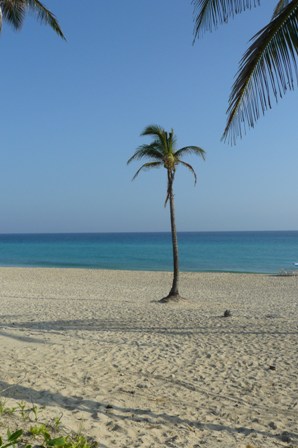
Our pocket was tucked away at the other end of Río Hondo’s sandy expanse, where the bridge curved over and away like a mulatta out of your league. Almond and seagrape trees provided shade for weathering Cuba’s brutal summer sun and we could easily improvise bathroom facilities where they thickened back from the beach; the tumble of sea stones that made up the shore gave way to a sandy, shaded patch for our tent; and our closest neighbors were 300 meters down the beach.

The site was, I dare say, perfect.

To be continued…..

Notes

1. You almost never hear ‘Bahia de Cochinos’ in Cuba, which just goes to show you how far apart the thinking is between here and there. Forget coming to terms on human rights issues, immigration, or sovereign state concepts: the two sides of the Straits are even at etymological odds, having different terms for the embargo (know as the bloqueo here and occasionally as genocidio, which I have a small conceptual problem with), the Spanish American War (called the Guerra Hispano-Cubano-Americano here which makes eminent sense: the Cubans, after all, played a pivotal, indispensable part), and the Bay of Pigs (here referred to as Playa Girón).

13 Comments

Filed under Americans in cuba, cuban beaches, environment, Here is Haiti, Travel to Cuba