Category Archives: Living Abroad

Cuban Marriage Counseling

Not a few consider me an odd bird for putting down stakes in Cuba. Indeed, I’m often asked what it is about this place that has kept me engaged all these years. It’s a fair question and one prudence and sanity obligate me to consider every so often.

Several readers have noticed that my posts have been somewhat bleak of late. I won’t deny or defend it, but instead will resort to metaphor: imagine yourself 13 years deep into a marriage with all the passionate delirium, grief and troubles, challenges and negotiating such a commitment commands. You’re both sagging, energy is flagging and while others would have thrown in the towel already, you remain steadfast, perhaps impractically so. Determined, to put a good spin on it. Dedicated. To make this veteran partnership work in its unlucky 13th year, you mix things up, change routine, get creative. And it helps evolve, even resolve, (if things go well), the situation.

In my effort to shake things up and goose my situation into evolution, I recently spent six weeks off-island – my longest hiatus since my last Lonely Planet assignment in 2008. It was a month and a half of memorable adventures in both space and time and spirit. I played a lot. I learned more. And wrote very little. It was, (to take the metaphor too far), my Cuban marriage counseling.

Lo and behold, my time a fuera was not for naught because it snapped some things into sharp focus about how this place intoxicates and charms. It’s not everyone’s cup of tea, granted, and even some of my dearest loved ones on the other side have confessed to not understanding the attraction. For them, but most importantly for me and you, here are some of the reasons I’ve been toughing it out here all this time. These aren’t the big picture principles – humanism, solidarity, romance, equity – that brought me here, but rather snapshots of why I like this place better than most others on a day-to-day basis.

Drunkenness here is laughter & dance, not morose & violent – I know more than a little about alcoholism; when I moved here way back when, I was convinced I’d encounter a fair amount of rum-fueled violence. It was a valid assumption given my boozy (but not floozy, eh?!) background and the drunken squabbles and brawls I’d witnessed up North. But like many assumptions (especially where Cuba is concerned), this has been disproven by direct experience. Sloppiness, raised voices and lowered inhibitions – all these are markers here. But violence? Not so much; crimes of passion, which are definitely part of the Cuban script, excepted. On the whole, drinking is a happy affair here, accompanied by music and dance, which is much groovier than the stress, angst and escapism I see among my drunk friends and family in New York.

Sexuality is celebrated rather than castigated or repressed – You see it in the clothing styles, hear it in the piropos, and fairly feel it in the air. How else can I explain that my all-time most popular post is The Cuban Love Doctor and that there are entire websites dedicated to Cuban amor? Just hours back from my six week hiatus, I witnessed this exchange at my local agropecuario:

– Hey chula! You’re looking real good! Ven acá, chica. ¡Ven acá! I know you like black guys, but give me a chance. You won’t regret it!

The young woman in question smiled and demurred, but that this kind of come-on would be brandished in public, for everyone in the market to hear, and that the woman would be amused, even flattered, says a lot about the Cuban approach to sexuality (and interracial relations, as well, it should be noted). Also, that the guy who sells boniato knows your preference in partners speaks volumes about the tightly-knit nature of Cuban neighborhoods.

After such a long (for me) stint in the US, I realized one of the things I don’t cotton to is the hypocritical Puritanism. Men who regularly consume porn but are prudish in their own beds; women who deny their own pleasure by adhering to oppressive societal paradigms and expectations; and the application of sexual dogma generally, have created a country (or at least several generations) of sexual neurotics. Sex is supposed to be fun and playful and shame-free, if you ask me and as long as you’re not hurting anyone, what’s the problem?

Bawdy, unabashed gab – Cubans’ capacity to discuss bodily functions openly and clinically is tangentially related to the abovementioned point on sexuality. In the past week, I’ve talked to male friends about their urinary tract infections; pre-mature ejaculation; and constipation. Female friends, meanwhile, have offered opinions on big breastedness vs. flat-chestedness; faking vs multiple orgasms; and menstrual flow.

Irreverent humor – I’ve written previously about how I appreciate Cubans’ sense of humor. It’s a George Carlin or Chris Rock approach: no one here is off limits and the humor tends towards social commentary and catharsis. Just a few days ago, I was waiting for my order at Havana’s version of Kentucky Fried Chicken (yes, times are a-changin’!) when I overheard the following:

– ‘I’m not sure what I want,’ said the customer. ‘What’s on the Cuban sandwich?’

– ‘It’s a baguette, with slices of pork loin,’ began the waiter…

– ‘Alternated with slices of Fidel, Raúl, and Antonio Mella,’ chimed in another.

This elicited a guffaw on the part of the jokester and nervous, but enthusiastic laughter by those within ear shot. Whether or not you find it funny, it illustrates how there are no sacred cows in Cuba – except actual cows, which is another story (and common joke).

Reusing, repurposing and resourcefulness – Sure, my life would be a helluva lot easier were it filled with Swiffers and paper towels, Windex, Tupperware, and Home Depot. But a broom is a functional, age-old tool; linen napkins and cloth cleaning rags are more environmentally-friendly;  vinegar and newspaper clean glass well; and a plate-covered bowl or cajita is as good as a plastic container with a lid (and probably healthier in the long run). If I had a Home Depot, I would have never met Eduardo the carpenter or Carlos who sells screws and light switches por la izquierda. Nor would I have occasion to call up Laura and Roly to lend me their ladder. Just today, a friendly fellow entered the bookshop selling rose bushes. We struck up a conversation, I bought a gorgeous yellow number for $3 CUC; he gave me pest-control advice. So the Cuban reality is not only more economical and ecological, it’s also more social. I point this out only to point up that easier does not necessarily mean better – something I have to remind myself of now and then. Just like I have to remind myself that Cuba is still a great place to be and grow. For now, anyway.


LINKS:

Cuban Love Doctor – https://hereishavana.com/2012/07/10/the-cuban-love-doctor-is-in/

Clothing styles – http://www.amazon.com/Havana-Street-Style-Intellect-Books/dp/178320317X

Bookshop: https://m.facebook.com/cubalibroHAV
 

13 Comments

Filed under Americans in cuba, Cuban customs, Cuban idiosyncracies, Expat life, Living Abroad

CUBAN DISPATCHES: Rock ‘n Roll!

Life has become way too complicated (and trying, truth be told) lately – something I predicted would happen. I chose to pointedly ignore the trying part here in that ‘hey, it’s a new year, maybe the world really isn’t going to shit and perhaps I will finish my memoir’ spirit of things. Also, since Cuba’s default setting is Trying, I didn’t want to beat a dead horse. Instead, I focused on the need to balance competing priorities and reminded everyone – myself included – to take the time to stop and smell the roses.

Six months on I can safely say I’ve failed pretty miserably in following my own advice (see previous maudlin post!) and that new year’s optimism has, once again, proven to be a fallacy: the world is going to shit, my memoir continues to gather dust, and I can’t even sort through the priorities, let alone begin to balance them.

Regular followers of Here is Havana will have noticed a precipitous decline in new posts over the past year and for those who care: so sorry. If it’s any consolation, not writing screws with my head mightily since it’s a form of catharsis and therapy – something anyone who lives long-term in Cuba needs in spades. So, here I am again, with a new proposition: a series of short dispatches crafted from various Cuba experiences, 2014.

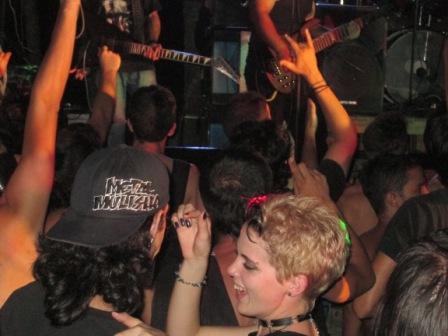
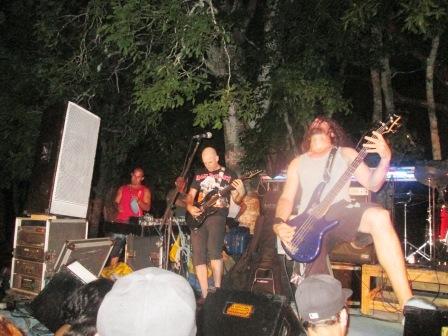
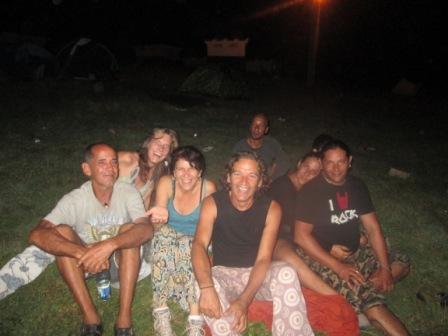
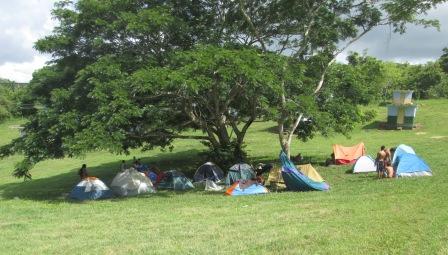
Let me pop the Dispatch cherry with one of the country’s oldest outdoor music festivals, Atenas Rock. Held in a copse tucked back in the hills of Matanzas, this weekend rock festival features two days and nights of heavy/death/black metal, camping, and more drinking and drugs than food and water. I had no idea what to expect and knew only one person in our piquete. But I love to camp, (plus it’s something I’m good at); I can never get enough rock and roll; and I always like to meet new people. To hell with competing priorities, I thought as I packed my camping hammock.

Our camp!

Our camp!

Although this type of metal isn’t generally my cup of tea, I’m 13% more deaf, which is generally a good measure of a proper rock festival. It’s terrible for my friends, family, colleagues and anyone else with whom I converse of course: I only hear half of what they’re saying and the rest of the time I’m shouting because my volume control is busted. But Atenas Rock 2014 was completely worth it.

crowd1

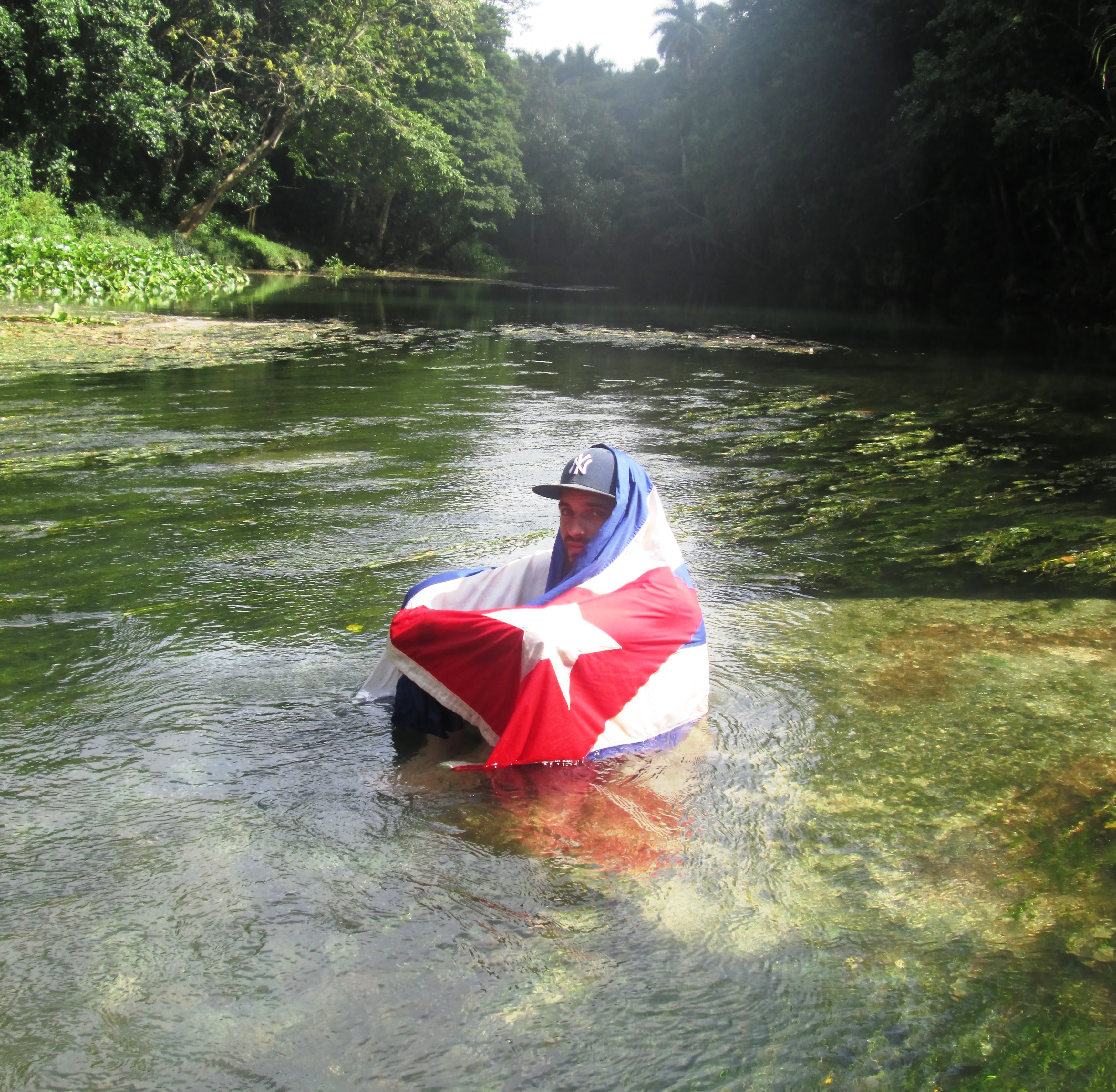
Everyone tells me this wasn’t as good as other years, in another era, but this weekend festival has some basic factors working it its favor. First, the setting in a grassy valley surrounded by woods bisected by the meandering Canímar river, is majestic. Second, the entire affair is free – the camping, the music, swimming in the refreshing pocket pools along the river. And, much to my amazement, Matanzas has some pretty good rock and roll bands (though groups come from Havana, Holguín and other provinces to play here, transport difficulties and lack of resources mean Matanzas is heavily represented); keep your ears open for Rice & Beans and Stone Road, especially. Finally, though there was liberal intake of all sorts of psychotropic substances, it was a very mellow, even family atmosphere, with long-haired rug rats throwing up the devil horns as they frolic in the river.

yankees vub

Some aspects, however, were less than ideal. Like not providing a single bathroom for the hundreds of concert goers? A shit show, literally. To be clear: I have no problem peeing and shitting in the woods. Indeed, I’ve logged en plein air baño time all over the world, from Hawaii and Bolivia to Morocco and Guatemala. But after a weekend of roughing it with people ignorant of the most basic camping tenets, heading into the trees when nature called was like walking into a feces minefield. To wit: my friend went to pee before turning in the first night and almost took a massive digger when her flip flop skidded in a pile of human shit. The kid in the next tent convulsing and barfing, pausing just long enough to shout about how he was possessed by a santo malo was also a bit of a downer. I, for one, was thankful when he passed out long and hard.

Shredding!

Shredding!

Sleep was elusive, what with deafening decibels shaking my tent flap and too many of the bands played covers. Hey, I like a good cover just as much as the next rock ‘n roll chick, but when it’s Highway to Hell played by six different bands, some badly? It gets a little tiresome. And it’s a waste of valuable stage time. But all in all, it was a fantastic festival. I can’t wait until next year. Rock on!

last night

13 Comments

Filed under Americans in cuba, camping, Cuban customs, dream destinations, Expat life, Living Abroad, off-the-beaten track, Travel to Cuba

Hasta Suicide is Hard in Cuba

If you know one thing about Cuba or have read a few of my more distressed musings over the years, you’re aware of how hard things are here. Some people have it easier than others of course – that’s the way of all societies, including those striving to be equitable and just – but I can count on one hand the Cubans I know who have it easy como tal.

The rest of us? We’re taking it One Day at a Time, trying to keep kindled the light in our eyes as we tolerate brutally long lines under an equally brutal sun; navigate a frustratingly disorganized (and often contradictory) bureaucracy; and bid adieu a steady stream of friends and loved ones as they leave the island.

That light, the inner sparkle and glow which I’m convinced helps us mere mortals to remain upright and breathing against the most violent and debilitating experiences life is forever fond of meting out – brain cancer, heartbreak, war, earthquakes, Tea Party republicans – has been snuffed for many here. Perhaps you’ve seen it yourself.

Is it just a coincidence that Cuba has one of the world’s highest suicide rates? And for all you dissident fucks and pseudo-intellectual detractors who pin blame on the revolutionary government, I recommend you read Lou Perez’ definitive tome To Die in Cuba: Suicide and Society. Therein you’ll discover that Cuba has had a sky-high suicide rate throughout the ages. I’d venture a guess that rather than any political paradigm, imperialism, slavery and neo-colonialism (plus their oppressive after effects), combined with lost or tossed love are largely to blame.

Causes aside, the problem is that in today’s Cuba, killing yourself is not an easy proposition. I wouldn’t even know where to get a gun, for instance, and no one I know has a working oven to stick your head in, let alone a car and garage guaranteeing proper asphyxiation. As far as I can tell, unless you throw yourself in front of a bus, off a bridge or down a dry well (a popular solution in the campo if I’m not mistaken), you’re shit out of luck in terms of trying to off yourself.

Hanging is a universally popular option, but how do you knot the thing correctly? If we had any decent kind of Internet, this could easily be learned on YouTube, I’m sure, but alas…And then there’s the question of finding an appropriate spot for your final dangle. I know that in my microbrigada apartment, there isn’t a prospective beam that isn’t termite-infested, an overhead fan that could bear my weight or other place for proper hanging. Getting cozy with a toaster in the tub seems practical – if you know anyone with a toaster or a tub. I suppose you could substitute an olla reina, but finding a tub? Good luck with that.

This leaves poison, pills or wrist-slashing (vertically, people, not across the veins). All things considered, I suppose an overdose would be the best bet. How many diazapan do you think it would take? That’s a rhetorical question.

I leave you with these thoughts since this will likely be my last post for a spell as I try and enjoy something of this summer.

27 Comments

Filed under Americans in cuba, Cuban customs, Cuban idiosyncracies, Expat life, Living Abroad

A Cuban Glossary

Anyone who speaks a language foreign to their own knows what an embarrassing, ego-crushing, confusing and even dangerous proposition it can be. If you’ve poked around my blog a bit, you know I’ve had my share of missteps, malapropisms, and foot-in-mouth moments. Trust me: it sucks.

I figure I suffer more than most in this foreign-language-learning struggle for three reasons: 1) there’s a lot of static in that part of my brain wired for music and language (luckily I make up for lack of natural ability with pure tenacity); 2) as a writer, words are my medium and I’m spoiled in English, where I have many and varied options to express myself clearly and precisely (not that it always works). When you’re learning a foreign language, for instance, it takes time to learn how to say sneaker, stiletto or ballet flat, obligating you to default to the generic ‘shoe’ in the meantime; and 3) Cuban Spanish is far removed from the español I learned in university, Guatemala and the streets of NYC.

I often advise native Spanish speakers to prepare themselves for a different linguistic experience here, adding that they may encounter problems understanding Cubans. Clearly, asking directions, exchanging pleasantries, or ordering a meal/drink/bit of fellatio will be (or should be) straightforward enough for hispanoparlantes. But once conversations get cooking, seasoned with slang and dichos, oblique (for non-Cubans) historical/cultural/political references, and island particular vernacular, it can get tricky. Few people believe me, let alone heed my counsel (see note 1).

I can hear some readers scoffing across the World Wide Web. But take this exchange for example:

“¿Que bolá asere? Tengo pincha y me hace falta una botella. Tírame un cabo y te doy un pescao.”

Very simply, this translates to: Hey man. I have to get to work and need a lift. Help me out and I’ll give you 10 pesos.

See what I mean? Tricky.

Of course, every country has its own terms for this, that, and the other thing. Vocabulary varies from region to region and between cities as well. For instance, I recently took a straw poll amongst friends from across the USA, asking what they called the type of sandwich sold at Subway. In New York, we call it a hero. In other parts of the country, you’ll hear it referred to as a submarine, a sub, grinder, or po’ boy (which really is in a class by itself, as anyone who has feasted in New Orleans will tell you).

But although we have regional differences on the island, it’s much more complex. This way-with-words business goes beyond variable regional vocabulary since Cubans pepper their Spanish with terms of African origin (like the aforementioned asere); many American English words are in daily use, including lager, homerun, and brother, all uttered in a sultry accent; and entire syllables are regularly dropped (e.g. ño), while other words are contracted (e.g. equivoca’o). Needless to say, this complicates matters, as does Cuban-specific vernacular. Some of these words may be used in other Spanish-speaking countries, but probably not in the same way Cubans use them. Have insights? Drop me a line or submit a comment.

Almendrón – Old US car; almendra means almond. Almendrón is a big almond, which these cars resemble.

Bala, bata, petaca – Cigarette

Caña, fula and tabla – Every day terms, these are used to denote CUC or ‘kooks,’ the hard currency here. Other terms include chavitos (which I hear infrequently in Havana) and morrocota, used exclusively for the 1 CUC coins. ‘Fula’ has other meanings as well; see below.

Curda – Alcohol; can also be used as an adjective for someone who’s drunk.

Faster – Bicycle; also called a chivo.

Fula – Screwed up, twisted, somehow malevolent or damaged. Used to refer to situations or people: “¿Ella? Tremenda fula.”

Gabo – Slang term for house or home; also a diminutive of Gabriel, used most famously for García Márquez.

Guagua – Bus

Jama – Food; grub

Jeva/o – girlfriend/boyfriend

Nescafé – Nothing doing; no way, as in ‘did you two hook up?’ ‘¡Nescafé!

Pincha – Work, job

Run run – Word on the street; rumor; grapevine. Synonyms include radio bemba and la bola.

I could go on (and on), but I’ve got other work to do, deadlines to meet, and dreams to realize.

Me voy en fa’.

Notes
1. Anyone planning a visit here will benefit from learning a few phrases and sayings with the Cuban dichos app.

46 Comments

Filed under Americans in cuba, Communications, Cuban customs, Cuban idiosyncracies, Cuban phrases, cuban words without translation, Expat life, Living Abroad

Havana Changes for the Good

Some readers may remember my predictions for 2014, where I mentioned that we’re going to have to fight to maintain balance – here, there, everywhere. Work, play, love, lust, family, friends, menial tasks like housecleaning and random responsibilities like jury duty, babysitting, passport renewal: all of these priorities are competing for precious time this year. Given that there are only 24 hours in a day (see note 1) and in those too few hours I’m meeting deadlines, running a bookstore, consulting travelers and policy makers, playing bike polo, and updating my app, I’m terribly behind on that key activity called sleep (and many aforementioned menial tasks/random responsibilities).

So that elusive balance? Tough to find, let alone forge, in today’s Havana, which moves to a new rhythm (note 2), thanks to the economic “updating” (to use the official vernacular) we’re experiencing. While I’ve written some about the troubling aspects this updating engenders, I’m going through a sort of Marriage Encounter phase with my adopted city, whereby my enchantment or something similar, is being rejuvenated. This is taking a conscious effort, I’ll admit, but also seems to be occurring naturally, for which I’m grateful.

If you sense that I’m adverse to change, I am – when that change is inequitable, disquieting, violently +/or stressfully attained or more bad than good. And I’m quite clear that I need to embrace Cuba’s changing socio-economic landscape in a positive, proactive way. Those of us who don’t are doomed – to angst, bitterness, depression, anxiety, addiction, denial and other not-so-desirable states. The long and short of it? I’m trying to love the new Havana even as foreigners move here in droves, rush hour traffic worsens, and the unfortunate combination of wealth and bad taste (note 3) conspire to give the city a flavor that’s starting to feel like Hialeah. So I don’t get swept away by the black cloud called Progress, I dedicate this post to the great things about our economic renewal.

Ice cream, you scream, we all… To say Cubans are fond of sweets is like saying Warren Buffet is well off. You need only look at the rapid proliferation of bakeries (some quite good) as testament. Or the line at Coppelia. As an ice cream fanatic myself, I’ve braved that colossal line – regularly running to an hour or more in the summer – many a time. Following on this delicious tradition is the recent emergence of several outstanding heladerias wholly (or partially) privately-owned and -operated.

I’d heard about the new ice cream place next to El Palenque, but it took a while to jinetear a ride all the way out there to the upper class suburbs to give it a try. Once I stepped into the cool, air-conditioned parlor with ice cream cone chairs and 25 different flavors – hazelnut! tiramisu! pistachio! – I knew I’d found my temple (see note 4). It’s a state-Italian venture as far as I can tell and a hell of an addition to Havana’s gastronomical scene. The same can be said for the spiffy new ice cream place on Calle 84 near 5ta B in Miramar. Creamy, dense, in all sort of assorted flavors – this is what folks tell me Coppelia was like back in the day. One recommendation: someone should open these types of parlors ‘for the hoi polloi,’ closer to the more densely populated (and less affluent for the most part) barrios of Marianao, Centro Habana, Lawton, etc. Even though the stuff is wicked expensive at 1 CUC a scoop, Cubans will always find a way to finance their sweet teeth. [ed note: to discover these and other interesting places to visit around town, please check out my Havana Good Time app for iPhone and Android.]

Late night noshing – Used to be that if hunger struck at midnight, you were shit out of luck. Just a few years ago, dinner after 11 would inevitably mean a microwaved package of overcooked El Rápido spaghetti with watery tomato sauce or some dry on the outside, pasty on the inside croquettes at Ditu (see note 5). News flash: those days are as long gone as Alicia Alonso’s eyesight. In today’s wee hours, you can choose from Swedish, Russian, KFC-type fried chicken (our crispy coating, however, is made with plantains and officials put the kibosh on the drive-thru window), sushi, pizza (delivered to your door in under 30 minutes or it’s free), Mexican, tapas, and my personal favorite: old fashioned comida criolla. I get that extended hours, KFC wannabes and delivery pizza may not be your idea of innovation and I mostly concur. However, the Cuban in me says ‘sushi?! Now that’s progress.’ Plus, there are rumblings of some real foodie inroads being made, including vegetarian cajitas (little boxed meals for a buck or two), protein/veggie shake shacks and various permaculture projects. Now if only the concept of Sunday brunch with Bloody Marys would catch on…

At your service: It’s amazing how many new, small private businesses are providing one service or another. Your Samsung Galaxy not receiving messages? Need your bikini line (or back or upper lip) waxed? I can hip you to half a dozen places within a mile of here to fix you up. Car need a wash? Maybe your dog does. Or perhaps you’re too uncertain or mono-lingual to make that casa reservation in Santiago de Cuba. No problem: in the “new” Havana someone will do it for you – for a fee of course. Today, you can get your iPhone unlocked, your navel pierced, Botox injections (this is actually a state enterprise; I don’t know if private individuals are also doing it, though I wouldn’t doubt it) and many more services we never dreamed of a decade ago. Having such services available bestows a sorely needed veneer of normalcy and efficiency on our corner of the world.

Touchy-feely intangibles – Some of the positive aspects being felt after three years of economic updating are unquantifiable and quite possibly ephemeral (depending on what the future holds). However, in the right now, relaxing restrictions and regulations has unleashed a torrent of pent-up creativity, which is exciting. More importantly, it gives people the space to dream, to put their ideas into practice and test their mettle. Furthermore, the possibilities provided by the 200 and something authorized economic activities give people breathing room, broaden their horizons, and help loosen the (real or perceived) noose of control that many Cubans feel outside or inside forces exert over their lives. This liberty, for lack of a better word, has taught a lot of people, fast, the meaning of hard work (see note 6), which my proletarian background obligates me to view, always, as a good thing. It’s empowering and for the first time, Cubans are getting a sense of individual agency (as opposed to agency as a nation). It’s refreshing. Now however, the trick is to turn all these touchy-feely intangibles into something good and sustainable and not just a mechanism for making money on the backs of their/our/your neighbors.

Notes
1. When I’m in charge there will be 48-hour days, no laugh tracks or white people with dreadlocks, plus Styrofoam will be illegal.

2. Once again, let me make it clear: what I write is about Havana – not Bayamo or Puerto Padre or Sandino. I wish I had the time and opportunity to visit these (and more) places across the island more often, but alas…

3. More on this money and tacky taste issue in future posts. Currently I’m thinking of launching a documentary project called Havana: Crimes Against Architecture focusing on how the nouveau super rich are tearing down residential jewels and throwing up Miami style McMansions.

4. I exaggerate. Coppelia, known in these parts as the ‘Cathedral of Ice Cream,’ will forever be my preferred spot to worship and gorge.

5. So notorious is the mystery meat croquettes and variants peddled at Ditus around the country, it led to a popular joke: when someone says ‘ditu’ (tell me about it), the response is ‘no es de pollo’ (it isn’t chicken).

6. Before certain readers get their knickers in a twist like they did with one recent post, let me say that many Cubans I know are very hard working – amongst the hardest working people I’ve ever met. Here, however, I’m talking about the younger generation who really are clueless about what a true hard day’s work entails, and about people who think running a small business is easy money.

20 Comments

Filed under Americans in cuba, Cuban customs, Cuban economy, Cuban idiosyncracies, Cuban phrases, Expat life, Living Abroad, Travel to Cuba

Havana: The Land of Big Ideas

Dear friends, family, readers new and not, informants, and detractors:

I’ve been (too) quiet here lately and for this, I apologize. It’s for worthy, horizon-broadening reasons however, and for that, I’ll never seek pardon. But enough with the ‘justificaciones’ as my friend and Havana Bike Polo champ Tomás likes to say.

To the grano:

I had this idea for a bookstore/café a couple of years ago. Like many of my ideas, it was ambitious, quirky, and against the grain. Furthermore, it was quite possibly impractical and practically (but not quite) impossible. I cooked it up slowly, adding ingredients and letting it simmer while I built momentum and strength (see note 1).

When I roped my Cuban family into it, I never imagined all the valuable experience and lessons – all the magic – we would live in the three short months since opening Cuba Libro (see note 2). And those experiences and magic were imparted and shared by some extraordinary people of all ages and genders, orientations and many nationalities, too. Being Cuba, every color of the skin spectrum has walked through our doors – another thing I love about this island. We’ve even imparted/shared with a little person (i.e. a dwarf), who had a voice delicious enough to eat – I could have talked to him all Havana day long.

In short (no pun intended), the people we’ve met and talked to, read and laughed with, are inspiring and surprising us daily.

Cuba Libro: serving up Havana's best juice!

Cuba Libro: serving up Havana’s best juice!

There’s Marta, the English teacher at the grade school across and up the street. And I do mean across and up: the school is divided between two Vedado mansions a block apart and the cute, uniformed kids are shuttled between the two – single file, hand-in-hand – a few times a day by Marta and others. When Marta came in to see about the possibility of getting some bilingual dictionaries (neither the school nor the teacher has one), we hatched a donation drive. Thanks to some folks visiting from afar, we made the first, small delivery of a few dictionaries a couple of weeks ago (see note 3).

Then there’s the guy in the orange-tinted, 70’s porn star sunglasses peddling black market coffee (see note 4), his breath perennially laced with Planchao. One morning around 11, he came in, plopped into the Adirondack chair under a palm tree, began mumbling drunkenly and nodded off. We rousted him gently and ushered him on his way. The combination between comfort and coolness at Cuba Libro is why we don’t sell any booze. If we did, we’d have people passed out in the hammocks, on the couch, the bathroom floor…

The avocado seller is another memorable character in Cuba Libro’s world. One day he saw me standing in front of the gate and asked: ‘Hey Blondie! Why’s someone as pretty as you all alone?’

‘I don’t know. I guess no one can tame the beast,’ I responded, laughing.

He sidled over with a gap-toothed smile. ‘I know how to tame the beast. Love and tenderness.’

When he saw me a couple of days later he said, ‘remember Blondie! Love and tenderness!!’

It’s still avocado season, but he hasn’t been around in a while. I miss him.

There’s the rough-around-the-edges fellow who passes by at the same time every single day pulling two boxes on a chivichana. We hear him before we see him:

‘CREMITA DE LEEEEEEEECHE!!’

‘BARRA DE GUAYABAAAAAA!!’

If you know some enthusiastic, deep-throated pregoneros, you know we can hear this sweets seller for blocks and blocks and blocks and…here he is now!

Doctors and students, parents, grandparents, expats and diplomats. They’re coming in droves. But it’s the artists – from scriptwriters to sculptors, composers to poets – keeping things frisky. We’re getting all kinds: painters, photographers, actors, costume designers, puppet makers and musicians. Some famous, all talented.

me and santi

I’ve taken a personal shine to Samuel. Red-haired, with big green eyes (a striking combination in any context, more so in Cuba), he’s a violin player who showed up at our most recent art opening. He lives in the neighborhood and was just passing by he told us. The party was in full swing, just comfortably shy of packed.

‘Would it be okay for me to play a while in the garden?’ he asked.

‘OK?! It would be phenomenal!’ I told him, blue eyes meeting green.

So he unzipped his case, grabbed his bow, tuned up, and ripped in. Samuel is 16 years old.

Then there are the little kids, many of them Cuba Libro regulars. Nikki (I’m not sure how to spell her name but given the Cuban penchant for funky, medio cheo names, this is probably close) is a handful and already a troublemaker at the tender age of eight (see note 5), but cute and charming. She’ll go far in this life.

ninas

We also have a tribe of 10-year old guapos coming in. They like to break rules, brag about fantasy conquests, and steal the condoms we offer free for the taking – but not for balloon making, which is what these kids use them for (see aforementioned fantasy conquests).

But it’s sweet, polite Jonathan, a tow-headed kid who says por favor and gracias while looking you in the eye shyly, who has won my heart. In his first year of pre-school (also across the street, but contained in one building por suerte), he came in with his grandmother Aracely a couple of months ago. Havana was still in that weird monsoon vortex where we’d get hours-long, sheets-of-water downpours every day, but that afternoon was sunny. I set Jonathan up swinging in a hammock and started talking to Aracely.

Like Cubans do, she said right out and straightaway: Jonathan is six, an only child. His mother, (Aracely’s daughter-in-law), died of a heart attack in March. She was 27. I touched Aracely’s arm and said ‘how awful.’ I told her how sorry I was. I asked after her family, after her son, after Jonathan. Her eyes went soft and moist as she confided that they were doing the best they can.

They came in a week later during another break in the rain. As Jonathan dashed for the hammock, Aracely told me: we were walking to school the other day. It was 7:30 and he was all excited, pointing as we passed by: ‘look abue! That’s where I drew with the colored chalk. In that garden. Let’s go back!’

And they’ve been in several times since. Jonathan always gets a lollipop, a box of colored chalk, and plenty of driveway-cum-canvas to draw his heart out. And Aracely always gets a cafecito on the house.

This is some of what and whom have kept me from writing lately. And that’s just fine by me.

PS – This post was ready two weeks ago but no manner of internet gymnastics/expense allowed me to post it. GRRRRRR.

Notes

1. 2011-2012 was a hell of a time for me, with great and multiple personal losses – hence the need for strength-gathering.

2. It actually started in earnest about 6 months ago when we started fixing the space up.

3. Anyone interested in donating, please drop a line to cubalibrohavana@gmail.com.

4. We don’t buy it, of course. That would be illegal. Regardless, it clogs our espresso machine. How did we discover that black market coffee clogs the machine? Don’t ask; don’t tell.

5. Not unlike another female Scorpio I know. Ahem.

30 Comments

Filed under Americans in cuba, bureacracy, Cuban customs, Cuban economy, Cuban idiosyncracies, Cuban Revolution, Expat life, Living Abroad

Habana Brats

Okay, people. I know I (semi) committed to writing about Cubans’ belligerent resistance to healthy/sane/considerate cologne application. If you haven’t been to Havana, trust me when I tell you the problem is generalized, acute, and worsening. When you can taste the chemicals wafting off a shaved metrosexual half a block away and instead of his taut ass in tight jeans all you see is that icon of stink Pepé Le Pew, you know the issue is serious.

But that’s going to have to wait because there’s another little drama happening over here which has my panties in a twist – I’m talking my underthings are in a massive, up-the-crack bunch thanks to what I call Habana Brats.

These cubanitos are chapping my ass. I need to write about them. It will help me move on. Hopefully. The stinky Cuban diatribe will have to wait.

They’ve always existed, these better-off, entitled, vacuous kids (e.g., certain military/political offspring who rolled up at high school during the Special Period in their own Ladas), but the phenomenon is spreading like an outbreak of VD in a freshman dorm around here lately.

First of all, these kids are clueless, which is annoying enough (see note 1). They don’t know what it means to pay an electricity bill – much less what’s involved when there’s no money to pay said bill. Nor do they know the exhaustion that comes from working a double, (let alone a triple), shift. They don’t know how to food shop or menu plan, some don’t even know how to make a pot of rice. They’ll need these life skills. Most of them anyway – the really rich ones will just hire help to do their grunt work and trust me, you don’t want me to start ranting about that. At the very least, knowing how to manage money, cook, and perform other mundane, but necessary, tasks of adulthood will make them more attractive mates. I pity them. As mom always says: ‘pity: it’s the basest coin in the realm.’

This new generation is a whole lot of hedonism, which is fun, to be sure, but unproductive – both for them as individuals and society as a whole. Unproductive and detrimental. I repeat: for them personally and us as a collective. They spend their days walking their pure-bred dogs, primping at private salons, and shopping (not for the evening meal, obviously). Nights are dedicated to bar hopping from one wannabe “lounge” to another, spending two weeks’ of a teacher’s salary on cheesy cocktails like Blue Hawaiians and Appletinis. I feel like telling them to grow a pair and graduate to vodka on the rocks (see note 2). They get giddy smoking cherry-flavored tobacco from hookahs (Havana’s new fad) and pursuing deep (insert ironic cough) conversations about where to buy designer clothes and pirated iapps (including mine).

hgt banner

I don’t know where they get the money to pursue this lifestyle, but young friends of mine (the thinking kind, thank you), posit that it probably comes from their parents +/o Miami. So shame on them too for enabling their brats. I’m sure these kids are the envy of their peers – equally worrisome if you ask me.

Returning to the point about this generation being vacuous: in my (thankfully) passing experience with this class of kid, the most demanding thought to skip across their minds is what to wear to the Ernesto Blanco concert or the superior photographic capabilities of the iPhone 4s (the iPhone 5 has yet to be seen in the hands of a Cuban in these parts). You may not find this problematic, but if you don’t find it boring, you’re probably one of them.

But what really rankles, the trend that makes me want to grab these brats and shake them like a chequere, is how they talk, loudly, obnoxiously, about their first-world problems (i.e. bullshit), throughout an entire set of music. Cuban musicians are globally-renowned for a reason: They are fuck-all talented and are products of a long tradition of formal musical education (and informal: Benny Moré was an autodidact, as was Arsenio Rodriguez). Many are prodigies and/or award winners – Montreaux, Grammys. We’re talking giants of music. Moreover, they’re playing their hearts out for peanuts. And these little ingrates are chattering away ad nauseam, drowning out greatness with their banal drone.

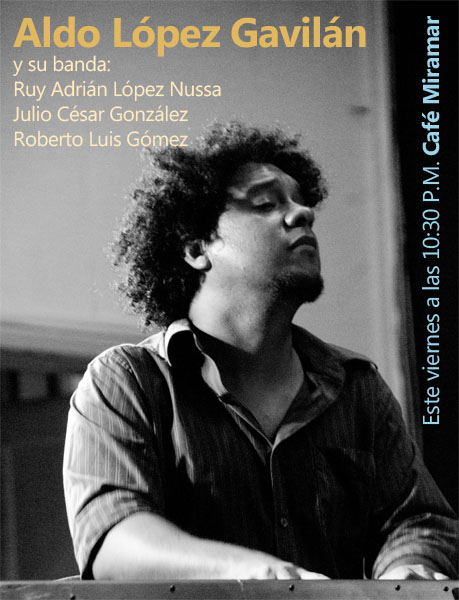
I first noticed it during a double set at the Café Miramar by Aldo López-Gávilan – one of the country’s most talented young pianists. An intimate club with good audio (see note 3), this is one of the popular spots on the new Miramar bar circuit favored by these nouveau rich kids. As Aldito and his conjunto ripped through one tune after another, these chamas couldn’t be bothered to listen. I actually had to move right alongside the piano to be able to hear the music over their din.

Aldito en el Cafe Miramar

Disgraceful and disrespectful a la vez.

The same thing happened at a packed Casa de las Americas gig recently. The concert, billed as Drums La Habana, was particularly unique in that it showcased Cuba’s most accomplished young drummers – Oliver Valdés and Rodney Barreto. To call these guys talented is like calling an anorexic lithe. These two are monstruos as we say here, producing percussive feats that your mind, eyes, and ears are hard-pressed to process.

The concert was unbelievable – the musicians were in the zone, Cheshire Cat grins plastered across their faces as they pounded their kits and poured their hearts out. Unfortunately, this virtuosity was accompanied by a low, constant thrum emanating from the back of the historic Che Guevara auditorium. I’m pretty sure I saw sax player Carlos Miyares grimace in their general direction at one point and I wonder how many artists are bothered by these bad manners and lack of listening skills? People around town have criticized Santiago Feliú for walking off stage recently two tunes into a set because he couldn’t be heard over the chatter. For those who don’t get it: have you ever performed live for an audience who thought their conversation was more important than the music you were making? It’s degrading. Creating art in front of a live audience is a brave act. Cubans used to respect that. Many still do, but they tend to be over 40.

I know a lot of what I’ve written here applies to youth the world over. But Cubans have distinguished themselves by being different. And this is getting lost and eroded little by little, day by day. Sometimes I wish all these kids would just emigrate and join their homogenized, opiated tribe up there and leave the island to those who are still interested in forging new paths, exploring frontiers, and listening, quietly, with appreciation, to some of the world’s best music.

Notes
1. If you’re new here, let me repeat: what I write at Here is Havana does not apply to all Cubans. I’m not implicating an entire pueblo, of this I’m very conscious, so save your comment for some other blinder-wearing blog. On a related note: although I’ve been based here since 2002, there’s a reason this blog is called Here is Havana: what I write applies only to what I know, that is to say, only to the capital. I really have no idea what happens in the provinces.

2. A new Russian bar, Tovarishch, is about to open up on Calle 20 and 5ta. I hope the bartender laughs openly at every kid who orders any pastel-colored or fruity vodka drink. I know that sounds mean, but I’ve had one too many run-ins lately with the annoying chamas. I promise to return to my upbeat self as soon as you arrive at the end of this sentence. OK, I lied. These kids have bad taste, to boot. 

3. Except behind the two wide pillars in the middle of the room; come early for a table with clean sight lines and clear sound.

23 Comments

Filed under Americans in cuba, Cuban economy, Cuban idiosyncracies, Cuban Revolution, Expat life, Living Abroad, Travel to Cuba

Today’s Cuba Reveal: Cuenta Propismo

I know more than a little about ‘cuento propismo,’ which in Cuba means freelancing (see note 1). I’ve been a cuenta propista writer since my grad school thesis was published and while writing is qualitatively different from slinging soggy pizzas from a Centro Habana tenement, many of the same principles apply. Tax burden and penalties; supply and demand; competitive advantage; 7-day work weeks and phantom vacations; plus a good dose of self-discipline, accountability and responsibility all come in to play when you’re your own boss. You also need to hone or have a knack for selling your product.

Here in Havana, where small businesses are sprouting like zits on a teenager, the learning curve is steep. Marketing is largely limited to twinkly lights, decals, and flyers and it’s not uncommon to see half a dozen or more cafeterias selling the same greasy grub on a single block. To date, over 400,000 people have solicited licenses to run or work at private businesses (tellingly, statistics released by the government fail to mention how many of these businesses have closed or failed since the licenses became available), the majority for food sales, preparation and services. It’s an experiment in market capitalism unfolding as I write this and it’s changing the face and feel of the city.

Some of the transformations are good, others are bad, and a few are ambiguous – for now anyway. Like a ‘sleeping shrimp,’ I’ve been swept along, but Havana is starting to feel vastly different for both individual and societal reasons and whenever I get this ‘oh shit, the roller coaster is about to dip and bank’ foreboding, I know it’s time to write about it.

Because I’m consciously, doggedly trying to emphasize the positive, I’ll start out with the good changes first.

The Good

More choice – For too long, Cubans have had to settle for what was available, when and if it was available. This is a result of severe scarcity on a national scale, for reasons well known (see note 2), coupled with centralized control of every sector of the economy. Today, you can choose from where you buy (state or private) and from whom – a friend, neighbor, family member, the muchacha you have a crush on, or the little old man trying to make ends meet. Both purveyors and consumers are still learning about how competition combines with supply and demand to drive choice, but at least now there is a choice – for those who can afford it (more on this under ‘The Bad,’ later).

Higher quality goods and services – The quick learners fast realized that they needed to provide quality products and services if they were going to survive. The savviest of Havana’s new small business owners – many from the Diaspora returning to the island to get a jump on the post-socialist Gold Rush – provide guarantees for their services and inculcate in their staff the philosophy that the customer is always right (not an easy feat in the Independent Republic of Saben lo Todo). On the consumer end, Cubans are starting to appreciate the value of paying more for higher quality – in other words, ‘you get what you pay for’ is starting to take hold.

Greater control and room to breathe/dream – One of the benefits to all this private enterprise – as intangible and unquantifiable as it may be – is that people working in the cuenta propista sector feel they have a modicum of control over their lives and destinies. This isn’t very practical in the state sector where the rule of thumb is ‘we pretend to work and they pretend to pay us (a pittance),’ and decisions can be made without explanation and seem absurdly arbitrary as a result. Striking out on your own, meanwhile, takes courage, fortitude, and a semblance of vision; how you dream your future can’t be arbitrary. It’s particularly nebulous, this ‘dare to dream’ benefit of the new economy, but I think it’s one of the critical changes we’re undergoing here. I’ve been hanging out with a lot of 20-somethings lately and this craving to ‘create your own reality’ is especially relevant to them. Working in the private sector puts money in their pocket – decent money, often for the first time – and habilitates dreams of how to spend it, teaches them to budget and save, and plants the seed that if you work hard, you’ll have the means to make bigger dreams a reality (see note 3).

Now The Bad…

Haves vs Have Nots – All those choices and quality goods, not to mention that entrepreneurial get-up-and-go? It’s only available to those already with the means. Sure, the government has started providing small business loans, but what’s really driving the new economy is that part of the population with the money to buy what’s on offer, invest in a great idea, or renovate a killer location for their new venture. Examples abound: fancy private gyms and spas; lounges a la London or New York serving $25 highballs; multi-bay car washes; and dog boutiques (yes, you read that right). And on the consumer end, we have ‘tweens with the latest iPhones, packed 3-D movie theaters, even paintball at $10 a pop. It’s the classic burgeoning middle class, but for every giddy kid with a new tattoo he’ll surely regret (I know of what I speak!), there’s a sad-eyed child wanting one of the fancy pastries in the window and an angry youth playing soccer barefoot. While I hardly register the flashy moneyed folks, each grim-faced granny and struggling single mother sticks with me. And I’m seeing more and more of them these days.

Life on fast forward – It’s amazing how slow, lethargic Havana has picked up speed of late. New cars hightail it through residential backstreets as if kids weren’t playing there; cafeteria patrons drum the counter top saying ‘I’m in a rush, hustle it up’; and ‘time is money’ is taking root as an economic/life concept. The digital boom fuels this and while I’ll be the first to champion faster internet, I worry the day will come (for some it’s already here), when we no longer make the time to spend time with the ones we love. I have to admit I’ve been guilty of this from time to time.

Prices are outrageous – Since the free(ish) market is brand new, charging ‘what the market will bear’ is being taken to absurd new heights. Agricultural cooperatives charge 10 pesos for four plantains (just a year or two ago these cost half this or less), while young men with bad hair charge 10 CUC for fixing a cell phone on the fritz; total labor: 15 minutes, meaning they make in a quarter hour what many make in a month. Service-based businesses are especially guilty and often don’t post prices, preying on the desperation of the customer who needs their phone fixed/car washed/business cards printed. I actually had this happen recently and when I took the guy to task, he said: ‘next time I’ll tell you the price beforehand’ (see note 4). I let him know there wouldn’t be a next time because I would be taking my business to the (more transparent) competition.

Key items go missing – When products suddenly disappear from store shelves here, we say they’re perdidos – lost or missing. And many things are missing of late since private restaurants and the general population shop at the same stores. This is a real point of contention for cuenta propistas who (rightfully) complain that they have to buy all their materials at retail prices, heavily compromising their profit margin. For the rest of us, certain items are increasingly hard to find – coffee, butter, cheese, toilet paper – as they get snatched up by restaurateurs stocking their larders. This creates even more societal friction and deepens the rift between the haves and have nots.

I don’t know how The Good and The Bad will eventually shake out, but I think we’d all be wise to buckle up because I predict The Bad is bound to get Worse. On the positive tip, there are a whole lot of creative, resourceful, intelligent and determined forces being released and connected right now which I admire. Whatever happens, you can bet I’ll be writing about it. Until then…

Notes

1. The literal translation is ‘by one’s account’ and in today’s changing Cuba refers to all small businesses from grannies selling bras and barrettes to Olympic stars running chic, expensive bars. These small business endeavors are permissible under what’s known in English as the Economic and Social Policy Development Guidelines, which began to take effect about two years ago.

2. Namely, the US blockade, the collapse of the Socialist bloc and ensuing Special Period, scarce resources in general and mismanagement.

3. As I write this, an email arrives in my inbox with this bit: “follow your dreams is sometimes a bit of a load of crap since your dreams don’t always pay the rent”. So far, so (pretty) good following my dreams, but point taken.

4. My bad for not asking the price ahead of time, but I needed the service provided desperately.

25 Comments

Filed under Americans in cuba, Cuban customs, Cuban economy, Cuban Revolution, Expat life, Living Abroad, Travel to Cuba

Cuba: What You Know but Don’t Realize

Over the years, I’ve dedicated (probably too) many hours analyzing, writing, editing, and commenting about the differences between here and there. The ‘there’ of which I speak is the US – from where I hail – but could easily be anywhere North, whither Big Macs and reality television conspire to make people fat and stupid.

Did I just say that? You betcha. I’m sorry if that applies to you, but my internal editor has been on sabbatical ever since a guy richer than Croesus got all up in my grill dissing Cuba like he actually knew what he was talking about.

Which is part of what sparked this post.

There’s a type of visitor here – usually imperious, moneyed men skidding down the hill of middle age towards moldering (and the aforementioned rich fulano fits the bill) – who has Cuba all figured after four days here. Sometimes even before getting here. Cuba is more complex than you could have imagined, you’re more close-minded than you care to admit, and your facile analysis belies the intelligence I’m sure you evidence in your back home life. For those in this category, I’ve crafted this post to clue you in. Just a little.

First, we’re facing a wave of economic, paradigmatic change here without precedent. It roils with an energy confusing, contradictory and encouraging (in its way), towards our shores. Indeed, already it’s breaking on our eroding sands. Like a tow surfer (see note 1) whose very survival depends on accurately calculating wave height, speed, and interval, while accounting for hidden (i.e. underwater) and surface (i.e. other surfers and their support crews) factors, we’re gauging the wave, trying to maintain balance, remain upright, and most importantly, keep from being sucked under.

But as any tow surfer will tell you: surviving a 75-foot wave and riding it are two entirely different experiences – as different as summiting Everest with throngs of weekend warriors as attaining the peak without oxygen. One simply takes money and some machismo and motivation; the other requires experience, training, skill, meticulous preparation, and a measure of karma and respect born of intimacy with the context.

So as this monster, freak wave feathers and breaks over Havana, I want to ride it, not simply survive it. And to do that, I – we – have to measure and analyze the conditions, bring our skills and knowledge to bear, channel positive energy, and ensure our fear is healthily spiked with faith. The first step in successfully positioning ourselves to ride this wave, it seems to me, is to understand the culture, in all its contradictory complexities, which brought us to…right…now…

While many emphasize the differences between here and there, between the land of Big Macs and the tierra de pan con croqueta, I take this opportunity to explain how we are the same:

Opinions vary: One of the questions I field most often is: do people like Fidel/Raúl/socialism/the revolution? This is as absurd as asking do people like Obama/capitalism/federalism? Setting aside the fact that the question itself is unsophisticated and dopey (governance and mandate are not about like or dislike but rather about measurable progress and peace within a society, plus, any –ism is just theory; it’s how it works in practice that counts), I posit that it all depends on whom you ask. Up there, a brother from the Bronx is unlikely to share views with a Tea Party mother of two. Similarly, an 18-year old from Fanguito won’t agree with a doctor from Tercer Frente.

It’s obvious, but visitors tend to forget that here, like there, you must consider the source when posing such questions. Less obvious is that here, it also depends on how you ask the question. But that’s a more advanced topic beyond the purview of this post.

People like stuff: On the whole, Cubans are voracious shoppers – always have been, always will be. Whether it’s shoes, books, handbags, wooden/porcelain/glass/papier mâché tschotskes, fake flowers, clothes, or packaged food, Cubans will buy it. Or at the very least browse and touch and dream of buying it. Some folks – like the ones who inspired this post – deny capitalist, consumerist culture ever existed in Cuba before now, revealing their lack of knowledge. I’m embarrassed for them; on the upside, it means many up there are clueless to fact that if you dropped a jaba bursting with a new pair of Nikes and Ray Bans, iPod (or better yet, Pad), some Levis, a pound of La Llave, gross of Trojans, and a couple bottles of Just For Men on every Cuban doorstep, with a note instructing them to come over to the imperialist dark side, a lot, the majority even, would do it. Being Cuban, a lot would pledge to ditch and switch just for the swag, of course, but that too, is an advanced topic beyond the purview of this post.

Until that day, folks here are gobbling up stuff as fast as the shelves can be stocked. In short, todo por un dolar is rivaling hasta la victoria siempre as most popular slogan around here.

It’s all about the kids: Here, as there, parents want a better life for their kids. While what constitutes “better” (again, here as there) depends on whom you ask, this desire to leave a more comfortable/equitable/safe/luxurious life and legacy to one’s kids is human nature. It drives people to rickety rafts, May Day parades, and long, hard overseas postings. It makes parents compromise their own mental health, spend beyond their means and completely subsume their own lives to their children’s. Case in point: have you ever seen what a Cuban goes through – psychically, financially – to celebrate a daughter’s quince? Hundreds, thousands of dollars and days, months, years of preparation are spent for the all-important photos, party, clothes, and gifts for their darling little girls. Families living six to a room in Centro Habana spending $5000 for their 15-year old’s celebration remind me of US folks who scrimp, struggle, and sacrifice to pay for their kid’s wedding/down payment/tuition. Children first – at all cost and any price, here as there.

We are the best in the world: Drop in anytime, anywhere in Cuba or the US and whomever you encounter will profess their country is the best. Greatness or weakness such bravado and pride? A little of both, I figure. That such hubris has contributed to where we are today, riding the wave, I have no doubt.

Notes
1. I’ve just finished reading The Wave, a spectacularly, adventurously researched and highly readable book on giant waves and the guys – tow surfers – who live to ride them. Check it out.

31 Comments

Filed under Americans in cuba, Cuban customs, Cuban economy, Cuban idiosyncracies, Cuban phrases, Cuban Revolution, dream destinations, Expat life, Fidel Castro, Living Abroad, Raul Castro, Travel to Cuba