Rock ‘n Roll Resurrection: Dead Daisies in Havana

I knew it was going to be a different kind of night when the heavy at the door started scrutinizing my press pass. It was from last year, true, but I’ve been accredited here for a decade plus and I didn’t have my new credential through no fault of my own.

‘This is you?’ he asked, in a not-too-friendly rumble.

I kept silent as he took a closer look. Here we go, I thought.

‘This isn’t you,’ he stated with some authority. ‘This is a mulata.’

I had to laugh. I don’t know what kind of caramel-colored glasses he was wearing or what hooch he was swilling, but I wanted some: a mulata? Me? These are words I never imagined applied to this white-like-leche, be-freckled chick. Luckily, our discussion was truncated by a group of kids sauntering up brandishing CUCs. He palmed the bills and waved us in to one of my all-time favorite Havana venues: El Salon Rosado de la Tropical.

—–

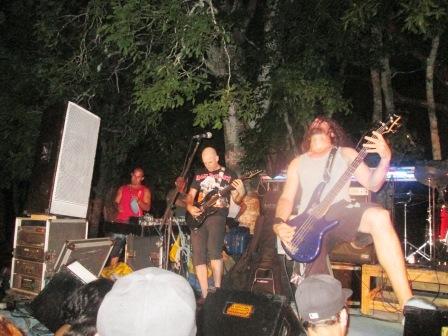
I have very few natural talents, but arriving precisely as the party starts to heat up and sensing when the pendulum is about to swing the other way – my signal to kiss and split – are probably my most utilized and useful. So it was for The Dead Daisies, the historic concert held this past weekend. I walked through the doors just as opening act David Blanco (who I’ve seen plenty) was finishing his set. I took a short cut to the dance floor, ran into friends, then some more, then more still. We danced ourselves as close to the stage as safety permitted, but the place was packed – frikis had begun arriving as early as 11am, from as far away as Camagüey, to hear members of their favorite bands (The Stones; Guns N Roses; Ozzy Osbourne; Motley Crüe) rock the Cuban capital.
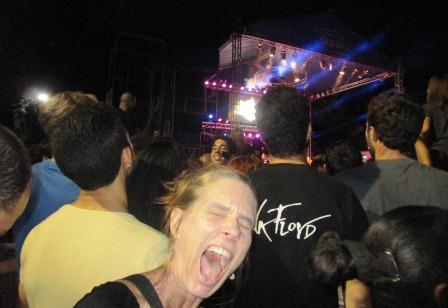
For those who like to rock!

Already the Salon Rosado was puddled with vomit (not mine, don’t let the photo fool you).

Nothing new or novel there: knowing your ingestion limit, when and how to mix what, how to pace yourself – this is a tricky equation which many Cuban rockers have yet to get. I’m talking about the younger crowd mostly, but we had to scurry out of the way as security physically restrained and removed a middle-aged dude, fairly drooling, with eyes bulging rabidly. Vomit, condom ‘balloons’ batted airborne with verve, and bottles produced from backpacks – these are de riguer at whatever big Cuban concert and were in abundant evidence this Saturday night.

What set this concert and this group apart was the sheer power, pedigree and talent of the band, combined with the setting: the Salon Rosado is that rare combination of big enough to pack in a few thousand high-energy fans, while retaining the intimacy of a much smaller gig. It’s also a multi-tiered, open-air venue with major space given over to the floor, which means lots of room to dance and mosh and good bird’s eye views, for voyeur rock and rollers. As for The Dead Daisies: we’ve had some big bands blow through Havana during my tenure, including Audioslave, Sepultura, Kool and the Gang and Calle 13; but these concerts are always held in the ‘Protestódromo’ – the seaside, make-shift area designed for massive protests and rallies (it was built during the Elián trauma) and adapted for concerts more recently. I’ve had tons of fun at these shows, but as you may imagine: the audio is shitty. Crashing surf and whipping wind are not conducive to music appreciation. It’s also worth keeping in mind that the last big concert like this was in 2010.

So we were due.

I hate to admit it, but I didn’t recognize the names of any of the musicians (though I reserve the right to invoke the ‘stuck in Cuba’ defense). I had never heard of the band either and was skeptical – what kind of name was Dead Daisies anyway? Flowers, dead or alive, don’t evoke screaming, pulsating, orgasmic rock n roll, not in my mind and body anyway (no disrespect to Guns N Roses and especially Slash, who rocks it real, but Axl’s whiny voice has always rubbed me in all the wrong ways).

R Fortus

But damn, did The Dead Daisies come through. I’m a guitar-loving kinda gal and when I read that Richard Fortus (Guns N Roses) counted John McLaughlin, Jeff Beck, and Robert Fripp among his preferred players, I knew things would be just fine. Just how fine I didn’t realize until the first notes rung out from Fortus’ drop-dead gorgeous Gibson over the sea of banging heads. There is perhaps nothing more glorious than a Cuban crowd united by the joy, energy and electricity of music well made, played from the heart. And so it was.

Meanwhile, any band with Dead in its name evokes that other, more (in)famous band synonymous with long sets peppered with covers and standards, enthusiastic mind-altering substance use, and drum solos; I was pretty shocked to experience similarities at the Salon Rosado. My olfactory sense alerted me to someone nearby enjoying the mighty herb and the pierced, tattooed guy on all fours puking violently while simultaneously smoking a cigarette argued for abuse rather than just use (though it was an impressive example of multi-tasking). But when Brian Tichy (from Ozzy’s band) ripped a 15-minute drum solo, the entire crowd was transported to an alternate reality. Holy shit. This guy is a monster. I’m not much for tricks with sticks, but he got admirable air between trills and when he started beating the skins with his hands? We went wild. Well done man, well done.

The Dead Daisies in Havana

An indisputable highlight was The Dead Daisies’ version of Knockin’ on Heaven’s Door (yet another example that anyone covering a Dylan tune does it better than Bob), where the crowd of 3000-plus needed no encouragement to sing the chorus long and hard. It was just after this when I realized I was in the no-woman’s-land between two increasingly large and frenetic mosh pits – dangerous territory for anyone not looking for a random fist in the face or elbow to the ribs. I danced away from the mosh sandwich towards my friends, marvelling at how music unites people and ignites the collective soul.

The Dead Daisies gave us the gift of uplift – and boy we could use more of it.
10 Comments

Filed under Americans in cuba, dream destinations, Expat life, Living Abroad, Travel to Cuba

Guaguas, Blackouts, and Ham Sandwiches: Making Music in Havana

After all these years here, I never tire of the constant education. Meeting new people, learning, creating, connecting – Cuba es así. These past 10 days were a potent distillation: immersed in an international ajiaco (thanks Roy Hargrove/Crisol) of musicians and artists, brains and beauties, I learned many things and shined new light.

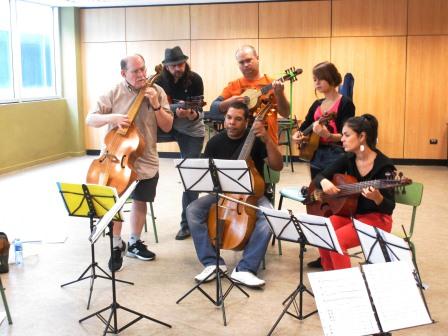
I learned that no matter where you are in the world or what type of music you play (in this case Renaissance and Baroque), you’re leaving the gig with 14 people and a half a dozen big instruments crammed into a mini van.

I learned that whether in Hialeah or Havana, the band may have to leave the gig running for the bus. And dinner was the cheapest, quickest thing around – in our case, the ubiquitous ham sandwich.

I learned – or re-learned – that magical things can happen when you combine musicians and blackouts (get your mind out of the gutter: I’m talking musically).

trio4

I heard a baroque guitar in a small ensemble for the first time and man, is that a hot little instrument. I know everyone’s gaga for the ukulele, but I tell ya…

I learned more viscerally that bass and tenor viola da gamba are powerful, communicative instruments. The treble? It still makes my ears twitch like an adorable terrier hearing above our range.

I had affirmed – once again – that music and movement, creativity and goodwill can transcend all language and cultural barriers.

I understood the profound human capacity for better communication, better conflict resolution, more fluid ways of being and wider ways of thinking.

I learned that the recorder sounds pretty damn good when not in the hands of a 3rd grader.

I learned that a cheese grater and a knife make a mean percussion instrument in the hands of a Cuban.

I realized that no matter how green the Yuma or how little traveled, how poorly they speak Spanish or how deeply-seeded the disinformation about Cuba, with an open mind and open heart, Cubans will touch both, ignite both, profoundly.

???????????????????????????????

And I was taught, once again, that the support and love of one’s community (however defined), is priceless and irreplaceable.

5 Comments

Filed under Americans in cuba, dream destinations, Expat life, Living Abroad, Travel to Cuba

Day 1, Year 0: Cuba and the USA

A bunch of people have asked about what I, CCG, personally think about recent groundbreaking announcements vis-à-vis Cuba, the US, and their respective release of prisoners. Some of you folks who follow my blog, but also a rash of people who read my dispatch for the Daily News (New York’s hometown paper!), came around querying. So to complacer them, you, and me, I’ll give you some of my thoughts on this, Day 1 of Year 0.

For me, the tangible effects this is going to have on Cuban families (and I mean that in the most expansive, criollo way possible) is the most important issue. Any improvement in trade, telecommunications, travel, postal and embassy (!) services, immigration policies, and transparency, translates into some sort of improvement for Cuban families. Ahora: the question is at what cost those improvements? Therein lies the rub, which is why it deserves is own short discussion.

I’m hearing a lot of static in the international media/blogosphere about the ‘Americanization’ of Cuba. First off, I suggest anyone using this term study up on Simón Bolívar, with a little José Martí thrown in for good measure. Second, the idea that US companies like McDonald’s and Starbuck’s are going to roll in and over the island disregards two very important components of the Cuban political reality: 1) the state remains steadfast in its commitment to complete sovereignty and 2) they’ve been thinking about this day for over 50 years. It also ignores two important factors in Cuban daily reality: 1) there are more pressing material problems than satisfying a Big Mac/Frappuccino craving and 2) policy makers are aware of the health dangers (ie chronic disease) burgers and milkshakes pose and so should work to keep them out – protecting public health is especially important in Cuba where the government maintains a universal, free system and regards health and well being as a human right.

Taking these realities into account doesn’t mean that no US chains will stake their claims here, but I think the Cubans will be strategic about whom they let in. Marriott, Hilton and other hotels, Cargill, ADM, and their big ag interest friends, Home Depot, telecommunications providers – these are all likely candidates for early entry into the Cuban market. McDonalds and Starbucks, not so much. Maybe it’s too rosy a picture, but I don’t think the folks running the show are just going to open the floodgates and let US interests run roughshod over the place.

The ‘run run’ (as we say here) amongst some, is that the policy changes won’t stick or even be enacted. One camp reasons the Cubans will finesse a flip flop, while the other argues the US Congress and/or next President (should it not be a Democrat or Rand Paul), will roll back whatever Obama and company have in store for the next year. These bits of ‘logic’ defy logic. First of all, the Cubans would be completely loco to announce such policy changes and then not pursue them – this is just a recipe for disaster given the current context on the island. And as far as Washington goes, US business interests want in on Cuba, like yesterday. The bottom line (pun intended): The desire for increased commerce and trade will trump any tantrums thrown by hard-line Cubans and Republicans regarding Cuba. As Obama has said repeatedly (paraphrasing Einstein), pursuing the same actions over and over again and expecting different results is the definition of insanity. And the embargo is a self-defeating policy – another opinion voiced by President Obama in these past few days.

Leaving politics aside, this is an incredibly emotional moment – especially for those of us who have been adversely affected and working so tirelessly to have this Draconian policy reversed. Obviously, change isn’t going to happen with the flip of a switch. There are a lot of messy threads to untangle, many policies and steps to analyze and tweak. For example, the 50% or so of Televisión Cubana that is pirated from US channels – HBO, Showtime, Discovery, ESPN – is going to go by the wayside, sooner rather than later. But after ‘no es fácil’ (it isn’t easy), our favorite saying here is ‘algo es algo’ (something is better than nothing). And the announcements of this past week are a very big something.

Just now, my 51-year old neighbor stopped by. “I never thought I would live to see the day. I knew The Five would return home in my lifetime, but I never thought I’d be alive to witness the normalization of relations. It is a great, great moment in our history.” She came over to congratulate me on the new era of US-Cuban relations (this is happening all over Havana these days: whether stranger, friend or neighbor, everyone is greeting each other with claps on the back, hugs and shouts of ¡felicidades!) and to let me know she’s already renovating a room in her house to rent to Americans, once they can travel here freely.

Personally, I can’t wait. Vamos bien.

47 Comments

Filed under Americans in cuba, Communications, Cuban economy, Cuban idiosyncracies, Cuban phrases, Cuban Revolution, dream destinations, Expat life, health system, Living Abroad, Raul Castro, Travel to Cuba

Havana for Careful Readers

Surrounded by punchy bright flowers, relaxing, windows thrown wide. The breeze and verdant hour and laughter of passersby intoxicate. Inventing parties, creating drama, swapping art and clothes and women, maintaining levity despite – and because of – life’s hardships: this is Havana. The unhinged enthusiasm dominoes, flirting, a robust buffet, and pelota (especially if it’s Industriales vs Matanzas like tonight) can occasion: this too, is Havana.

Barking dogs, erecting walls, crumbling sidewalks and streets, buildings, families and lives. Coin flipped: tinted cars, exclusive bars, fridge full and belly contento. Friends forever leaving, returning as visitors of a sort to eat congris, drink lager, dar cuero. Dancing. Laughing. Taking your vieja to the polyclinic and chama to Jalisco Park. Loading up carts to overflowing at El Palco or 70 y Tercera, getting right with the padrino, paying respects at Cementerio Colón. Public peeing and masturbation, gay play along the dark bastions of the Castillo de Principe, working girls working the boulevards of Miramar and the back alleys of Cayo Hueso. Going for the daily bread.

Genius composers, a farce of artists (but reams of the real deal, too), honest, sensitive young men breaking the mold and stereotype, moms working themselves ragged cleaning, cooking, shopping, caretaking and running ministries. Dads pregnant with beer bellies out on the town, suelto sin vacunar. Know-it-all and equally annoying clueless tourists who don’t study up enough beforehand resolve life for some, earning gratitude, fomenting envidia.

All of this is Havana. Come see for yourself.

16 Comments

Filed under Americans in cuba, Cuban customs, Cuban economy, Cuban idiosyncracies, Cuban phrases, Cuban Revolution, Expat life, Living Abroad, Travel to Cuba

Cuban Marriage Counseling

Not a few consider me an odd bird for putting down stakes in Cuba. Indeed, I’m often asked what it is about this place that has kept me engaged all these years. It’s a fair question and one prudence and sanity obligate me to consider every so often.

Several readers have noticed that my posts have been somewhat bleak of late. I won’t deny or defend it, but instead will resort to metaphor: imagine yourself 13 years deep into a marriage with all the passionate delirium, grief and troubles, challenges and negotiating such a commitment commands. You’re both sagging, energy is flagging and while others would have thrown in the towel already, you remain steadfast, perhaps impractically so. Determined, to put a good spin on it. Dedicated. To make this veteran partnership work in its unlucky 13th year, you mix things up, change routine, get creative. And it helps evolve, even resolve, (if things go well), the situation.

In my effort to shake things up and goose my situation into evolution, I recently spent six weeks off-island – my longest hiatus since my last Lonely Planet assignment in 2008. It was a month and a half of memorable adventures in both space and time and spirit. I played a lot. I learned more. And wrote very little. It was, (to take the metaphor too far), my Cuban marriage counseling.

Lo and behold, my time a fuera was not for naught because it snapped some things into sharp focus about how this place intoxicates and charms. It’s not everyone’s cup of tea, granted, and even some of my dearest loved ones on the other side have confessed to not understanding the attraction. For them, but most importantly for me and you, here are some of the reasons I’ve been toughing it out here all this time. These aren’t the big picture principles – humanism, solidarity, romance, equity – that brought me here, but rather snapshots of why I like this place better than most others on a day-to-day basis.

Drunkenness here is laughter & dance, not morose & violent – I know more than a little about alcoholism; when I moved here way back when, I was convinced I’d encounter a fair amount of rum-fueled violence. It was a valid assumption given my boozy (but not floozy, eh?!) background and the drunken squabbles and brawls I’d witnessed up North. But like many assumptions (especially where Cuba is concerned), this has been disproven by direct experience. Sloppiness, raised voices and lowered inhibitions – all these are markers here. But violence? Not so much; crimes of passion, which are definitely part of the Cuban script, excepted. On the whole, drinking is a happy affair here, accompanied by music and dance, which is much groovier than the stress, angst and escapism I see among my drunk friends and family in New York.

Sexuality is celebrated rather than castigated or repressed – You see it in the clothing styles, hear it in the piropos, and fairly feel it in the air. How else can I explain that my all-time most popular post is The Cuban Love Doctor and that there are entire websites dedicated to Cuban amor? Just hours back from my six week hiatus, I witnessed this exchange at my local agropecuario:

– Hey chula! You’re looking real good! Ven acá, chica. ¡Ven acá! I know you like black guys, but give me a chance. You won’t regret it!

The young woman in question smiled and demurred, but that this kind of come-on would be brandished in public, for everyone in the market to hear, and that the woman would be amused, even flattered, says a lot about the Cuban approach to sexuality (and interracial relations, as well, it should be noted). Also, that the guy who sells boniato knows your preference in partners speaks volumes about the tightly-knit nature of Cuban neighborhoods.

After such a long (for me) stint in the US, I realized one of the things I don’t cotton to is the hypocritical Puritanism. Men who regularly consume porn but are prudish in their own beds; women who deny their own pleasure by adhering to oppressive societal paradigms and expectations; and the application of sexual dogma generally, have created a country (or at least several generations) of sexual neurotics. Sex is supposed to be fun and playful and shame-free, if you ask me and as long as you’re not hurting anyone, what’s the problem?

Bawdy, unabashed gab – Cubans’ capacity to discuss bodily functions openly and clinically is tangentially related to the abovementioned point on sexuality. In the past week, I’ve talked to male friends about their urinary tract infections; pre-mature ejaculation; and constipation. Female friends, meanwhile, have offered opinions on big breastedness vs. flat-chestedness; faking vs multiple orgasms; and menstrual flow.

Irreverent humor – I’ve written previously about how I appreciate Cubans’ sense of humor. It’s a George Carlin or Chris Rock approach: no one here is off limits and the humor tends towards social commentary and catharsis. Just a few days ago, I was waiting for my order at Havana’s version of Kentucky Fried Chicken (yes, times are a-changin’!) when I overheard the following:

– ‘I’m not sure what I want,’ said the customer. ‘What’s on the Cuban sandwich?’

– ‘It’s a baguette, with slices of pork loin,’ began the waiter…

– ‘Alternated with slices of Fidel, Raúl, and Antonio Mella,’ chimed in another.

This elicited a guffaw on the part of the jokester and nervous, but enthusiastic laughter by those within ear shot. Whether or not you find it funny, it illustrates how there are no sacred cows in Cuba – except actual cows, which is another story (and common joke).

Reusing, repurposing and resourcefulness – Sure, my life would be a helluva lot easier were it filled with Swiffers and paper towels, Windex, Tupperware, and Home Depot. But a broom is a functional, age-old tool; linen napkins and cloth cleaning rags are more environmentally-friendly;  vinegar and newspaper clean glass well; and a plate-covered bowl or cajita is as good as a plastic container with a lid (and probably healthier in the long run). If I had a Home Depot, I would have never met Eduardo the carpenter or Carlos who sells screws and light switches por la izquierda. Nor would I have occasion to call up Laura and Roly to lend me their ladder. Just today, a friendly fellow entered the bookshop selling rose bushes. We struck up a conversation, I bought a gorgeous yellow number for $3 CUC; he gave me pest-control advice. So the Cuban reality is not only more economical and ecological, it’s also more social. I point this out only to point up that easier does not necessarily mean better – something I have to remind myself of now and then. Just like I have to remind myself that Cuba is still a great place to be and grow. For now, anyway.


LINKS:

Cuban Love Doctor – https://hereishavana.com/2012/07/10/the-cuban-love-doctor-is-in/

Clothing styles – http://www.amazon.com/Havana-Street-Style-Intellect-Books/dp/178320317X

Bookshop: https://m.facebook.com/cubalibroHAV


13 Comments

Filed under Americans in cuba, Cuban customs, Cuban idiosyncracies, Expat life, Living Abroad

CUBAN DISPATCHES: Rock ‘n Roll!

Life has become way too complicated (and trying, truth be told) lately – something I predicted would happen. I chose to pointedly ignore the trying part here in that ‘hey, it’s a new year, maybe the world really isn’t going to shit and perhaps I will finish my memoir’ spirit of things. Also, since Cuba’s default setting is Trying, I didn’t want to beat a dead horse. Instead, I focused on the need to balance competing priorities and reminded everyone – myself included – to take the time to stop and smell the roses.

Six months on I can safely say I’ve failed pretty miserably in following my own advice (see previous maudlin post!) and that new year’s optimism has, once again, proven to be a fallacy: the world is going to shit, my memoir continues to gather dust, and I can’t even sort through the priorities, let alone begin to balance them.

Regular followers of Here is Havana will have noticed a precipitous decline in new posts over the past year and for those who care: so sorry. If it’s any consolation, not writing screws with my head mightily since it’s a form of catharsis and therapy – something anyone who lives long-term in Cuba needs in spades. So, here I am again, with a new proposition: a series of short dispatches crafted from various Cuba experiences, 2014.

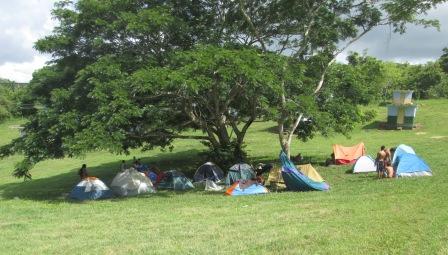
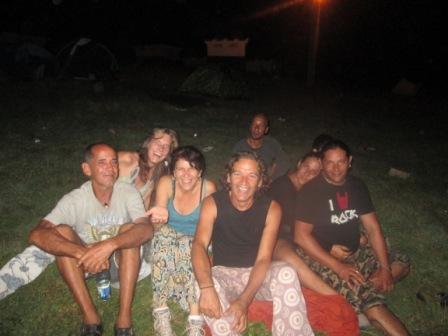
Let me pop the Dispatch cherry with one of the country’s oldest outdoor music festivals, Atenas Rock. Held in a copse tucked back in the hills of Matanzas, this weekend rock festival features two days and nights of heavy/death/black metal, camping, and more drinking and drugs than food and water. I had no idea what to expect and knew only one person in our piquete. But I love to camp, (plus it’s something I’m good at); I can never get enough rock and roll; and I always like to meet new people. To hell with competing priorities, I thought as I packed my camping hammock.

Our camp!

Our camp!

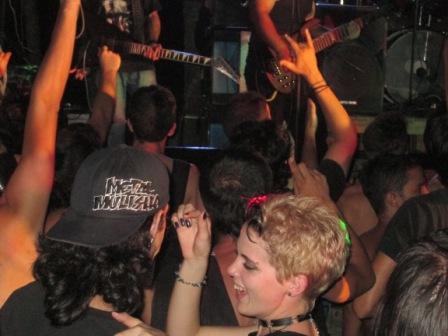
Although this type of metal isn’t generally my cup of tea, I’m 13% more deaf, which is generally a good measure of a proper rock festival. It’s terrible for my friends, family, colleagues and anyone else with whom I converse of course: I only hear half of what they’re saying and the rest of the time I’m shouting because my volume control is busted. But Atenas Rock 2014 was completely worth it.

crowd1

Everyone tells me this wasn’t as good as other years, in another era, but this weekend festival has some basic factors working it its favor. First, the setting in a grassy valley surrounded by woods bisected by the meandering Canímar river, is majestic. Second, the entire affair is free – the camping, the music, swimming in the refreshing pocket pools along the river. And, much to my amazement, Matanzas has some pretty good rock and roll bands (though groups come from Havana, Holguín and other provinces to play here, transport difficulties and lack of resources mean Matanzas is heavily represented); keep your ears open for Rice & Beans and Stone Road, especially. Finally, though there was liberal intake of all sorts of psychotropic substances, it was a very mellow, even family atmosphere, with long-haired rug rats throwing up the devil horns as they frolic in the river.

yankees vub

Some aspects, however, were less than ideal. Like not providing a single bathroom for the hundreds of concert goers? A shit show, literally. To be clear: I have no problem peeing and shitting in the woods. Indeed, I’ve logged en plein air baño time all over the world, from Hawaii and Bolivia to Morocco and Guatemala. But after a weekend of roughing it with people ignorant of the most basic camping tenets, heading into the trees when nature called was like walking into a feces minefield. To wit: my friend went to pee before turning in the first night and almost took a massive digger when her flip flop skidded in a pile of human shit. The kid in the next tent convulsing and barfing, pausing just long enough to shout about how he was possessed by a santo malo was also a bit of a downer. I, for one, was thankful when he passed out long and hard.

Shredding!

Shredding!

Sleep was elusive, what with deafening decibels shaking my tent flap and too many of the bands played covers. Hey, I like a good cover just as much as the next rock ‘n roll chick, but when it’s Highway to Hell played by six different bands, some badly? It gets a little tiresome. And it’s a waste of valuable stage time. But all in all, it was a fantastic festival. I can’t wait until next year. Rock on!

last night

13 Comments

Filed under Americans in cuba, camping, Cuban customs, dream destinations, Expat life, Living Abroad, off-the-beaten track, Travel to Cuba

Hasta Suicide is Hard in Cuba

If you know one thing about Cuba or have read a few of my more distressed musings over the years, you’re aware of how hard things are here. Some people have it easier than others of course – that’s the way of all societies, including those striving to be equitable and just – but I can count on one hand the Cubans I know who have it easy como tal.

The rest of us? We’re taking it One Day at a Time, trying to keep kindled the light in our eyes as we tolerate brutally long lines under an equally brutal sun; navigate a frustratingly disorganized (and often contradictory) bureaucracy; and bid adieu a steady stream of friends and loved ones as they leave the island.

That light, the inner sparkle and glow which I’m convinced helps us mere mortals to remain upright and breathing against the most violent and debilitating experiences life is forever fond of meting out – brain cancer, heartbreak, war, earthquakes, Tea Party republicans – has been snuffed for many here. Perhaps you’ve seen it yourself.

Is it just a coincidence that Cuba has one of the world’s highest suicide rates? And for all you dissident fucks and pseudo-intellectual detractors who pin blame on the revolutionary government, I recommend you read Lou Perez’ definitive tome To Die in Cuba: Suicide and Society. Therein you’ll discover that Cuba has had a sky-high suicide rate throughout the ages. I’d venture a guess that rather than any political paradigm, imperialism, slavery and neo-colonialism (plus their oppressive after effects), combined with lost or tossed love are largely to blame.

Causes aside, the problem is that in today’s Cuba, killing yourself is not an easy proposition. I wouldn’t even know where to get a gun, for instance, and no one I know has a working oven to stick your head in, let alone a car and garage guaranteeing proper asphyxiation. As far as I can tell, unless you throw yourself in front of a bus, off a bridge or down a dry well (a popular solution in the campo if I’m not mistaken), you’re shit out of luck in terms of trying to off yourself.

Hanging is a universally popular option, but how do you knot the thing correctly? If we had any decent kind of Internet, this could easily be learned on YouTube, I’m sure, but alas…And then there’s the question of finding an appropriate spot for your final dangle. I know that in my microbrigada apartment, there isn’t a prospective beam that isn’t termite-infested, an overhead fan that could bear my weight or other place for proper hanging. Getting cozy with a toaster in the tub seems practical – if you know anyone with a toaster or a tub. I suppose you could substitute an olla reina, but finding a tub? Good luck with that.

This leaves poison, pills or wrist-slashing (vertically, people, not across the veins). All things considered, I suppose an overdose would be the best bet. How many diazapan do you think it would take? That’s a rhetorical question.

I leave you with these thoughts since this will likely be my last post for a spell as I try and enjoy something of this summer.

27 Comments

Filed under Americans in cuba, Cuban customs, Cuban idiosyncracies, Expat life, Living Abroad

A Cuban Glossary

Anyone who speaks a language foreign to their own knows what an embarrassing, ego-crushing, confusing and even dangerous proposition it can be. If you’ve poked around my blog a bit, you know I’ve had my share of missteps, malapropisms, and foot-in-mouth moments. Trust me: it sucks.

I figure I suffer more than most in this foreign-language-learning struggle for three reasons: 1) there’s a lot of static in that part of my brain wired for music and language (luckily I make up for lack of natural ability with pure tenacity); 2) as a writer, words are my medium and I’m spoiled in English, where I have many and varied options to express myself clearly and precisely (not that it always works). When you’re learning a foreign language, for instance, it takes time to learn how to say sneaker, stiletto or ballet flat, obligating you to default to the generic ‘shoe’ in the meantime; and 3) Cuban Spanish is far removed from the español I learned in university, Guatemala and the streets of NYC.

I often advise native Spanish speakers to prepare themselves for a different linguistic experience here, adding that they may encounter problems understanding Cubans. Clearly, asking directions, exchanging pleasantries, or ordering a meal/drink/bit of fellatio will be (or should be) straightforward enough for hispanoparlantes. But once conversations get cooking, seasoned with slang and dichos, oblique (for non-Cubans) historical/cultural/political references, and island particular vernacular, it can get tricky. Few people believe me, let alone heed my counsel (see note 1).

I can hear some readers scoffing across the World Wide Web. But take this exchange for example:

“¿Que bolá asere? Tengo pincha y me hace falta una botella. Tírame un cabo y te doy un pescao.”

Very simply, this translates to: Hey man. I have to get to work and need a lift. Help me out and I’ll give you 10 pesos.

See what I mean? Tricky.

Of course, every country has its own terms for this, that, and the other thing. Vocabulary varies from region to region and between cities as well. For instance, I recently took a straw poll amongst friends from across the USA, asking what they called the type of sandwich sold at Subway. In New York, we call it a hero. In other parts of the country, you’ll hear it referred to as a submarine, a sub, grinder, or po’ boy (which really is in a class by itself, as anyone who has feasted in New Orleans will tell you).

But although we have regional differences on the island, it’s much more complex. This way-with-words business goes beyond variable regional vocabulary since Cubans pepper their Spanish with terms of African origin (like the aforementioned asere); many American English words are in daily use, including lager, homerun, and brother, all uttered in a sultry accent; and entire syllables are regularly dropped (e.g. ño), while other words are contracted (e.g. equivoca’o). Needless to say, this complicates matters, as does Cuban-specific vernacular. Some of these words may be used in other Spanish-speaking countries, but probably not in the same way Cubans use them. Have insights? Drop me a line or submit a comment.

Almendrón – Old US car; almendra means almond. Almendrón is a big almond, which these cars resemble.

Bala, bata, petaca – Cigarette

Caña, fula and tabla – Every day terms, these are used to denote CUC or ‘kooks,’ the hard currency here. Other terms include chavitos (which I hear infrequently in Havana) and morrocota, used exclusively for the 1 CUC coins. ‘Fula’ has other meanings as well; see below.

Curda – Alcohol; can also be used as an adjective for someone who’s drunk.

Faster – Bicycle; also called a chivo.

Fula – Screwed up, twisted, somehow malevolent or damaged. Used to refer to situations or people: “¿Ella? Tremenda fula.”

Gabo – Slang term for house or home; also a diminutive of Gabriel, used most famously for García Márquez.

Guagua – Bus

Jama – Food; grub

Jeva/o – girlfriend/boyfriend

Nescafé – Nothing doing; no way, as in ‘did you two hook up?’ ‘¡Nescafé!

Pincha – Work, job

Run run – Word on the street; rumor; grapevine. Synonyms include radio bemba and la bola.

I could go on (and on), but I’ve got other work to do, deadlines to meet, and dreams to realize.

Me voy en fa’.

Notes
1. Anyone planning a visit here will benefit from learning a few phrases and sayings with the Cuban dichos app.

46 Comments

Filed under Americans in cuba, Communications, Cuban customs, Cuban idiosyncracies, Cuban phrases, cuban words without translation, Expat life, Living Abroad

Havana Changes for the Good

Some readers may remember my predictions for 2014, where I mentioned that we’re going to have to fight to maintain balance – here, there, everywhere. Work, play, love, lust, family, friends, menial tasks like housecleaning and random responsibilities like jury duty, babysitting, passport renewal: all of these priorities are competing for precious time this year. Given that there are only 24 hours in a day (see note 1) and in those too few hours I’m meeting deadlines, running a bookstore, consulting travelers and policy makers, playing bike polo, and updating my app, I’m terribly behind on that key activity called sleep (and many aforementioned menial tasks/random responsibilities).

So that elusive balance? Tough to find, let alone forge, in today’s Havana, which moves to a new rhythm (note 2), thanks to the economic “updating” (to use the official vernacular) we’re experiencing. While I’ve written some about the troubling aspects this updating engenders, I’m going through a sort of Marriage Encounter phase with my adopted city, whereby my enchantment or something similar, is being rejuvenated. This is taking a conscious effort, I’ll admit, but also seems to be occurring naturally, for which I’m grateful.

If you sense that I’m adverse to change, I am – when that change is inequitable, disquieting, violently +/or stressfully attained or more bad than good. And I’m quite clear that I need to embrace Cuba’s changing socio-economic landscape in a positive, proactive way. Those of us who don’t are doomed – to angst, bitterness, depression, anxiety, addiction, denial and other not-so-desirable states. The long and short of it? I’m trying to love the new Havana even as foreigners move here in droves, rush hour traffic worsens, and the unfortunate combination of wealth and bad taste (note 3) conspire to give the city a flavor that’s starting to feel like Hialeah. So I don’t get swept away by the black cloud called Progress, I dedicate this post to the great things about our economic renewal.

Ice cream, you scream, we all… To say Cubans are fond of sweets is like saying Warren Buffet is well off. You need only look at the rapid proliferation of bakeries (some quite good) as testament. Or the line at Coppelia. As an ice cream fanatic myself, I’ve braved that colossal line – regularly running to an hour or more in the summer – many a time. Following on this delicious tradition is the recent emergence of several outstanding heladerias wholly (or partially) privately-owned and -operated.

I’d heard about the new ice cream place next to El Palenque, but it took a while to jinetear a ride all the way out there to the upper class suburbs to give it a try. Once I stepped into the cool, air-conditioned parlor with ice cream cone chairs and 25 different flavors – hazelnut! tiramisu! pistachio! – I knew I’d found my temple (see note 4). It’s a state-Italian venture as far as I can tell and a hell of an addition to Havana’s gastronomical scene. The same can be said for the spiffy new ice cream place on Calle 84 near 5ta B in Miramar. Creamy, dense, in all sort of assorted flavors – this is what folks tell me Coppelia was like back in the day. One recommendation: someone should open these types of parlors ‘for the hoi polloi,’ closer to the more densely populated (and less affluent for the most part) barrios of Marianao, Centro Habana, Lawton, etc. Even though the stuff is wicked expensive at 1 CUC a scoop, Cubans will always find a way to finance their sweet teeth. [ed note: to discover these and other interesting places to visit around town, please check out my Havana Good Time app for iPhone and Android.]

Late night noshing – Used to be that if hunger struck at midnight, you were shit out of luck. Just a few years ago, dinner after 11 would inevitably mean a microwaved package of overcooked El Rápido spaghetti with watery tomato sauce or some dry on the outside, pasty on the inside croquettes at Ditu (see note 5). News flash: those days are as long gone as Alicia Alonso’s eyesight. In today’s wee hours, you can choose from Swedish, Russian, KFC-type fried chicken (our crispy coating, however, is made with plantains and officials put the kibosh on the drive-thru window), sushi, pizza (delivered to your door in under 30 minutes or it’s free), Mexican, tapas, and my personal favorite: old fashioned comida criolla. I get that extended hours, KFC wannabes and delivery pizza may not be your idea of innovation and I mostly concur. However, the Cuban in me says ‘sushi?! Now that’s progress.’ Plus, there are rumblings of some real foodie inroads being made, including vegetarian cajitas (little boxed meals for a buck or two), protein/veggie shake shacks and various permaculture projects. Now if only the concept of Sunday brunch with Bloody Marys would catch on…

At your service: It’s amazing how many new, small private businesses are providing one service or another. Your Samsung Galaxy not receiving messages? Need your bikini line (or back or upper lip) waxed? I can hip you to half a dozen places within a mile of here to fix you up. Car need a wash? Maybe your dog does. Or perhaps you’re too uncertain or mono-lingual to make that casa reservation in Santiago de Cuba. No problem: in the “new” Havana someone will do it for you – for a fee of course. Today, you can get your iPhone unlocked, your navel pierced, Botox injections (this is actually a state enterprise; I don’t know if private individuals are also doing it, though I wouldn’t doubt it) and many more services we never dreamed of a decade ago. Having such services available bestows a sorely needed veneer of normalcy and efficiency on our corner of the world.

Touchy-feely intangibles – Some of the positive aspects being felt after three years of economic updating are unquantifiable and quite possibly ephemeral (depending on what the future holds). However, in the right now, relaxing restrictions and regulations has unleashed a torrent of pent-up creativity, which is exciting. More importantly, it gives people the space to dream, to put their ideas into practice and test their mettle. Furthermore, the possibilities provided by the 200 and something authorized economic activities give people breathing room, broaden their horizons, and help loosen the (real or perceived) noose of control that many Cubans feel outside or inside forces exert over their lives. This liberty, for lack of a better word, has taught a lot of people, fast, the meaning of hard work (see note 6), which my proletarian background obligates me to view, always, as a good thing. It’s empowering and for the first time, Cubans are getting a sense of individual agency (as opposed to agency as a nation). It’s refreshing. Now however, the trick is to turn all these touchy-feely intangibles into something good and sustainable and not just a mechanism for making money on the backs of their/our/your neighbors.

Notes
1. When I’m in charge there will be 48-hour days, no laugh tracks or white people with dreadlocks, plus Styrofoam will be illegal.

2. Once again, let me make it clear: what I write is about Havana – not Bayamo or Puerto Padre or Sandino. I wish I had the time and opportunity to visit these (and more) places across the island more often, but alas…

3. More on this money and tacky taste issue in future posts. Currently I’m thinking of launching a documentary project called Havana: Crimes Against Architecture focusing on how the nouveau super rich are tearing down residential jewels and throwing up Miami style McMansions.

4. I exaggerate. Coppelia, known in these parts as the ‘Cathedral of Ice Cream,’ will forever be my preferred spot to worship and gorge.

5. So notorious is the mystery meat croquettes and variants peddled at Ditus around the country, it led to a popular joke: when someone says ‘ditu’ (tell me about it), the response is ‘no es de pollo’ (it isn’t chicken).

6. Before certain readers get their knickers in a twist like they did with one recent post, let me say that many Cubans I know are very hard working – amongst the hardest working people I’ve ever met. Here, however, I’m talking about the younger generation who really are clueless about what a true hard day’s work entails, and about people who think running a small business is easy money.

20 Comments

Filed under Americans in cuba, Cuban customs, Cuban economy, Cuban idiosyncracies, Cuban phrases, Expat life, Living Abroad, Travel to Cuba

Cuba: Oh, the Absurdities

I’m writing this on February 14th (see note 1), which down this way is known as Día de Amor y Amistad – Day of Love and Friendship. In Conner-speak, it’s the Day to Stay Indoors since Cubans embrace St Valentine with the frenetic enthusiasm of a nine year old screeching a speech on high revolutionary holy days. (If you haven’t been subjected, count yourself lucky – it can be pretty disturbing). Interminably long lines at restaurants, theaters, clubs and shoddy bars are the norm here every February 14th. My advice? Stay close to home.


This fury for the Day of Love is the perfect opportunity for me to tackle the sticky issue of how absurd this place can be. Love, absurd? Indeed, but even more so here, where it’s as scarce as an honest butcher. Lust? It’s everywhere, a veritable epidemic of Eros we’ve got going on. Lasciviousness and overworked libidos? Cubans take the concepts to new heights (or lows, depending on how you look at/do it). But love? Love is something else entirely and aside from parental love for a child and elderly couples with decades of dedication, it’s not much in evidence as far as I can tell.   


And I’m not referring to what Cubans say – they talk a huge and charismatic love game – but rather what they do. Blackmail and brujería, lying (by omission or otherwise), cheating, unwillingness to compromise and difficulties/resistance to communicating are how many back up their grand claims of love, making the emphasis on Valentines look pretty absurd. And a lot of things other than love are looking this way lately – where folks walk the walk, but don’t talk the talk; where there’s a great and spreading maw between theory and reality; and where the policy contradicts the practice, resulting in paradoxes no one can wrap their heads around.


Some of Havana’s absurdities are simple (and simply ridiculous) like alarmingly long fingernails (which make picking up coins and masturbating problematic) and impractically high heels (which render women unable to walk). Personally, I find these killer nails and come-fuck-me-shoes (as Mom always calls them) absurd. Some other absurdities happening around here lately include:


$200,000 cars: The liberalization of car sales ‘no tiene nombre as we say in Cuba. Liberating car sales essentially means the authorities corrected one absurdity (i.e. buyers no longer need to navigate the onerous bureaucratic approval process to buy a car) by introducing another (i.e. cars would now be sold “freely” at prices set by the state). The logic goes that pricing cars high would bring in sorely-needed revenue to create a good, functional public transportation system. But who’s going to buy a car – and a French or Chinese one at that – for 900 times the sticker price? What sounded doable and looked good on paper (and whoever drafted, edited and approved that policy isn’t the sharpest knife in the drawer), bombed fantastically in practice. The new car sales scheme kicked up a firestorm of critical foreign press and dealt a low blow to the Cuban people, many of whom had been saving for years to buy a (normally-priced) car. Now they couldn’t even dream of it. People railed publically, loudly against the measure, creating new jokes to channel their frustration (see note 2). For instance, a cartoon popped up of the classic Cuban animated character Cucarachita Martina pondering whether she should spend a $200,000 windfall on a new car or Manhattan penthouse. Thinking she could buy more than a closet with 200 grand in New York is almost as absurd as the policy she’s lampooning.


Televisión Cubana: I love TV in Cuba – there are only 4 channels (5 in Havana), which makes choosing what to watch much easier than where you live (see note 3). There are also no commercials, just public service announcements explaining the importance of sharing; why parents need to spend quality time with their kids; and how to keep bacteria at bay through proper food handling (not that it always works). To boot, something like 50% of all programming is pirated from the USA. This has its good parts (August: Osage County; Inside The Actor’s Studio) and bad (Malcolm in the Middle; Royal Pains) but means I can get my English fix any day of the week.


Not surprisingly, TV Cubana can also be poignantly absurd. Recently, the national sports channel TeleRebelde was showing figure skating, giant slalom and bobsledding every night. This isn’t absurd in and of itself, but rather a welcome change from the usual baseball/futbol fare we’re fed. What is absurd, however, are the Cuban commentators calling the action from a booth in Vedado. Needless to say, they don’t know fuck all about winter sports. Still, I was heartened that they were sharpening their skills in the lead up to Sochi. Except Televisión Cubana isn’t showing the winter Olympic games. Other TV absurdities include an hour-long midnight aerobics program and a detailed segment on Japanese stationary stores with long, lingering shots of well-stocked aisles of papers and pens, chalk, crayons, ink, paints and markers – mountains of them in all colors and weights and manner of applications. This may accurately be called torture, as well as absurd.


Pirates of the Caribbean: When I moved here in 2002 (to say nothing of my virgin voyage in 1993), DVD players were the stuff dreams were made of: only the most worldly and wealthy Cubans had one of these new-fangled gadgets. Indeed, most of us only had VCR players (many still do) and ‘videotecas’ – libraries stocked with movies and soap operas did a brisk business. Oh, how things have changed. Today, you can buy five blockbuster movies for a buck, including those still in theaters near you, like Gravity and 12 Years a Slave. Most of these are decent copies, dubbed directly from those provided to festival and awards juries. Sure, there are some, like the version of Last Vegas I watched yesterday, filmed in movie theaters – you can see a head every time someone goes for popcorn or a pee and hear the audience laughing at the funny bits, but these are the exception. Havana is peppered with mom-and-pop shops selling these 5-movie ‘combos.’ There are also more technologically advanced options, like the service whereby a young buck comes to your house and copies whatever you fancy on to your computer – anti-virus software and updates provided free of charge. The newest innovation is a service where for $2, the young buck installs a potpourri of 250 gigabytes on your machine, with the bundle of movies, shows, and computer programs changing each week. Need the latest version of iTunes or the season finale of Breaking Bad? These are your gente.


What’s so absurd about this is multi-factorial. First, Cuba is signatory to international anti-pirating conventions. Second, it hurts Cuban artists as much as Hollywood and the rest since copyright infringement knows no nationality and you can just as easily procure pirated versions of the hot new Cuban movie Conducta as The Hobbit. Last, many of the movies and shows come with that threatening FBI anti-piracy warning. Very ironic. But what chaps my ass most and takes the absurdity to new, personal heights is the availability of pirated versions of my Havana Good Time app. You can’t download it legally from iTunes in Cuba (the site is blocked by the US government embargo; when you try to access the site, you’re informed of such) but you can easily get a bootleg copy. I don’t know how much it costs or what version they’re offering, but if you come across it, drop me a line – I’d love to know just how absurd this place can get.


Notes


1. But it probably won’t go live for weeks due to my crappy internet connection – which is so crappy, it conspires to make a quitter of me.


2. One notable change over the past 3 years has been the dearth of new jokes around town. Cubans are incredible jokers and love a good pun and humor serves as necessary catharsis here. I’ve been worried about the lack of new jokes recently – people are too anxious, stressed or depressed to devise and enjoy new jokes, until things take a turn for the really absurd, like we’re seeing with the state’s car prices.


3. Lack of Netflix and any other streaming video limits choice even more. 

38 Comments

Filed under Uncategorized