Category Archives: Expat life

Our Baby’s Two Years Old: Cuba Libro!

Circa January 2002: I was sitting at my sister’s dining room table – in the crappy apartment she was forced to rent after losing her home and business in 9-11 – with a friend. At the time, he was a producer for PBS and I was a struggling writer. When I told him I was moving to Cuba to live and write he said: “who would ever buy what you have to write about Cuba?” Cue incredulous, pregnant pause (haters gotta hate, right?) I’m sure he doesn’t remember this comment made so long ago, but it kicks me in the ass every time I pitch, and write, and yes, get published. Turns out some people do want to buy and read what I have to write about Cuba.

Flash forward a dozen years. A friend drives across Havana to give me a sack of books. “They’re good, but not great and I have no room for them. If you don’t want them, I’m throwing them away.” So first of all: I don’t have room in my life for good, but not great books, let alone the shelves to hold them. Second of all: I can’t bear to see books thrown out and can’t do it myself – it’s like those leftovers I swear I’ll eat tomorrow, until tomorrow turns into the next day and then next week. By that time, I can no longer distinguish the pesto from the mold but it’s food; when you grow up poor, you don’t throw away food. Third of all: when my friend made that drive across town, I was in a very dark place, in a grief so deep I couldn’t concentrate long enough to finish a page of a book, let alone an entire title.

That yellow sack of books sat for six months gathering dust as I mourned my loss and questioned my life. And then, after much loving support from my friends and family here and there, I was able to get through a page, a book, an entire day without bursting into tears. I started feeling like me again. An idea began to brew. What if Havana had an English-language bookstore and coffeehouse, a place equally comfortable for Cubans and visitors, residents and foreigners, where you could sit with a good book and coffee to make conversation and friends and memories? It could be an oasis from hot, hectic Havana where nada es fácil; it could be a place for visitors to get cultural information and for Cubans to practice their English; it could and would be an alcohol-free space, a regguetón-free zone, a place with no place for pena.
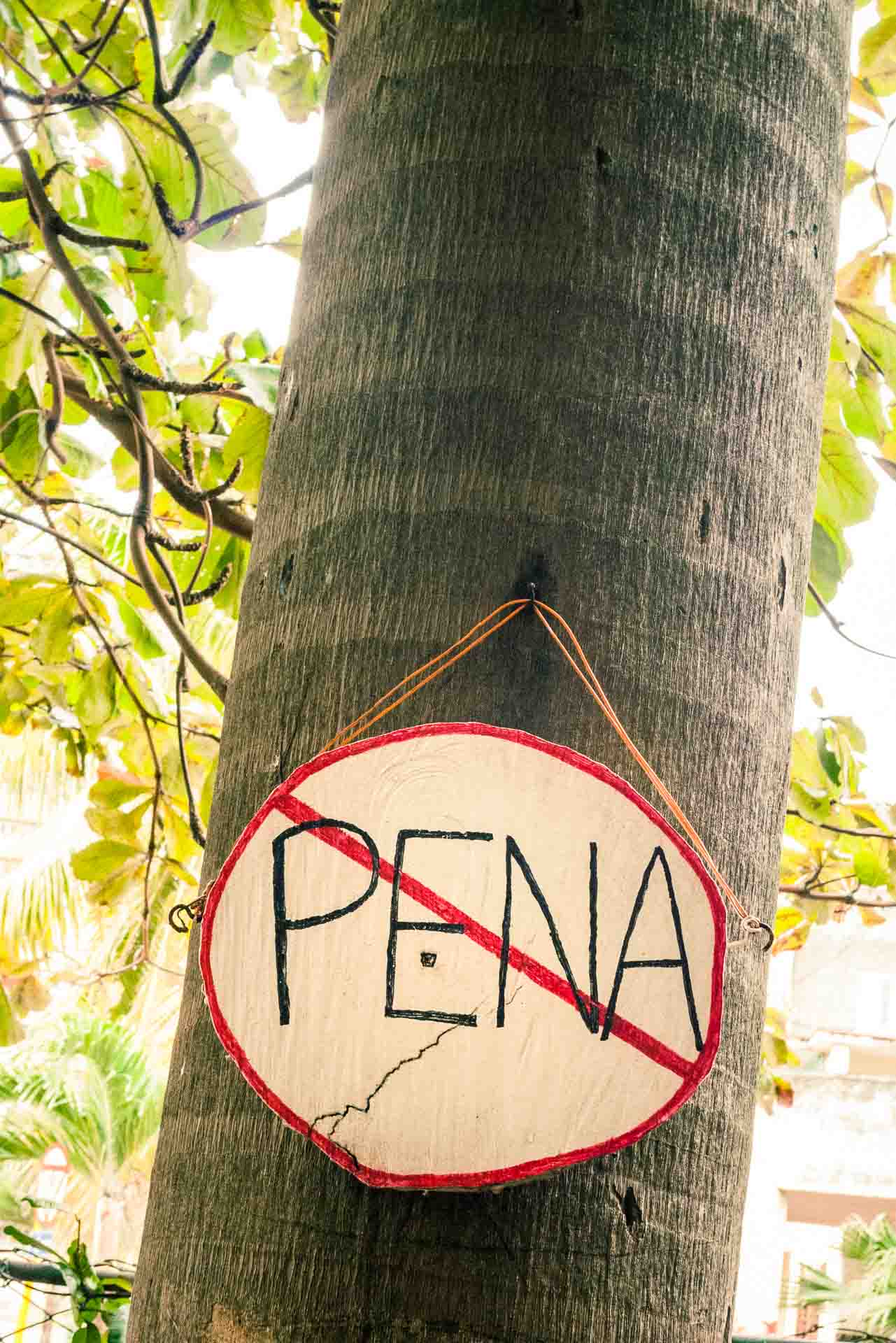
No Pena at Cuba Libro!!

No Pena at Cuba Libro!!

But it could be so much more (obviously, I was feeling very much myself again, thinking and dreaming big). We could be ethically- and socially-responsible, basing our business philosophy on the principal that everything we do, every policy and practice, must be a win-win-win: a win for our customers, a win for our community, and a win for our staff. We could be a beacon in Cuba’s dark, uncertain times of private enterprise, where inequities are deepening, the country is experiencing double brain drain (people leaving for foreign shores; people leaving the state sector for the private), and the majority of Cubans don’t have the resources to patronize – let alone open – a private business. We would do things differently: we would be a place for everyone, our goods and services would be accessible to everyone, regardless of age, race, nationality, sexual orientation and importantly: finances. Money would not be the arbiter of who is in and who is out at our special spot. And so, Cuba Libro was born.

As two friends and I painted the space we rent from a neighbor, I honed my strategy about how to build community, support that community, and offer something completely different.

First Cuba Libro policy? You don’t have to buy anything. You can spend all day in a hammock reading National Geographic in Havana’s shadiest corner and not spend a kilo. This will bring in all the folks who don’t have the money or inclination to buy a coffee or book. It will make it a more diverse, exciting space. For people who love to read but don’t have the money or space for a book, we’ll offer library services, lending titles at 5 CUP (25 cents) for two weeks.

Humberto is a regular in the Cuba Libro hammocks

Humberto is a regular in the Cuba Libro hammocks

Second policy? Cuba Libro staff will earn more than anyone else in Havana doing similar work. We will commit ourselves in this way (and others), to supporting Cuban youth – to proving that young people here can learn new skills, make a dignified living, and build a future in their beloved Cuba. In addition to the robust salary, I instituted a profit-sharing program for staff and a tip jar exclusively for them. Here’s a typical end-of-day exchange with staff: “Conner. This is too much. Please take your cut of the tips.” I always decline, but then they slip some bills into my bag when I’m not looking and I slip them right back. In an effort to support young Cubans, I determined we would dedicate part of the café to emerging artists who have little opportunity to show their work in a city where six terrific artists crawl out from under any rock. We’ve shown artists who use the hallway of their building to create or have to sit on their single mattress to paint. For almost all our artists, their Cuba Libro show is their first solo show. One of my favorite parts of this 2-year adventure is when I get to call one of these artists (especially the ones earning peanuts in a state job) to say: ‘you sold something; your work is going to Canada/the United States/Chile/wherever, c’mon by so we can settle up.’
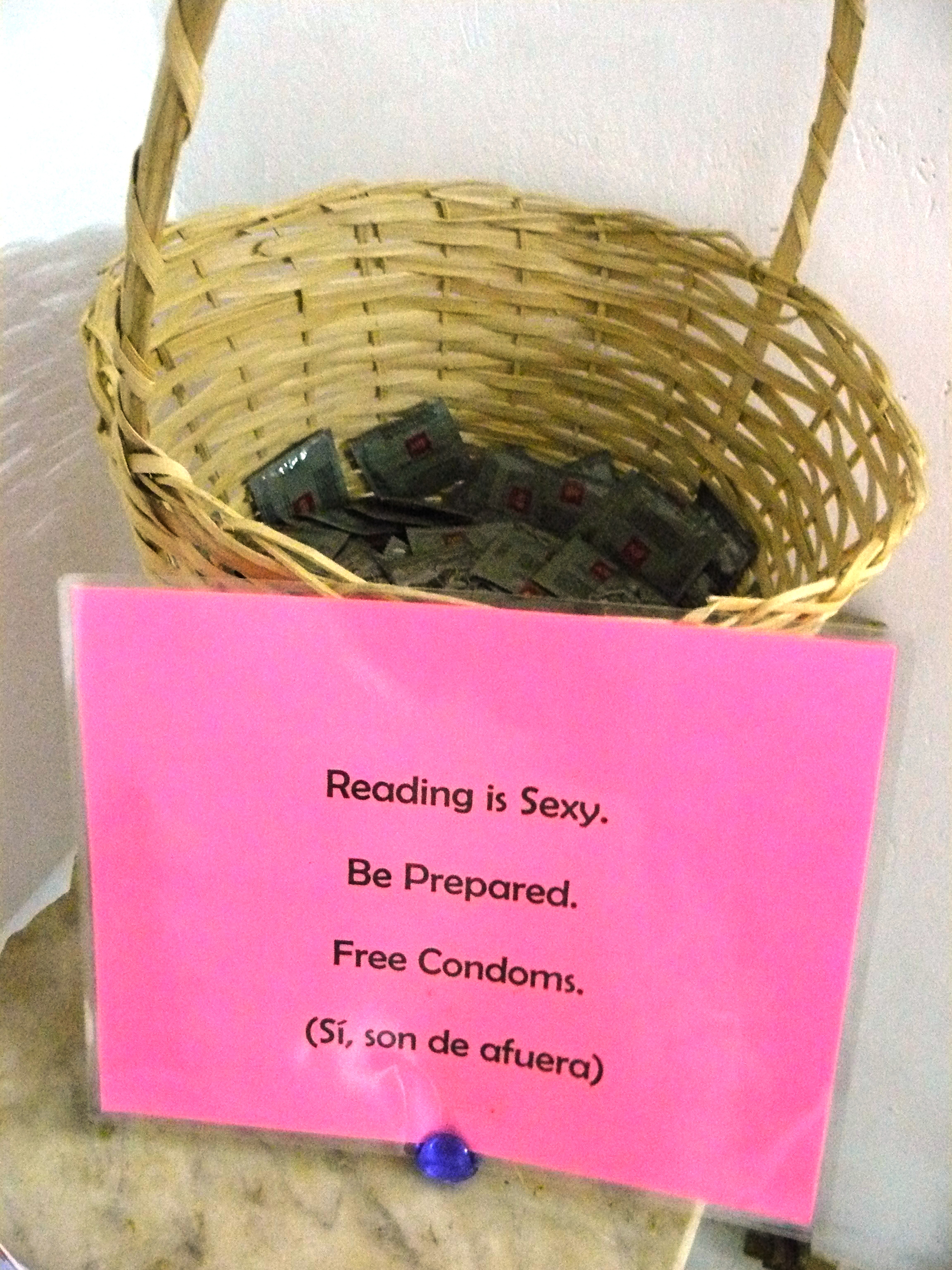
reading is sexy

Third policy? We will do everything within our power to help attack inequities, educate, contribute to the health and well-being of our customers/staff/neighbors, broaden our collective support network, and build community. We will start donation programs, hold classes and workshops, plant trees, refill water bottles (as tourists numbers soar, plastic bottle waste is becoming a huge problem for this island ecology), give out free condoms (my public health commitment and also a way to diversify our community even more), make our stellar bathroom available to everyone, whether they buy something or know us or not, and actively curate titles, authors and genres requested by our community. When friends started an organic, collective farm, we offered to make their wonderfully delicious and affordable produce available to our community – at no profit to us. We pledge to be relevant and positive and pro-active.

Fourth policy? Cuba Libro will institute a collective decision-making model – any policy change or decision which affects our staff and/or community, requires consultation with them. This is completely new for many Cubans and we’ve had several opportunities to put the model to the test: do we want to appear in the Lonely Planet guidebook? Do we want to be on Travel Channel? This is a no-brainer for folks blind to everything except the bottom-line, but as I always say: ‘Cuba Libro is less about peddling coffee and books and more about being a resource for the surrounding community’ and once you get massive international exposure from media giants like LP and Travel Channel, the scales tip towards more foreigners, fewer locals in your establishment. Our collective debate revealed that none of us wanted this. But the debate also revealed alternatives, which ended up winning out. When I suggested raising our prices after more than a year in operation, staff pushed back, argued why we shouldn’t, and we didn’t; our prices, payable in either CUC or CUP, (another policy designed to make Cuba Libro as accessible as possible to as many as possible), have remained the same since opening: from a 60 cent espresso to a $1.50 frappuccino (both of which kick ass, according to customers). The latest debate is a rager: should we habilitate WiFi when it becomes a possibility? Feel free to weigh in, we’re currently collecting opinions.

Meanwhile, Cuban friends and family doubted my crazy bookstore/café idea when I unveiled it in 2013:

“You can’t give away stuff for free.”

“You have to sell liquor or you won’t survive. At least beer!”

“What’s the point of an English bookstore in a Spanish-speaking country?”

“You can’t lend books, they’ll never come back.”

Well, two years on, we’ve proven them wrong. Now what we’re hearing:

“Cuba Libro literally changed my life” (Susan, who met her future husband here)

“This is the best job I’ve ever had. It has changed my life” (Douglas! Fabulous Douglas, author of our original motto: ‘Life is peachy at Cuba Libro’);

“This is the coolest place in Havana” (Richard, early adopter and mainstay of the Cuba Libro family);

“I wouldn’t have survived medical school without Cuba Libro” (Dr Vero, another early adopter who was also the first – but not the last – to say: “I’m not telling anyone about this place. It’s MY oasis; I don’t want anyone to know about it”);

“I wish I had discovered this place when I first got to Havana” (Molly, a regular-in-the-making);

“This is my favorite place” (Humberto, who has cashed in more buy-10-get-1-free cards than anyone);

“I swear this is best iced coffee I’ve ever had” (Marcia, documentary filmmaker);

“Who are these new people? This is OUR hangout and they’re in MY hammock! (Maria Carla, Cuba Libro regular and future famous playwright).

We were one of (if not THE) first business with a loyalty reward program

We were one of (if not THE) first business with a loyalty reward program

I speak for the collective when I say: we’re extremely proud of what we’ve achieved at Cuba Libro, very much a labor of love, very much a success – as defined by us. Although there are days we lose money, when the bureaucracy and inspections and blackouts and difficulties seem too much, there are days like last week when I looked around the garden, full of Cubans and a smattering of foreigners laughing, playing Scrabble and the guitar, reading Rolling Stone, and sipping 100% Cuban coffee and realized we’re not only creating community, we’re creating meaning in our lives and the lives of others. Douglas caught me smiling and read my mind: “this is what you dreamed of, right?” Yes, Dudu, this was the dream, the dream we’re making a reality in our shady little corner of Vedado, every day.
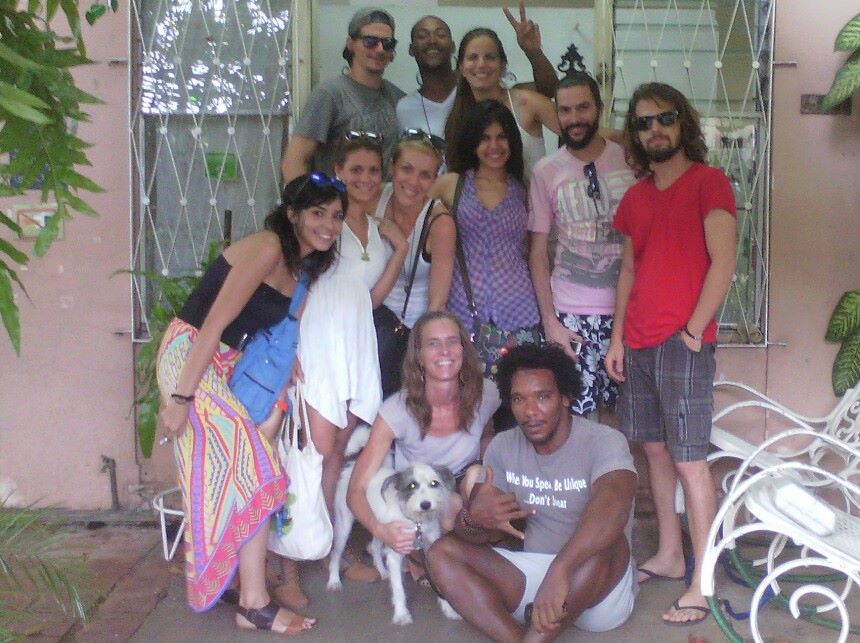
Last day before August vacation; they look happy, but these regulars (Cuban all, except me) grumbled!

Last day before August vacation; they look happy, but these regulars (Cuban all, except me) grumbled!

This post is dedicated to all our supporters from around the corner and around the globe, who have helped us survive and thrive over the past two years, proving the improbable is possible and that you can live your dreams. Thanks to you, we’ve found the motivation, positive energy, solidarity, and resources to do all of this in two short years:

– Over 5200 condoms distributed, free!
– Over 1600 book donations to Cuba Libro from around the world
– Dozens of bilingual dictionaries donated to the local elementary school
– One dozen bilingual dictionaries donated to a private English teacher
– Several large donations to family doctors and administrators
– One large donation of coloring books, crayons and age-appropriate games to Centro Habana Pediatric hospital
– 12 art shows of emerging Cuban artists + rocking parties to inaugurate each (free to public!)
– One live music event with musicians from USA & Cuba (free to public!)
– 6 cine debates (Cuban documentaries presented by the filmmakers followed by debate; free to public!)
– 3 book launches (free to public!)
– 121 official people-to-people groups received from the United States
– One semester-long conversational English class, taught by a certified, native English-speaker
– Visitors from more than 3 dozen countries
– One marriage
– Providing study space and caffeine for half a dozen medical students, now doctors
– Innumerable friends made (including those with benefits!)
– One baby on the way (due Oct 24th; congrats Gaby & Raudel!)
– One stray street dog adopted
– 132 frequent client cards filled (buy ten coffees or other drink, receive your next drink free)
– Planted 6 trees
– Launched organic farm share with Finca Tungasuk, reaching dozens of local families
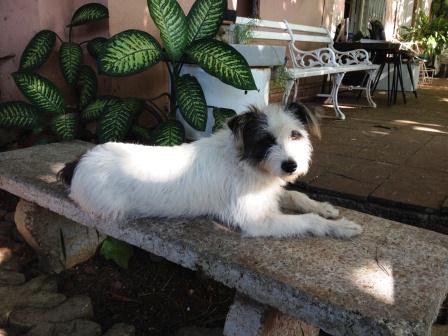
Rescued, November 2014!! Senor Tobias, resident CL pet.

Rescued, November 2014!! Senor Tobias, resident CL pet.

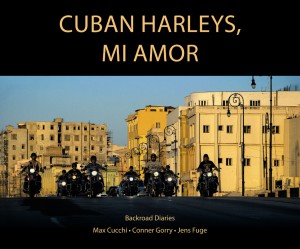
It has been one hell of a ride and we’re steeling ourselves for Fall 2015, when we’ll be expanding the organic farm share, hosting a week-long American Sign Language workshop (taught by a Cuban), hosting two art openings and one cine debate and launching a book about Pope Francis (while he’s in Havana!) and my new book Cuban Harleys, Mi Amor. Our work regularly exhausts us but always motivates us to do more and better. Thank you Cuba Libro community for making our work meaningful. Here’s to the next two years!!

48 Comments

Filed under Americans in cuba, bureacracy, Cuban customs, Cuban economy, Cuban phrases, Cuban Revolution, environment, Expat life, Living Abroad, Travel to Cuba

Cubans are Cockroaches

Cuba – Cubans – defy odds. The longest, harshest embargo in modern history. Back-to-back-to-back hurricanes. The Special Period (very special as the joke goes here). The dearth of feminine products. Their tenacity and resiliency make them the cockroaches of the human race: they will out-survive us all.

I’ve had the privilege of living among this tenacity and resiliency for over 13 years. It’s an ‘I can do this, this can be done’ perspective, as opposed to a defeatist, ‘can’t be done’ perspective. The former is superior. Even if it leads to failure at least you’ve tried (fuck you, Yoda).

And then there are times when ‘this can be done’ leads to legacy. From the 16 staffed and equipped field hospitals Cuba sent to post-quake Pakistan to the biker who smuggled six vintage Harleys to Miami piece by piece. There’s the Fabrica de Arte. La Farola. Cuban drag queens.

Once, flying down Boyeros from the airport, I saw a handicapped dude in an electric wheelchair giving a rope tow to his buddy – also in an electric wheelchair. If that’s not the epitome of a can-do attitude, I don’t know what is. Although, as I write this, I remember another graphic example of that same attitude: one night I walked in to my friend’s kitchen to find Noche, the cat, mounting Lola, the dog. I’ve seen gay canine sex in Cuba. I’ve seen furry threesomes. But interspecies? Cuban pets can (and do!) do it! Then there was the time Dina – the dog up the street – was in heat. She’s epileptic, so her owner had to keep her sequestered behind a fence; were she to screw, she’d likely die. This didn’t stop Toby from licking her red, swollen privates through the fence everyday. ¡si, se puede!

Seduce and woo a foreigner for a couple, three years to get a fiancé visa and then split upon arriving abroad? It can be (and has been) done. Throw a 105mph fastball? Aroldis Chapman can do it! There are those old cars (and more “modern” Ladas, too) converted to run on propane tanks – the same kind of little tank you have hooked to your BBQ in the backyard. Tucked away in the trunk, drivers can switch, with the flick of a switch on the steering column, between propane and actual gas. There’s the literacy campaign which taught the entire country to read and write. There are bike brakes held together with string. No brakes? No problem! When you hit a downhill, just brake with the heel of your tenis (this has happened to me).

There’s the mojito. I always empathize with the poor bartender staring down that 10 mojito ticket, crushing mint until their wrists hurt. I know at that moment when they’re swishing around yet another sprig, they’re thinking: ‘couldn’t we have a less labor-intensive national drink?!’ (Pro tip: get on your barman’s good side by ordering a Cuba Libre). But they do it – crank out a dozen mojitos at a time (and look damned good while doing it).

And the best part of the ‘I can do it perspective?’ It rubs off.

There’s a dark side to this, too (isn’t there always?). From people taking to dangerous seas in unworthy vessels to reusing disposable diapers. Unfortunately, in too many cases, it’s the chronic scarcity here that obligates Cubans to this tenacity, resiliency, and ingenuity. But that’s a different discussion and besides – I think Cuba’s recent history with all the scarcity and want, and importantly, the humanity there sown, bodes well for what lies ahead. This back story puts Cuba – and Cubans – in an advantageous position to figure out the economic piece of their present story, in a sane way.

Have doubts? We all do. The question is: Are you a cockroach?

Comments Off on Cubans are Cockroaches

Filed under Americans in cuba, Cuban customs, Cuban economy, Cuban idiosyncracies, Expat life, Living Abroad, Relationships, Travel to Cuba

The Cuba No One’s Writing About

Early adopters of my blog may remember my post (many moons ago) where I listed the reasons why I love Cuba. Considering I’ve opted to make this crazy place my home for the past 13+ years, this is a question I get fairly often. For several reasons – the superficial fluff being published about Cuba with frightening frequency, the tsunami of clueless tourists, the stress Cuba’s new economy is generating – I think it’s time to revisit why Cuba rocks. This is the Cuba no one is writing about – the deep, below-the-surface substance that makes this place so special. Let’s dive in:

Our diet is largely chemical- and preservative-free.
Sure, you can spend $5 on a can of Pringles or $3 on a can of Red Bull, but when you can whip up fresh plantain chips for mere cents and buy fresh-pressed guarapo for pennies, aside from the novelty, why would you?

The country is popping with wonderful eye/soul candy. Human, architectural, artistic, natural – this place is a visual and spiritual feast.

There is music everywhere
. Literally (and whether you like it or not).

Havana’s tactile nights.
Once you catch that savory-sweet wind laced with gardenias, plumeria and sea salt, moonlight glancing off the waves crashing into the Malecón? No tiene nombre as we say here.

Solidarity.
Foreigners ask me pretty often if Cubans’ willingness to share, lend a hand, empathize, and the like is real. It is. I think this is one of those things – if we can retain it (dare I say strengthen?) – will go a good way toward saving what’s really admirable about this society whatever the next few years may bring.

Abortion, free and on demand.
Ever wonder why it’s so hard to find an orphanage in Cuba? This is it: almost 100% of children born in Cuba is a wanted child.

Cubans are shame-free when it comes to bodily functions. Got diarrhea? Your period? Hemorrhoids? Feel free to share (over-sharing and TMI are concepts which don’t translate here); seek advice and resources; vent. Interestingly, this is one of the few areas of discussion and interface which is completely free from gender considerations. Just today I was talking with a Cubano friend about finger probing prostate exams, while another guy lent a kind ear to a friend waxing cathartic about her crippling hot flashes.

Embracing bodily (mis)functions is something I came to appreciate very early on: one of my earliest memories after moving here occurred at a family barbeque at Playa Larga. A couple of hours after meeting everybody, one of the teen girls emerged from the ocean and appealed to men and women alike: ‘does anyone have a maxipad? I just got my period.’ (Yes: there was blood running down her leg. Did I mention that TMI doesn’t apply here?!). And she felt no shame because of it. Why would she? She got her period unexpectedly – one of the most natural things in the world (and what keeps the human race going, incidentally) – and it was entirely not her fault. It’s like how Cubans view disabilities: it’s not that person’s fault, so it’s just downright cruel to shun or otherwise judge someone for a condition or circumstance which is completely out of their control.

But I digress.

Back to how Cubans view bodily functions and how this perspective implicitly rejects Puritanism and gender paradigms. I’ve been in conversations with friends – male and female – about: being a man-whore; circumcision; boob jobs (for both aesthetic and medical reasons); to what size the cervix must dilate to pass a baby; bowel movements – lots and lots of shit talk (frequency, consistency, color, remedies for, causes of); hemorrhoid operations; and penis operations (thankfully not related and not on the same person).

And then there was this recent exchange between some (platonic) friends as we headed out one night:
Her: Shit. I don’t have another Tampax (pronounced in Cuban: Tampac).
Him: I’ll go get one from my sister.
Me: =)

Cuba: it makes you laugh. It makes you cry. But it never leaves anyone indifferent. And this is the #1 reason I love this crazy place: it arouses passion.

18 Comments

Filed under Americans in cuba, Cuban customs, Cuban idiosyncracies, Cuban phrases, Cuban Revolution, dream destinations, Expat life, health system, Living Abroad, Travel to Cuba

‘To Don’t List’ for Emigrating Cubans

Amaya; Otto; Giulietta; Jonas; Alejandro El Mesero, Alejandro El Informático: all these friends (and more) have left these shores in the past six months in search of something bigger, better, brighter or simply different.

We always send friends and family off with well wishes and congratulations (yes: getting a coveted work visa or bewitching a foreign spouse is still celebrated here the way I imagine prisoners celebrate an Early Release Date), but it’s sad too, despairing even. Tears are shed – in private or at the airport, before during or after. Yet once they dry, Cubans face leave-taking the way they face bureaucratic absurdities, violent hurricanes, chronic shortages and all-day blackouts (yes: we still have them. We’re in the thick of one as I write this, in fact, beads of sweat pooling between breasts). Mal tiempo, buena cara.

Living in Cuba is a lesson in constants: constant contradictions, constant challenges, constant rupture. And I’m still learning. I mourn the loss of my friends who, once they leave, get sucked into a dimension of fast food and FaceBook, big box stores and demanding bosses. It’s wonderful for them to have experiences they’ve only dreamt of and deserve, but it still feels like abandonment to me. Cubans seems to be less ‘trágica’ about it. I guess they have to be. It makes sense – intellectually. I know (too) many Cubans who’ve flown the coop, so to speak; the nostalgia and longing can be crippling, painfully so. As an immigrant myself, I know this feeing intimately. Mal tiempo, buena cara.

But emotionally? It sucks to have your social structure stirred up like a stamped on ant hill. Then there’s brain drain, the negative birth rate (many émigrés are women of child-bearing age), dearth of eligible bachelors, and all the other practical implications of immigration.

Rather than wallow however, I try to be of service. It helps me work through the missing. Not ready for my medicine? Tough luck.

For all my Cuban friends considering or in the process of leaving, I offer this check list of things you’re used to doing in Cuba that you cannot do once you arrive at your foreign destination of choice or default. This should be especially helpful for those moving to La Yuma.

DO NOT:
launch snot rockets (AKA the Farmer Hanky)
– pop your lover’s zits in public
– have an open container in a car
– toss cans and other garbage out of a moving car/bus/train
– tssst tssst to get the waiter’s attention
– shoot birds with a sling shot
– pick your neighbors flowers or poison your neighbor’s dog (yes: this is pretty common here)
– saunter away from a steaming pile of your dog’s shit on the sidewalk
– flaunt your mistresses
– smoke cigarettes – anywhere (unless you enjoy pariah status)
– believe everything you read on the Internet
– steal the toilet paper
– throw soiled toilet paper in the garbage
masturbate in movie theaters
– use cooking oil as sexual lubricant
– wear stilettos to the beach
– wear shorts so short your ass cheeks hang out
– forget to write. We miss you!

10 Comments

Filed under Americans in cuba, bureacracy, Communications, Cuban customs, Cuban economy, Cuban idiosyncracies, Cuban phrases, Cuban Revolution, Expat life, Living Abroad

Getting Screwed in Cuba’s New Economy

It will take a bit for me to create the physical time and psychic space to write a long form piece on private businesses here – but trust, me: I’ve got plenty to say on the subject. In the meantime, I’ll channel my cathartic necessities through the relating of my washing machine saga, AKA “The Yoyi Affair.”

_____

I am extraordinarily fortunate to own a washing machine. Anyone who has hand washed a queen-sized sheet, scrubbed towels on a washboard (common to Cuban laundry sinks), or tried to wring out a pair of skinny jeans (and pray for sun because otherwise those clothes are going to smell funkier than a frat boy’s laundry bag) knows what I’m talking about. I lived years here drowning in that routine and now I can’t glimpse a clothesline heavy with recently-scrubbed laundry without wanting to knock on the door and offer the lady of the house a glass of something cool and a rocking chair. It’s terrifically hard work keeping a Cuban household running (forget about smoothly); as you may imagine, laundry is a sticky bitch in the equation.

Luckily, a few savvy Havana entrepreneurs have pinned their cuenta propista hopes on privately-operated Laundromats, where dirty duds are returned to you clean as a whistle, for just a couple of CUCs a kilo. I hear the one in Miramar is making bank, but their folding lacks attention to detail. There are (dark, uninviting) state places too, with cute names like Little Laundry or no name at all. You just have to know they exist and where they are. These are cheaper than the private outfits, but with unreliable hours and workers who filch your soap. I’ve been down that road and while it’s a more sane solution than trying to wring out your Levis by hand, taking my place in line at 6am for a service which takes two days is not my idea of a good time. So when my mom bought her blushing-bride-of-a-daughter a fully automatic LG washing machine as a wedding gift, it was pure euphoria.

That was almost a dozen years and what seems a lifetime ago, but it has worked beautifully and without complaint since. Ah! To wash sheets at the touch of a button! To have jeans nearly extracted dry! I loved that machine even after it developed a high-pitched squeal like a Christmas pig having its throat cut. It was so loud and piercing, callers often asked: ‘what’s that sound in the background? Are you keeping pigs?!’ ‘No, just the rinse cycle,’ I’d explain. I could live with the squeal – after all, I didn’t have the time, energy or inclination to fix it. I had bigger problems – like deadlines and ant infestations and inspectors. And I was tired: we’re working 60 hours a week, easy, at Cuba Libro, where we go through a dozen individual hand towels a day. And more than the pile of dirty laundry, these towels are the sticky bitch in my equation. ‘Whatcha doing tonight, boss? Washing little towels?! Heh, heh, heh,’ is a common conversation starter among our staff. (Note to self: dock pay for every snarky Saturday night towel comment. Just kidding!) It’s sad, but true however: I spend many an evening listening to my querida machine squeal little towels around as I wait for the dial-up internet to hop to. It only makes me weep on occasion.

One of those occasions was when the machine ceased, definitively, to have a spin cycle. Of course, it happened during an insanely busy week: long-time, well-loved staff departing for foreign latitudes; training newbies; hosting groups; friends’ birthdays; multiple deadlines; and my trip to New York. Have you ever traveled with a suitcase of soiled clothes? Not pretty, but a nice little ‘gotcha!’ for the folks rifling through luggage on this side of the Straits and Homeland Security on that one. For reasons more important than this, however, my immediate priority was Getting My Washing Machine Fixed.

I put it off, but the second time I was forced to look into that towel and soap soup, and rinse and wring out each toallita individually, I knew procrastination was no longer advisable. True, I was drowning in work, bureaucratic bullshit and administrative tedium. In short: I didn’t have one atom of extra energy to confront the jodedera of getting a major appliance fixed in today’s Havana. And then I met Yoyi. He was an affable guy with gold teeth, cafe au lait skin, and an efficient, confident air. His workshop is in a garage a couple of blocks from Cuba Libro, the driveway choked with washing machines in various stages of decay, disrepair and death. When I explained to him the problem, he boiled it down to one of three parts. ‘Let’s go to your house. I’ll assess the problem and if you agree, I’ll bring the machine here to the workshop, fix it and you’ll have it back in 24 hours.’ Transport, parts, labor and a one-year guarantee included. Efficient, professional and good looking private enterprise? Hell yeah, bring it on!

Flash forward to my apartment where two strange men are shimmying the machine away from the wall and peering into its nether regions. “It’s the clutch,” Yoyi tells me. Of course it’s the clutch, the most expensive part, for which Yoyi quoted me $150CUC. This is a total rip off, I’m fully aware. Yoyi was showing me what’s known in Cuba as ‘cara dura’. I was getting the Screw-The-Yuma price (and female to boot! Cha ching!) and I knew it, but I needed that machine in working order like, yesterday. I’m used to Cubans fucking me for my non-Cuban status in terms of pricing, but fucking me up the ass in terms of pricing? This is something else. ‘$150 CUC. That’s rough. You can come down a bit, surely,’ I told Yoyi with a smile.

We settled on $130CUC and away he went with my machine. The next day I went to his garage storefront at the appointed hour where I, along with his employees (who couldn’t reach him on his cell), waited until it grew dark. Yoyi finally rattled up in an old Lada, wedged the machine in the trunk and off we set for my apartment. After he and his pierced, tattooed helper lugged it up to the third floor, they plugged the old girl in and ran it through the spin cycle. Success! There were smiles, handshakes and goodbye kisses all around. I was impressed: within 24 hours, I had a working washing machine installed in my house, plus a one-year guarantee from Yoyi and his guys.

_____

The next day, I loaded up the machine, turned on the water, added detergent and pushed the magic button. I was answering yet another email from a clueless journalist here on assignment with no Spanish, no contacts, no guidebook or map even, and only a vague idea of what to write about when the machine started beeping. This wasn’t the steady ‘wash is done!’ beep but the frenetic ‘spin cycle won’t kick in!’ beep – the exact same annoying beep that drove me to Yoyi in the first place. Beads of frustration sweat popped to my brow as I went to inspect. It had worked yesterday. Why not today? I tried to restart it, trick it into going through different cycles, and taking out some clothes to lighten the load. Nada. When I looked closely, I noticed Yoyi had switched out my drum for a smaller, inferior one. De pinga.

I returned to his appliance workshop one, two, three days in a row. The place was shut tighter than the doors of the US-Cuba negotiations. Yoyi and crew were gozando with my $130 CUC no doubt. My mind went to a dark, destructive place: I was ready to open a can of NYC whup ass on the dude. On Day 4, I went with a gaggle of Cuban friends to back me up (what a motley bunch of muscle we made: a fellow so skinny his nickname is Periodo Especial; a too-good looking gay friend hitting on the too-good looking mulatto friend, a quiet pacifist, a philosopher…). When we rolled up on Yoyi, he admitted to not having tested the spin cycle with actual water. Duh. And he fessed up to switching out the drum. He promised to return to my house, retrieve the machine and fix it properly. I was peeved, but encouraged – his one-year guarantee had some validity, it seemed.

Then I went to NY. My mighty Cuban muscle paid several visits to Yoyi, but he was as scarce as butter and cheese in Havana circa 2015. That is to say: nowhere to be found. Then Havana got flooded. The pictures were frightening from where I was sitting stateside, but I knew the reality was much more horrifying: collapsing buildings; ruined keepsakes, furniture, electronics; stranded seniors. And I doubted there was hope for returning to a working washing machine.

Two days before arriving back in Havana, I got word: Yoyi fixed the machine, it was back at my house and ready to roll. I sent silent (none have email, alas) thanks and praise to my Cuban muscle and didn’t bother wasting my precious family and friend time in NY washing clothes; I’d do that in Havana and serve up another gotcha! to all airport personnel who deigned to inspect the contents of my luggage.

You see where this is going?

I got home, hugged the dog, and unpacked a small – teeny, really, so as not to overwhelm her – load of dirty laundry into the machine. As it did its thing, I began extracting from my luggage all the teas, spices, shoes, small electronics, feminine products, vitamins and the rest of the pacotilla with which I always travel: every trip Cuban friends and family give me a list of things they need but can’t get here (currently I’m procuring: baby bottles; children’s NyQuil; a lint brush; a motherboard; lubricant and coin wrappers). And guess what?! The machine worked! No frantic beeps! A proper rinse cycle! It was extraordinarily satisfying – $130 CUC satisfying, I’d say.

Fast forward two days. Another night spent alone washing little towels. As I was counting my blessings, the evil beeps started. The rinse cycle didn’t. I was peering again into little towel-soap soup. My knees and resolve to work with this guy weakened: I just don’t have the energy to interface with Yoyi again – in spite of the year guarantee. But when I do, I’m not going to bring him my machine for a third time. Instead, I’m going to bring all my NY Irish to bear and open that can-of-whup-ass all over him and his private sector business. Stay tuned.

15 Comments

Filed under Americans in cuba, bureacracy, Cuban customs, Cuban idiosyncracies, Cuban phrases, Cuban Revolution, Expat life, Living Abroad, Travel to Cuba

Rock ‘n Roll Resurrection: Dead Daisies in Havana

I knew it was going to be a different kind of night when the heavy at the door started scrutinizing my press pass. It was from last year, true, but I’ve been accredited here for a decade plus and I didn’t have my new credential through no fault of my own.

‘This is you?’ he asked, in a not-too-friendly rumble.

I kept silent as he took a closer look. Here we go, I thought.

‘This isn’t you,’ he stated with some authority. ‘This is a mulata.’

I had to laugh. I don’t know what kind of caramel-colored glasses he was wearing or what hooch he was swilling, but I wanted some: a mulata? Me? These are words I never imagined applied to this white-like-leche, be-freckled chick. Luckily, our discussion was truncated by a group of kids sauntering up brandishing CUCs. He palmed the bills and waved us in to one of my all-time favorite Havana venues: El Salon Rosado de la Tropical.

—–

I have very few natural talents, but arriving precisely as the party starts to heat up and sensing when the pendulum is about to swing the other way – my signal to kiss and split – are probably my most utilized and useful. So it was for The Dead Daisies, the historic concert held this past weekend. I walked through the doors just as opening act David Blanco (who I’ve seen plenty) was finishing his set. I took a short cut to the dance floor, ran into friends, then some more, then more still. We danced ourselves as close to the stage as safety permitted, but the place was packed – frikis had begun arriving as early as 11am, from as far away as Camagüey, to hear members of their favorite bands (The Stones; Guns N Roses; Ozzy Osbourne; Motley Crüe) rock the Cuban capital.

For those who like to rock!

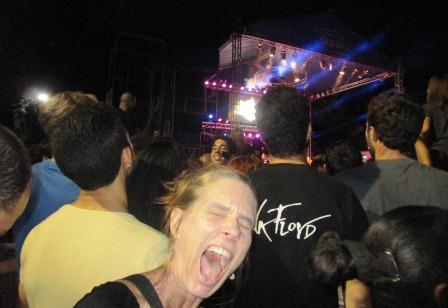
Already the Salon Rosado was puddled with vomit (not mine, don’t let the photo fool you).

Nothing new or novel there: knowing your ingestion limit, when and how to mix what, how to pace yourself – this is a tricky equation which many Cuban rockers have yet to get. I’m talking about the younger crowd mostly, but we had to scurry out of the way as security physically restrained and removed a middle-aged dude, fairly drooling, with eyes bulging rabidly. Vomit, condom ‘balloons’ batted airborne with verve, and bottles produced from backpacks – these are de riguer at whatever big Cuban concert and were in abundant evidence this Saturday night.

What set this concert and this group apart was the sheer power, pedigree and talent of the band, combined with the setting: the Salon Rosado is that rare combination of big enough to pack in a few thousand high-energy fans, while retaining the intimacy of a much smaller gig. It’s also a multi-tiered, open-air venue with major space given over to the floor, which means lots of room to dance and mosh and good bird’s eye views, for voyeur rock and rollers. As for The Dead Daisies: we’ve had some big bands blow through Havana during my tenure, including Audioslave, Sepultura, Kool and the Gang and Calle 13; but these concerts are always held in the ‘Protestódromo’ – the seaside, make-shift area designed for massive protests and rallies (it was built during the Elián trauma) and adapted for concerts more recently. I’ve had tons of fun at these shows, but as you may imagine: the audio is shitty. Crashing surf and whipping wind are not conducive to music appreciation. It’s also worth keeping in mind that the last big concert like this was in 2010.

So we were due.

I hate to admit it, but I didn’t recognize the names of any of the musicians (though I reserve the right to invoke the ‘stuck in Cuba’ defense). I had never heard of the band either and was skeptical – what kind of name was Dead Daisies anyway? Flowers, dead or alive, don’t evoke screaming, pulsating, orgasmic rock n roll, not in my mind and body anyway (no disrespect to Guns N Roses and especially Slash, who rocks it real, but Axl’s whiny voice has always rubbed me in all the wrong ways).

R Fortus

But damn, did The Dead Daisies come through. I’m a guitar-loving kinda gal and when I read that Richard Fortus (Guns N Roses) counted John McLaughlin, Jeff Beck, and Robert Fripp among his preferred players, I knew things would be just fine. Just how fine I didn’t realize until the first notes rung out from Fortus’ drop-dead gorgeous Gibson over the sea of banging heads. There is perhaps nothing more glorious than a Cuban crowd united by the joy, energy and electricity of music well made, played from the heart. And so it was.

Meanwhile, any band with Dead in its name evokes that other, more (in)famous band synonymous with long sets peppered with covers and standards, enthusiastic mind-altering substance use, and drum solos; I was pretty shocked to experience similarities at the Salon Rosado. My olfactory sense alerted me to someone nearby enjoying the mighty herb and the pierced, tattooed guy on all fours puking violently while simultaneously smoking a cigarette argued for abuse rather than just use (though it was an impressive example of multi-tasking). But when Brian Tichy (from Ozzy’s band) ripped a 15-minute drum solo, the entire crowd was transported to an alternate reality. Holy shit. This guy is a monster. I’m not much for tricks with sticks, but he got admirable air between trills and when he started beating the skins with his hands? We went wild. Well done man, well done.

The Dead Daisies in Havana

An indisputable highlight was The Dead Daisies’ version of Knockin’ on Heaven’s Door (yet another example that anyone covering a Dylan tune does it better than Bob), where the crowd of 3000-plus needed no encouragement to sing the chorus long and hard. It was just after this when I realized I was in the no-woman’s-land between two increasingly large and frenetic mosh pits – dangerous territory for anyone not looking for a random fist in the face or elbow to the ribs. I danced away from the mosh sandwich towards my friends, marvelling at how music unites people and ignites the collective soul.

The Dead Daisies gave us the gift of uplift – and boy we could use more of it.

10 Comments

Filed under Americans in cuba, dream destinations, Expat life, Living Abroad, Travel to Cuba

Guaguas, Blackouts, and Ham Sandwiches: Making Music in Havana

After all these years here, I never tire of the constant education. Meeting new people, learning, creating, connecting – Cuba es así. These past 10 days were a potent distillation: immersed in an international ajiaco (thanks Roy Hargrove/Crisol) of musicians and artists, brains and beauties, I learned many things and shined new light.

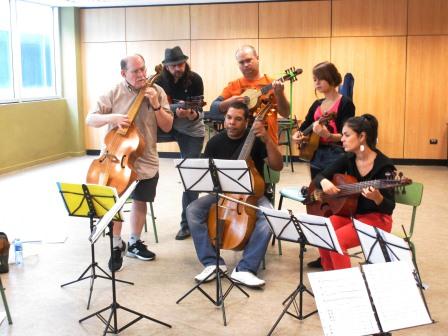
I learned that no matter where you are in the world or what type of music you play (in this case Renaissance and Baroque), you’re leaving the gig with 14 people and a half a dozen big instruments crammed into a mini van.

I learned that whether in Hialeah or Havana, the band may have to leave the gig running for the bus. And dinner was the cheapest, quickest thing around – in our case, the ubiquitous ham sandwich.

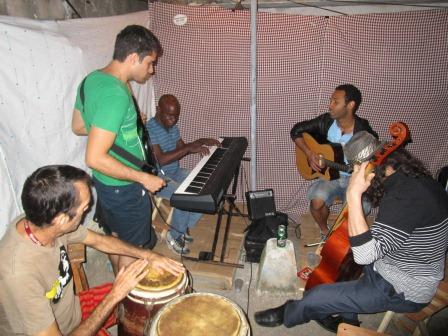
I learned – or re-learned – that magical things can happen when you combine musicians and blackouts (get your mind out of the gutter: I’m talking musically).

trio4

I heard a baroque guitar in a small ensemble for the first time and man, is that a hot little instrument. I know everyone’s gaga for the ukulele, but I tell ya…

I learned more viscerally that bass and tenor viola da gamba are powerful, communicative instruments. The treble? It still makes my ears twitch like an adorable terrier hearing above our range.

I had affirmed – once again – that music and movement, creativity and goodwill can transcend all language and cultural barriers.

I understood the profound human capacity for better communication, better conflict resolution, more fluid ways of being and wider ways of thinking.

I learned that the recorder sounds pretty damn good when not in the hands of a 3rd grader.

I learned that a cheese grater and a knife make a mean percussion instrument in the hands of a Cuban.

I realized that no matter how green the Yuma or how little traveled, how poorly they speak Spanish or how deeply-seeded the disinformation about Cuba, with an open mind and open heart, Cubans will touch both, ignite both, profoundly.

???????????????????????????????

And I was taught, once again, that the support and love of one’s community (however defined), is priceless and irreplaceable.

5 Comments

Filed under Americans in cuba, dream destinations, Expat life, Living Abroad, Travel to Cuba

Day 1, Year 0: Cuba and the USA

A bunch of people have asked about what I, CCG, personally think about recent groundbreaking announcements vis-à-vis Cuba, the US, and their respective release of prisoners. Some of you folks who follow my blog, but also a rash of people who read my dispatch for the Daily News (New York’s hometown paper!), came around querying. So to complacer them, you, and me, I’ll give you some of my thoughts on this, Day 1 of Year 0.

For me, the tangible effects this is going to have on Cuban families (and I mean that in the most expansive, criollo way possible) is the most important issue. Any improvement in trade, telecommunications, travel, postal and embassy (!) services, immigration policies, and transparency, translates into some sort of improvement for Cuban families. Ahora: the question is at what cost those improvements? Therein lies the rub, which is why it deserves is own short discussion.

I’m hearing a lot of static in the international media/blogosphere about the ‘Americanization’ of Cuba. First off, I suggest anyone using this term study up on Simón Bolívar, with a little José Martí thrown in for good measure. Second, the idea that US companies like McDonald’s and Starbuck’s are going to roll in and over the island disregards two very important components of the Cuban political reality: 1) the state remains steadfast in its commitment to complete sovereignty and 2) they’ve been thinking about this day for over 50 years. It also ignores two important factors in Cuban daily reality: 1) there are more pressing material problems than satisfying a Big Mac/Frappuccino craving and 2) policy makers are aware of the health dangers (ie chronic disease) burgers and milkshakes pose and so should work to keep them out – protecting public health is especially important in Cuba where the government maintains a universal, free system and regards health and well being as a human right.

Taking these realities into account doesn’t mean that no US chains will stake their claims here, but I think the Cubans will be strategic about whom they let in. Marriott, Hilton and other hotels, Cargill, ADM, and their big ag interest friends, Home Depot, telecommunications providers – these are all likely candidates for early entry into the Cuban market. McDonalds and Starbucks, not so much. Maybe it’s too rosy a picture, but I don’t think the folks running the show are just going to open the floodgates and let US interests run roughshod over the place.

The ‘run run’ (as we say here) amongst some, is that the policy changes won’t stick or even be enacted. One camp reasons the Cubans will finesse a flip flop, while the other argues the US Congress and/or next President (should it not be a Democrat or Rand Paul), will roll back whatever Obama and company have in store for the next year. These bits of ‘logic’ defy logic. First of all, the Cubans would be completely loco to announce such policy changes and then not pursue them – this is just a recipe for disaster given the current context on the island. And as far as Washington goes, US business interests want in on Cuba, like yesterday. The bottom line (pun intended): The desire for increased commerce and trade will trump any tantrums thrown by hard-line Cubans and Republicans regarding Cuba. As Obama has said repeatedly (paraphrasing Einstein), pursuing the same actions over and over again and expecting different results is the definition of insanity. And the embargo is a self-defeating policy – another opinion voiced by President Obama in these past few days.

Leaving politics aside, this is an incredibly emotional moment – especially for those of us who have been adversely affected and working so tirelessly to have this Draconian policy reversed. Obviously, change isn’t going to happen with the flip of a switch. There are a lot of messy threads to untangle, many policies and steps to analyze and tweak. For example, the 50% or so of Televisión Cubana that is pirated from US channels – HBO, Showtime, Discovery, ESPN – is going to go by the wayside, sooner rather than later. But after ‘no es fácil’ (it isn’t easy), our favorite saying here is ‘algo es algo’ (something is better than nothing). And the announcements of this past week are a very big something.

Just now, my 51-year old neighbor stopped by. “I never thought I would live to see the day. I knew The Five would return home in my lifetime, but I never thought I’d be alive to witness the normalization of relations. It is a great, great moment in our history.” She came over to congratulate me on the new era of US-Cuban relations (this is happening all over Havana these days: whether stranger, friend or neighbor, everyone is greeting each other with claps on the back, hugs and shouts of ¡felicidades!) and to let me know she’s already renovating a room in her house to rent to Americans, once they can travel here freely.

Personally, I can’t wait. Vamos bien.

47 Comments

Filed under Americans in cuba, Communications, Cuban economy, Cuban idiosyncracies, Cuban phrases, Cuban Revolution, dream destinations, Expat life, health system, Living Abroad, Raul Castro, Travel to Cuba

Havana for Careful Readers

Surrounded by punchy bright flowers, relaxing, windows thrown wide. The breeze and verdant hour and laughter of passersby intoxicate. Inventing parties, creating drama, swapping art and clothes and women, maintaining levity despite – and because of – life’s hardships: this is Havana. The unhinged enthusiasm dominoes, flirting, a robust buffet, and pelota (especially if it’s Industriales vs Matanzas like tonight) can occasion: this too, is Havana.

Barking dogs, erecting walls, crumbling sidewalks and streets, buildings, families and lives. Coin flipped: tinted cars, exclusive bars, fridge full and belly contento. Friends forever leaving, returning as visitors of a sort to eat congris, drink lager, dar cuero. Dancing. Laughing. Taking your vieja to the polyclinic and chama to Jalisco Park. Loading up carts to overflowing at El Palco or 70 y Tercera, getting right with the padrino, paying respects at Cementerio Colón. Public peeing and masturbation, gay play along the dark bastions of the Castillo de Principe, working girls working the boulevards of Miramar and the back alleys of Cayo Hueso. Going for the daily bread.

Genius composers, a farce of artists (but reams of the real deal, too), honest, sensitive young men breaking the mold and stereotype, moms working themselves ragged cleaning, cooking, shopping, caretaking and running ministries. Dads pregnant with beer bellies out on the town, suelto sin vacunar. Know-it-all and equally annoying clueless tourists who don’t study up enough beforehand resolve life for some, earning gratitude, fomenting envidia.

All of this is Havana. Come see for yourself.

16 Comments

Filed under Americans in cuba, Cuban customs, Cuban economy, Cuban idiosyncracies, Cuban phrases, Cuban Revolution, Expat life, Living Abroad, Travel to Cuba

Cuban Marriage Counseling

Not a few consider me an odd bird for putting down stakes in Cuba. Indeed, I’m often asked what it is about this place that has kept me engaged all these years. It’s a fair question and one prudence and sanity obligate me to consider every so often.

Several readers have noticed that my posts have been somewhat bleak of late. I won’t deny or defend it, but instead will resort to metaphor: imagine yourself 13 years deep into a marriage with all the passionate delirium, grief and troubles, challenges and negotiating such a commitment commands. You’re both sagging, energy is flagging and while others would have thrown in the towel already, you remain steadfast, perhaps impractically so. Determined, to put a good spin on it. Dedicated. To make this veteran partnership work in its unlucky 13th year, you mix things up, change routine, get creative. And it helps evolve, even resolve, (if things go well), the situation.

In my effort to shake things up and goose my situation into evolution, I recently spent six weeks off-island – my longest hiatus since my last Lonely Planet assignment in 2008. It was a month and a half of memorable adventures in both space and time and spirit. I played a lot. I learned more. And wrote very little. It was, (to take the metaphor too far), my Cuban marriage counseling.

Lo and behold, my time a fuera was not for naught because it snapped some things into sharp focus about how this place intoxicates and charms. It’s not everyone’s cup of tea, granted, and even some of my dearest loved ones on the other side have confessed to not understanding the attraction. For them, but most importantly for me and you, here are some of the reasons I’ve been toughing it out here all this time. These aren’t the big picture principles – humanism, solidarity, romance, equity – that brought me here, but rather snapshots of why I like this place better than most others on a day-to-day basis.

Drunkenness here is laughter & dance, not morose & violent – I know more than a little about alcoholism; when I moved here way back when, I was convinced I’d encounter a fair amount of rum-fueled violence. It was a valid assumption given my boozy (but not floozy, eh?!) background and the drunken squabbles and brawls I’d witnessed up North. But like many assumptions (especially where Cuba is concerned), this has been disproven by direct experience. Sloppiness, raised voices and lowered inhibitions – all these are markers here. But violence? Not so much; crimes of passion, which are definitely part of the Cuban script, excepted. On the whole, drinking is a happy affair here, accompanied by music and dance, which is much groovier than the stress, angst and escapism I see among my drunk friends and family in New York.

Sexuality is celebrated rather than castigated or repressed – You see it in the clothing styles, hear it in the piropos, and fairly feel it in the air. How else can I explain that my all-time most popular post is The Cuban Love Doctor and that there are entire websites dedicated to Cuban amor? Just hours back from my six week hiatus, I witnessed this exchange at my local agropecuario:

– Hey chula! You’re looking real good! Ven acá, chica. ¡Ven acá! I know you like black guys, but give me a chance. You won’t regret it!

The young woman in question smiled and demurred, but that this kind of come-on would be brandished in public, for everyone in the market to hear, and that the woman would be amused, even flattered, says a lot about the Cuban approach to sexuality (and interracial relations, as well, it should be noted). Also, that the guy who sells boniato knows your preference in partners speaks volumes about the tightly-knit nature of Cuban neighborhoods.

After such a long (for me) stint in the US, I realized one of the things I don’t cotton to is the hypocritical Puritanism. Men who regularly consume porn but are prudish in their own beds; women who deny their own pleasure by adhering to oppressive societal paradigms and expectations; and the application of sexual dogma generally, have created a country (or at least several generations) of sexual neurotics. Sex is supposed to be fun and playful and shame-free, if you ask me and as long as you’re not hurting anyone, what’s the problem?

Bawdy, unabashed gab – Cubans’ capacity to discuss bodily functions openly and clinically is tangentially related to the abovementioned point on sexuality. In the past week, I’ve talked to male friends about their urinary tract infections; pre-mature ejaculation; and constipation. Female friends, meanwhile, have offered opinions on big breastedness vs. flat-chestedness; faking vs multiple orgasms; and menstrual flow.

Irreverent humor – I’ve written previously about how I appreciate Cubans’ sense of humor. It’s a George Carlin or Chris Rock approach: no one here is off limits and the humor tends towards social commentary and catharsis. Just a few days ago, I was waiting for my order at Havana’s version of Kentucky Fried Chicken (yes, times are a-changin’!) when I overheard the following:

– ‘I’m not sure what I want,’ said the customer. ‘What’s on the Cuban sandwich?’

– ‘It’s a baguette, with slices of pork loin,’ began the waiter…

– ‘Alternated with slices of Fidel, Raúl, and Antonio Mella,’ chimed in another.

This elicited a guffaw on the part of the jokester and nervous, but enthusiastic laughter by those within ear shot. Whether or not you find it funny, it illustrates how there are no sacred cows in Cuba – except actual cows, which is another story (and common joke).

Reusing, repurposing and resourcefulness – Sure, my life would be a helluva lot easier were it filled with Swiffers and paper towels, Windex, Tupperware, and Home Depot. But a broom is a functional, age-old tool; linen napkins and cloth cleaning rags are more environmentally-friendly;  vinegar and newspaper clean glass well; and a plate-covered bowl or cajita is as good as a plastic container with a lid (and probably healthier in the long run). If I had a Home Depot, I would have never met Eduardo the carpenter or Carlos who sells screws and light switches por la izquierda. Nor would I have occasion to call up Laura and Roly to lend me their ladder. Just today, a friendly fellow entered the bookshop selling rose bushes. We struck up a conversation, I bought a gorgeous yellow number for $3 CUC; he gave me pest-control advice. So the Cuban reality is not only more economical and ecological, it’s also more social. I point this out only to point up that easier does not necessarily mean better – something I have to remind myself of now and then. Just like I have to remind myself that Cuba is still a great place to be and grow. For now, anyway.


LINKS:

Cuban Love Doctor – https://hereishavana.com/2012/07/10/the-cuban-love-doctor-is-in/

Clothing styles – http://www.amazon.com/Havana-Street-Style-Intellect-Books/dp/178320317X

Bookshop: https://m.facebook.com/cubalibroHAV


13 Comments

Filed under Americans in cuba, Cuban customs, Cuban idiosyncracies, Expat life, Living Abroad