Category Archives: Cuban Revolution

Todavia Queda Gente Buena

Come morning in Cuba, you don’t know if you’ll have electricity. Or water. Or friends – they’re leaving in droves. You may not even have access to your hard-earned (or ill-gotten) funds.

The outpost of Banco Metropolitano in my neighborhood is a repurposed shipping container. It has two broken ATMs and no money for the teller to disburse. A famous artist who lives nearby had to come to the rescue, depositing 70,000 pesos in a unique-to-me public/private bailout which warms the heart (but troubles the mind). Naturally, I opt to bank at a proper branch, where at least one ATM should work and there’s actual cash. But nothing is assured in today’s Cuba; when I arrive, the whole area is in a blackout. No banking today.

I return the following day. There is electricity and a longer line than usual as a result. People exiting the bank have to elbow through the crowd waiting to gain access. The sun blazes. There is nowhere to sit. We are used to it. We have no choice.

For many reasons, standing in a Cuban line is bad for your mental health. The generalized national lament about ‘la cosa’ – everything from blackouts and mountains of festering garbage, to dismal public transport, inflation, and more. Even when you withstand an hours-long line and the sad stories of those in it, there’s no guarantee you’ll be served, met, or able to conduct the business you came for. The lights could snap off, the bread could run out, the one person in the office might be picking up their child or have a doctor’s appointment. Maybe they’re taking a leisurely lunch. Any manner of things could happen that prevent the line from moving.

When this is your day-to-day, you have to be strong, yet flexible, resilient while remaining human, and take concrete steps to keep yourself sane. Happiness is a luxury reserved for other contexts. This is survival. And some people aren’t making it. Loneliness. Helplessness. Hunger. Fatigue and frustration. Friends whisper to me about suicide. Therapists are in high demand and short supply. Yesterday, a doctor friend told me she was ‘in critical condition, but stable,’ which is an accurate diagnosis for the country as a whole right now.    

Cuba has been in acute, more-than-usual crisis for the past several years. We’ve all been sick without medication and lost friends to emigration. We struggle to get where we’re going and pay out the nose for necessities. But I reject the ad nauseum crisis dialogue and beeline elsewhere when someone starts in with it. I try to remain calm on every line. I breathe deep with each new bureaucratic odyssey and expect the least, hoping I will be pleasantly surprised. I realize lowering expectations is succumbing, a soft surrender. Still, I decline to participate in the national lament. Sometimes I fail.

But not today. I approach the line with a buenos días and a smile, taking the ‘último’ from a middle-aged woman and giving it to a hunched 92-year-old with cloudy eyes who ambles up next. A fellow arrives, asks for the last person in line, and inquires how fast it’s moving.

“It isn’t, but we’re hopeful,” I say.

“YES!” says the woman in front of me. “This is the corner of hope. We will get in!”

Within moments, the door opens and five people are granted passage. We smile and back clap. Score one for the hopeful crew.

_____

Ostensibly, this post is about hope in Cuba, autumn 2024. I’m on the lookout, my antenna swiveling towards those good people, doing charitable acts guided by ethics, not greed or individualism. The young man who helps a little old lady configure her phone while they wait for the bus. The single mother who rescues dogs abandoned by their owners when they split for El Norte. The neighbor who plants trees instead of cutting down yours under the cloak of night (true story, like everything I write here). Local Development Projects that put people before profit like Bacoretto and Armonía. I’m collecting these stories so that the world knows that todavia queda gente buena in Cuba. Here, there are still good people. If anyone tells you different, send them this link.

For reasons too complex (and boring) to go into here, I found myself in the Comunales office last week. Comunales is a strange administrative division charged with garbage collection, keeping green areas tidy and other mortal matters like cremation and freezer rental for cadavers. I was there about garbage: how and when we dispose of it and our right as a Local Development Project to do so. Even though garbage collection is largely theoretical these days (the bulldozer and convict brigade shoveling the rubbish into an open truck haven’t been by in a while; there is rotting garbage half a block long), community projects like ours have to pay to use the dumpsters.

I arrived with a smile and my ‘hopefully I can achieve something today’ attitude. Every person in that dim and doleful office where they earn in a month what a coffee and donut cost at Starbucks, was incredibly kind, friendly, and professional. As I sat with the garbage specialist, she multi-tasked in a way that is shocking for a Cuban bureaucrat, taking calls from her daughter (Supermarket 23 was at their door with a delivery), fielding questions from colleagues about garbage paperwork, and deftly sifting through contracts old, new, and out-of-date on her dented metal desk. We were laughing at one of her jokes when a man entered, holding aloft the keys to my e-bike.

“Are these yours? They were in the street beside your moto.”

“Oh, my god. Yes!” I hadn’t even noticed I’d dropped them.

“Anyone could have taken it.”

We were stunned. He was right. Anyone could have taken it. HE could have taken it. If he hadn’t done the right thing and hunted me down behind the hallway of closed doors, anyone else WOULD have taken it…todavía queda gente buena.

_____

The chance to steal an e-bike and he didn’t?! I shared this unbelievable story with Alfredo which prompted him to share his own: cruising in a collective taxi recently between Vedado and Centro Habana, the four other passengers disembarked one by one between the University and Ameijeiras. Barreling down San Lazaro, it was just Alfredo and the driver when a young man waved down the hulking car. Accompanied by three foreign women, the tout offered the driver $5 USD to go the dozen blocks to the Capitolio. The driver nodded ascent and motioned for them to get in the back.

“Five dollars for the entire car. Without other passengers,” he said, looking at Alfredo.

My friend sighed, preparing to get out.

“Keep your five dollars. He was my fare first,” the driver said before speeding off. He wouldn’t even take the 300 extra pesos Alfredo offered him. Todavía queda gente buena.

People around me are clamoring for these human stories. We crave an uplifting, a pause from the crisis lament in which we wallow. When friends hear I’m writing this post, they offer their own tales. Dr Laura tells of taxi drivers who refuse to charge her on her morning commute and José was able to recover his wallet, left on an incoming American flight and found by aircraft cleaning crew. Drivers have saved Dr Laura thousands of pesos and the money in José’s wallet was more than a year’s salary for one of those cleaning people.

Aldito offers another gente buena story to the collection: A neighbor came to his door to change US dollars for Cuban pesos. Sounds straightforward but in reality, involves rucksacks of bills, big numbers, and some risk. A calculator is always involved and a bill counter as well, but only when there’s electricity. The neighbor is selling $50 USD, for which he’ll receive 16,000 pesos. But Aldito had been conducting business all morning and his brain was a bit frazzled. He had $100 USD/32,000 pesos stuck in his head and this is what he gave the neighbor, who suffers from bad eyesight and perhaps a touch of dementia. They sealed the deal with a handshake.

Fast forward a few hours and Aldito realizes his mistake. He has no way of contacting the neighbor and though he’s from the barrio, Aldito doesn’t know where he lives. Swear words are uttered and self-loathing gallops headlong into the evening. Suddenly, there’s a knock on the door.

“I’m not good with money or numbers, but as I was paying me bills, I realized I had a lot left over. You must have given me more. I think you made a mistake.” He handed a stack of bills to Aldito totaling 15,650 pesos. Todavía queda gente buena.

Lend a hand. Give a lift. Slow down. Cede way. Walk in your neighbors’ shoes. Be mindful. Join us in making each day somehow better.

¡Gente buena! Do you know some or a good story? Please share!

25 Comments

Filed under Americans in cuba, Cuban economy, Cuban idiosyncracies, Cuban Revolution, Expat life, Living Abroad, Travel to Cuba

“Sanctions Produce Heartbreak”

Hello from Havana, where regular people can’t afford rice or sugar or eggs, gas lines are half-a-work-day long (“lucky” for us – in the provinces they’re three-workdays long, piggy-backing on eight-hour blackouts), and real-feel temperatures are breaking records regularly. Three summers running, we’re still on the brink.

You don’t need me to tell you things are bad all over – inflation, war, sedition, scarcity, an intractable climate catastrophe, plus powerful cadres who want to keep us misinformed, consuming and fearful, less we wake up to stand up. But the global malaise is one thing. The longest, strongest US sanctions are something altogether. The two together? Cuba, Summer, 2023.

_____

Imagine you live in a gated or rural community with a single road in and out. One day, you decide to make changes to your property, implementing a new landscape design, including lawn art. Your closest neighbor does not approve. They are, in fact, quite horrified at what you’ve chosen to do. Although you’ve lived side-by-side for decades, they raise a ruckus. Rather than invite you over for coffee and a conversation, said neighbor goes to the mat, blocking the one-way-in, one-way-out road, holding you captive, demanding you remove those endemic plants and hideous (to them) kinetic sculptures.

By this time, they’ve got their panties in a full twist and enlist other neighbors, threatening to shut off their means of entry and egress unless—and until—they fall in line. They, of course, accede – sooner or later, often against their principles. Roadside signs begin popping up: ‘Only lawns!’ and ‘No yard art!’ are popular. People stop sharing food and gossip and laughter with you. Social feeds from the next community over add fuel to the fire: ‘It’s your property! No one can tell you what to do with it!’ is a common sentiment. ‘They are punishing you for your plant preference? Are we still living in the Land of the Free?!’ opines Farmer Marj. ‘Down with lawn art!’ counters a Karen. ‘Not in our backyard!’ someone seconds.  

They dig in. You dig in.

Sounds outlandish, exaggerated, absurd.

And yet, in this metaphor, Cuba is that neighbor – all endemic plants and funky sculptures. And the United States does not like the looks of it. Since 1960, billions of dollars (including your tax dollars) have been spent, and political careers forged/consolidated, on the issue of our southern neighbor’s choices. For a country built on individualism about which it boasts and markets itself worldwide, the USA’s actions belie its rhetoric. If you do a deep dive, it becomes apparent that my birth country doesn’t genuinely welcome independent, outside-the-box thinking. A little might be ok, good even, for the optics, but color outside US-designed lines and You. Will. Pay.    

For over 60 years and counting, Cubans have been paying.

_____

Most of you probably don’t know (or care) that I have a Master’s degree in political science. It’s more a toxic hobby nowadays, but the ineffective and counterproductive nature of sanctions is Global Diplomacy 101. Read the balanced, sourced analyses below and you’ll see, sanctions only work in a few, very specific contexts. Cuba is not one of them.

“…a review of all U.S. sanctions since 1970 shows that targeted countries altered their behavior in a way that the U.S. hoped they would just 13 percent of the time.”

“…sanctions often fail to sufficiently or efficiently squeeze regimes, whether the goal is to end a war, stop genocide, limit the bomb, or undermine oppression…Years of sanctions failed in North Korea, Venezuela, and Iraq. Cuba has faced layers of U.S. trade and arms embargoes since 1960. The Communist regime is still in power…Sanctions also produce heartbreak.”

Can you hear all those hearts breaking?

Probably not. For over 60 years, people who have never stepped foot on the island, who couldn’t pick Randy Alonso out of a line up, who’ve never enjoyed a cold drink coupled with a hot kiss on the Malecón, have been telling the world how they are going to break Cuba. They always fail to mention, however, the heartbreak of a mother dying alone, lovers separated, siblings estranged.

Meanwhile, this is our daily bread. Heartbreak. Hunger. Punishment. Take this. Take that. Suffer.

If after 60 years your neighbor hasn’t installed a lawn and taken down questionable art, isn’t it time to try a new strategy? Obama got it.

Obviously, my metaphor is reductive and Cuba needs to own its share of the blame for the current situation (corruption; internal blockade; lack of transparency; power/paranoia dynamic; disastrous/delusional accounting systems; and horrible marketing of their message, among them). Nevertheless, it illustrates my premise: subjecting a neighbor or country or neighboring country to violence and torture because you don’t agree with how they’re conducting their lives – even if you had an historical hand in constructing that life – is an egregious violation of rights: basic rights, human rights, sovereign rights.  

Did you say violence and torture? Yes, in fact, I did: when your child has a rare form of curable cancer and treatment is only available in the United States, but you can’t access that care because your child is Cuban (even with all the money in the world), that is violent. That is torture. That is familial and generational trauma in the making. That is inhumane and that is criminal. And that Cuban child with cancer? She needs treatment, as you read this. But the US won’t give her and many others like her a temporary visa to get the care she needs. Tightening sanctions during the pandemic? Violence. Torture.   

_____

People write me all the time: ‘I’m reading that Cubans are starving. I don’t want to take food from peoples’ mouths. Is it ethical for me to travel there?’ First, Cubans may be hungry, but not starving. Second, this is not a zero-sum game where the yuca on your plate could be on a Cuban’s. Third, the rules of the Cuban game are so complex and mine-riddled, you’ll likely be all kinds of unethical without even realizing it. But don’t worry: Cubans are master ducks, letting most everything slide right off their backs.

In fact, the opposite might be argued, that staying away is unethical.

Every dollar, euro, pound or yen that enters the country helps feed some people, somehow, in today’s Cuba. Each day at the beach, horseback ride, dinner at a restaurant, dancing at a club, coffee by the roadside or beer on the Malecón, is helping feed a Cuban. Donate to good causes while you’re at it – many projects inside and outside the country have reliable, experienced donations programs helping Cubans survive. Spend freely, tip your guides, hosts, servers and entertainers. Draw your own conclusions. Come help us laugh and make music, make merry and forge new friendships.

While you’re at it (or if you aren’t up for traveling), lobby your politicians for a change in policy – especially if you live in New Jersey or Florida. Need a good argument? For 30 straight years, the world community has condemned these sanctions, most recently voting 185-2 (US and Israel against) at the UN General Assembly to lift the blockade. The 2023 vote is coming up. Hopefully we’ve reached a tipping point where the United States is dethroned as Global Bully once and for all.  

34 Comments

Filed under Americans in cuba, Cuban economy, Cuban Revolution, Expat life, Living Abroad, Travel to Cuba

Your Live Donkey, Reporting from Havana

Remember the good ole days of the ‘coronacoaster,’ riding the ups and downs of 2020-2021 and looking forward to better times ahead? That was some aspirational thinking. Delusional even. Now, rather than breathing a little easier, it feels like we’re hanging on for dear life, hoping the coaster correctly banks that terrorizing turn. If it doesn’t? We’ll soon be careening off the rails, flying into the abyss.   

Ringing in 2021, we had vaccines rolling out (or rather, some of us did—vaccine inequity is genocidal, but that’s another story). We reunited with our loved ones (or rather, some of us did). We had some hope, false hope, but still: false hope is better than no hope I’ve come to realize.

Last year we talked about “after the pandemic.” How foolish. How grammatically incorrect. That whole time we were using the wrong preposition. There is no life “after” the pandemic, only life with the pandemic. And just when you think it can’t get any worse, hang on baby because it certainly can.

Enter Omicron. Por díos. Redact “false hope” for “no hope.” Too cynical? Perhaps. Too dramatic? I am known to skew cynical and dramatic (ahem), but these past two years have been stranger than fiction…

Here’s a quick list (quick because each entry warrants its own post), of what is adding fodder to the dumpster fire. These are arranged in no particular order save for progressing from the collective to the personal,.

For all of you hoping for good news from Havana, you’ve come to the right place at the wrong time. I promise to share all kinds of uplifting (and exclusive) information related to my passion project, but that will have to wait. The silver linings, the Cuban vaccines, the possibility (finally) of the country legalizing gay marriage—all of this will have to wait because the past two years have been especially shitty in Cuba. And not just due to SARS-CoV-2.

Reordering of the Cuban economy: File under: Disaster, Possibly Fatal.  Official reports from end-of-year analysis show 70% inflation in the formal market, and more than triple that in the informal (AKA black) market. It’s a total shit show.

N27, J11, N15 and any other letter/number combination I may have missed: I’ve written about ‘the troubles’ (to borrow the Irish euphemism) here previously and I don’t feel the need (nor the desire, frankly) to re-visit at the moment. But trust me: we haven’t heard the end of this.

Me Too: Not yet a movement, but thanks to 5 very courageous women who went public in December about a known, repeat sex offender, the long-overdue reckoning about sexual harassment, violence and abuse in Cuba is (nearly) upon us. Heads will—and damn well should—roll. Can’t happen soon enough.

Death, hunger and disillusionment: It’s pretty well generalized no matter where you live, but the combination of COVID and Biden with his sanctions against the island (see descarado/comemierda/hijo de puta in the dictionary of Cuban slang) is inhumane. Not to mention insane: the idea that the blockade hurts the government and not the people is demonstrably false. I tire of such idiocy.

Now for the personal part…

Death, hunger and disillusionment: In the latter half of December 2019, my mother died suddenly, unexpectedly. We suspect COVID, not yet detected in the USA, but late 2019, in NYC, in a woman who regularly attended the movies, live theater and ate out? Entirely possible. Regardless, her death ripped my family asunder. Anyone who has lost a parent, child or loved one suddenly knows the lingering sadness and loss of true north this signifies. To all of you: my deepest, most sincere condolences.

I’m an infamously hangry person—it goes back to food insecurity suffered as a child. And while I’m seriously privileged compared to others in the food department, that’s not saying much these days here.  Food insecurity suffered in one’s formative years is similar to profound grief in that it lingers and ghosts; anyone who survived the Special Period can relate.

Disillusionment is new for me and many people here, too. Cuba is in terribly deep waters—economically, socially, spiritually. Créeme: we are feeling it. I’m feeling it. If I can muster the motivation and rally the energy, I might write more about collective/personal disillusionment. But don’t hold your breath.

Keeping Cuba Libro afloat: The only people who can truly understand the frustrating, infuriating and constant struggle it takes to keep a small business alive during the triumvirate of Trump/Biden sanctions, COVID and the reordenamiento, are other Cuban small business owners and workers. I can’t tell you how many times I’ve considered closing shop over the past two years. But the Team can. My partner can. Without them, and without the support (financial, spiritual) from our friends abroad, we would already be history. And we aren’t out of the woods yet.

Toby is sick and isn’t getting better: Although childless by choice, when we rescued Tobito in 2014, he became the hijo I never had. In October, he started breaking out in nasty, bloody pustules. We went to the vet (this is another disastrous dirty secret here, often unethical too, about which I will rant later), did the labs, procured the medicine through sheer solidarity, applied the method religiously…and he continues to worsen. Getting a second opinion has proven impossible. I’m distraught and desperate and don’t want to talk about it.  Until (and unless) the story has a happy ending.

Job insecurity: Thankfully I still have my day job as a health reporter and editor for MEDICC Review, but that too is a double-edged sword: every day I wake to an inbox full of COVID-related news—local, regional, national and global. My livelihood depends on keeping up-to-date and writing about the pandemic. Given these circumstances, it’s hard to shield myself from the hard realities. And it’s part of the reason I haven’t written anything else in nearly two years. I tried to pitch. I’ve tried to write, but my muse is dead or on life support. I’ve considered issuing a DNR, considered giving it up altogether. It’s not a good scenario.

I could go on. I could tell you about the anxiety of living here amongst overly socialized Cubans without having a COVID booster or the dear friends who’ve left the country, leaving gaping holes in my support system. I’ll spare you the details of a friend who died in a tragic motorcycle accident one month ago today and the marital discordance 2020/2021 has engendered. The health issues. The shortages. The short fuses. It’s all a tinder box.

I feel my bravery waning and my defenses grow weak. My resiliency went the way of the 10 peso pizza. I’m reminded of Ernest Shackleton who said it’s better to be a live donkey than a dead lion. I would be lying if I told you it hasn’t crossed my mind to pack up and leave, to embark on a new adventure, in different latitudes. If things continue to deteriorate, I just might, preferring to be that donkey than that lion.   

27 Comments

Filed under Cuban customs, Cuban economy, Cuban Revolution, Expat life, health system, Living Abroad, Travel to Cuba

Unpacking the Protests in Cuba

Recent events compel me to post sooner than I otherwise might. First, I’ve received so many questions, including in my professional capacity as a journalist, about what’s happening in Cuba that for efficiency’s sake, it’s easier to condense my thoughts here. Part I is What You Need to Know.

Second, just as many people or more, have contacted me asking how they can help. And while some may be abashed to say it, I’m not: Cubans need help. So for everyone wishing to act in solidarity with Cuba and the more than 11 million people on the island, I’ve put together Part II: What You Can Do. If anyone has other (serious, verifiable) leads for donation, support, lobbying, etc., please feel free to drop me a line or comment.

By way of preface, transparency, and cred: I have built this blog and my not-altogether-smooth writing reputation through a golden rule of only reporting what I’ve seen or experienced first-hand. As a (distant second, seldom-used) alternative, I’ll report what close friends and clear-eyed colleagues have experienced. What follows employs both these mechanisms.

I’m not there now, but I was in Cuba for the November 27 sit/sing-in at the Ministry of Culture and ensuing events through March 2021. Different from what’s happening now, but useful as a baseline for how different things can look when you’re on the ground actually living it, from when you’re watching from afar, observing virtually. I’ve also been in constant, expensive and difficult contact with my friends and loved ones, young and old, in Havana and the countryside.

Obviously, there’s much more to be understood and written about these events, but this is what I’ve got for you right now.  I’ve used numbered, bold sections for ease of reading.  

What You Need to Know

1. Anything on the internet should be considered suspect, false, or doctored until proven otherwise. Cuba and COVID-19 have a lot in common: a perfect storm of historic and novel circumstances converge, fueled by an infodemic and all hell breaks loose. In Cuba’s case, we have 60 years of brewing animosity and policies—on both sides—exacerbated by a pandemic lockdown and four, going on five, years of Trump sanctions. Throw in a rabid, militarized diaspora with some internet savvy (and coaching, I’m sure) and the shit is bound to hit the fan. Oh! Plus the weather.

First time someone has mentioned the weather in relation to recent events? No surprise there. Unless you’ve lived it, weather severity of the type we have in Cuba and how it affects people has probably never occurred to you. But it’s real: two consecutive summers without a beach or pool for cooling off (they were closed both this and last year) , combined with no air conditioning  when there’s a blackout (most Cubans can’t afford it anyway), plus the shortages, plus the lines, plus the economic crisis, plus the MLC stores—of course it’s driving some to extreme lengths.

Conclusion: If it weren’t for COVID-19, we would not be seeing protests in Cuba.  

2. The US and their shills in the exile community are complicit in fueling the violence (and goddamn it: would all of you just stop? You are destroying people and families). We know violence begets violence in a vicious cycle where there are no winners. Think US involvement is some wacky leftist conspiracy theory? This is old hat for Uncle Sam. Just follow the money—to whom it’s distributed and how it’s spent. These are US tax dollars paying for this, which should nauseate you as it does me.

Conclusion: Cuba’s right to sovereignty and self-determination is violated by US sanctions. Obviously, events in Cuba cannot be laid entirely at the door of foreign intervention, but without the money and cage rattling by the US government and exile groups (to mention nothing of the media’s role), I wouldn’t be writing this post.  

3. Too many of us have too short a historic memory and we, as a human race, suffer greatly for it.  Several factors at play today put me specifically in mind of the violent act of war at Girón. Remember Girón? To recap: President Kennedy authorized a military invasion of Cuba by CIA-trained and equipped Cuban exiles, promising air cover once they reached the beachhead. That cover never came and many people died as a result. A tactical oopsie daisy from which I would have hoped policymakers had learned. Wishful thinking. Whatever policy analysis is being done in the US continues to underestimate the will of the Cuban majority to defend their right to sovereignty while overestimating the power and sway of people of Cuban descent off-island.

Conclusion: US Cuba policy continues to depend on counsel from partisan factions and people who are too far removed from what is happening on the ground to make an accurate assessment. This has had fatal consequences like the Bay of Pigs, Brothers to the Rescue and others still classified.                  

4. Pay no mind to the man behind the curtain as he works furiously to distract us from the fact that since the 19th century to right this second, Cuba is a US domestic issue, rather than a foreign policy concern. We need only look at last week: Haiti sinks deeper into chaos and violence, openly requesting US assistance to stabilize the situation and all we’re hearing about is Cuba. Why? And why has President Biden, despite having a ringside seat during the normalization process, despite Dr Jill Biden’s visit to the island, despite his campaign pledges, despite urgent calls to lift sanctions from BLM, Oxfam, the UN and others, refused to change Trump’s policy towards Cuba? Because congresspeople in New Jersey and Florida have his ass over a barrel, posing a threat to his power and the Democrats’ future in mid-term elections. Haiti? Who cares. Cubans? Expendable. Cuba? Capitulate to elected bullies to consolidate power in the Beltway—using florid and moving language, evoking democracy, freedom, and human rights. But only when it fits US interests and narrative.

Conclusion: US policy towards Cuba is about the US, not Cuba or Cubans on the island. As a friend put it recently: the US is ready to sacrifice 11 million Cubans at the Bob Menéndez altar.

5. Too many, including Cuban policy makers, continue to meter todo el mundo en el mismo saco (lump everyone together, ignoring nuance and circumstance). All societies are an organism—a living, breathing, often amorphous and contradictory conglomeration of personalities, individual situations, philosophy, and history. Just like every New Yorker is not a rushed neurotic mess in a perpetual rat race, not every Cuban who has been to the United States is against their own government. Just like not every Floridian is a gin and tonic swilling fogie, not every young Cuban wants to emigrate. Not every Cuban on an overseas scholarship is under the thumb of a foreign government and not every child of Operation Peter Pan is working to destabilize their birth home.

Conclusion: Beware of anything you read that says ‘the Cuban people are doing or feeling X’; such generalizations can’t be applied to any nation and is a blatant tip off that your source is biased. Instead, look for nuance and breaking down of stereotypes—something sorely needed to move us closer to mutual understanding.

6. The limits of Cuban resiliency and creativity are being tested in ways heretofore unseen. Sure, for certain generations and to a certain extent, the Special Period and Bush aggressions were a test. But younger Cubans didn’t live that, they don’t want to live like that and they shouldn’t have to. Their resiliency and creativity are being forged now, during COVID-19. While the pandemic shares some commonalities with the shortages and exposed inequities that typified the 1990s, Cuban youth can’t be expected to channel the same flavor of resilience their parents and grandparents did. They have different sources of resiliency and are as creative, in their own way, but they need a real seat the table and need to be heard—and not only members of the UJC, señores.   

I’ve been writing and talking about waning resiliency for a while. Most Cubans I know are tired, hungry, hot and let me underscore: sad. Everyone I’ve talked to in these past few days—Cubans on the island and off—are crying themselves to sleep at night (when they can sleep) and bone/soul depressed about what is happening. They aren’t in the streets or trolling hate on the internet; they are desperately trying to maintain communication with their loved ones, find food, and keep their mental health from further fraying.

Conclusion: Anyone against violence, anyone wishing to see a peaceful, long-term and sovereign solution, anyone who cares about the health and well being of Cubans and their families, wherever they choose to live, should be promoting resiliency and creativity. How do we avert violence while promulgating respectful, sane dialogue even though we disagree? How do we engage disaffected, disenfranchised or apathetic youth? In some cases is doing nothing better than doing something? Just some preliminary questions that can help inform the road map out of this morass.

7. COVID. COVID. COVID. As a public health journalist, as someone who has lived the pandemic in Cuba and now for the past four months in the United States, the A #1 priority right now is controlling the spread of COVID-19 and treating those that have it.

Conclusion: What is killing Cubans is COVID-19. Not the Cuban armed forces. Not the police. Not the lack of internet or freedom of speech. Not even the hunger, kept at bay via the ration card, as threadbare as it is. It’s the SARS-CoV-2 virus and anything that keeps jabs from people’s arms, medicines from their reach, and food from their table is complicit.

***NOTE: I was not aware when I wrote this that 36-year old Diubis Laurencio Tejeda died during the protests. I regret the omission.***

What You Can Do

1. Promote non-violence. If not, the current shit show could erupt into a blood bath.

2. Don’t be a dot com dolt. Do not share, like or otherwise promote posts, tweets, videos or photos without first verifying the source, date, author and veracity of claims made therein. And see What You Can Do #1 before hitting send.

3. Recharge the phones of your loved ones. This allows you to keep in touch and know they’re safe. Also, phone saldo is used as an ersatz currency that can be sold and traded. I’ve used ding and Fonoma, but there are many others.

4. Encourage critical thinking. Pay attention and actively listen. Dig deeper. Be conscious of subtext including hidden agendas, axe-grinding and hypocrisy. Look for nuance.in

5. Don’t fight on the internet. This is akin to pissing in the wind or fucking drunk: useless, frustrating and messy. Your energy and time are better spent hounding your elected officials for a humanitarian Cuban policy during this traumatic pandemic.  

6. Send money to loved ones. This is more difficult than ever since Trump shut down Western Union to the island but I’ve successfully used Duales which has the option of depositing into a bank account or delivering the money straight to the recipient’s door.  

7. Send food to your loved ones. There has been an explosion of services delivering fresh, canned and prepared food door-to-door in Cuba (side benefit of COVID-19). The ones I’ve used with no problem whatsoever are MallHabana and Katapulk. Not cheap, but assured.

8. Send medicines and syringes to Cuba. Already there are several global campaigns to send urgently needed supplies to Cuba to help control COVID-19, including 30 million syringes so every Cuban can be vaccinated. They have the vaccines because they produced them but they don’t have the syringes. Other options for sending essential medicines and supplies are through the Cuban embassy in your country (except the USA, natch) and now, in your suitcase.

That’s it for now folks. I will update as necessary. Thanks for reading and a huge, grateful hug  to everyone who has reached out with emotional, financial and moral support.

51 Comments

Filed under Americans in cuba, Busting myths about Cuba, Communications, Cuban economy, Cuban idiosyncracies, Cuban phrases, Cuban Revolution, Expat life, health system, Living Abroad, Uncategorized

Surviving Cuba with FE*

(*Familia en el Exterior)

I used to tell people when I’d be traveling—give them a head’s up in case they needed something from a fuera. That was when I first got here, green and eager. It took just a few trips hauling back motherboards, tires, cologne and all manner of sordid (vibrators/lube) and sundry (Dremels/extension cords) cargo to learn to keep my travel plans private. The responsibility became a burden, literally and figuratively, my luggage loaded down with encargos.

Everyone wanted something. But not everyone needed something. It took me awhile and hasn’t been easy, but I’ve learned to distinguish between the two.

Some people talk a really good, sweet game. Others take straight up advantage. Often, priorities and similar levels of need compete. Triage is hard—especially in disaster times. The night before I left our tent camp after weeks of living with the Henry Reeve Brigade in post-quake Pakistan, I offered to mule gifts to the doctors’ families back in Cuba. Within a few hours, I had tank tops and underwear, flip flops, dolls, razors, makeup, toy cars and soap—an entire extra bag accompanying me on the long trip home.

As I’m sure/hope you’ve heard, we are squarely in disaster times on the island right now. It’s heartbreaking (Alfredo making chicken foot soup; Elena fashioning her own soap) and there’s blame to lay, but what substantive, long-term good does that do? Not enough, I’m afraid. Does it ease our aching hearts? It does not, I am proof. So this time I’m bringing back as much as my skinny arms, wallet and airline will allow. But I’ve had to set—and stick to—a strict prioritization method.

For me, like most people (most of my people anyway), it’s always family first. I’m talking beyond blood: I’m talking Family, capital F. Cuban-type, capital F type Family, which is broader, more blended, sometimes even including mistresses, bastard children and ex-husbands. Have I been burned? You betcha. Swindled. Double crossed and tricked, by people I thought were family. What a crappy feeling that is, eh? These days I’m studiously careful about whom I consider Family. Because these days, more than most days, all Cubans need FE to survive. And I can’t be a surrogate FE for all these people in need.  

The need is great indeed. Everyone is suffering from the COVID-induced paralysis of disastrous proportions, the reunification of the currency and attendant runaway inflation, plus the US blockade which is right now at its most Draconian since its imposition 60 years ago. So for this (unplanned and bittersweet) trip, I told no one but my Family—this includes my closest neighbors, the Cuba Libro team of course, and my MEDICC Review colleagues. But you know what happens once la bola está en la calle: word starts getting around.

It fast became evident I would need a solidarity hierarchy to complement my regular prioritization mechanism:

  • Family: Within this category I prioritize the sick, elderly, children and new moms. Our pets are also Family (there is so much need for veterinary meds and supplies). Among the items I’ll be bringing back: a cane, shoes, razors, wheels for angle grinders, printer cartridges, a couple of cell phones, bras, toothpaste and brushes, shoes and seeds for home gardens…Just last night my sister-in-law fairly begged for seeds and spices. I’ve got her covered.
  • Medicine: Certain non-family folks jump to the front due to health problems, like the 3-month old with leukemia who lives next door to an old friend and a colleague’s mom who recently had a cerebral hemorrhage. Medications I’ll be bringing back for them, family and friends: children’s cough syrup, Omega 3, glaucoma eye drops, multi-vitamins, B complex, blood pressure, cholesterol, anti-anxiety and Parkinson’s meds, antihistamines. burn cream and lidocaine patches.  
  • Food: You’ve seen how skinny I am? It’s not an eating disorder: that’s stress and food scarcity pure and simple. Smoking doesn’t help and I surely have parasites glomming off my gut, but I love to eat. So much so my Cuban friends dubbed me La Yuma Jamaliche.  But this whole COVID thing combined with the teetering Cuban economy means there ain’t enough to go around. Me and almost everyone else is not getting enough to eat, period. It was annoying enough when every last person was saying how flaca I’d become but it was downright alarming when one of my scientific, vaccine expert colleagues told me the same thing, advising me to eat more (as if it were that easy in Havana, Spring 2021).  I always chow down hard when I’m in the States, aiming to gain 10 pounds, but this trip I’m going for a baker’s dozen (only 2 pounds to go!) by the time I return. And you know I’ll be returning with a valise full of food including: industrial amounts of cumin, cinnamon and garlic powder, nuts and grains of various types, energy bars, rice, pasta, dried fruit, parmesan cheese, tuna and more (RAMEN is my savior!).
  • Gifts, fun and ephemera: A well-known food and social justice activist taught me an important lesson: for years, she was rabidly opposed to any cut flowers, arguing that this and all fertile land should be dedicated to food production. Bouquet flowers were frivolous, ephemeral and perishable—and criminal when people were starving. Then one fine day, someone pointed out to her that flowers feed the soul.

And our soul needs feeding. More than ever these days. Soul burn out is real and lethal. This is especially true for those of us fighting the good fight and dedicating ourselves to helping others. And while cut flowers are still kind of iffy in my mind (better to plant your own), the point is, we all need fun, pretty stuff in our lives. This isn’t an easy lesson for me. My epigenetic code yells Suffer! Deny comfort! Work hard! Form follows function! Not a lot of wriggle room for pretty things within my particular neurosis, but I’m learning and this trip I’ll be going back with: scented candles, two of mom’s ceramic bowls from my childhood, a psychedelic spinning thing for my balcony, all kinds of chocolate/cool magnets/earrings for my family and friends, and a bit of makeup for me ‘cuz you know: I’m getting old and burnt out and it’s beginning to show.

As I hunt furiously for a way to return, people continue to write me asking to bring: belt drives, nutritional yeast, cell phone cases, mouse pads, and more. The need never ends. There’s never enough room or money or time. I’m learning to say no when all I want to say is: ‘hell yes!’ Now if only I could get my body and bags on a plane headed to Havana…

NB: The term FE (Familia en el Exterior) was copped from Peter, my brother from another mother.

Also: These travel gymnastics and luggage nightmares would be fewer and far between if Biden would get OFF HIS ASS and restart the normalization process.

And: For those who got all the way to the end of this post and are left wondering…yes. I mule in money for every family, friend or colleague who asks.

31 Comments

Filed under Americans in cuba, Cuban customs, Cuban economy, Cuban idiosyncracies, Cuban phrases, Cuban Revolution, Expat life, health system, Living Abroad, Uncategorized

COVID-19 & Cuba: The Not-So-Good

Some of you have noticed that I’ve taken a long hiatus from here. The reasons are tragic and painful and pre-date this pandemic de mierda. For those readers looking for something upbeat, you get the following paragraph. After that? Buckle up babies, because I feel a rant coming on.

Cuba – the nation – is doing a bang-up job of getting a handle on this beast. Early, effective measures adapted from decades of successful infectious disease control; clear, comprehensive, daily communication from the highest ups; active screening of over 6 million and counting; treatment and tests for everyone needing them; isolation and quarantine centers throughout the island; and all manner of steps to assure food supply, defer taxes and licensing costs for private businesses, guarantee salaries (at least in part), and prioritizing the most vulnerable, including those with pre-existing conditions and the elderly – these measures are making an impact.

It’s a paradigm worth emulating and I am extraordinarily proud of how national authorities are handling things and particularly of the health professionals on the frontlines (many of whom I’ve had the honor to cover in my work as a health journalist for MEDICC Review).

Unfortunately, Cubans, as a nation of people, have the potential to royally fuck it all up.

First, we have ‘stay at home’ and ‘social distancing’ – two key components to allowing infectious disease control measures to take effect. As I write this, we are not in official lockdown (though all performances and large gatherings were cancelled long ago, schools have been closed for a couple of weeks and tele-commuting is now obligatory for those who are able. Cafeterias and bars are still allowed to operate (though many have shut voluntarily and those that remain open must follow strict protocols and are inspected by epidemiological teams) and of course, the paquete is doing a huge business since only the Cuban 1% has enough disposable income to live stream Tiger King and PornHub.

Nevertheless, we get constant public health messaging – on TV, the radio, in the newspaper, on Instagram and Facebook, from the med students doing active screening, from famous musicians and artists, from neighbors, our family doctors, and cops patrolling neighborhoods – to stay at home, retain a distance of a meter-and-a-half (or better 2 meters) from anyone, and wear a protective mask any time you must leave your home. This is for your protection and the protection of others. There is not a single Cuban who does not now know this.

And yet.

And yet.

Every day the guy slowly pedals by selling ice cream sandwiches, surgical mask dangling around his sweaty neck. Every morning, our habitual flower seller is wheeling her wares block to block to block touching neighbors and money and fences. And then her face – to re-position the face mask as the cruiser rolls by. Today, a fellow yelled up to windows: ‘I buy bicycle parts!’ with such operatic projection, he surely wore no mask, I didn’t even have to roust myself to check.

While I’m sobbing over reports about my fellow New Yorkers who are being bagged, tagged and fork-lifted into refrigerated trucks by the dozens because the cadavers are piling up, my neighbors are buying flowers and ice cream.

‘OVER 40,000 DEAD!!!’ I want to shout from my balcony.

‘THIS ISN’T A MOVIE FROM THE FUCKING PAQUETE, YOU COVID-IOTS!!!’ I urge to reprimand each and every one of them.

Not all of my neighbors are irresponsible; not all Cubans, but still. But still.

I get it. People have to work. You can’t live on bread, rum and good humor alone (though sometimes it seems like it here!). We shut Cuba Libro two weeks ago and there are seven people, myself included, who are now trying to figure out how to pay rent and put food on the table. You can imagine the enormous amount of stress and angst this causes me as founder of a socially- and ethically-responsible business who always puts the team and community first (which is why we closed so long ago).

And I know the economic reality of this is hitting everyone, everywhere hard. But at least here, you will never be put out of your home (note to self: ask both landlords at home and the cafe, for rent relief). At least here, food, medicine, and utilities are subsidized, plus health care is free. This isn’t to say that jungle rules don’t apply, they’re just different rules. So: do you really need to put yourself, your family and your community at risk peddling or buying ice cream.

If you’ve ever been here, you know that Cubans are social beasts. Our daily information sessions from the National Director of Epidemiology, the President and the Minister of Public Health all recognize how hard it is not to kiss people hello and to maintain two meters between each other. They talk about it openly, cajole people to social distance because they know, personally, how hard it is here. They hammer home the message because they also know how critical a step this is in containing COVID.

Which brings me to spitting and chicken.

Each morning, I wake to this nightmare that is our new “normal”, don mask, pick out my pandemic-designated clothing for the day, change to my outdoor shoes and walk Toby. Luckily I live in a neighborhood that allows me to just cross the street whenever I see someone coming my way. Little did I know that today, there was a brigade of street cleaners sent to our neighborhood. I spied them from a block away, about ten of them, masks dangling around their fleshy, prison-tatted necks, smoking and joking. Not social distancing. Spread as they were among the four corners, avoidance became tricky. I began to dodge and weave like a drunkard navigating the grease-slicked streets of Chinatown, trying to figure out which way they were going to move before I made mine. I miscalculated and crossed to a corner just as one of the guys stepped off the curb, let out a couple hacking coughs and then hurled a loogie within my COVID safety zone (note to self: outdoor shoes SHOULD NOT be flip flops).

I’d never given much thought to the widespread practice of public spitting here until this virus attacked. Although faithful readers will remember my post on the disgusting farmer hanky practice (quick recap: close off one nostril with a finger, tilt head, blow hard until phlegm flies out). Public spitting or airborne snot via the farmer hanky – I will open a can of NY whup ass on the next person that does it in my vicinity.

Luckily there are no firearms in the mix. I can only imagine how you are coping with that up there.

And if you Google “cola pollo Habana” you will get all sorts of nasty images replete with zero social distancing, cop presence and maybe a bit of name calling among locals who just cannot do quarantine without chicken. Throngs. THRONGS of people all crowded up against one another, bumping backs and elbows and boobs to get their coveted chicken. I often tell visitors that after 18 years of full-time, year-round living here, I still don’t understand a lot about Cubans; even Cubans don’t get Cubans, I’ll say. To whit: “there are tons of other protein options,” observed my next door neighbor. “There are eggs and fish and all cuts of pork. Why the furious scrum for chicken?!”

And this despite the fact that a) we have a line organizing mechanism here know as el último so that you don’t even have to physically stand in the goddamn line! And b) only 3 to five people are allowed in the store at one time. So, you mark your place in line, step away (far, far away!) and then hustle up to the door when your group is permitted entry.

For such an educated populace, sometimes Cubans can be so stupid.

And sometimes they’re just a little too smart for their own good. Witness the six people who successfully escaped from an isolation center (a re-purposed hotel, mind you), only to be detained by authorities within 24 hours and returned to isolation. Now the COVID-6 (my nickname) are subject to prosecution under a statute that makes it illegal to propagate disease and epidemics (a hefty fine or three months to one year jail time). Then there are those who just can’t let go of the visita. A cultural touchstone, this is where you visit friends, family, and your favorite house-bound little old lady for a cup of coffee and some gossip. It’s one of the things I love about Cuba, but not today, not April 2020 where we’re living this dystopian super flu clusterfuck. The Health Minister, the President, the National Director of Epidemiology have all underscored the importance of suspending the visita for now. Do the people heed? THEY DO NOT HEED.

Lastly, we have the hiding. The highest authorities have also mentioned this specifically. Since we have active screening, designed to identify each and every case walking around these borders and since the treatment for COVID is essentially mom’s age-old advice (stay home, lots of fluids), symptomatic people are going into hiding. They get a family member or friend to lend them an apartment, an Air BnB perhaps (with all the remaining tourists here in quarantine, these remain vacant) or an empty room in their house so they can’t be contact traced or screened. And then they head out to buy flowers or ice cream or chicken or to visit their favorite little old lady friend.

Give me the Kool-Aid, I’m ready to drink it – the Jim Jones kind, not the Ken Kesey kind – this is already too much of a bad acid trip.

30 Comments

Filed under Americans in cuba, Cuban customs, Cuban economy, Cuban idiosyncracies, Cuban Revolution, Expat life, health system, Living Abroad, Uncategorized

The Not-So-Slow Leak

Almost 18 years living here and to some things I cannot adapt. The Farmer Hanky. Public zit popping. The heat. Other things I’ve been forced into accepting and conceding. The tedious bureaucracy. The piropos. And the leave-takings.

Emigration is complicated. It’s never easy and often terribly trying. Painful. Dangerous even. Different people handle it differently – and I refer to the emigrants and those they leave behind. Regardless of the promises and desire, intentions and proclamations, we are left behind. It just happens. Emails start arriving less frequently or cease altogether. Phone calls, rare in the best of times, become a once or twice annual surprise – around New Year’s usually or Mother’s Day. Valentine’s Day maybe, depending on the person and your relationship. Even with new technologies (for us) like roaming data and WhatsApp, communication drops off after a few months. It’s as if Cuba and the emigrant are Velcro – together they compose a strong, useful bond, something capable of changing the world. Separate them and you’re left with something senseless, not living up to its potential.

Emigration plays powerfully and violently with identity – it can shred it, dilute it, confuse it, strengthen it (temporarily anyway: distance in space and time, plus acculturation and adaptation to a new country and culture, erodes an emigrant’s grip on their homeland and grasp of its evolution). This is one of the reasons Cuban artists, regardless of genre, lose relevance if they continue creating island/revolution-themed works without returning periodically to recharge and reboot with “Cubaness.” I’m an immigrant and often wonder ‘what am I?!’ as I commit social faux pas in New York – sitting too close, inviting more people into an almost-full elevator, making casual conversation with strangers and eye contact with passersby. Stateside, I catch raised eyebrows as I kiss people hello and goodbye at parties and functions. I suppose similar awkward moments beset Cubans living off-island.

As for keeping friendships whole and strengthening them across miles and years, I’ve worked very hard (‘not hard enough!’ I hear some clamoring) to not leave my people behind – or be left behind. It’s a two-way street after all. I write letters infrequently, but postcards when I can and make phone calls when I can afford it. I run around visiting people when I’m in the States, just like Cubans do when they return. There’s never enough time and someone is always left unvisited and upset.

For my first 15 or so years here, only a few people I love left. But now, my friends and family are slowly leaking out.

“I have a dentist appointment tomorrow and the gynecologist the day after. I have to get it all done now, you know.”

“Caballeros…”

“I’m going to wipe old peoples’ asses, spoon-feed them pablum – anything, I don’t care.”

Jenry. Alejandro. Carla. Jose. Eduardo. Ray. Frances. Daisy. Julio.

A dancer, a dentist, a writer, an actor, two filmmakers, a bartender, a pianist, a photographer.

The slow leak is now a deluge.

Some are tired. All are broke. Some are gay or trans and suffer for it. All have professional ambitions beyond what they can achieve on a blockaded island.

Some are leaving with their small children. Just as I get close to the little ones, just as they let me in, they’re leaving. That’s the shittiest part of emigration, I think. Choices are made, decisions are taken, in which the kids have no say. And BAM! They’re gone. It’s like an ice cream brain freeze on my heart. Kids are adaptable and I know they’ll do all right wherever they land, but I do miss the little buggers and lament that such weighty change is thrust upon them without their consent or consult.

How Cubans leave varies. Some marry foreigners. Others overstay tourist visas. A few never return from work contracts abroad. There are those who claim political asylum (some valid, some not). Some take advantage of family reunification programs. This is a resourceful, creative people, emigrants and otherwise. ‘Where there’s a will, there’s a way,’ is an axiom particularly Cuban.

Mexico City. Miami. Moscow. Stockholm. Berlin. Quito. Buenos Aires. Munich. Merida. Brussels.

My friends are strewn around the world. They’re marrying and having children. Letting their queer flag fly. Landing great jobs, studying for second careers, and buying property (both Here and There, wherever ‘There’ may be). They’re converting dreams into reality.

So why do I feel this ache in my heart? I know the moment I land in any of these cities (except Miami; I avoid that cesspool at all costs. Sorry Carla, Max, Leo, Yanelys, Yarelis, Yoanna), I will find home, hearth and hugs with my people. I’ll meet their spouses and children. They’ll take me to see their office/screening/exhibit. We’ll laugh and catch up. Most of them will be friends for life. Despite the distance and day-to-day disconnect.

Is this heartache I feel because I still don’t fit in here, even after so long, and know they’re going through the same? Or is it because I choose to stay here when I don’t have to? This is a question I’ve fielded from curious Cubans for decades and I’ve recently started asking it myself (and I’m not alone in this – a trio of long-term resident foreigner friends are considering leaving and another has already left). Is it because they’re changing without me? Or because I’m changing without them? Is it because I have a few, fierce friends and I feel our bond and intimacy slipping away? Maybe it’s because I feel robbed of the energy, time and affection I’ve spent strengthening friendships and then pfft! Like that, they’re gone (but not gone)?

I can’t pinpoint the source and reason for the heartache but it’s making me skittish – like a cat in the dog pound. There’s definitely a fear factor involved. ‘Who’s next?’ is constantly at the back of my mind and bottom of my heart. Jenny’s had a lot of doctors appointments lately and Delio just had his eyes checked and new glasses made (one thing all future emigrants do is complete checkups and medical, including dental, care before leaving – Cuba’s free universal health coverage is something they ain’t gonna find abroad and they know it). Roxana asked if we had a spare suitcase and Raul wants to know how much the paperwork costs to marry a foreigner.

Some people deal with their impending departure by saying nothing, others throw bon voyage parties. I can understand both approaches but the former makes me sad and a little mad sometimes. Sure, if the exit is illegal, you’re not going to broadcast it, but a couple of very near and dear friends just disappeared and I didn’t know they had emigrated until they sent me an email from allá. As if I’m not discreet. As if I can’t keep a secret. It feels like when very good friends don’t come out of the closet to me. If you think I’m capable of outing someone or shaming them for their sexual orientation you don’t know me at all.

Who’s next? I shudder to think. I’m anxious about the next departure, the next person to join the drain. I fear it’s going to be someone I just truly do not want to live without. I’ve survived these types of leave-takings fairly unscathed (one as recently as last month), but a couple of them – Berlin, Stockholm – still leave a stone in my gut and furrow my brow. It hasn’t changed my behavior – I’m still supportive of their (difficult) decision and offer any help I can – within reason, within the letter of the law. I wish them success. Genuinely and respectfully, with my heart behind it.

But damn it hurts. I’ve provided succor and a shoulder to several people left behind who are facing life here without their nearest and dearest – sons and daughters, lovers and husbands. I fear I’ll be needing succor and a shoulder next. But those I typically lean on in these situations are fewer and fewer by the year.

Indeed: as my close friend Miguel and I shared coffee the other day during one of his weekend passes, he told me he can’t take it anymore and he’ll be leaving as soon as he’s able. I’m ashamed to say my first thought was ‘at least we’ll still have some time together.’ Miguel has two years remaining on his sentence and can’t leave during parole. I don’t know how long he’ll be with us after being sprung, but the selfish part of me knows it won’t be long enough.

Any immigrant reading this: call someone you love on the island today. Write them an email. Pen a letter. We miss you and love you and wish you were here (the selfish part of us anyway).

UPDATE: Since crafting the first draft of this post a couple of weeks ago, I’ve learned that another very close friend will soon be leaving. Cue more heartache.

60 Comments

Filed under Americans in cuba, bureacracy, Communications, Cuban customs, Cuban idiosyncracies, Cuban Revolution, Expat life

Periodo Especial: The Sequel?!

I don’t know how the Special Period felt coming on, but I do know how it manifested once in full swing. Transport was so scarce and overcrowded, passengers lunged from bus windows at their stop or simply rode on the roof, hung from the door frame or clung to the back bumper.

Each and every day, the entire island was plunged into darkness; blackouts were so long and common, Cubans, plumbing their deep well of ironic optimism, began referring to ‘light ups,’ those times when there actually was electricity. So few and far between were those electrified hours, neighborhood block parties were held in the street, around a bonfire with a jug of rum (or more often moonshine known as ‘chispa‘e tren/baja tus bloomers’).

Toilet paper was non-existent – we used water or more often, pages ripped from the Granma newspaper. In many homes, squares the size of real TP were cut from the paper and stacked neatly atop the toilet tank. I wasn’t too put off by this. As a life-long camper, I’ve wiped my butt with all manner of material. Nevertheless, I do remember my shock at seeing Che’s face, shit-stained and crumpled, staring up at me from the bathroom wastebasket. It seemed blasphemous then but practical and normal thereafter – in dire/adverse circumstances, you do what you gotta do to survive.

And Cubans did.

They pedaled the 1 million Chinese bikes imported as transport of last resort. They fried “steaks” from grapefruit rinds, they fanned infants for hours with a piece of cardboard during stagnant summer nights. They lost weight, some suffering a neuropathy epidemic for lack of nutritious food. They rigged up kerosene burners for cooking and fashioned homemade matches. They struggled and suffered, finding solace in family, days swimming at El Espigon and nights stretching out on the Malecon. They danced, sang and fucked. They persevered and survived…

Flash forward to 2019. We’re in a different historical moment, a different context than the one I experienced in 1993, but the effects of the Special Period linger, if you know where to look. Not wanting their kids to ever go hungry like they did, parents indulge appetites to the point where child obesity and overweight are current health problems. Bicycles and cycling are stigmatized, reminding people too viscerally of those hard times. Today, hoarding happens and some still prefer newspaper to toilet paper.

The cleverness of Cubans and their deep stores of creativity and inventiveness honed during the Special Period are constantly on display. You see it in the 70-year old Harley-Davidsons zooming down the road, parts hand-hewn in cluttered, greasy garages across the island. You see it in the Russian washing machines cannibalized to make lawn mowers, blenders and coconut shredders. You see it in the burgeoning upcycle movement where the experience of struggle is translated into décor and dollars.

But no one, I mean no one wants to go through that again. And I highly doubt as many Cubans who tolerated it then would now – at least not in Havana. Make no mistake: Cuba learned its lesson from the implosion of the Soviet bloc, which sent the dependent island economy into a tailspin. It diversified, it liberalized, and it looked for and forged alternatives. But we’re seeing signs, folks. We’re not out of the woods yet, not by a long shot. And it’s worrying.

Indeed, the most violent factor was – and is – beyond Cuban control: the nearly 60-year old US embargo cripples all economic and social development in one way or another. And last week the Trump Administration announced it’s considering enacting Title III of the Helms-Burton Act. I’ll leave a full explanation to the economists and wonks, but the important point is: as in 1996, during the deepest days of the Special Period, Jesse Helms and Dan Burton pounced on Cuba’s vulnerability and pushed this Act through Congress “to seek international sanctions against the Castro government in Cuba, to plan for support of a transition government leading to a democratically elected government in Cuba, and for other purposes.” Sensing that same vulnerability like a lioness stalking the weakest of the pack, Marco Rubio is exacting his quid pro quo with Donald Trump via Cuba and Title III.

It’s abominable how this administration is destroying lives at home and abroad. It’s no less shameful how supposed political detractors enable this cabal. Please, anyone in a policy/decision-making position reading this: do the world (and yourselves) a favor and grow some balls/ovaries; history will judge you and you will NOT be absolved.

Unfortunately, I doubt anyone reading this is making US policy. I also doubt that many people reading this realize just how vulnerable right now feels. Major trading partners and allies including Venezuela and Brazil are on the ropes. Trump rhetoric is scaring away investors and tourists. The embargo is still in place and we’ve suffered Hurricane Irma, Sub Tropical Storm Alberto, a devastating plane crash and a tornado, all in the past 18 months.

And we’re feeling it.

There was a massive flour shortage and though we are once again enjoying flour and pizza, there is neither milk (terrible for Cuba Libro) nor eggs. These latter were dubbed salvavidas in the Special Period days because eggs are a cheap, easy-to-prepare source of protein. They were, and are, ‘lifesavers.’ In the past three months, I’ve eaten a total of half a dozen eggs; it used to be a daily (or even twice a day) affair. Monthly egg rations have been cut in half to five per person, per month and when they do appear in stores, customers are limited to two cartons of 36 eggs each. But this is Cuba…

This week, my friend Camilo got word that eggs were being sold at the Plaza de Marianao. He made the trek across town and took his place in the long line. He watched people carting away 6, 7, 10 or more cartons of eggs. The stack for sale behind the crumbling counter shrank. He surmised the egg sellers were paid off to ignore the two-carton rule. The sun beat down, the stack shrank, Camilo was sweating from the heat and attendant low-level panic. Would the eggs hold out until his turn came around? He had waited in line already for two hours. The stack shrank. He asked one of the customers pulling a dolly away with over 400 eggs if he would sell a carton?

‘!Hombre no! This is for my private cafeteria. I need every last one.’

The eggs ran out and Camilo left empty handed. Mad and desperate, he went to a cafeteria near his house to order two egg sandwiches, hold the bread, hold the oil, hold the making of it. When he discovered that same sandwich which used to cost 35 cents, now costs 75, he slumped home egg-less. Today we’re scrambling to procure eggs for Jenny’s grandmother who, ailing and frail, has been prescribed a special diet by her doctor, including two eggs a day. So far we’ve been unsuccessful.

Then there’s the cooking oil situation. Shortages nationwide mean customers are only allowed two bottles per person. To procure those two precious bottles, you have to travel to the store that has it (lucky you if it’s actually in your neighborhood) and spend hours on line under a blistering sun just like my egg-less friend Camilo. As a result, many people I know spent this past weekend rendering chicken and pork fat so they won’t get caught (too) short.

Shortages of flour, eggs, oil – this post was simmering in my overworked brain for a bit but didn’t come to fruition until last night when the smell of gasoline permeated my living room. I emerged from the egg-less, flour-less kitchen (we don’t fry much and our current bottle of oil is a month old and still half-full) to see what was up. Twenty liters of premium gas now sits in a tank in said living room because people see the writing on the wall: gas hoarding has officially begun.

Blackouts are happening too – not as long or as often as I experienced in 1993, but worrisome still. And the economy overall is showing signs of serious distress. Last year the national economy grew a meager 1% and projections for this year are similar.

We may not be headed for a Second Special Period, but things feel tense as we plod through this year, Havana’s 500th anniversary.

Happy Birthday, ciudad querida. I hope smoother sailing awaits.

27 Comments

Filed under Americans in cuba, cuban cooking, Cuban economy, Cuban Revolution, Expat life, Living Abroad, Travel to Cuba

Cuba Libro – In Peril?

I’ve always had an inkling, but now I know up close and personally why people shun and malign journalists. This new knowledge is particularly ironic given the fact that I’ve been a full-time, accredited journalist here in my adopted home for more than 15 years. I would say my recent experience was also particularly instructive if it hadn’t been so damaging – I have to douse smoldering fires before I can fully learn the lesson provided by recent events.
_____
One Cuba Libro phenomenon (among many!) which taxes our team and especially me personally, is the random, drop-in journalist. Normally, these are foreign correspondents, some with exceptional, deep experience around the world, in war zones even, who come to me in a panic, behind schedule, deadline looming, fairly pleading with me to provide story ideas, contacts, leads and the like. More often than not, they don’t speak Spanish, further complicating matters. Always they underestimate the difficulties of reporting from Cuba. They may or may not have the proper visa. These types of unexpected visitors spike when there’s a major news story like Fidel’s illness/death; a papal visit; or constitutional referendums (happening right now, as I write this).

A flood of such reporters descended upon us when the normalization process with the US was announced in December 2014, followed by the Obama visit a few months later. To the drop-ins must be added the phone calls, emails and Facebook messages I receive requesting contacts and/or interviews with me. It saps too much time and energy truth be told.
To handle this efficiently and with a modicum of aplomb, I’ve developed filters and a triage system for these folks. The ones without journalist visas make it easy – I don’t talk to them. They’re breaking local laws. Those with an axe to grind also don’t make the cut (I’m still quite old school, believing in objectivity, accuracy and the Fourth Estate when it comes to reporting. How antiquated, right?), nor those who haven’t properly prepared. That leaves those who have the authorization, a clear idea of their angle, and the maturity and organization/preparation to warrant my help. Sounds haughty, I know, but I’ve clocked a decade and a half of in-the-trenches experience – I’m not giving that away free to just anyone.

Then there are the Cuban journalists…

The filters still apply to them but I must admit I have a soft spot for the young cub reporters with bright ideas and insatiable drive. Everyone needs a hand when starting out and unless they’re really off the rails or egregiously misrepresenting reality (including by omission), I will sit down and talk to them.

Which brings me to the subject of this post.

It wasn’t the first interview I granted to El Toque. Staffed by young Cuban journalists, this is a locally-produced, non-state news site. It has its flaws. And it’s on a learning curve. A steep one. But when they approached me to talk about Cuba Libro’s green initiatives for a series on the environment they were publishing, I was game. Encouraged even – Cuba has made strides in environmental protection since I moved here, though I see egregious digressions every day still. If you’ve been here, you’ve seen them too. So I sat down with fulana (Cuban for Jane Doe – I honestly don’t know her name) and gave her an overview of our policies and practices promoting environmental protection.

I never saw the resulting article. Along with thousands of Cubans, my internet connection is via 28.8 dial up. I don’t have the time (or inclination) to spend an hour accessing everything written about me, my writing, or Cuba Libro.

My bad.

When fulana crossed our threshold last month requesting an interview about the new regulations for private business here, I acceded. I spent an hour talking to her about how we’ll comply and how it’s likely to affect our business model.
This time I didn’t need to tax my paltry dial-up looking for the article.

The Cuba Libros Literary Café [sic] (at least its essence) will disappear on December 7, 2018, when a “series” of new regulations for private business owners come into effect.”

This was the lede, mind you. The piece, published in Spanish, picked up by other outlets and translated into English, went viral. I was bombarded by messages, Facebook queries, phone calls and walk-ins lamenting our closure.

The “journalist” (yes, the quotes are necessary) or editors cut everything I said about long, official meetings to figure out how to remain true and legal to our mission. She cut the explanation about exploring alternatives with the Ministry of Culture and related entities to keep offering superior coffee and English-language literature – what Cuba Libro has been doing since 2013. She failed to mention our community-building and robust, free cultural programming and how we intended to not just maintain it, but grow it. Nor did she include our donation programs, our free condom initiative (17,000+ given away to date), or our ethically- and socially-responsible philosophy which includes profit sharing and collective decision making. She did, however, include a damning quote from a supposed regular who opined that without books, Cuba Libro would be just another generic cafe. No one who works at or frequents the cafe recognized the guy quoted and calling him a regular? Puhlease: all our regulars know about our social mission because they are participants – joining us on our periodic volunteer days, taking advantage of our free English classes, spontaneously planting trees and donating plants as part of our environmental stewardship, or receiving donations of pre-natal vitamins, menstrual cups or cold and flu medicine.

It was impossible for me to contain the damage while the article was posted and re-posted across the World Wide Web in both languages. My internet is too slow, my real work too pressing. Nevertheless, little by little I responded to emails questioning the impending closure of Cuba Libro. Again, I employed triage, posting a response on the most trafficked websites. I clarified the situation on our Facebook page. But weeks on, we’re still experiencing the adverse effects. Our book donations have slowed to a trickle. A customer came in the other day and in a disrespectful manner not uncommon to men (mostly) of a certain age from the developed north, ranted at me, asking me offensive, invasive questions about the economics of Cuba Libro, about why we were closing, about my origins, about my personal life.

“Are you a LESBIAN?!” he fairly shouted, standing so close I could see his nose hair needed a good trimming.
“Are you bi-polar?!” I should have responded, but didn’t, instead opting to hold my tongue.

He interrupted the documentary being filmed in the living room, ignoring our whispered requests to maintain his distance. He was so insistent and disruptive that the person being interviewed had to shoo him away. He got on my last nerve, that guy.

But apparently, there was more in store. At 6pm, on my birthday, mind you, a call came in with a 305 area code. Florida. My biological father (or as my friend Peter says of his: The Sperm Donor) lives in that hell state. It crossed my mind that it might be him, but unlikely – I can’t remember the last time he recognized my birthday. But no, it was worse: a journalist from Radio Martí wanting comments about the new private enterprise regulations. Where did she get my cell phone number I wonder? Fucking El Toque, probably. I wished her a good day and hung up.

In case there remains any doubt: Cuba Libro is neither closing nor getting rid of our wonderful books. See you there one day soon.

12 Comments

Filed under Americans in cuba, bureacracy, Communications, Cuban economy, Cuban idiosyncracies, Cuban Revolution, Expat life, Living Abroad, Travel to Cuba

Inside a Cuban Orphanage

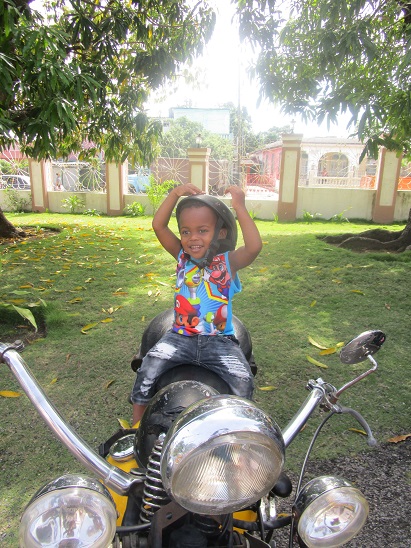
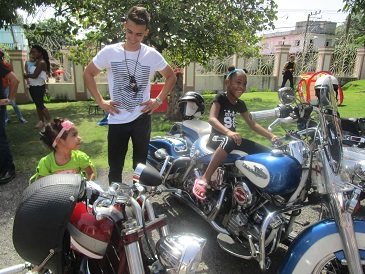
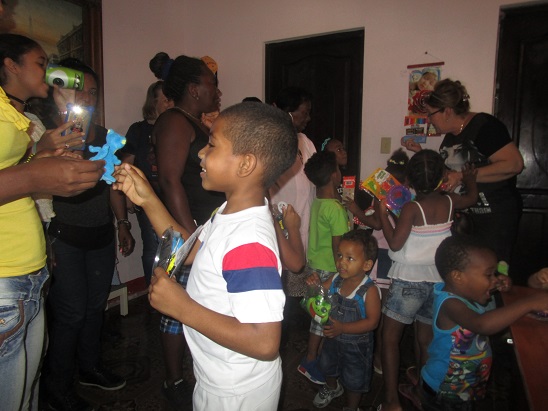
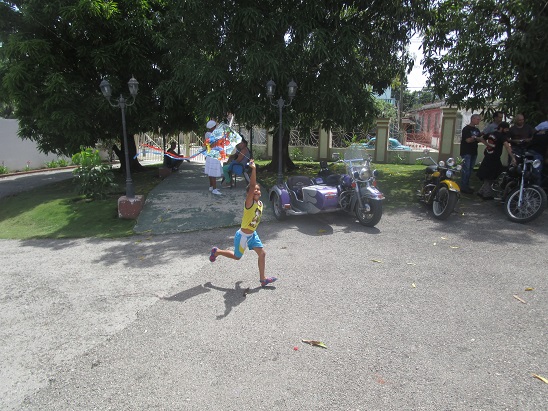
If you know me, you know I get terribly bored (and sometimes in trouble) if I’m not learning anything new. If you know my writing, you know that one of the things I love about Cuba is that I’m learning new things all the time. It’s stimulating, humbling – an eternal education, vaya. A recent experience was particularly educational when Cuba Libro, together with our family of Harlistas Cubanos, paid a visit to the Guanabacoa orphanage.

orphanage

Here’s what I learned:

1) In Cuba, orphanages are not called orfanatos like in other parts of the Spanish-speaking world. Here, they’re called casas de niños sin amparo filial (literally children without family protection; more proof that Cubans are masters of euphemism. This is something I knew from my days volunteering here during the ‘Special Period in A Time of Peace,’ – how Cubans refer to total economic catastrophe);

2) In Cuba, these children aren’t called orphans. They’re called niños de la patria (how’s that for euphemism?);

3) There are some very dedicated, loving and compassionate people working in this sector (all are women at this particular orphanage, something I suspect is par for the course across the country);

orphanage5

4) I knew before this visit that there are few orphanages in Cuba (thanks to a variety of factors, including free, safe abortions), but I learned this weekend that the most common reasons children end up here are: neglect, their parents are in jail or addicted to drugs or they’re abandoned outright;

5) Orphanages in Cuba are divided by age – there are orphanages for infants who are still breast feeding, others for children from 1-1/2 to 11 years old; and others for kids 12 to 18;

6) Some children arrive at orphanages having never seen a doctor – despite Cuba’s free, universal health system. A 5-year old boy at the Guanabacoa orphanage, for example, arrived with an undiagnosed degenerative childhood disease. His muscles will atrophy until he dies, before reaching adulthood. He’s now receiving appropriate medical attention, but his is a bleak diagnosis. In addition to full medical care, the government provides these children with food, clothing, beds and linens, soap and toothpaste (a bar and tube, respectively, for each child every month), school uniforms, and a monthly stipend;

orphanage4

7) Every opportunity to place orphans with foster or adoptive families is investigated and made. Although the process is incredibly long and arduous, requiring all kinds of background checks, character testimonies, home visits, and documentation, several of the 20 children at the orphanage we visited were with their foster families for the weekend. Additionally, one 4 year-old girl was with her adoptive family which was finalizing her adoption;

8) The chance to visit the Guanabacoa orphanage and learn how all of this works in Cuba was possible thanks to a donation initiative by Havana Harley-Davidson riders and Cuba Libro. Most Here is Havana readers already know about Cuba Libro’s robust, targeted donation programs but this was our first donation to an orphanage. We’re incredibly thankful to have friends and family among these generous bikers who provided the opportunity to learn what orphanages most need in Cuba:
– infant and boys’ and girls’ clothes;
– sneakers and shoes;
– washcloths and shower scrubbies (caretakers are prohibited from having skin-to-skin contact with the children); and
– white knee socks – part of the official school uniform.
Thanks to this initial donation (organized by our Donation Coordinator, Yenlismara), Cuba Libro will be continuing to support the wonderful staff and children at this orphanage. If you would like to participate in this or other donation programs administered by Cuba Libro, please drop us a line;

orphanage2

9) The last thing I learned was the provenance of this house – a mansion really, with multiple gardens, a pool and Jacuzzi, three-car garage and so many bedrooms I lost count. Several years ago, an official police video made the rounds (you can get the new fuzz reels every week from any little storefront business selling the paquete) about a massive bust in Guanabacoa. The video showed all manner of ill-gotten goods – including eight cars, gold and jewels, appliances, electronics, the works. They even found bricks of cocaine stashed around – it was really some Cops Miami type shit. The culprit? A half-assed Cuban rapper wanted in the United States for a giant Medicare scam which fleeced boatloads of money from the federal program. I had never heard of Gilbert Man before I saw the video, nor after – until we were preparing the kids’ donations. Turns out that after he was caught, charged, sentenced to 17 years and imprisoned, the Cuban government converted his house into this orphanage. Upon visiting and beholding the f-ugly furniture, gold and brown brocade drapes, god awful porcelain vases and gilded mirrors, I learned that Gilber Man may have been (temporarily) rich, but had perennially bad taste.

I also learned that wonderful things can be sown from nefarious seeds and soil.

50 Comments

Filed under Americans in cuba, Cuban customs, Cuban economy, Cuban idiosyncracies, Cuban Revolution, Expat life, Living Abroad, off-the-beaten track, Travel to Cuba, Uncategorized