Category Archives: Fidel Castro

What Cubans Won’t Say

[tweetmeme source=”connergo” only_single=false]

The mainstream media has you hoodwinked. The Beeb, Miami Herald, WSJ, CNN – whatever news profiteer you prefer, they’d have you believe Cubans are cowed, afraid to criticize the powers that be and not willing (or able) to speak truth to that power.

Those who’ve been here know that’s a whole bunch of hooey, another of those myths perpetuated to fit an antiquated paradigm and forward a political and commercial agenda. While media control and social coercion once ruled in Cuba and self-censorship was synonymous with self-preservation, that was then.

These days, Cubans and Habaneros (my specialty) especially, criticize a blue streak and are learning slowly, surely, to speak truth to power through neighborhood and national debates, blogs, publications like Temas and La Calle del Medio, as well as TV shows like Libre Acceso. Sitting here in Havana, trust me when I tell you: the evolution of the revolution is happening folks, whether They like it or not. And people are talking about it.

But there’s one thing Cubans won’t say still. From Abbottabad to Boyeros, Port-au-Prince to Perico, I’ve never heard a Cuban say “can’t.” Simply put, there’s no can’t in Cuba. What more, it’s what has kept the dream alive all these years (see note 1).

In a recent PBS special on Cuban healthcare, an executive at Havana’s Genetic Engineering and Biotechnology Center credited the US blockade for Cuba’s ingenuity saying, “it created the challenge for us to try and solve our own problems.” And this is undeniably true in the biotech sector, an industry where patents and inputs controlled by the USA forces Cubans to forge their own solutions – so successfully that today Cuban vaccines, cancer therapies, and generic drugs are among the country’s largest export earners today (see note 2).

In my mind though, the Cuban “can-do” attitude isn’t just due to the blockade; it’s in their blood. Consider José Martí, who organized, fundraised and fought for Cuban independence, only to be shot dead two days into the fracas. Or Fidel Castro’s failed attack on the Moncada Barracks which landed the survivors in jail, not to mention the even more disastrous (and fatal) fight after the Granma landed when only a dozen of 82 survived. As I said, “can’t” isn’t in the Cuban vernacular.

Bay of Pigs?
Yes we can!

Missile Crisis?
Yes we can!

Special Period?
Yes we can (eventually)!

Cubans can invent (and overcome, it seems) anything. Here we call this the ability to ‘resolver.’ These folks can resolve anything and even my mom has taken to saying: ‘It’s Cuba. It can be resolved’ every time I regale her with a new problem or gripe. She doesn’t realize both my husband and I are shitty resolvers.

Not so the guajiro who brought electricity to the clutch of one-room wooden houses in his remote mountain village of Guantánamo by inventing La Cuchufleta. Made from scrap metal and a bicycle wheel, this ingenious contraption sits in a bend in the river where the water flows fast and produces enough juice to power the bare bulbs and sole TV in that previously dark and silent burg.

Then there are the ‘Yank tanks,’ those Detroit dowagers nearly as old as Fidel that are kept together and running with duct tape, wires, and anything else that helps ‘resolver‘ – including a Flintstones vitamin bottle for brake fluid.

McGyver’s got nothing on the Cubans.

One of my favorite Cuban inventions is the rikimbili (see note 3), a motorized bicycle which has grown increasingly rare in Havana unfortunately. They come in different shapes and levels of sophistication, but when you see a bike putt-putt-putting along Calle 100 with a soda bottle strapped to the frame, piss yellow ‘brillante‘ sloshing around inside, you’ve sighted a rikimbili.

Cuban medical missions serving in scores of countries from East Timor to Mali, Bolivia to Botswana couldn’t survive without this inventive ingenuity. I’ve seen it firsthand. In Pakistan, where Cubans were freezing their cojones off during six months of disaster relief, I watched as family doctors constructed a tube of interlocking water bottles from their tent to a trench out back so they could pee without going out into the frigid Kashmir night. My bunkmates, las doctoras, weren’t so fortunate.

In post-quake Haiti, I held a girl’s hand (her only body part not in a cast) as a Cuban orthopedic surgeon adjusted her “traction” – a rope and cinder block invention rigged up at the foot of her bed in the overflowing, fly-infested ward.

Not everything Cubans invent is good however. Recently, a friend was buying veggies at the agro when he spotted a stand piled high with puré. Sold in re-purposed 1.5 liter bottles, this tomato paste is a staple of the Cuban kitchen and an efficient way to dispatch with past-their-prime tomatoes besides. As my amigo spoke to the vendor, he noticed huge sacks of carrots and squash behind the stand. In a wordless exchange (something else Cubans have elevated to an art form) he raised an eyebrow at the sacks and she responded, wordlessly, by pointing her pursed lips in the direction of the bottles. My friend couldn’t figure how the orange root vegetables could be transformed into the bright red paste until he consulted the radio bemba (grapevine): the color was obtained by adding a dash of pulverized brick. Apocryphal? Perhaps. This is Cuba after all.

Good or not so, keep an eye open in Cuba and you’ll discover inventions everywhere. Even after all these years, I’m still learning the extent of ingenuity powering this country. Just last week I was stopped dead in my tracks with a new way to resolver: the 3-legged chair. No stool this, we’re talking a 3-legged chair propped just so.

‘What will they think of next?’ I wondered.

I came across my answer a couple of blocks later: a 2-legged chair, propped against a tree, upon which was seated a none-too-slim parking attendant.

In Cuba, ¡sí, se puede!

Notes

1. The other factor that has kept it alive is the solidarity Cubans extend to each other. Consider this from a blog post listing What Cuban Friends Are Like: “A friend sends you a card and flowers when you’re in the hospital. A Cuban friend stays at the hospital, sitting in a rocking chair at your bedside.”

2. The blockade of Cuba, which is known as a “genocidal policy” here, prevents the island from obtaining badly-needed pharmaceutical products like Sevoflurane (Abbott Laboratories), a general anesthesia for children. Things like this – preventing kids from having anesthetic for imperceptible political gain – gets my Irish way up. It also prevents normal readers like you from traveling to Cuba.

3. There’s a special prize for any reader who can enlighten me as to the origin of this word.
39 Comments

Filed under Americans in cuba, Cuban customs, Cuban idiosyncracies, Fidel Castro, Living Abroad

Drinking the Capitalist Kool-Aid in Cuba

[tweetmeme source=”connergo” only_single=false]

I’m not sure what news about Cuba is being made over your way, but I assume you’ve heard changes are afoot. I’m talking big, game-changing adjustments that surely have Che spinning in his grave (to say nothing of Marx and Lenin). The reasons are many and complex why I’ve put off writing about “the changes” (sounds like a euphemism for menopause which isn’t a bad metaphor for today’s Cuba I should think) but suffice to say, I can no longer keep quiet.

A sort of financial shock therapy, these changes are deeply personal and downright frightening for many Cubans. However necessary (and dare I say it?) inevitable, the greatest free market experiment since 1959 is a sink or swim proposition: if it does work, Havana will start looking more like Santo Domingo or Miami. But if it doesn’t work, millions of people will bear witness to generations of work going down the tubes.

This predicament, the very real possibility of economic failure translating into socio-political failure is causing anxiety, anger, breakdowns and break ups. Of course, the changes give hope to some, but I’m not among them. From where I’m sitting, they’re an unworkable solution. Salvaging the Cuban economy by allowing private enterprise and other too little, too late measures is an impractical workaround I call ‘Shutting Barn Door, Horse Long Gone’ (see note 1). The Cuban economy was, is, and always shall be struggling. It’s geography, politics, history and fate. It’s The Way it Is.

So I take exception to the theory and the timing. But even more so, I question the mechanism. Pandora’s Box is being thrown wide with this headlong dive into the shallow end of the free market pool. I call this last gasp for cash ‘One Foot on the Slippery Slope.’

I’m a capitalism refugee. I know viscerally that money is the root of all evil. It corrupts, ruins friendships, ruptures families, crushes love, and damages the environment. And make no mistake: this genie has a one-way ticket out of his bottle.

A fascist anti-materialist (see note 2), I moved to Cuba in part to escape the unchecked consumerism and dollar lust that grips my old world. An error in judgment, faulty analysis or both since I quickly learned that money and stuff (along with sex, transportation, and protein) are uppermost in Cubans’ minds; in fact, most days are dedicated to their pursuit. Still, I loved how time was made for friends and conversation, how freely people shared. This will all roll away down the Slippery Slope once the real money lust sets in, I’m afraid. When taxes and employees and suppliers must be paid and profits are squirreled away for baubles – this is when things will get ugly de verdad.

Already the fury for iPods and 2 inch acrylic nails, nights dancing at the Salon Rojo, navel piercings, and tramp stamps (see note 3) are eroding values and substituting style over substance, form trumping function. The market, I have no doubt, has the unique capacity to undermine most everything the Cuban revolution stands for.

The feeding frenzy is already in full scrum. I have friends who procured licenses under the new regulations to train dogs, sew and sell dresses, and even make ice – home delivery extra. In any neighborhood nowadays I can browse CDs & DVDs, shoes, guayaberas and house wares set out for sale on people’s porches. Every few days, an old guy walks my block shouting: “I buy empty perfume bottles.” I guess I should be glad that Havana garages hold perfume factories instead of meth labs – for now at least.

What scares me most is the fundamental economic concept of supply and demand: if there’s enough of the latter, someone will step up to provide the former. And if there’s one thing we have a surplus of here, it’s demand. I call this the ‘Special Period Hangover’ (see note 4).

Worrying me these days is more than the simple human desire for things. It’s the confluence of factors making free market free-for-alls particularly toxic and potent here: the US embargo which keeps Cubans in a permanent state of want and need; the indelible psychological effects of the Special Period; the new opportunities to amass cash; and the myriad different and novel ways to spend it.

Now, before you get your knickers in a twist, let me say that I fully and clearly understand how easy it is for me to disparage the lust for stuff, having had my chance at it. But I feel nauseous when I think about this socio-economic ‘perfect storm’ and what it means for the future – our future – the future being forged for Cubans, by Cubans.

Consider what I call the ‘Miami Effect:’ throughout southern Florida and especially in Miami, there are businesses dedicated to renting thick gold chains and ghetto hoops, rings for every finger and gold-plated watches – all gauche to the extreme. Men’s signet bracelets are also in high demand at these shops which exist solely to rent gold and bling to Cuban Americans returning to the island to visit friends and family.

Who cares if the 14k bracelet says Tito and your name is Yamel? The important thing is to arrive in Havana (or Holguín or Camagüey) looking like an old skool NY guido who just hit the Lotto. Thanks to these businesses, you can achieve your look at a reasonable price (just don’t forget to relinquish those jewels upon your return). Has it not dawned on these folks that their money is better spent on cooking oil or a pair of decent sheets for family back home? Maybe some quality sponges, batteries or other utilitarian items every Cuban home needs?

I invite my readers to take a moment to ponder the absurdity of a poor person visiting even poorer people and budgeting for bling (see note 5). I mean, I know ‘form follows function’ is a foreign concept in Miami, but this boggles the mind. And it scares me that this is part of the Cuban character. This type of materialist twist and bent is my nightmare. After 9 years in Cuba, I dread waking up to it.

A friend said to me years ago that if the Yanquis want to kill the revolution, all they have to do is drop a jabita stuffed with Levi’s, Converse, and Lancôme at every doorstep and everyone will roll over. I hope she’s wrong because that is just too fucking depressing.

Notes

1. Surely Cubaphiles will have caught the double meaning here: Fidel is sometimes referred to as ‘el caballo.’

2. For example, my blood pressure spikes when I watch my neighbor walking her two Siberian Husky puppies – the new breed of choice down here. I find it cruel and unusual for these dogs to suffer a Havana summer just because their owner wants a couple of status symbols. Then there’s all the kitschy Ed Hardy knock offs that make me shudder and groan. Maybe I should start importing Bedazzzlers – the Cubans will go gaga over a tool that allows them to bling everything from baja chupas (tube tops) to blumers (underwear). To get a better understanding of just how anti- I am about all this, check the Church of Life After Shopping link on my Blog Roll.

3. To put things in perspective, consider what these non essentials cost here on the average Cuban salary: iPod = 4 to 20 months salary; acrylic nails = 1 month’s salary; night out at the Salon Rojo = 2 months salary (minimum); navel piercing = 2 weeks salary; tramp stamp = 1.5 months salary.

4. Once the Berlin Wall fell, Cuba’s almost total economic collapse was swift. Nearly 85% of foreign aid disappeared, Cuban adults lost 20 pounds on average and the first experiment with private industry was launched. This era (1993 to depends-who-you-ask) was dubbed ‘A Special Period in Time of Peace.’

5. I welcome input from other immigrants and expats – have you found this to be true of folks from your country or where you live?

63 Comments

Filed under Americans in cuba, Cuban Revolution, Fidel Castro, Raul Castro

Slippery Okra & Sleeping Shrimp: Classic Cubanisms

[tweetmeme source=”connergo” only_single=false]

One thing I’ve learned my nearly eight years in Havana is that Cubans have a way with words. Many a lass for example (present company included) has been seduced by a poetry-reciting buck borrowing from the likes of Silvio Rodriguez and Cintio Vitier. And who isn’t hip to the oratory artfulness of Fidel, that hypnotist of crowds from New York to Durban?

In fact, Cuba is a country full of semantic artisans willing and able to sprout ‘flowers from their tongues’ as we say here. This oral aptitude is nothing new or novel. Since Martí and the Mambises, Cubans have honed their mesmerizing way with words. This extends to dichos, popular sayings that use metaphor, irony, and double entendre to encapsulate life’s promise, problems, and perversities. Learning a dicho or three in your armchair or actual travels is a simple way to peel away a layer of the Cuban psyche.

An all time classic that has particular relevance during the dog days of summer and other ‘special periods’ is “entre col y col, una lechuga.” Between all that cabbage, a little lettuce is akin to our ‘variety is the spice of life.’ It’s not surprising one of the most popular sayings uses a metaphor based on leafy greens and cruciferous veggies – Cuban psychological hunger runs deep.

Another food-related dicho that anyone who has been to Cuba has likely experienced is: “donde come uno, come dos (o tres),” which means to say: where there’s food for one, there’s food for two (or three). What can be likened to our ‘the more the merrier’ is in fact, the cornerstone of Cuban hospitality (see note 1).

But hands down, my favorite food-related saying here is “pasando gato por liebre.” While ‘passing off cat as rabbit’ may sound like a Chinatown food nightmare, this saying is applied to all sorts of Cuban chicanery, from serving $3 mojitos made with rock gut rum instead of Habana Club to selling Selectos as Cohibas (see note 2). Being agile to this kind of trickery is part and parcel of being Cuban, embodied in another of my preferred sayings: “camarón que se duerme, se la lleva la corriente.” Or ‘you snooze, you lose.’

But enough of all this food and fauna. Let’s talk about sex, another cornerstone of Cubanilla. While there are many dichos referencing carnal undertakings, (and I could dedicate an entire post to piropos, the ingenious and often hilarious come-ons Cubans invent for catching the ear and eye of the opposite sex), my favorite is “quimbombó que rebala, pa’la yuca seca.” Literally this translates as ‘for dry manioc, use slippery okra.’ Hardly the sensuous flowering phrase you’d expect from hot-blooded Cubanos y Cubanas itching to get their groove on. But anyone who’s familiar with okra knows how slippery, slimy it gets if prepared incorrectly. And yucca, from Havana to Asunción, is dry and unappetizing unless gussied up with mojito (see note 3). So while okra is slippery by nature and yucca is dry, get the two together (or more accurately, the body parts for which they serve metaphorically) for erotic results.

Gracias a dios I’ve got no problem where yucca and okra are concerned, but there is one dicho bien Cubano that I’ve yet to internalize. Maybe it’s because I’m a New Yorker or has something to do with being a Scorpio or perhaps it’s just the state of being Conner (god help us!), but I just haven’t been able to master ‘a mal tiempo, buena cara.’ Putting on a good face during bad times just doesn’t seem to be in my make up.

Seems I’ve still got a lot to learn.

Notes

1. According to the expert in everything (that would be my husband), this saying has roots in the Cuban countryside, where hospitality knows no bounds. But it can also be traced to the island’s Haitian community, which arrived on Cuban shores in the early 19th century. Seems Haitians of the time had the custom of setting an extra place at the table, Caribbean Elijah-style.

2. Selectos are the/my five cent cigar of choice, sold in bodegas (where Cubans procure their rations). Many a tourist has been duped into buying what are touted as Cohibas when really they’re just Selecto dirt sticks wearing the signature yellow and black bands of Cuba’s most famous cigar.

3. Visitors sometimes confuse mojito, the minty potent potable, with mojito the garlicky bitter orange-spiked sauce used to dress root vegetables that is as delicious as it is addictive. While plain old manioc yucca is pasty and not-so-tasty, yuca con mojo is irresistible.

5 Comments

Filed under Americans in cuba, cuban cooking, Fidel Castro, Living Abroad

Cuba’s Secret Weapon: Little Old Ladies

[tweetmeme source=”connergo” only_single=false]

Up and moving to a foreign country is like tiptoeing across a tightrope without a net. It takes balls (or ovaries, as we say on this side of the Straits), but can be stupid, reckless, and if all goes horribly wrong, detrimental to breathing.

When I landed in Cuba to live full time – without a net – in April 2002, I had a pretty good idea of what I was in for (see note 1). But imagining 6-hour blackouts and bucket showers is one thing. Cooking, eating, reading and lovemaking by candlelight followed by a military shower is something (uncomfortably, unsustainably) else.

Little by little, things improved. Gradually, I adjusted. I sprang for a $15 electric shower unit (known as widow makers in some countries) and we kept a list of debate topics on hand for the next blackout. Over time, I grew accustomed to my neighbors dropping by unannounced for coffee and a chat and I no longer started at the good-natured yelling Cubans indulge in. Poco a poco my wardrobe got shorter and tighter, I perfected the use of a pressure cooker, and grew used to the idea that gladiolas aren’t just for dead people (see note 2).

But clothing, cooking, even floral tendencies, are differences you expect in foreign countries. In Pakistan I had to cover my head. In Guatemala I (happily) forsook bread for tortillas. Here in Havana however, I was blindsided by something else entirely, something wholly unexpected: I’m surrounded by old people.

It’s not simply that Cubans have a longer life expectancy than you (see note 3) or that the country has 1,488 centenarians and counting. Sure, the island is a willing poster child for the 120 Club (see note 4), but the ubiquity of the elderly here has more to do with the culture of aging than health indicators.

In Cuba, great pains are taken to keep the ‘senior zits’ and ‘blue hairs’ (as my mother calls them, even though – technically – she forms part of their ranks) actively involved in society. Active aging they call it. Every day, from Pinar del Río to Guantánamo, you’ll see seniors doing knee bends and loosening their rotator cuffs in free, outdoor exercise classes; raisin-like men mixing up the dominos at seniors’ centers; and great grandmothers wheeling their sweet potatoes and yucca away from the Tulipán vegetable market.

As end of days approach, it is the rare Cuban that gets parked in a nursing home. Here, people prefer to take care of their own, at home – even hospice happens at home, in your own bed. Up north, meanwhile, we tend to shutter people away once they reach a certain age. Where I’m from, growing old and dying at home is the rare exception. I get that nursing homes are handy. Who wants to change their mother’s diaper or go unrecognized by their own father as he battles demons known only to Alzheimer’s patients? But, the incontinent and impenetrable aside, I think the Cubans are on to something with their family-based aging in place.

Teresita was my first clue. Wide-hipped and curmudgeonly, with hair dyed the color of bread crusts, Teresita is my 86-year old neighbor. She’s the archetypical despotic Cuban matriarch, heading up four generations of females squeezed into a 2-bedroom apartment. Though able-bodied, Teresita never leaves the apartment. Despite her cranky, iron-fisted disposition, we call her “Terry” with affection.

Times are hard for Terry and her girls. She had to share her rubber-sheeted bed with her 56-year old daughter Lila until the latter emigrated to Tampa. It happened exactly like most leave-takings here in Cuba: here one day, gone the next. The space opened up in Terry’s bed couldn’t compensate for the sorrow it planted in her heart. With the high drama that grips so many Cuban women, Terry comes to me after Lila has left to say the only thing she has to look forward to now is the grave.

While her granddaughter is out earning her daily bread and her great granddaughter is at school learning her times tables, Terry is left alone. All day, every day. She’s locked in, but far from shut-in: perched at her window observing all the comings and goings, Terry is The Gossip. From her I learn a trio of young thugs are posing as public health inspectors, finessing their way into the homes of little old ladies, and robbing them blind. It’s Terry who tells me that Omara from upstairs in going to Spain and Yusi downstairs is dating a new guy.

“He’s black,” she whispers to me, passing a couple of fingers along her forearm – the classic Cuban sign for a person of color.

Like many white ladies of an age, Terry is a little bit racist, which is akin to being a little pregnant in my book, but I let it slide. She’s got over eight decades of memories and experience and I find myself heading across the hall to “talk story” as we say in Hawaii. I find reasons to knock on her door – bringing her the reading material she so desperately craves and dropping by for coffee and a turn in her broken cane rocker. Over tiny cups of sweet and musky bodega coffee (see note 5), she tells me about her brutal, pre-revolution childhood.

Rocking and sipping, she tells me how her father’s second wife, a wicked substitute for Terry’s dead mother, forced her to work beginning at an absurdly early age. There were the customary cooking and cleaning chores that every household has, but young Terry was also forced to take outside work, washing and ironing the neighbors’ guyaberas, slacks, and skirts. If she protested, she met the business end of a belt. She’s less forthcoming about her husband, who gave her one daughter and a whole lot of headaches. Of course, our conversation always detours to the terrain of her various ailments: stiff joints, failing eyes, and a chronic, inexplicable throbbing in her thigh. If I let her roam, we’ll get lost in the badlands of her aches and pains.

Then there’s Carmita, my 82-year old friend from Regla (see note 6). She’s more affectionate and sharp-witted than Teresita, but is a similarly iron-willed matriarch with a long gone husband. ‘Good riddance!’ she exclaims with a devlish smile. ‘That one was born unfaithful.’ Laying a liver-spotted hand on my leg she cracks jokes about macho men and criticizes complicit women in that spirited, pre-curve feminist way of hers.

Sipping the same sweet, musky coffee from the same teeny cups everyone has here, Carmita spins tales of teaching hicks from the sticks to read during the 1961 literacy campaign. With her eyes closed softly, she recreates the Bay of Pigs attack, reliving those tense days. Carmita can be mercurial, fluctuating between placcid and resigned, spunky and spent. Like Teresita – like everyone I’m realizing – her life has been peppered with profound pain and loss.

Carmita has her health problems too – arthritis forced her to abandon her sewing business some years ago and the diabetes is under control. For now. While she fries up some plantains for her handsome grandson, Carmita relates last night’s dream with that munificent smile of hers. In the dream, her recently deceased daughter has been revived, the cancer expunged, her lifeblood back.

“Give me a hug Mom.”

“It won’t hurt?”

“No, Mom. I’m good. I’m healthy.”

Her words hung in the small, dark kitchen.

“And then you woke up, though you never wanted to,” I say with finality.

“It was horrible muchacha.”

I can’t imagine.

Old Cuba likewise comes alive sitting on Evarina’s porch in Miramar. Homebound and 80-something, Evarina’s a bulldog of a dame. She’s from the Oriente originally, (which means something if you know the island), and once upon a time was a daily cigar smoker like myself. Her diabetes is having its way with her and there’s some concern she might lose her foot. While she tries to “resolve” a course of the Cuban wonder drug for diabetic foot, she passes her time burning up the phone lines gossiping about her sister’s new cleaning lady and the Braves’ acquisition of her favorite ball player.

Then there’s Mary and Esther. Debra and Julia. When I step back and look at the landscape of my life here in Havana, I’m shocked to realize that the people I like best, that are the most interesting and engaging, are, on average, 79 years old. Old women, the lot of them. Why, I ask myself, are there so many viejitas in my midst? Could this even happen in the States?

Gotta run. Carmita’s expecting me in Regla and has promised to tell me about when Hemingway was sweet on her, dropping by her work to flirt and conquer.

Notes

1. I had been here several times before, first as a volunteer in 1993 during the Special Period (which was very, very “special” according to the Cuban joke,) and most recently in 2000.

2. There are a couple of Cuban characteristics I will never get used to. Topping the list is the national penchant for spoiling movie endings. If you have Cuban friends, you know what I’m talking about. The other is eating pizza with a knife and fork.

3. Cubans’ life expectancy is 78.3 – just surpassing the US figure of 78. Meanwhile, 16% percent of the island’s population is over 60; this will shoot up to 25% by 2025. Cuba’s recently concluded national centenarian study is fascinating.

4. Fidel Castro is the Club’s most famous member.

5. The “bodega” is where Cubans receive their monthly rations – food and other staples provided almost free by the State. As I type this, the ration card is being phased out in one of the most radical departures for the Cuban government in recent memory (I’d hate to be the person who had to convince Fidel that cutting rations is a good idea). Last week, potatoes and dried peas were dropped from the ration card. Bread and coffee are next but won’t go as gently into that good night as papas and chicharro, I’m afraid. In Cuba, bread and coffee mean breakfast. Making people buy these staples is going to be tricky – especially coffee, which, like everywhere, is very expensive: we make one espresso pot a day, spending around $15 a month. Being that the average salary is $12 a month, we’ll soon be facing a national java jones unless other provisions are made.

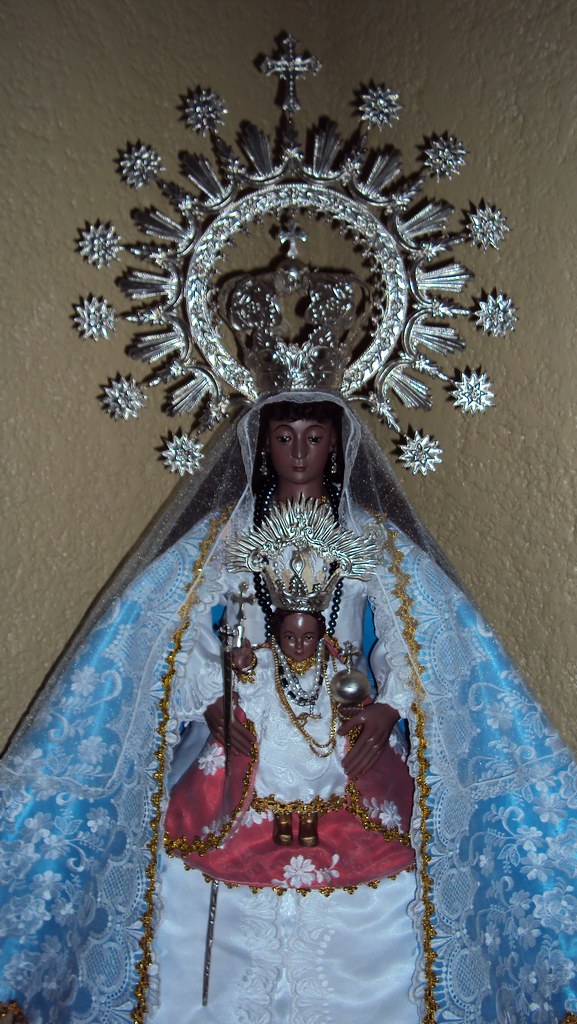
6. Regla is known as the “Little Sierra Maestra” it’s that revolutionary. It’s also home to the Black Virgin of Regla (Havana Bay’s patron saint and closely linked with Yemayá) and many secrets great and small. You can drive to Regla in 10 minutes from downtown Havana, but cross the bay via ferry for a picturesque, enjoyable journey to what could be a small town in the island’s interior, with all the friendly faces and simple fun that implies.

36 Comments

Filed under Americans in cuba, Fidel Castro, Living Abroad

Re-Entry’s A Bitch

[tweetmeme source=”connergo” only_single=false]

Faithful readers will have noted my prolonged absence from the great (and not so) blogosphere. It’s not that Cuba has driven me to slit my wrists (see note 1), but rather a quick trip to the singular city and state of mind that is New York which has kept me and my pen quiet for a piece (see note 2). No doubt these infrequent escapes “home” serve to temper any suicidal tendencies, but they also trip up my psyche, stirring up stressful emotions of otherness: I’m no longer from there, and will never be from here, but am caught turbulently in between. It’s making me a little loopy.

Back in the Big Apple, my compatriots were fretting about baseball and Bloomberg. The Yankees were in the World Series (again, imagine that!) and a collective breath was held to see if The Best Team Ever could bring the big win back to the new stadium. Mayor Bloomberg, meanwhile, wasn’t taking any chances: to assure his election day triumph, he abolished term limits (see note 3) and spent like a drunken sailor during Fleet Week on his re-election bid – we’re talking over $100 million dollars. The foregone conclusion was reached reluctantly – he beat out his closest competitor by less than 5%, and that guy spent a mere $8 million on his campaign.

Baseball and politics are similarly hot topics on this side of the Straits, albeit more complex. More complex and also more disheartening: to start, Cuban baseball is in crisis. Or close to it. I’m not one of those fanatics who parses the sports page (yes, it’s just one page, but the entire paper is only 8, so that’s a pretty good percentage) and eavesdrops on the ball debates raging daily in Parque Central (see note 4). But I know poor play when I see it and Cuba’s lackluster showing in recent international competitions is cause for serious concern and perhaps (gasp!) some sports reform.

Here’s the scorecard. First, several high profile defections in 2008 and 2009,coupled with the many (non-superstar but still solid) players leaving the country every year is having an impact on Cuban ball. In short, even when you’re playing against the country’s best, that quality is relative. But it’s not just emigration taking its toll. The Cuban system, remember, is pulling from a population the size of Ohio. And while that system is phenomenal at scouting, training, and supporting its talent…Do I think a Cuban team today could beat a US major league club like happened in 1999 against the Orioles? No, I do not.

Then there’s the no trade policy. In Cuba, you play for the club where you were born (relocation is rarely, if ever, an option), meaning good players may never make it to great. Especially when their local team sucks. If you’ve ever played a sport, you know you tend to “play up” – performing better against superior opponents. If you’re the best player on a bad team here, you’re kind of doomed to the middle ground.

The state of Cuban baseball has a lot of people pissed around here. The exorcism of baseball from the Olympics – the island’s greatest international sports stage – has even more people more pissed. I think if there’s one facet of daily life that could unite the masses against the powers that be, it may just well be Cuban baseball’s slow decline. The disappearance of onions is another (see note 5).

But I digress (she says trying to sideline the politics portion of our programming).

From where I’m sitting, things seem…restive. My Cuban friends tell me this is a permanent state of shifting ground, not much different from other unquiet times. They’ve got me cornered with that argument since I arrived in 2002, so I don’t know how it was before. Or before before (see note 6).

But for those who claim these times are igual or casi casi, let’s review. In the past few years alone, Fidel has retired to the dugout; three hurricanes ripped across the island in a month, taking $10 billion worth of food and goods with them; a global economic crisis began sinking its teeth into every country big and small; and there have been some highly charged and wholly unexpected political layoffs that took intelligent and experienced young Cubans out of the game. What’s more, 2009 imports are down 36% (an incredible 80% of that is food, exacerbating my psychological hunger); tourist arrivals have increased, but the same can’t be said for corresponding revenues, which have dropped; nickel prices are down; and there’s talk of axing the ration book. I can’t imagine Cubans paying for sugar. In fact, add purchasing sugar to the list of agitating factors alongside bad baseball and AWOL onions.

So anxiety is high for me here in Havana. As it was up north, sitting around with my friends talking about the state of their lives and nation. All are still employed and housed, so we give thanks for that. But I kept hearing the same stress-ridden refrains, regardless if it was my hipster high school teacher friend, my small business owning sister, or my like-a-brother bartender talking:

‘If I get sick, I’m fucked.’

‘I pay into social security, but I’m sure it won’t be there for me when I need it.’

‘The taxes are killing us (so we decided to get married).’

‘I don’t know what I’ll do when I’m old and retired, so I have to work like a dog now while I can.’

‘I’ve consolidated my loans so they wouldn’t garnish my wages; now I’ll be paying for another 20 years.’ (This from yours truly).

What’s comically tragic is that we’re all in the same boat. Except I’m over here, with a whole other set of factors contributing to the stress pie (the least of which, let’s be frank, is baseball-related). I had hoped my two weeks away would have changed something, but they’re still fumigating house to house against dengue, the electric hot water unit continues to shower us in sparks meaning we’ve regressed to the bucket shower, and there’s nary an (affordable) onion to be found.

“Cheer up!” a Cuban friend tells me.

“You can’t go on like this,” says another. “What are you gonna do? Put a bullet in your head?”

I ponder this.

“The problem is there are no guns.”

In the meantime, I continue to tread water here in the small pond.

Notes

1. I would be neither the first nor the last: Cuba, both pre- and post-revolution, has one of the world’s highest suicide rates. An intriguing construct, made more so by the determination it takes to pull it off – the sheer lack of garages, guns, and ovens makes it a mean feat. If you’re interested in the complex reasons of the why and the creativity of the how, see Louis Perez’ comprehensive tome (we’re talking 480 pages on Cubans killing themselves!) To Die in Cuba: Suicide and Society.

2. Yes, I still write with pen and paper.

3. Funny how US politicians condemn others for lesser measures (eg, Chavez who extended his stay via popular referendum and Zelaya who simply suggested a vote on the idea even though it wouldn’t have applied to him) but barrel ahead with dictatorial policies when it suits. This double standard pragmatism is a deeply troubling pattern in US foreign policy. Global warming? We caused most of it, but you deal with it you dirty developing countries. Nuclear proliferation? We’ve got our arms, but you best not go there Israel. Whoops. I mean Iran.

4. Known as La Esquina Caliente (The Hot Corner), these open air baseball debates occur in parks around the country and have been called the most democratic spaces in Cuba. If you’re ever in Havana, especially during the season (October-April, which makes it exactly the reverse of the big leagues, meaning Cuban players could, in theory, play both here and there, but that’s best left for someone else to tackle), head to Parque Central for an earful.

5. For about 6 weeks and counting here in Havana, it has been extraordinarily difficult to find onions – one of the single most important ingredients in the Cuba kitchen. Difficult, but not impossible: those who can afford $1 a pound for onions have them. As you may imagine, these people are in the great minority in a country where the average monthly salary is $20. The onion farmers, meanwhile, are dancing a jig of joy since they’re getting rich. This has precedent: in the brutal days of the economic crisis known as the Special Period, fortunes were made by garlic farmers who kept the capital city in its preferred herb. This earned them the moniker “garlic millionaires.”

6. This is only partially true: I first washed up on these shores in 1993, the heart of the harshest part of the Special Period when 8-hour blackouts were de rigueur and people lit bonfires in the streets to pass the dark nights. But it’s one thing to pass a month volunteering and another to live it day in, day out, like I’ve been doing since 2002.

11 Comments

Filed under Americans in cuba, Cuban Revolution, Fidel Castro, Living Abroad

Excerpt – Here is Havana, Chapter 3

[tweetmeme source=”connergo” only_single=false]

He’s laughing so hard he’s shaking and I can see the black, pitted holes where teeth once rooted. Peering into the rot, I wonder how he eats carrots or the gooey slabs of peanut brittle hawked at bus stops around town. The moon is still high and bright as trucks peel off the Autopista, catching the laughing man in their headlights before trundling on to market.

In these pre-coffee, pre-dawn hours, the laughing man is not alone. No matter the time, place, or circumstance, somewhere there’s a Cuban burdened with a sack of potatoes, stranded by the side of the road, or simply hungry who’s also laughing. Troubles are smoothed here with this tonic for the soul.

There are the two girls sent running, giggling, into the street when an unexpected wave crashes over the Malecón. Darting from the path of a ’46 Plymouth, they find each other’s hand again as they leap back onto the sidewalk. Their eyes are dancing, delighted, while salt water drips from the hems of their school uniforms. A student on lunch break whistles his approval in the direction of their strong, but still spindly legs. Under his confident gaze, with eyes like agates working up towards their chests and faces, the friends break into gales of laughter and saunter on hand in hand.

Joyful and energetic, Cuban laughter is infectious, instinctive. It smoothes troubles, but also creates fellowship. Every hug, favor and joke unifies, helping keep it – and us –together. Cuban solidarity protects the island like chain mail, functioning as ingrained and sacred scripture. Neighbors arrive at my door unannounced proffering limes and honeyed squash fritters, young men guide octogenarians across the street, and public phones with money remaining are handed to the person next in line. Stoked by Cold War fires extinguished almost everywhere else and against all odds, the human spirit thrives. Like family in the ideal, Cubans stick together, watching each other’s back, lending a hand or leg up, and pitching in; it’s no coincidence that Cuban immigrants have had such success in the US. Through squabbles and dark, hard-kept secrets, Cubans stand as a unit, ready, willing, and able to circle the wagons.

As dysfunctional as it is sacrosanct, Cuban society-cum-kin is forever battling internal demons. Here, indolence and inertia are the norm as ‘hurry up and wait’ mixes with ‘what next?’ to paralyze the island. Like an ant trapped in amber, we’re frozen in our languor. Soap operas, gossip, church, salsa, manicures, hair dying, baseball, dominoes, and kite-flying are all passionate pastimes. They’re how we save ourselves from being bored to tears. Entre col y col, una lechuga – literally between all that cabbage, some lettuce – is the Cuban way of saying variety is the spice of life. Here, going to the movies becomes an act of self-preservation, while that hushed conversation about Ramón’s new underage girlfriend breaks the work-cook-clean grind.

Intellectual release and freedom, meanwhile, are found in humor, that particularly impassioned and Cuban show of mental acuity and creativity, cleverness, self-effacement, and irony. When not eclipsed by a healthy dose of denial, Cubans recognize that their revolutionary experiment has led them up the proverbial creek without a paddle – brilliantly evidenced by their jokes. The revolutionary slogan ‘Socialism or Death!’ for instance, is bastardized to ‘Socialism or Socialism!’ and Fidel is (was) sometimes referred to as The Onion because each time he talks, you cry.

Entire nights are passed sharing jokes, and as the rum bottle empties, the crowd gets rowdier, the jokes raunchier, and the laughter louder. Cubans are known as ‘gritones,’ prone to gritería, which means they shout, yell, cry, hoot, holler, and scream. Loud music and laughter bridge the sorrowful waters all Cubans have tread. With these same melodies and humor, they sail into the deep sea of their future.

To read Chapter 3 in full: http://www.connergorry.com/hereishavana.html

7 Comments

Filed under Americans in cuba, Cuban Revolution, Fidel Castro

Dying in Cuba – Part 2

[tweetmeme source=”connergo” only_single=false]

Even the flowers are different at Cuban funerals. Forget bouquets and baskets. Here, wreaths rule. Just as every funeral home has a cafeteria, each also has a wreath workshop close by. Cuban funeral wreaths are made of wadded up, tightly twisted raffia studded with flowers. Also stabbed into the tire-sized wreath are sprightly green foliage and a billowing ribbon stamped: ‘Our condolences, The Perez Family’ or ‘Always in my memory, Your Loving Brother.’ These are the same wreaths laid at memorials for national heroes – Martí, Maceo, Mella – seen around town once in a while. The most creative use of funeral wreaths are by baseball and basketball fans who hold them aloft, the ribbon reading ‘RIP Industriales’ or ‘Sorry for your loss Santa Clara.’1

Which reminds me of the time I was in Baracoa…

I was updating a guidebook. You know the one that takes people into every nook and cranny of the world making the company’s name an oxymoron? That guidebook. Anyway, on the day in question, I was in Baracoa, a charming seaside town that had no road connecting it to the rest of Cuba until the 1960s. As you may imagine, it retains a down home, small town feel.

So there I am, walking Baracoa’s clean-swept streets ostensibly collecting detail after niggling detail for my legion of readers, but what I’m really after are cigars. I have a two-cheroot-a-day habit and watch out when I run out! Poking around for my fix, I spy a hand painted sign above a typically quaint wooden doorway: We Sell Coronas.

Coronas! Just what I’m looking for. I quicken my step and knock on the door. A well-kept ‘tween boy opens it a crack.

“Good afternoon?” he greets me politely but with that screwed up look that says ‘what the hell is this gringa doing on our doorstep?!’

“You sell Coronas?” I ask, pointing up at the sign.

“Yes?” he answers with that same queer look.

“Can I buy some?”

“Um, let me get my mom,” he responds with knitted brow, shutting the door gently.

His mom comes to the door and we go through the same Q&A – her look as skeptical as her son’s. Friendly, but bewildered. Finally she offers to show me their wares; I can almost taste the tobacco at this point. As I’m led through their spotless living room to the back where they keep the goods, it’s marigolds and daisies I smell, not tobacco. We emerge in their workshop stacked high and deep with the funeral wreaths I would come to know well. What I didn’t know then is that they’re called coronas.

I’m quite sure the story of the Corona-hunting gringa is still making the rounds up there in Baracoa.

Back at the funeral home, each family has a designated room where their loved one is laid out. The coronas are hung from hooks latched onto molding about five feet off the floor. The room is lined with my favorite kind of rocking chairs – the ones with metal frames and plastic blue or red lanyards that are so popular in the tropics. While morgue to grave is fairly speedy in Cuba, the actual wake can be an 8-hour marathon and these chairs cradle you like a baby, rocking you to sleep.

Family, friends, neighbors, and co-workers pass the time rocking and chatting quietly. There’s a lot of hugging and handholding and kisses on the cheek – at wakes, the archetypical Cuban trait of human warmth and contact takes over. Someone will likely set up a small table in the corner with plastic cups and a couple of Thermoses. One has the sweet, black coffee we’re all addicted to, the other has ‘té de tilo.’2

Hours go by drinking tilo, rocking, crying, and napping. Stepping out once in a while to smoke fragrant, filter-less Cuban cigarettes, we receive fresh mourners at the funeral home door. No one wears black.

All coffins in Cuba are wooden carbon copies, covered in black cloth (white for kids) that’s pinned down tight with decorative rivets. There’s always a window for viewing the dead’s head. They probably have windowless models for violent accident victims, but I’m not familiar with the ‘closed Cuban casket.’ They do an admirable job with the makeup, considering.

At the appointed time, the coffin is again transferred to a dolly and wheeled away. People who hadn’t the strength to move close during the official viewing are sometimes taken unawares, catching a glimpse through the coffin window of their beloved’s head as they roll by. There may be wailing then and turning towards walls for support or to pound a futile fist.

After the coffin is wheeled out, the coronas are unhooked and taken to the hearse. As soon as they’re piled on the roof and the back door is closed, the procession begins to make its way through the city streets to Cementerio Colón. The state provides a couple of black and yellow antiquated Russian taxis to transport the family. Everyone else is on their own.

A shadowy silence descends on the usually effervescent streets with the procession’s passage and bystanders play a traditional game of tag to ward off a similar fate. At a bus stop, a woman touches her husband’s arm. ‘Pasa el muerto‘ she says. ‘Pasa el muerto’ he says, passing it to his son with a pat on the back. ‘Pasa el muerto’ he says to someone, anyone, touching their shoulder – he knows if he’s stuck with the ‘pasa el muerto,’ he’ll be next.

The caravan’s arrival at the cemetery has to be timed precisely since each burial is tightly scheduled (I imagine the whole thing is a nightmare to coordinate). The hearse inches its way under a blistering sun through the cemetery’s narrow streets, with the bereaved walking behind it. Parents, children, and other close family and friends often plant a palm on the car as if to guide it. Hand on hearse, you can see their need for contact this one last time.

When the deceased is someone particularly loved and esteemed, the procession is large and slow, taking its time to reach the tomb. Typically, the no-digging grave diggers are waiting when it rolls up. Pall bearers extract the coffin and carry it the short distance from hearse to crypt. Mourners rest against strangers’ graves as they wait for the cemetery workers to slip the lid off the tomb and ease the coffin down and in. Once it’s settled, the lid is replaced, and they stack the wreaths on top of the tomb. For the religious, a few words will be pronounced by a pastor. For the poets, a few lines of verse read.

It’s all over quickly. The grave diggers are tipped without delay and mourners drift away to drink more tilo and cry themselves to sleep.

Notes

1. The Industriales (aka Los Leones, Los Azules) are Havana’s baseball team and are often likened to the New York Yankees for their popularity and historically winning record (though they seem to have gone soft of late). Santa Clara is to the Industriales what the Red Sox are to the Yankees.

2. After a lengthy investigation, I’ve discovered that tilo is linden in English. I’d never heard of tilo (or linden) before all this grief, but my friend’s comparison to ‘mellow valerian root’ is right on the mark.

– For Lily and Carmita.

14 Comments

Filed under Americans in cuba, Cuban Revolution, Fidel Castro, Living Abroad

A Cuban Snapshot (or Three)…

[tweetmeme source=”connergo” only_single=false]

The Cuban psyche is shaped, some might say warped, by four fundamental factors:

1. We’re on a slab of land you can drive across in 15 hours. Water hems us in. As on every island, there’s an intrinsic self-reliance tempered by that nagging question: what’s beyond all that blue, blue sea?

2. Revolution, capital R. Almost 50 years of it. Dignity, self-esteem, solidarity with the downtrodden, and kick ass culture are part of the post-1959 Cuban DNA at this point.

3. Blockade, capital B (for Bully, Bollocks, Botched, Bogus, Besieged).

4. Sex.

Some days, like yesterday, I do think it’s twisted, this Cuban psyche. What with all the melodrama. Then there are other days when it’s refreshing (the psyche, not the drama-rama), revelatory, and yes, downright revolutionary goddamn it.

When the small island that’s hard to get off doesn’t drive you stir crazy with the eternal question: what’s beyond all the water?, it unifies. Its simple state of island-ness, combining the tenacity of the underdog with the confounding irony of needing to be, but never becoming, self-sufficient puts us all in the same boat so to speak.

From Malta to Manhattan, name an island and you’ve got a co-dependent.

Even so, exactly how can an island, any island, become self-sufficient when it’s totally blockaded (ironically, that other fundamentally unifying element)? It’s sick and expensive the lengths the USA goes to screw Cuba. I won’t go into it here; you’ve got Google. But I’m quite sure history will judge – sooner rather than later – the US embargo policy as just that: sick, expensive, and cruel. Not to mention failed.

But back to right now.

The Revolution. It’s more grayed than frayed, as some might have you believe. Still, the former can be just as dangerous. Maybe more so. Frayed can be mended; gray just withers and dies.

Then there’s Fidel.

He was so influential for so long. His mere presence inspired, as anyone who has met him will attest. He was game changer personified. I don’t think he’s much different in reclusion: whatever his state of health, he still stirs hearts, minds, (and ire), influences events, and provokes thought (and fights).

How did I get off on Fidel? See how it’s always about him? Certainly the foreign press seems to think so, if their Enquirer-esque pursuit of anyone with the Castro last name is any measure.

But I was talking about the Revolution after all and what the Revolution is, essentially, is a compact between him and the Cuban people to create a more dignified life for as many as possible. And honestly, I think when it all shakes out, Cuba has done that as well, if not better, than any other country in the world. (Don’t agree? Live here for seven years, then we’ll talk.)

Not to say mistakes weren’t made and shit didn’t happen. Mistakes are still made and the excrement still hits the cooling element: making ends meet is a nightmare for some, a pipe dream for others. And those that have ‘resolved’ their ends to meet are probably making serious sacrifices and compromises to do so. They may even have to break a few laws or bend a rule or three hundred to get the job done. But from Calle Ocho to Callejón de Hamel, when you need a job done, call a Cuban.

Then there’s Havana’s decrepit splendor or splendid decay, depending how you look at it. No matter how you look at it, though, it’s here. High above clothes drying on the line a turret crumbles, the toilet overflows at the breathtaking Gran Teatro, and another dozen families are evacuated from a seaside building threatening collapse.

But it’s improving. Slowly, very slowly, but surely, Havana’s being reinforced and restored. I can imagine a day when every grand palace and collonade is all spruced up capitalistic-Home Depot style with luxurious landscaping and hot interior design.

When that day comes, no doubt Havana will look swell. But the traffic, not to mention the nostalgia, will be hell.

6 Comments

Filed under Americans in cuba, Fidel Castro, Uncategorized