Circa January 2002: I was sitting at my sister’s dining room table – in the crappy apartment she was forced to rent after losing her home and business in 9-11 – with a friend. At the time, he was a producer for PBS and I was a struggling writer. When I told him I was moving to Cuba to live and write he said: “who would ever buy what you have to write about Cuba?” Cue incredulous, pregnant pause (haters gotta hate, right?) I’m sure he doesn’t remember this comment made so long ago, but it kicks me in the ass every time I pitch, and write, and yes, get published. Turns out some people do want to buy and read what I have to write about Cuba.
Flash forward a dozen years. A friend drives across Havana to give me a sack of books. “They’re good, but not great and I have no room for them. If you don’t want them, I’m throwing them away.” So first of all: I don’t have room in my life for good, but not great books, let alone the shelves to hold them. Second of all: I can’t bear to see books thrown out and can’t do it myself – it’s like those leftovers I swear I’ll eat tomorrow, until tomorrow turns into the next day and then next week. By that time, I can no longer distinguish the pesto from the mold but it’s food; when you grow up poor, you don’t throw away food. Third of all: when my friend made that drive across town, I was in a very dark place, in a grief so deep I couldn’t concentrate long enough to finish a page of a book, let alone an entire title.
That yellow sack of books sat for six months gathering dust as I mourned my loss and questioned my life. And then, after much loving support from my friends and family here and there, I was able to get through a page, a book, an entire day without bursting into tears. I started feeling like me again. An idea began to brew. What if Havana had an English-language bookstore and coffeehouse, a place equally comfortable for Cubans and visitors, residents and foreigners, where you could sit with a good book and coffee to make conversation and friends and memories? It could be an oasis from hot, hectic Havana where nada es fácil; it could be a place for visitors to get cultural information and for Cubans to practice their English; it could and would be an alcohol-free space, a regguetón-free zone, a place with no place for pena.
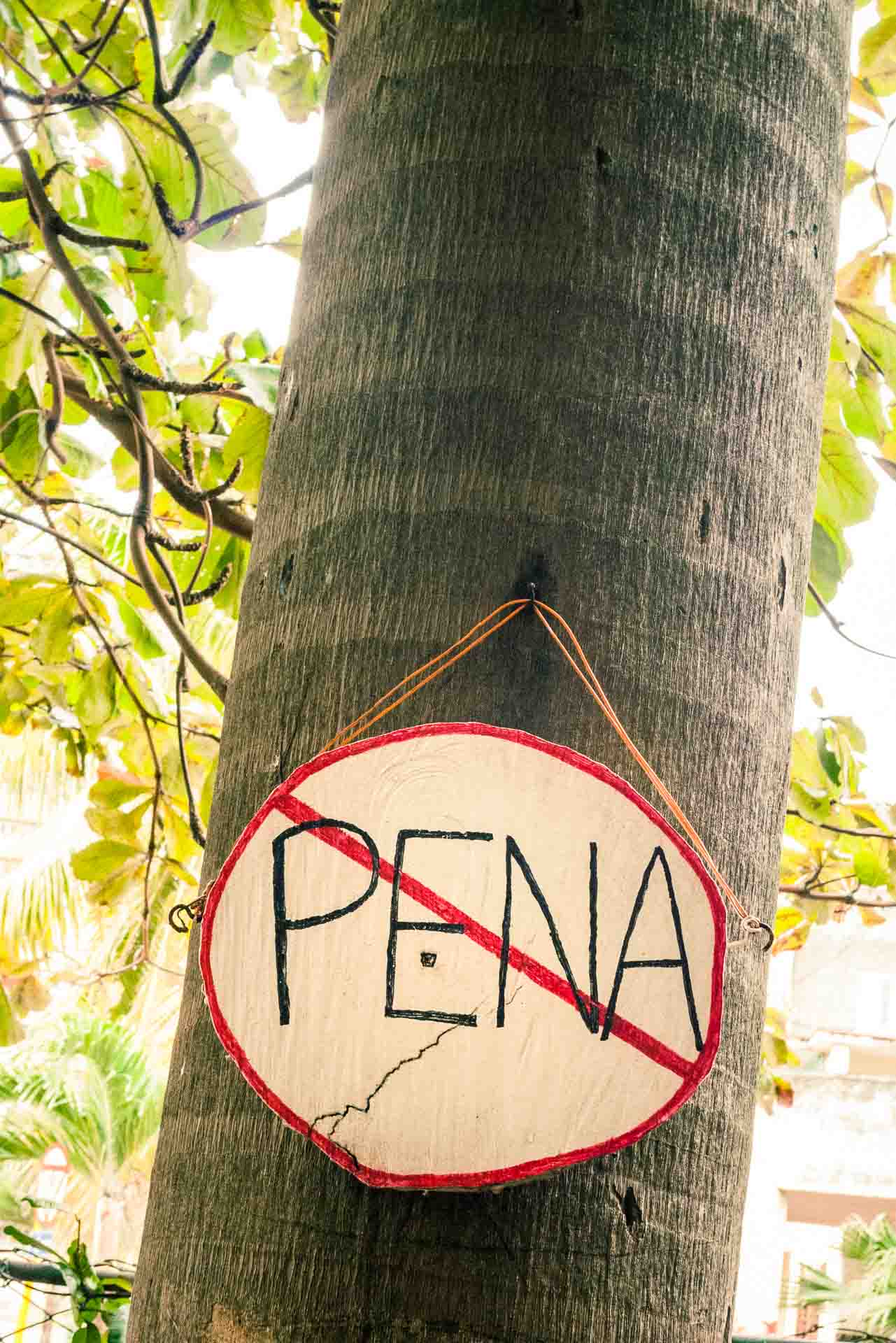
No Pena at Cuba Libro!!
But it could be so much more (obviously, I was feeling very much myself again, thinking and dreaming big). We could be ethically- and socially-responsible, basing our business philosophy on the principal that everything we do, every policy and practice, must be a win-win-win: a win for our customers, a win for our community, and a win for our staff. We could be a beacon in Cuba’s dark, uncertain times of private enterprise, where inequities are deepening, the country is experiencing double brain drain (people leaving for foreign shores; people leaving the state sector for the private), and the majority of Cubans don’t have the resources to patronize – let alone open – a private business. We would do things differently: we would be a place for everyone, our goods and services would be accessible to everyone, regardless of age, race, nationality, sexual orientation and importantly: finances. Money would not be the arbiter of who is in and who is out at our special spot. And so, Cuba Libro was born.
As two friends and I painted the space we rent from a neighbor, I honed my strategy about how to build community, support that community, and offer something completely different.
First Cuba Libro policy? You don’t have to buy anything. You can spend all day in a hammock reading National Geographic in Havana’s shadiest corner and not spend a kilo. This will bring in all the folks who don’t have the money or inclination to buy a coffee or book. It will make it a more diverse, exciting space. For people who love to read but don’t have the money or space for a book, we’ll offer library services, lending titles at 5 CUP (25 cents) for two weeks.
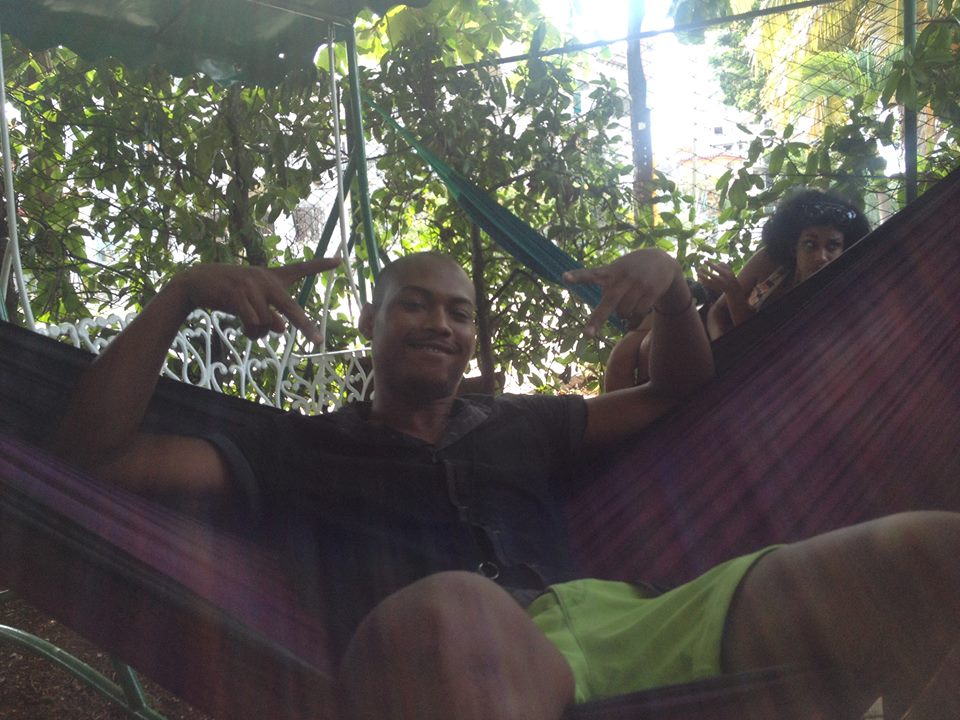
Humberto is a regular in the Cuba Libro hammocks
Second policy? Cuba Libro staff will earn more than anyone else in Havana doing similar work. We will commit ourselves in this way (and others), to supporting Cuban youth – to proving that young people here can learn new skills, make a dignified living, and build a future in their beloved Cuba. In addition to the robust salary, I instituted a profit-sharing program for staff and a tip jar exclusively for them. Here’s a typical end-of-day exchange with staff: “Conner. This is too much. Please take your cut of the tips.” I always decline, but then they slip some bills into my bag when I’m not looking and I slip them right back. In an effort to support young Cubans, I determined we would dedicate part of the café to emerging artists who have little opportunity to show their work in a city where six terrific artists crawl out from under any rock. We’ve shown artists who use the hallway of their building to create or have to sit on their single mattress to paint. For almost all our artists, their Cuba Libro show is their first solo show. One of my favorite parts of this 2-year adventure is when I get to call one of these artists (especially the ones earning peanuts in a state job) to say: ‘you sold something; your work is going to Canada/the United States/Chile/wherever, c’mon by so we can settle up.’
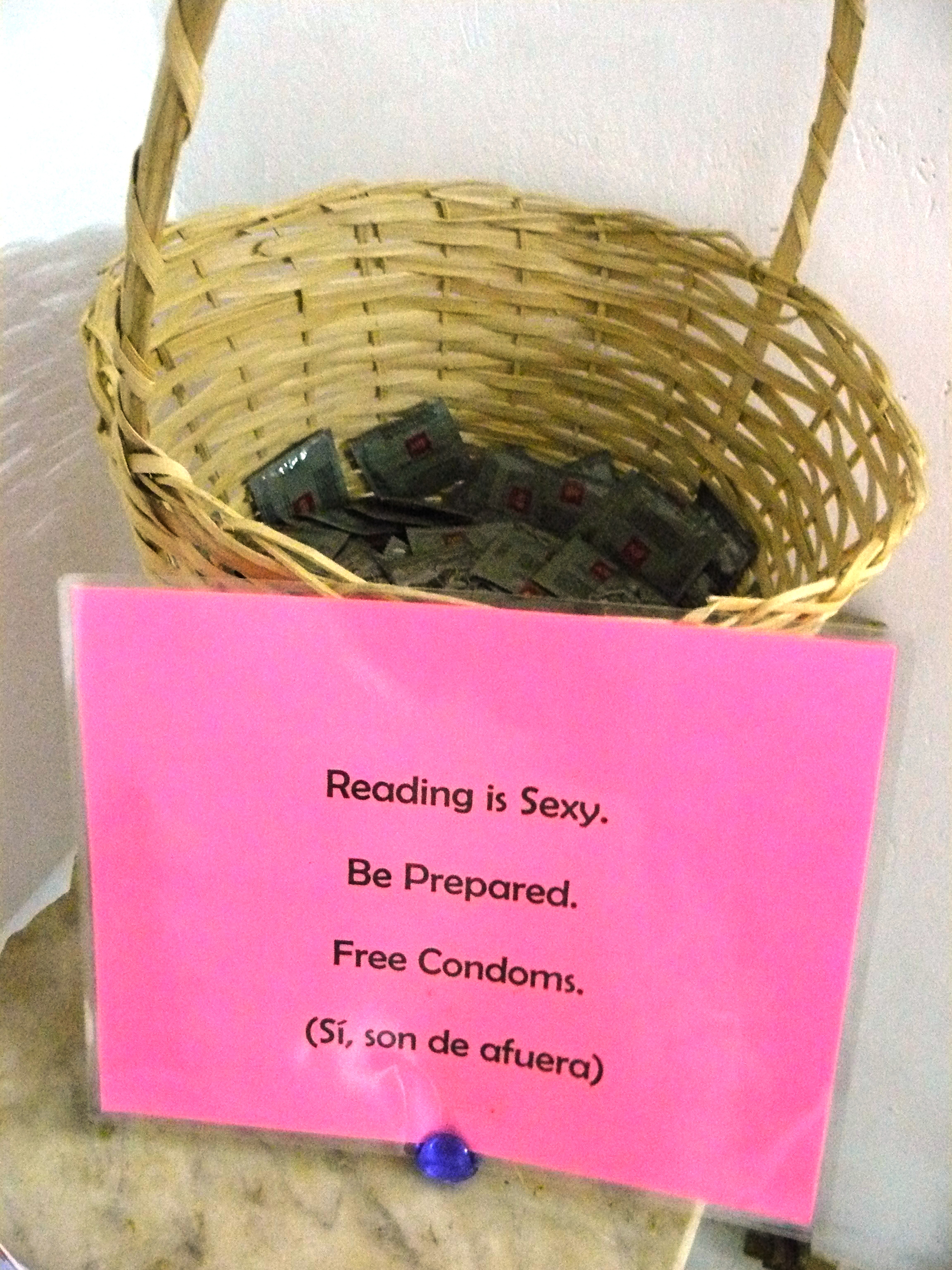
Third policy? We will do everything within our power to help attack inequities, educate, contribute to the health and well-being of our customers/staff/neighbors, broaden our collective support network, and build community. We will start donation programs, hold classes and workshops, plant trees, refill water bottles (as tourists numbers soar, plastic bottle waste is becoming a huge problem for this island ecology), give out free condoms (my public health commitment and also a way to diversify our community even more), make our stellar bathroom available to everyone, whether they buy something or know us or not, and actively curate titles, authors and genres requested by our community. When friends started an organic, collective farm, we offered to make their wonderfully delicious and affordable produce available to our community – at no profit to us. We pledge to be relevant and positive and pro-active.
Fourth policy? Cuba Libro will institute a collective decision-making model – any policy change or decision which affects our staff and/or community, requires consultation with them. This is completely new for many Cubans and we’ve had several opportunities to put the model to the test: do we want to appear in the Lonely Planet guidebook? Do we want to be on Travel Channel? This is a no-brainer for folks blind to everything except the bottom-line, but as I always say: ‘Cuba Libro is less about peddling coffee and books and more about being a resource for the surrounding community’ and once you get massive international exposure from media giants like LP and Travel Channel, the scales tip towards more foreigners, fewer locals in your establishment. Our collective debate revealed that none of us wanted this. But the debate also revealed alternatives, which ended up winning out. When I suggested raising our prices after more than a year in operation, staff pushed back, argued why we shouldn’t, and we didn’t; our prices, payable in either CUC or CUP, (another policy designed to make Cuba Libro as accessible as possible to as many as possible), have remained the same since opening: from a 60 cent espresso to a $1.50 frappuccino (both of which kick ass, according to customers). The latest debate is a rager: should we habilitate WiFi when it becomes a possibility? Feel free to weigh in, we’re currently collecting opinions.
Meanwhile, Cuban friends and family doubted my crazy bookstore/café idea when I unveiled it in 2013:
“You can’t give away stuff for free.”
“You have to sell liquor or you won’t survive. At least beer!”
“What’s the point of an English bookstore in a Spanish-speaking country?”
“You can’t lend books, they’ll never come back.”
Well, two years on, we’ve proven them wrong. Now what we’re hearing:
“Cuba Libro literally changed my life” (Susan, who met her future husband here)
“This is the best job I’ve ever had. It has changed my life” (Douglas! Fabulous Douglas, author of our original motto: ‘Life is peachy at Cuba Libro’);
“This is the coolest place in Havana” (Richard, early adopter and mainstay of the Cuba Libro family);
“I wouldn’t have survived medical school without Cuba Libro” (Dr Vero, another early adopter who was also the first – but not the last – to say: “I’m not telling anyone about this place. It’s MY oasis; I don’t want anyone to know about it”);
“I wish I had discovered this place when I first got to Havana” (Molly, a regular-in-the-making);
“This is my favorite place” (Humberto, who has cashed in more buy-10-get-1-free cards than anyone);
“I swear this is best iced coffee I’ve ever had” (Marcia, documentary filmmaker);
“Who are these new people? This is OUR hangout and they’re in MY hammock! (Maria Carla, Cuba Libro regular and future famous playwright).
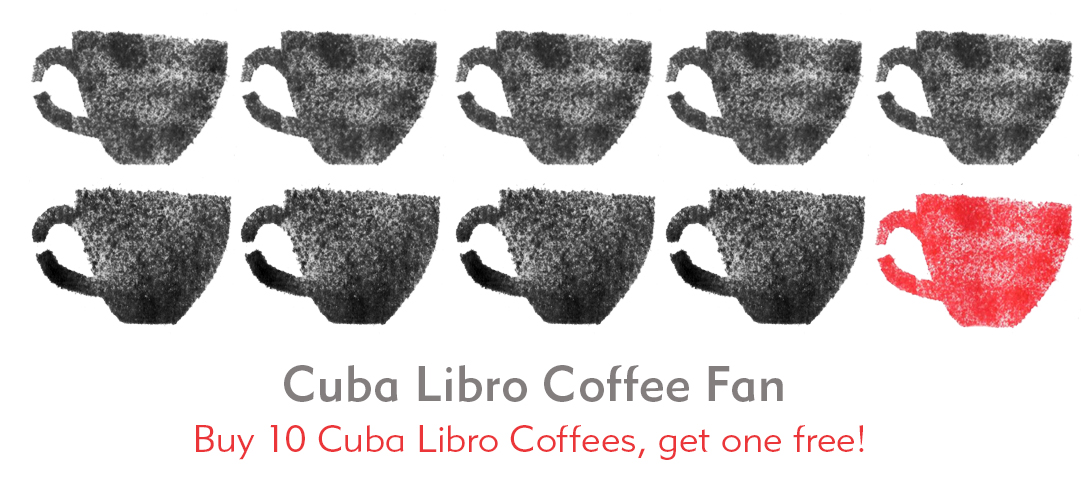
We were one of (if not THE) first business with a loyalty reward program
I speak for the collective when I say: we’re extremely proud of what we’ve achieved at Cuba Libro, very much a labor of love, very much a success – as defined by us. Although there are days we lose money, when the bureaucracy and inspections and blackouts and difficulties seem too much, there are days like last week when I looked around the garden, full of Cubans and a smattering of foreigners laughing, playing Scrabble and the guitar, reading Rolling Stone, and sipping 100% Cuban coffee and realized we’re not only creating community, we’re creating meaning in our lives and the lives of others. Douglas caught me smiling and read my mind: “this is what you dreamed of, right?” Yes, Dudu, this was the dream, the dream we’re making a reality in our shady little corner of Vedado, every day.
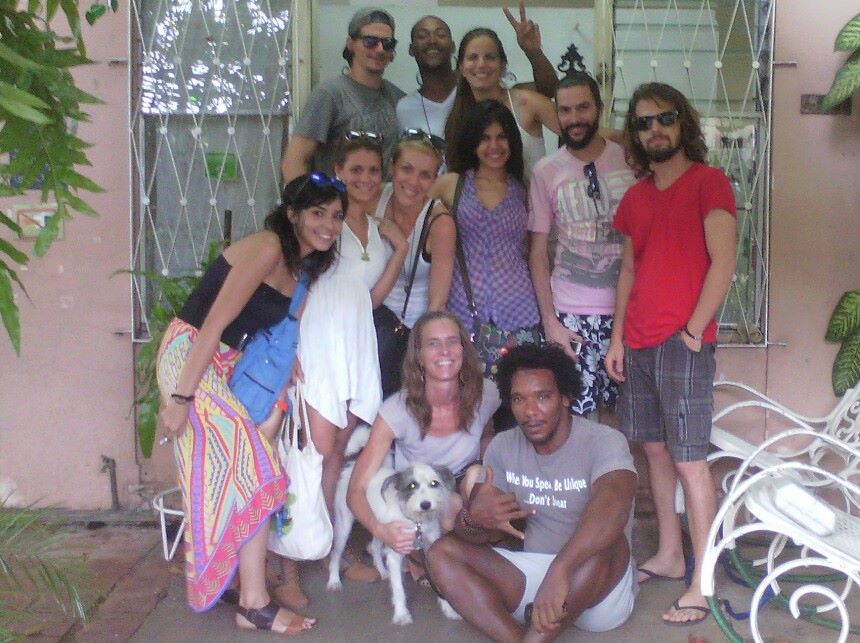
Last day before August vacation; they look happy, but these regulars (Cuban all, except me) grumbled!
This post is dedicated to all our supporters from around the corner and around the globe, who have helped us survive and thrive over the past two years, proving the improbable is possible and that you can live your dreams. Thanks to you, we’ve found the motivation, positive energy, solidarity, and resources to do all of this in two short years:
– Over 5200 condoms distributed, free!
– Over 1600 book donations to Cuba Libro from around the world
– Dozens of bilingual dictionaries donated to the local elementary school
– One dozen bilingual dictionaries donated to a private English teacher
– Several large donations to family doctors and administrators
– One large donation of coloring books, crayons and age-appropriate games to Centro Habana Pediatric hospital
– 12 art shows of emerging Cuban artists + rocking parties to inaugurate each (free to public!)
– One live music event with musicians from USA & Cuba (free to public!)
– 6 cine debates (Cuban documentaries presented by the filmmakers followed by debate; free to public!)
– 3 book launches (free to public!)
– 121 official people-to-people groups received from the United States
– One semester-long conversational English class, taught by a certified, native English-speaker
– Visitors from more than 3 dozen countries
– One marriage
– Providing study space and caffeine for half a dozen medical students, now doctors
– Innumerable friends made (including those with benefits!)
– One baby on the way (due Oct 24th; congrats Gaby & Raudel!)
– One stray street dog adopted
– 132 frequent client cards filled (buy ten coffees or other drink, receive your next drink free)
– Planted 6 trees
– Launched organic farm share with Finca Tungasuk, reaching dozens of local families
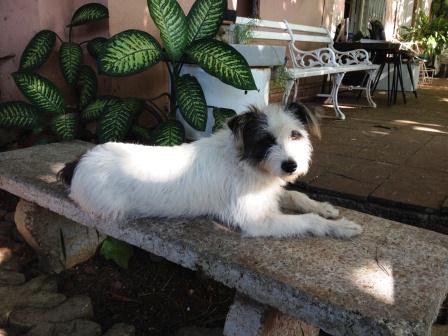
Rescued, November 2014!! Senor Tobias, resident CL pet.
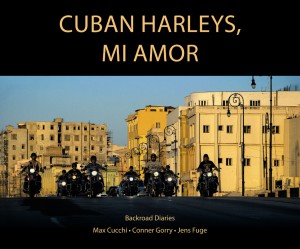
It has been one hell of a ride and we’re steeling ourselves for Fall 2015, when we’ll be expanding the organic farm share, hosting a week-long American Sign Language workshop (taught by a Cuban), hosting two art openings and one cine debate and launching a book about Pope Francis (while he’s in Havana!) and my new book Cuban Harleys, Mi Amor. Our work regularly exhausts us but always motivates us to do more and better. Thank you Cuba Libro community for making our work meaningful. Here’s to the next two years!!
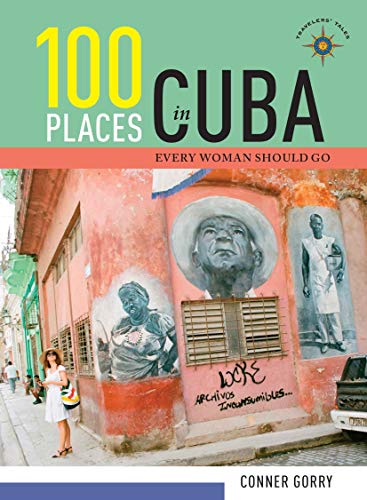





 Here is Havana